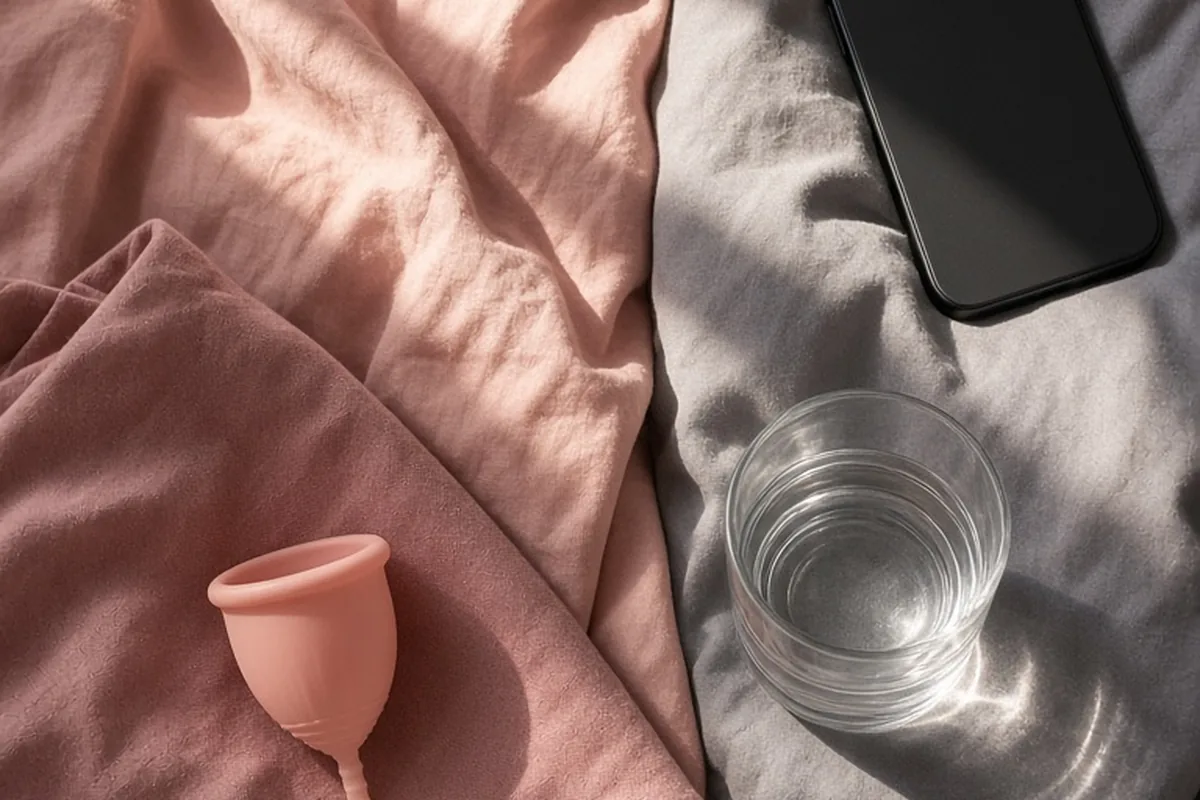
A properly inserted menstrual cup should not hurt. While you might feel mild pressure when first learning how to fold, insert, or remove the cup, it should remain entirely unnoticeable once settled correctly in the vaginal canal. Discomfort typically points to an incorrect size, a cup positioned too close to the vaginal opening, improper folding, or failing to break the suction seal before removal.
Switching from pads or tampons to a menstrual cup often brings questions about physical sensation and comfort. Understanding how cups interact with your natural anatomy can help you navigate the initial learning curve without unnecessary discomfort or frustration.
What a Menstrual Cup Normally Feels Like When Worn
When a menstrual cup is inserted properly, you generally should not feel it at all throughout the day. The upper portion of the vaginal canal has relatively few nerve endings that detect fine touch or light pressure, which is why a flexible silicone or elastomer cup can sit securely without creating continuous awareness. The cup is held in place by the gentle tension of your pelvic floor muscles and a light vacuum seal against the vaginal walls, allowing you to walk, sit, exercise, and sleep without physical distraction.
Unlike disposable tampons, which absorb menstrual fluid along with natural vaginal moisture, menstrual cups collect fluid without drying out delicate mucosal tissue. This fundamental difference means you avoid the abrasive, scraping sensation that often occurs when removing a partially dry tampon on light flow days. If you consistently feel a sensation of fullness, heaviness, or pinching while resting or moving, the cup is likely sitting at an improper depth or may be the wrong firmness for your anatomy.
Why Discomfort Happens During Insertion
Insertion discomfort usually stems from muscle tension, an unsupportive insertion angle, or friction against dry tissue. When someone feels nervous about trying a cup for the first time, the pelvic floor muscles instinctively contract and tighten the vaginal entrance. Attempting to push a cup through tense muscles creates resistance and stinging. Additionally, inserting the cup straight upward toward the head rather than angling it horizontally back toward the tailbone pushes the silicone rim directly against the sensitive anterior vaginal wall.
The specific folding technique you choose also influences how comfortable insertion feels. Standard folds like the classic C-fold create a relatively wide rim entry point that can feel awkward or uncomfortable for smaller or sensitive openings. Switching to narrower entry folds, such as the punch-down fold or the seven-fold, reduces the insertion diameter significantly. Adding a drop of plain, water-based lubricant to the rim can also eliminate friction without damaging the cup material.
Avoiding Pain and Pinching During Removal
Pain during removal almost always occurs when someone attempts to pull the cup out by its stem without first releasing the suction seal. Menstrual cups rely on a light vacuum to prevent leaks, and pulling directly downward against that intact seal creates uncomfortable internal suction against the vaginal walls and cervix. The stem is designed solely as a guide to locate the base of the cup, not as a handle for pulling it out like a tampon string.
To remove the cup comfortably, relax your pelvic muscles, slide your index finger and thumb alongside the lower body of the cup, and firmly pinch the base. This pinching action collapses the walls slightly, equalizing the air pressure and releasing the seal. Once the vacuum is broken, you can gently walk the cup downward side to side, keeping it upright until the rim exits the vaginal opening. If the rim pinches the sensitive entrance on the way out, fold the rim slightly as it passes through the opening.
Matching Cup Size, Shape, and Firmness to Your Body
Discomfort often reflects a mismatch between the physical dimensions of the cup and your personal pelvic anatomy. Cervix height is one of the most critical factors: if you have a low cervix and choose a long cup, the base and stem will stick out past the vaginal entrance, rubbing against sensitive outer tissues and causing pain when sitting. Conversely, a short cup in a high-cervix canal may travel upward and prove difficult to reach, causing stress and muscle strain during removal.
Silicone firmness also plays a decisive role in physical comfort. Firmer cups open easily and resist the pressure of active pelvic floor muscles, but they can press against the bladder or urethra, causing mild cramping or a sensation of needing to urinate. Softer cups exert minimal pressure on surrounding organs, making them ideal for sensitive bodies or those prone to bladder sensitivity, though they require a bit more manual adjustment to ensure they pop open fully.
Distinguishing Normal Adjustment from Warning Signs
A brief period of mild adjustment is common when you first start using a menstrual cup. You might experience subtle awareness of the cup for the first few minutes after insertion as your pelvic muscles settle, or minor tenderness from repeated practice attempts. However, sharp stabbing pain, persistent pelvic cramps, throbbing pressure, or intense burning are not normal parts of the adjustment period and indicate that you should remove the cup immediately.
Certain underlying reproductive conditions can make cup insertion uncomfortable regardless of technique. Conditions such as vaginismus, pelvic floor hypertonicity, or endometriosis can heighten vaginal sensitivity or cause pelvic floor spasms. If you consistently experience pain despite using water-based lubrication, proper folding, and smaller cup sizes, pausing use and consulting a gynecologist or pelvic floor physical therapist can help you identify whether a cup is suitable for your body.
Practical Habits for a Comfortable Learning Curve
Mastering menstrual cup use typically takes between one and three menstrual cycles of consistent practice. To minimize frustration, consider practicing insertion when you are relaxed and not under time pressure, such as at home in the evening or during a warm shower where the warm water naturally helps relax pelvic muscles. You can also do practice runs slightly before your period starts, provided you use water-based lubricant to prevent dry friction.
Varying your posture during insertion can make a significant difference in how easily the cup glides into place. Many users find success by squatting low, sitting comfortably back on the toilet with knees wide, or resting one foot on the edge of the bathtub. Experimenting with these positions allows you to find the natural angle of your vaginal canal, leading to smooth, painless placement.
Illustrative Scenarios
Adjusting Placement for a Low Cervix
Taylor decided to try a standard medium menstrual cup after using disposable pads for years. During the initial trial, Taylor experienced sharp pinching near the vaginal opening whenever walking or sitting down. Rather than pushing through the discomfort, Taylor checked the cup's position and realized the stem protruded past the labia because of a naturally low cervix. Taylor trimmed the silicone stem and practiced using the punch-down fold while resting one foot on the edge of the bathtub. The shorter profile allowed the base of the cup to sit comfortably inside the vaginal canal without pressing against sensitive outer tissue, eliminating the pain entirely during subsequent cycles.
Key point: Persistent pinching or poking often indicates that the cup or its stem is too long for your vaginal canal height rather than an inability to wear a cup.
Frequently asked questions
Can a menstrual cup cause menstrual cramps to get worse?
Menstrual cups do not directly generate cramps, but a cup that is too firm or placed too high against the cervix can apply local pressure and intensify existing discomfort. Switching to a softer silicone cup or positioning the cup slightly lower in the canal often relieves this sensation. If severe cramping continues, removing the cup and speaking with a healthcare provider is a sensible choice.
Is it painful to use a menstrual cup if you have never had intercourse?
Using a menstrual cup without prior sexual activity does not have to be painful, though unfamiliarity with vaginal insertion can cause involuntary muscle tension. The hymenal tissue stretches naturally, but using a smaller, softer cup alongside water-based lubricant makes insertion much smoother. Taking time to relax your pelvic floor and choosing a narrow fold helps prevent discomfort.
What should you do if the cup feels stuck and hurts to reach?
A menstrual cup cannot get lost inside the body because the cervix physically blocks entry into the uterus. If the cup sits high, take slow breaths to relax your pelvic muscles, gently bear down as if having a bowel movement, and slide a finger up to pinch the base to release the vacuum before pulling. Never yank the stem if you feel resistance.
Why does inserting a menstrual cup burn or sting?
Burning or stinging usually results from friction against dry mucosal tissue or irritation from harsh soaps used to wash the cup. Applying a small drop of water-based lubricant to the rim and rinsing the cup thoroughly with plain water after cleaning can prevent this irritation. Persistent burning may signal an infection or sensitivity that requires medical evaluation.
Your next step
If you experience pain while trying a menstrual cup, remove it and assess your cup firmness, cervix height, and insertion angle before trying again with a water-based lubricant.