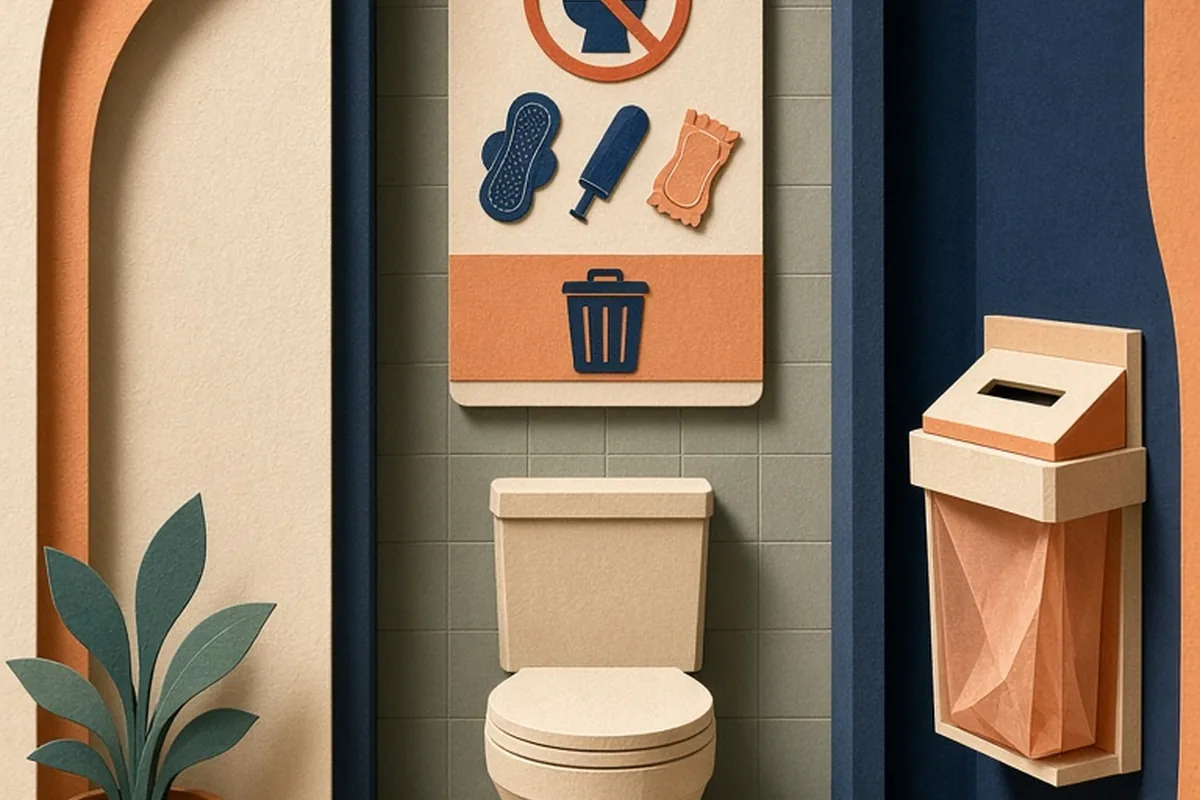
A do not flush feminine hygiene products sign informs guests and employees that pads, tampons, and wrappers must go into a waste receptacle rather than the toilet. To be effective, pair clear, respectful phrasing with visible icons, mount the sign at seated eye level on the stall door, and always provide an accessible, lined disposal bin nearby so visitors have an immediate, hygienic alternative.
Plumbing repairs caused by flushed menstrual products are costly and disruptive, yet preventing them requires thoughtful communication rather than harsh warnings. Successful restroom signage combines clear messaging, respectful wording, and convenient disposal options so that guests feel supported while protecting your facility pipes.
Choosing the Right Tone and Phrasing for Signage
The language used on a restroom sign sets expectations and establishes the atmosphere of your facility. Aggressive, accusatory, or overly graphic language can make visitors feel uncomfortable or unwelcome. Signs that read with hostility, such as threatening fines or using exclamation points, often generate negative feelings without improving compliance. Instead, clear and courteous phrasing conveys professional care while delivering the necessary instructional message.
Effective wording focuses on what action to take rather than solely issuing a prohibition. Phrases like Please Dispose of Feminine Hygiene Products in the Provided Receptacle or Help Us Protect the Plumbing: Place Sanitary Items in the Bin offer actionable guidance. For commercial offices and hospitality venues, adding a simple Thank You acknowledges the guest. A potential trade-off of very polite wording is that distracted users might skim past it, which is why straightforward typography and concise phrasing remain essential.
Strategic Sign Placement for Maximum Visibility
A well-designed sign will fail if users do not notice it at the exact moment they need the information. The most common mistake in public and commercial restrooms is mounting signs on the exterior stall door or behind the toilet tank where they are out of the user line of sight. When someone prepares to dispose of a menstrual product, their attention is focused inside the stall, usually facing the inner door panel or looking directly toward the toilet roll holder.
Position signs on the interior face of the stall door at seated eye level, typically between forty-eight and sixty inches from the floor. Another effective location is directly above or adjacent to the sanitary disposal unit mounted on the partition wall. In single-occupancy residential or guest bathrooms, placing a framed, discreet reminder near the toilet paper dispenser ensures it is seen naturally without dominating the room decor. Keep in mind that mounting signs too close to coat hooks or accessories may lead to them being covered by jackets or bags.
Incorporating Universal Symbols and Multilingual Text
Visual communication transcends language barriers and ensures that instructions are understood by everyone, including international visitors, non-native speakers, and people in a hurry. Relying solely on English text leaves room for misunderstanding in diverse workplaces, transportation hubs, restaurants, and event venues. Combining simple, recognizable graphics with short text dramatically improves comprehension across all demographics.
Standard iconography typically depicts a waste bin with an arrow indicating disposal, alongside a crossed-out toilet symbol. When using symbols, ensure the graphics clearly represent pads, tampons, and packaging rather than abstract shapes that could be confused with general litter. In bilingual communities or international settings, include the primary secondary language below the English text. The main challenge with multilingual signs is visual clutter, so prioritize clean layouts with ample white space to keep the message legible from several feet away.
Pairing Signage with Reliable Disposal Infrastructure
A sign instructing people not to flush items is only as effective as the physical disposal options available in the stall. When individuals encounter a sign prohibiting flushing but find no waste bin, an overflowing container, or a broken receptacle, they face an uncomfortable dilemma. Expecting guests to carry used personal hygiene items out of a private stall into a common area is unreasonable and leads directly to improper flushing.
Every stall must feature a clean, functional, and lined sanitary disposal unit within arm reach of the toilet. Touchless or pedal-operated bins provide a more hygienic experience, encouraging visitors to use them without hesitation. Providing individual disposal bags or wrapping paper inside the stall further simplifies the process. Property managers must balance the initial cost and maintenance time of dedicated stall receptacles against the substantial plumbing fees associated with line clearing and sewer backups.
Addressing Sensitive Septic and Older Plumbing Systems
Facilities operating on septic tanks, older municipal hookups, or macerating toilet pumps require heightened diligence because these systems cannot break down synthetic fibers, cotton, or plastic backings. In residential rental properties, historic buildings, and rural event spaces, a single flushed tampon can cause immediate blockages, pump burnout, or drain field contamination that costs thousands of dollars to remediate.
Signage in these environments should briefly explain the mechanical necessity behind the request. Text such as Historic Plumbing: Please Do Not Flush Sanitary Items, Wipes, or Paper Towels or Sensitive Septic System: Only Toilet Paper May Be Flushed helps users understand that the rule stems from structural limitations rather than arbitrary policy. While providing this context increases compliance, owners should avoid overly technical explanations that make the sign hard to read quickly.
Material Selection and Durability for Restroom Environments
Restrooms are high-moisture environments subject to daily chemical cleaning, humidity, and physical wear. Paper printouts taped to walls quickly curl, fade, peel, or harbor bacteria, projecting a neglected image and diminishing the authority of the message. Investing in durable, commercial-grade materials ensures that the sign remains clean, legible, and presentable over years of use.
Engraved acrylic, brushed aluminum, and rigid PVC plaques with rounded corners are the industry standards for commercial restrooms. These materials resist moisture, withstand industrial disinfectants, and can be mounted securely using high-strength double-sided foam tape or screw mounts. For upscale venues like boutique hotels or private practices, matching the sign finish to the existing hardware, such as matte black, brushed nickel, or brass, integrates the signage seamlessly into the interior design.
Establishing Routine Restroom Maintenance Protocols
Signage alone cannot maintain sanitary standards without a consistent operational routine behind it. Even the clearest sign will be disregarded if the disposal bin is full or lacks a clean liner. A comprehensive restroom management strategy connects visual communication with regular janitorial oversight to ensure that facilities stay functional throughout the business day.
Establish a regular inspection schedule that includes emptying stall bins, replacing liners, restocking individual disposal bags, and wiping down signage with non-abrasive disinfectant. In high-traffic venues, monitor peak hours such as lunch rushes or shift changes to adjust service frequency. Facilities that maintain spotless, well-supplied stalls reinforce the message on the sign, building a culture of mutual respect between property owners and restroom users.
Frequently asked questions
Why can feminine hygiene products not be flushed down the toilet?
Pads, tampons, and applicators are made from dense cotton, rayon, and synthetic plastics designed to absorb liquid and expand rather than disintegrate in water. Flushed items easily catch on pipe joints, tree roots, and septic components, causing severe clogs and sewer backups.
What is the best wording for a residential guest bathroom sign?
Keep residential messaging friendly and subtle, such as Please place all feminine products and wipes in the trash can, thank you. Placing a small, framed card near the toilet paper holder alongside an accessible, lidded trash can provides clear guidance without making guests feel self-conscious.
Are products labeled as biodegradable or flushable safe to flush?
Plumbing and wastewater professionals generally advise against flushing any feminine products, regardless of packaging claims. Even biodegradable items take significant time to break down and can readily tangle with other debris to create blockages in private drains and municipal sewer systems.
How high should a do not flush sign be mounted inside a stall?
Mount the sign on the inside of the stall door between forty-eight and sixty inches from the floor. This height aligns naturally with the eye level of a seated user, making the message noticeable right before disposal decisions occur.
Your next step
Assess your restroom stalls today to ensure each one has a durable, eye-level sign paired with a clean, lined disposal bin within arm reach.