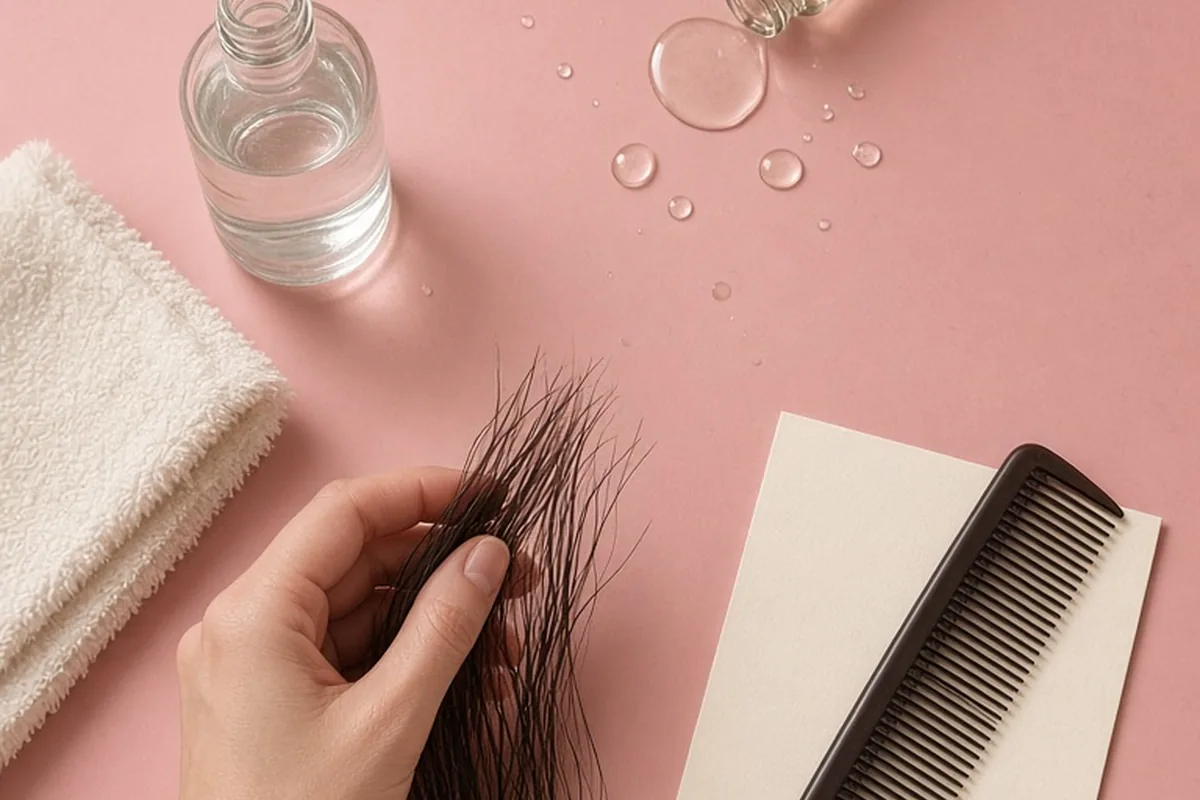
Hair oil does not moisturize fine hair because oil is an occlusive lubricant rather than a hydrating agent. True hair moisture requires water and water-binding humectants. Applying oil alone to dry fine hair coats the cuticle and traps dryness underneath, often creating a greasy, limp appearance. For fine strands, lightweight oils should only be used in micro-doses over damp, water-hydrated hair to lock in existing hydration or as a pre-shampoo barrier to reduce wash-day friction.
Fine hair exists in a delicate structural balance: individual strands have a narrow diameter that easily loses water through the cuticle, yet those same strands quickly become weighed down, greasy, and stringy when coated with traditional conditioning products.
The Biological Difference Between Hair Hydration and Hair Sealing
To understand whether oil moisturizes fine hair, you must distinguish between hydration and lubrication. Hydration refers specifically to the absorption of water into the hair shaft's inner cortex. When water penetrates the cortex, it temporarily increases elasticity, softness, and pliability. However, water molecules evaporate rapidly through the outer cuticle layer if nothing stands in their way. This is where lipids and oils enter the equation, functioning as hydrophobic barriers rather than sources of moisture.
Oils are composed of fatty acid chains that repel water. When applied to hair, an oil coats the outer surface of the cuticle scales or, in the case of certain low-molecular-weight lipids, partially integrates into the upper layers of the cuticle. This coating acts as an occlusive seal that slows down water evaporation. If you apply oil to bone-dry fine hair, there is no water inside the strand to trap. The oil simply forms an impermeable barrier on the surface, preventing atmospheric moisture and leave-in products from reaching the inner fibers, leaving the strand structurally dry beneath an oily exterior.
True hair moisturization requires a two-step process: delivering water alongside humectants like aloe vera, glycerin, or panthenol, followed by a controlled lipid barrier to prevent evaporation. Fine hair requires far less lipid sealing than coarse or thick hair because the surface area of each individual strand is small. Overloading fine strands with pure oils skips the hydration phase entirely, creating the illusion of conditioning while starving the cortex of the water it needs for flexibility.
Why Heavy Oils Flatten and Dehydrate Fine Hair Strands
Fine hair has a naturally small cross-sectional diameter, meaning each strand has fewer cuticle layers and a smaller cortex than medium or coarse hair. Because of this smaller physical structure, fine hair has very low weight tolerance. Heavy vegetable and nut oils have high molecular weights and dense viscosities that coat the strand in a thick film. This film increases surface tension between neighboring hairs, causing them to clump together into stringy sections and collapse flat against the scalp.
Beyond cosmetic flattening, heavy oils can cause what trichologists describe as paradoxical dehydration in fine hair. When dense oils like castor oil, raw shea butter, or thick olive oil are applied repeatedly, they resist removal by gentle, sulfate-free shampoos. Over multiple wash cycles, these stubborn lipids accumulate on the cuticle surface. This buildup forms an occlusive shell that blocks daily water absorption during washing or conditioning.
As a result of this accumulation, fine strands become stiff, brittle, and prone to snapping at the ends, even though the hair looks oily or shiny. The strand loses its natural bounce and movement because the accumulated lipid layer hardens on the cuticle surface. Fine hair owners often mistake this stiffness for a lack of oil and apply even more, worsening the cycle of surface grease and internal fiber dehydration.
The Best and Worst Hair Oils for Fine Strands
Selecting an oil for fine hair requires analyzing molecular weight, viscosity, and fatty acid composition. The ideal oils for fine textures are lightweight, fast-spreading, and high in polyunsaturated fatty acids or light esters that provide slip without leaving a sticky residue. Squalane, whether derived from sugarcane or olives, is one of the most effective options for fine hair because it mimics natural human sebum while maintaining an ultralight, non-greasy consistency that evaporates cleanly without heavy buildup.
Jojoba oil is another compatible choice for fine strands because it is technically a liquid wax ester rather than a true triglyceride. It closely matches the lipid profile of the scalp's natural oils, offering surface smoothing and moisture retention without forming an impenetrable film. Cold-pressed argan oil and grapeseed oil also perform well on fine hair when applied in minimal quantities, providing antioxidant protection and cuticle alignment without overwhelming thin hair shafts.
Conversely, heavy, highly saturated oils should generally be avoided as leave-in treatments on fine hair. Raw coconut oil, while praised for its ability to penetrate the hair cortex due to its high lauric acid content, often causes fine hair to feel brittle and stiff by creating protein-like rigidity within fine fiber matrices. Castor oil, 100 percent mineral oil, and unrefined avocado oil have excessive viscosities that instantly pull fine hair flat, resist normal lathering, and require harsh clarifying detergents to remove.
How to Apply Oil to Fine Hair Without Greasiness or Buildup
The most effective way to utilize oil on fine hair is through the pre-shampoo method, commonly known as a pre-poo. Applying a lightweight oil to dry mid-lengths and ends ten to twenty minutes before stepping into the shower creates a protective buffer against hygral fatigue, which is the swelling and deswelling of the hair cuticle caused by rapid water absorption during washing. The oil cushions the delicate cuticles against the friction of lathering and rinsing, and excess oil is naturally washed away by your shampoo, leaving strands soft without any lingering heaviness.
If you prefer to use oil as a post-wash finishing step, the technique must be precise. Never apply oil directly from the dropper onto fine hair. Instead, dispense a single drop—or half a drop if using a pump—onto your palms and rub your hands together vigorously until your skin feels warm and slightly slick. Then, gently graze your palms only over the bottom two inches of damp, towel-dried hair where split ends and mechanical damage are concentrated, avoiding the roots and mid-lengths entirely.
Another practical approach for fine hair is oil cocktailing. Rather than layering pure oil on top of a leave-in conditioner, blend one tiny droplet of squalane or jojoba oil directly into a dime-sized amount of a water-based leave-in spray in the palm of your hand before application. This dilutes the lipid concentration across a broader surface area, ensuring that the moisture-sealing benefits are evenly distributed across fine strands without forming concentrated greasy patches.
Recognizing and Reversing Oil-Induced Buildup on Fine Hair
Because fine hair exhibits product accumulation rapidly, it is essential to recognize the physical signs of oil overload before it causes mechanical breakage. The most common indicator is hair that feels wet or sticky to the touch even after being fully blow-dried. If your hair separates into individual stringy clumps within an hour of styling, or if your clean hair lacks volume and looks dull, your cuticle layer is likely coated with lipid residue.
Another clear sign of buildup is a sudden reduction in the effectiveness of your regular hydrating masks or leave-in conditioners. If products that previously left your hair soft now seem to sit on the surface without absorbing, the oil barrier has become too dense. You may also notice white or grayish residue on your brushes and combs, which occurs when accumulated oils mix with airborne lint and dead scalp cells.
To reverse this buildup, implement a clarifying wash using a dedicated clarifying shampoo containing sulfosuccinates, olefin sulfonates, or mild sulfates once every two to three weeks depending on your wash frequency. Focus the clarifying lather directly on the scalp and let the suds rinse through the mid-lengths and ends. Follow immediately with a lightweight, water-based hydrating conditioner to restore lost water content, skipping all leave-in oils for at least two subsequent washes to let the hair fibers reset.
A Step-by-Step Hydration Routine for Fine Hair Textures
Creating a reliable moisture routine for fine hair begins at the washing stage with lukewarm water, as hot water strips natural lipids and causes excessive cuticle flaring. Cleanse the scalp thoroughly with a gentle, volumizing or balancing shampoo, allowing the lather to clean the lengths without aggressive scrubbing. Apply a lightweight rinse-out conditioner containing water-soluble humectants like panthenol and vegetable proteins from the mid-shaft to the ends, leaving it on for two minutes before rinsing thoroughly with cool water to smooth down the cuticle scales.
Once out of the shower, gently squeeze excess moisture from the hair using a microfiber towel or soft cotton cloth rather than roughly rubbing with terrycloth. While the hair is still damp, apply a water-based leave-in conditioning spray. Look for formulas listing water or aloe barbadensis leaf juice as the primary ingredient, paired with light humectants that bind water to the strand. This step delivers the actual hydration that fine hair needs for elasticity and softness.
To finish the routine, determine whether your environment and hair porosity demand a final lipid seal. If your hair is prone to split ends, flyaways, or high humidity swelling, warm a single drop of squalane or hemi-squalane between your fingertips and lightly press it onto the very tips of your ends. If your fine hair is low-porosity and easily weighed down, you can omit the post-wash oil entirely and reserve your oil usage exclusively for pre-shampoo treatments.
Frequently asked questions
Can I leave oil in fine hair overnight to treat dry ends?
Leaving oil in fine hair overnight is rarely necessary and often leads to scalp irritation and flat, greasy strands the next morning. Fine hair absorbs surface lipids quickly, so a 15 to 30-minute pre-shampoo oil treatment before washing provides the full protective benefit without transferring oil to your pillowcase or clogging scalp pores.
Why does coconut oil make my fine hair feel dry and straw-like?
Coconut oil has a high concentration of lauric acid, which penetrates deep into the hair cortex and binds strongly to internal proteins. In fine hair, this structural reinforcement can cause the hair shaft to become overly rigid and stiff, mimicking the brittle symptoms of severe protein overload.
Is dry oil better for fine hair than regular hair oil?
Dry oils are formulated with high concentrations of lightweight esters and volatile silicones or cyclomethicone, which evaporate quickly after application. This makes dry oils significantly better for fine hair than heavy raw oils because they deliver surface shine and slip without leaving a dense, grease-attracting residue.
How often should someone with fine hair use oil?
Most fine hair types benefit from using oil no more than once or twice a week, ideally as a pre-shampoo treatment. If used as a daily styling seal, fine hair quickly accumulates excess weight, requiring frequent clarifying washes to maintain natural volume and bounce.
Your next step
Examine your current hair products to confirm that your primary leave-in product is water-based, and switch your oil application to a single-drop dosage applied strictly to damp ends.