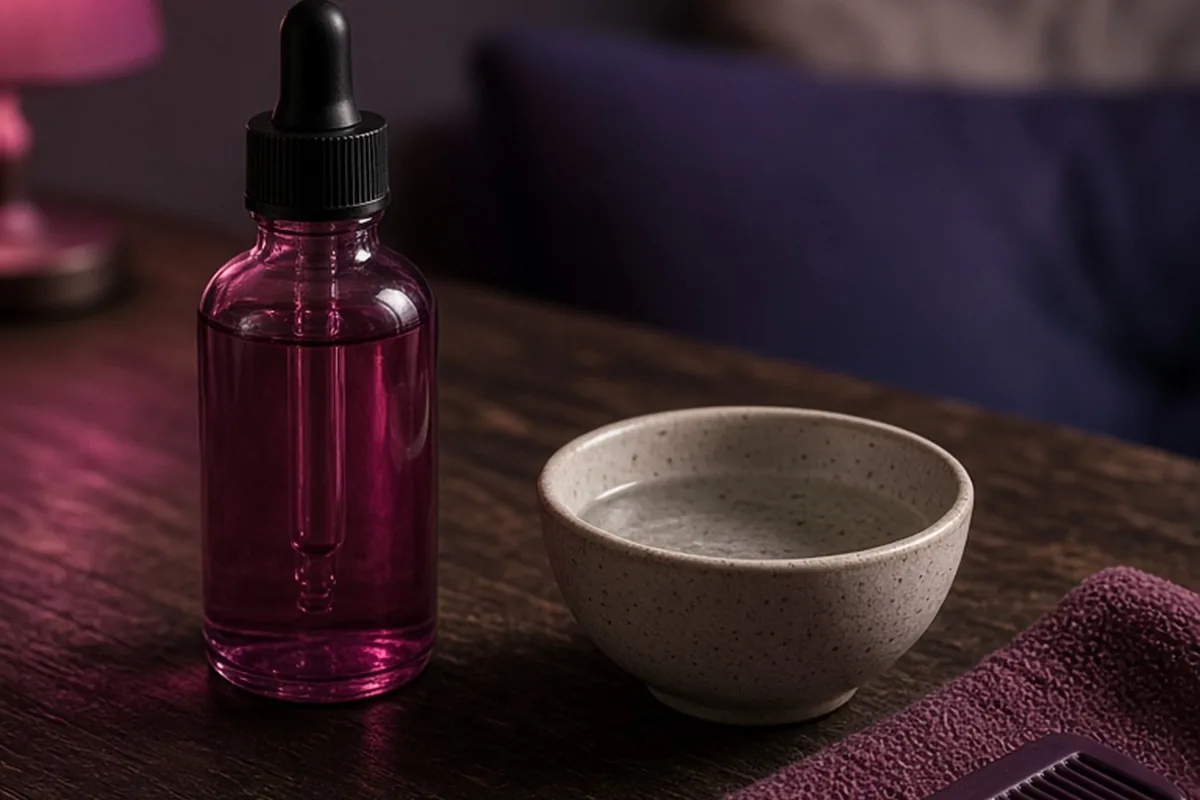
No, hair oil does not moisturize hair on its own. True moisture comes only from water and water-based hydrators. Oils are hydrophobic lipids that act as sealants, emollients, or lubricants. They form a protective barrier over the cuticle layer to slow the evaporation of existing water from the hair shaft and reduce friction. To keep hair healthy, you must first infuse the strands with water or a water-based leave-in conditioner before applying oil on a structured maintenance schedule tailored to your porosity.
Many hair care routines fail because people mistake lubricated strands for hydrated strands. Applying heavy oils directly to dehydrated hair often creates a barrier that keeps vital atmospheric moisture out, leaving the hair feeling brittle, dull, and prone to snapping. Understanding the distinct biochemical roles of water and oil is the key to designing a maintenance schedule that preserves softness, improves elasticity, and prevents chronic product buildup.
The Biological Difference Between Hydration and Oil Lubrication
To understand why oil cannot moisturize hair, you have to look at the structure of the hair shaft itself. Hair fiber consists predominantly of keratin proteins bound together in a matrix surrounded by an outer cuticle layer. When hair is dry, it lacks water within this protein core. Water molecules are small enough to penetrate the cuticle, binding to the keratin structures and restoring flexibility, pliability, and bounce. Without water, hair fiber becomes rigid and fragile.
Oils, whether botanical or synthetic, are composed of fatty acid chains and triglycerides that are naturally hydrophobic, meaning they repel water. When you apply oil to hair, it coats the outer cuticle scales or fills microscopic gaps between them. This lipid coating smooths rough edges, reflects light to create shine, and significantly reduces friction between individual strands during styling. However, because oils contain zero water content, they add no actual hydration to the inner fiber. Using oil without a water-based hydrator simply coats dry hair in grease, sealing dryness into the strand.
A practical way to conceptualize this relationship is to view water as the beverage that quenches thirst and oil as the lid on the cup. If you apply the lid to an empty cup, you remain thirsty. You must first introduce water, aloe vera juice, or a formulated water-based leave-in product before adding the oil layer to lock that moisture in place.
Penetrating Oils Versus Sealing Oils in Hair Care
Not all hair oils behave the same way on a strand of hair. Their behavior depends on their molecular weight, polarity, and chemical composition. Broadly, hair oils fall into two categories: penetrating oils and sealing oils. Choosing the wrong category for your specific hair texture or porosity can cause heavy buildup, limp strands, or persistent dryness.
Penetrating oils possess small, linear molecular structures and high polarity, allowing them to pass underneath the cuticle layer and enter the hair cortex. Coconut oil, babassu oil, and unrefined avocado oil are well-known examples. These oils help reduce protein loss and prevent excessive water absorption during washing, a process known as hygral fatigue. However, penetrating oils are not hydrators; they act as structural supports that limit the swelling and shrinking of the hair strand during wash cycles.
Sealing oils, on the other hand, consist of larger, non-polar molecules that remain on the surface of the hair shaft. Jojoba oil (technically a liquid wax ester), Jamaican black castor oil, mineral oil, and argan oil primarily function as surface sealers. They smooth the outer cuticle, lock in moisture applied during previous steps, and protect against environmental abrasion. Using a heavy sealing oil when your hair requires a lightweight penetrator can quickly weigh down fine strands and suffocate your style.
Structuring a Hair Oil Maintenance Schedule by Porosity
A successful maintenance schedule depends primarily on hair porosity—how easily your cuticle layer opens to receive and retain moisture. High-porosity hair absorbs water rapidly through raised or damaged cuticles but loses it just as quickly. Low-porosity hair features tightly compacted cuticles that resist water entry, making heavy oils problematic because they sit on top of the hair without absorbing.
For low-porosity hair, oil application should be light and infrequent. A realistic maintenance schedule involves oiling only once or twice per week. Use lightweight oils with low viscosity, such as sweet almond, grapeseed, or jojoba oil, immediately after a warm shower when heat has gently lifted the cuticle. Applying heat or steam before oiling helps water enter first. Applying heavy butters or thick oils multiple times a week to low-porosity hair guarantees greasy buildup, dullness, and eventual breakage.
High-porosity hair requires a more frequent and robust sealing schedule to compensate for its compromised cuticle layer. A three-to-four-day cycle often works best. Start with a water-based liquid leave-in, apply a rich botanical cream, and finish with a heavier sealing oil such as castor, olive, or argan oil. In dry or cold climates, refreshing the ends of high-porosity hair with a tiny drop of sealing oil every two days prevents the rapid moisture evaporation that causes split ends.
Methods for Applying Oils: Pre-Poo, LOC, and Hot Oil Treatments
Timing and technique determine how effectively oils perform in your routine. One of the most effective techniques is the pre-shampoo treatment, commonly called a pre-poo. Applying a penetrating oil like warm coconut or olive oil to dry hair 30 to 45 minutes before washing creates a protective buffer. This minimizes the harsh stripping action of surfactants and prevents strands from absorbing too much water too fast, which weakens the internal protein structure.
The Liquid-Oil-Cream (LOC) and Liquid-Cream-Oil (LCO) methods are structured layering techniques designed for post-wash styling. In the LOC method, you apply water or a water-based leave-in conditioner first (Liquid), follow with a thin layer of oil to seal (Oil), and finish with a thicker cream to smooth the cuticle (Cream). In the LCO method, the cream precedes the oil, which many low-porosity and medium-porosity individuals find creates better softness because the humectants in the cream are applied directly against the water layer before the final oil seal is laid down.
Hot oil treatments serve as an occasional deep-conditioning boost, ideal for a bi-weekly or monthly schedule. Warming a blend of nourishing oils—such as jojoba, avocado, and rosemary oil—and applying it under a shower cap with gentle heat allows the oils to soften the cuticle and lubricate the scalp. This treatment increases strand elasticity, eases detangling, and provides deep surface conditioning without permanently altering the hair's internal moisture balance.
Scalp Oiling Protocols and the Risk of Buildup
Applying oils directly to the scalp is a traditional practice in many cultures, but it requires careful moderation. The human scalp naturally produces sebum, an oil-rich lipid mixture designed to lubricate the skin and the base of the hair follicle. When excessive external oils are layered onto the scalp daily without regular cleansing, they can trap dead skin cells, disrupt the normal scalp microbiome, and trigger conditions such as seborrheic dermatitis or severe flaking.
If you include scalp oiling in your maintenance schedule, reserve it for targeted, pre-wash massage sessions rather than daily leave-on treatments. Massaging a lightweight carrier oil into the scalp for five minutes before shampooing stimulates blood circulation and loosens natural flaking. However, leave-on scalp oils should generally be avoided if you struggle with an oily scalp, persistent dandruff, or inflammatory skin conditions.
To prevent chronic product buildup on both the scalp and lengths, an effective oil maintenance schedule must include clarifying washes. Incorporating a sulfate-based or dedicated chelating clarifying shampoo every two to four weeks dissolves stubborn lipid films that regular co-washes and gentle cleansers leave behind. Without regular clarifying, old oils oxidize on the hair shaft, repelling fresh water and leaving strands chronically dehydrated beneath a layer of grease.
Troubleshooting Common Hair Oil Scheduling Mistakes
The most common mistake in hair oiling is applying oil to bone-dry hair in an attempt to relieve coarse, straw-like texture. When oil is smoothed over dry strands, it locks out ambient humidity and prevents any subsequent water-based products from penetrating. If your hair feels dry mid-week, mist the lengths lightly with pure water or a hydrating leave-in mist until slightly damp, and only then apply a single drop of oil to lock that fresh moisture in.
Another frequent pitfall is using excessive product quantity. Hair can only hold a microscopic film of oil on its surface before it becomes saturated, heavy, and stringy. Start with two to three drops warmed thoroughly between your palms, focusing almost entirely on the older, more fragile ends of the hair rather than the roots. If your hair looks wet, stiff, or separates into greasy clumps after styling, you have exceeded the strand's carrying capacity.
Finally, failing to adjust your schedule to the changing seasons can undermine your hair health. In dry winter months or arid environments, sealing oils must be used more consistently to prevent dry indoor heating from pulling moisture out of the hair. In highly humid summer weather, a lighter oil routine prevents excessive swelling and frizz. Monitor your hair's response to tactile touch weekly: if it feels crunchy or stiff, clarify to remove buildup and rebuild your hydration foundation.
Frequently asked questions
Can I use hair oil as a replacement for a daily conditioner?
No. Conditioners contain cationic surfactants, water, and humectants designed to balance hair pH, smooth the cuticle, and infuse hydration. Oil only provides lubrication and occlusion, lacking the detangling and hydrating chemistry of a formulated rinse-out or leave-in conditioner.
How often should I apply oil to my hair during the week?
Most hair types benefit from oiling one to three times per week directly after washing or refreshing with water. Fine or low-porosity hair typically needs only one light application per week, while thick, coarse, or high-porosity textures can handle sealing every two to three days.
Does applying oil every day promote faster hair growth?
Oil itself does not speed up the biological rate of hair growth from the follicle. However, routine scalp massages can support local blood flow, and sealing fragile ends reduces mechanical breakage, helping you retain length more effectively over time.
Why does my hair feel stiff and dry after using coconut oil?
Coconut oil is rich in lauric acid and penetrates deep into the hair shaft, binding tightly to internal proteins. On protein-sensitive or low-porosity hair, this can cause the hair fiber to become excessively rigid, leading to a stiff, brittle texture that requires clarifying.
Your next step
Check your hair porosity today using a simple clean-strand water test, then adjust your routine so you apply a water-based leave-in before sealing your ends with two drops of oil.