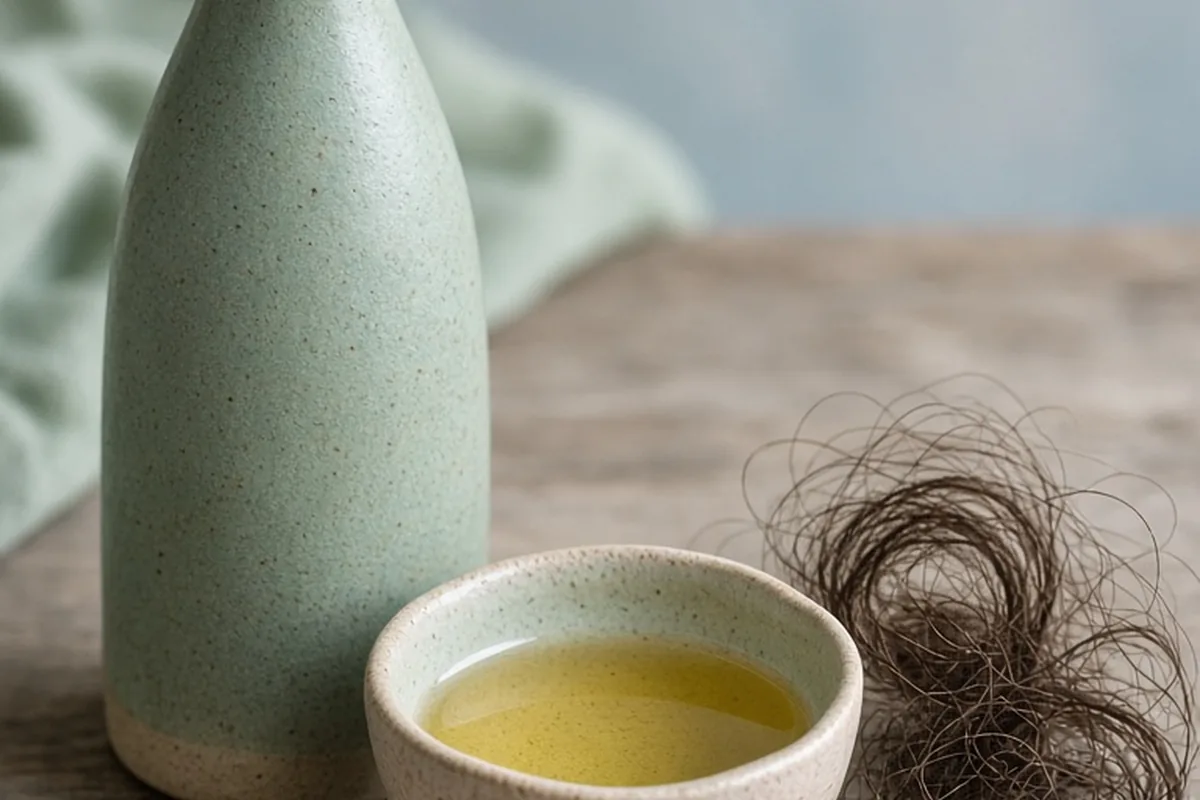
No, oil does not directly moisturize hair tips because oils are hydrophobic lipids that contain no water. True moisture comes only from water or water-based hydrators. However, oils play an essential protective role by lubricating cuticles, reducing mechanical friction, and creating a barrier that seals existing water inside the hair fiber to keep dry ends flexible and resilient.
When hair ends feel coarse, brittle, or perpetually dry, reaching for a bottle of hair oil feels like the most intuitive remedy. Many styling routines promote oil as an all-in-one hydrating cure, yet applying pure oil to chronically dry hair often leaves strands feeling stiff rather than supple. Understanding the mechanical distinction between infusing water into hair and locking that water in place is essential for building a routine that actually preserves length and prevents breakage.
Moisture Versus Sealing: Why Hair Ends Require Water First
In cosmetic chemistry and trichology, moisture refers specifically to water content. The cortex of a human hair strand relies on internal hydrogen-bonded water molecules to maintain elasticity, bend without snapping, and recover its shape after manipulation. Pure oils, whether derived from botanical seeds or mineral sources, consist entirely of fatty acids, triglycerides, esters, or hydrocarbons. Because lipids are naturally water-repellent, an oil contains zero moisture on its own. When you apply oil to bone-dry hair, you are coating the outer surface in a lipid film rather than delivering hydration to the inner cortex.
This distinction explains why individuals who apply generous layers of oil to dry ends often experience worsening brittleness over time. If the hair fiber lacks internal water before oil application, the oil creates an impermeable barrier that prevents environmental humidity and water-based products from penetrating the strand. The result is hair that feels simultaneously greasy on the outside and parched on the inside. To achieve genuine softness, hair tips must first absorb water, a humectant-rich leave-in conditioner, or a water-based tonic before any oil layer is introduced.
The primary mechanical benefit of oil is occlusivity—the capacity to slow down the evaporation of water from within the hair shaft. Because the tips of your hair represent the oldest segment of the strand, they have weathered months or years of washing, UV exposure, heat styling, and physical friction. Their natural outer lipid layer (the 18-methyleicosanoic acid or 18-MEA layer) has largely worn away. Applying a carefully selected oil recreates this protective lipid shield, ensuring that water absorbed during washing remains trapped inside the cortex for longer periods.
How Hair Oils Physically Protect Fragile Tips
Even though oil does not hydrate hair on its own, it is indispensable for maintaining healthy hair tips because it shields against everyday mechanical wear. The outer cuticle layer of the hair consists of overlapping scales that resemble shingles on a roof. On healthy, newly grown roots, these scales lie flat and tight. At the tips, constant rubbing against collars, sweaters, pillowcases, and hairbrushes lifts and chips these scales. When cuticles become rough, adjacent hair strands snag on one another, leading to knots, tearing, and split ends.
Applying a light coating of oil drastically reduces the coefficient of friction along the hair shaft. The lubricant allows strands to glide past one another smoothly during detangling, brushing, and everyday movement. This friction reduction is one of the most reliable ways to preserve hair density over time, as it prevents fragile ends from snapping off prematurely under tension.
Furthermore, certain oils protect hair against a phenomenon known as hygral fatigue. When hair gets wet, the inner cortex swells as it absorbs water; as it dries, it contracts back to its original size. Repeated swelling and contracting cycles can stretch and weaken the cuticle matrix over time. Applying specific oils prior to washing slows down the rate of water absorption, buffering the strand against rapid volume changes and minimizing structural stress.
Penetrating Oils Versus Sealing Oils for Hair Tips
Not all hair oils behave identically when applied to hair ends. Their behavior depends primarily on their molecular size, chemical polarity, and fatty acid composition. Hair oils generally fall into two functional categories: penetrating oils and sealing (or surface-coating) oils. Choosing the wrong category for your specific hair concern can lead to heavy buildup, persistent dullness, or inadequate moisture retention.
Penetrating oils possess small, linear molecular structures and high polarity, which allows them to slip past the outer cuticle and enter the inner cortex of the hair fiber. Coconut oil is the most prominent example, containing high concentrations of lauric acid, a medium-chain fatty acid with a strong affinity for hair proteins. Other oils with notable penetrating capabilities include olive oil, avocado oil, and babassu oil. These oils help reinforce internal structural integrity and reduce protein loss during washing, making them exceptional choices for pre-shampoo treatments or deep conditioning enhancements.
Sealing oils, by contrast, feature larger or non-polar molecular structures that cannot easily penetrate the hair shaft. Instead, they remain on the surface of the cuticle, forming a smooth, hydrophobic shield that locks in moisture and reflects light. Examples include jojoba oil (technically a liquid wax ester that closely mimics human sebum), argan oil, mineral oil, and sweet almond oil. Sealing oils are ideal finishing products for damp or conditioned ends, as they trap hydration within the strand while smoothing rough, lifted cuticles.
Matching Oils to Hair Porosity and Strand Thickness
The effectiveness of using oil on your hair tips depends heavily on two structural characteristics: hair porosity and individual strand diameter. Porosity refers to how easily moisture passes into and out of the cuticle layer, while strand diameter determines how much weight a single hair can support without collapsing into a limp, greasy clump.
High-porosity hair features widely spaced, raised, or damaged cuticles that absorb water almost instantly but lose it just as rapidly. For high-porosity tips, heavier sealing oils or plant butters—such as castor oil, shea butter, or rich avocado oil—are advantageous. These dense lipids physically fill the microscopic gaps between lifted cuticle scales, creating a robust seal that prevents hydration from escaping into dry air. Conversely, low-porosity hair has tightly bound, overlapping cuticles that resist both water absorption and heavy oil penetration.
If you have low-porosity hair, heavy oils will simply sit on the surface, attracting dust, creating sticky buildup, and blocking moisture from entering during subsequent washes. Low-porosity strands thrive on lightweight, dry oils such as jojoba, grapeseed, squalane, or sweet almond oil applied exclusively to damp hair. Fine-textured strands also require ultra-lightweight oils regardless of porosity, as dense lipids will quickly weigh down the hair and compromise natural volume.
The Correct Routine for Applying Oil to Hair Tips
To harness the benefits of oil without creating dehydration or greasy buildup, application technique and timing are critical. The most reliable method is applying oil directly after introducing water-based hydration. This is the foundation of established haircare protocols such as the LOC (Liquid, Oil, Cream) or LCO (Liquid, Cream, Oil) methods. After washing or dampening your hair with clean water or a water-based leave-in spray, distribute a nickel-sized amount of leave-in conditioner to supply water and humectants.
Once the hydrating product is evenly distributed, dispense a very small amount of oil onto your palms. For fine to medium hair, one to three drops is typically sufficient; thicker or coarser textures may require four to six drops. Rub your hands together vigorously to warm and spread the oil across your palms and fingers. Gently work the oil through the bottom two to three inches of your hair, using a downward smoothing motion or praying-hands technique to flatten the cuticle scales.
Avoid applying pure sealing oils directly to the scalp or upper mid-lengths unless you are performing a dedicated pre-shampoo scalp massage meant to be washed out. Concentrating the application strictly on the oldest, most weathered tips prevents root congestion while delivering maximum protection where the hair fiber is weakest. If you need to refresh your ends between wash days, lightly mist the tips with water or a hydrating leave-in tonic before smoothing on a micro-drop of oil.
Common Oil Application Mistakes That Dry Out Hair
A widespread mistake in everyday hair maintenance is using oil as a daily thermal protectant prior to high-heat flat ironing or curling. While specialized silicone- and polymer-based heat protectants are formulated to dissipate high temperatures, raw plant oils have varying smoke points and can conduct intense thermal energy directly onto fragile cuticles. Applying pure botanical oil immediately before touching a 400-degree hot tool to your ends can scorch the hair fiber, accelerating irreversible protein breakdown and split ends.
Another common pitfall is continuous oil layering without adequate clarifying. Over the course of a week, repeatedly applying oil to hair ends without cleansing creates a dense lipid buildup that repels all ambient moisture. Over time, the hair becomes progressively stiffer, duller, and more prone to snapping. If your ends feel slick yet crunchy or stiff when bent, product buildup is likely suffocating the strand.
To resolve this, incorporate a gentle clarifying shampoo into your routine every two to four weeks, depending on your wash frequency and product usage. A thorough cleanse strips away oxidized lipids, product residues, and environmental debris, resetting the cuticle so that water-based conditioners can once again penetrate the cortex effectively.
Distinguishing Between Parched Ends and Irreversible Split Ends
It is important to maintain realistic expectations regarding what oils can achieve on compromised hair tips. While oil can temporarily smooth dry, weathered cuticles, it cannot permanently repair hair fibers that have physically split or fractured. A split end occurs when the protective cuticle is completely stripped away, allowing the internal cortical fibers to unravel like the frayed end of a rope.
Certain styling oils containing film-forming ingredients or dense silicones can temporarily glue frayed fibers together, masking the appearance of split ends until the next wash. However, this is purely a cosmetic concealment. Once the structural integrity of the hair shaft is broken, the split will continue to migrate upward along the strand if left unaddressed, eventually causing breakage higher up the hair shaft.
If your ends feel rough, catch incessantly on fine-tooth combs, or display visible white dots and bifurcated tips, the only permanent remedy is a precise trim using sharp professional hair shears. Once the damaged ends are cleanly removed, introducing a consistent hydrating and oil-sealing routine will protect the newly exposed, healthy ends from developing premature splits.
Frequently asked questions
Can I put oil on dry hair tips every day?
Applying pure oil to dry hair every day can lead to heavy buildup that eventually blocks moisture from entering the strand. If your ends feel dry between washes, lightly mist them with water or a water-based leave-in spray first, then smooth on a single drop of lightweight oil to seal the hydration in.
Which oil is best for fine, easily weighed-down hair ends?
Lightweight, non-greasy oils with low viscosity are best for fine hair. Squalane, jojoba oil, and grapeseed oil provide smooth cuticle lubrication and moisture retention without leaving a heavy, limp residue on delicate strands.
Is it better to apply oil to wet or damp hair?
Applying oil to damp, towel-dried hair is generally most effective. Damp hair has already absorbed water into the cortex, allowing the oil to lock that hydration inside while lubricating the cuticles as the hair air-dries or is gently styled.
Does coconut oil moisturize hair ends better than other oils?
Coconut oil does not contain water, so it does not technically moisturize hair. However, because its lauric acid penetrates the hair shaft, it helps prevent protein loss and reduces moisture loss better than many surface-only oils when used as a pre-wash or post-wash treatment.
Your next step
Assess your hair tips today: if they feel dry or brittle, apply a water-based leave-in conditioner first, then seal the ends with two drops of lightweight oil like jojoba or squalane.