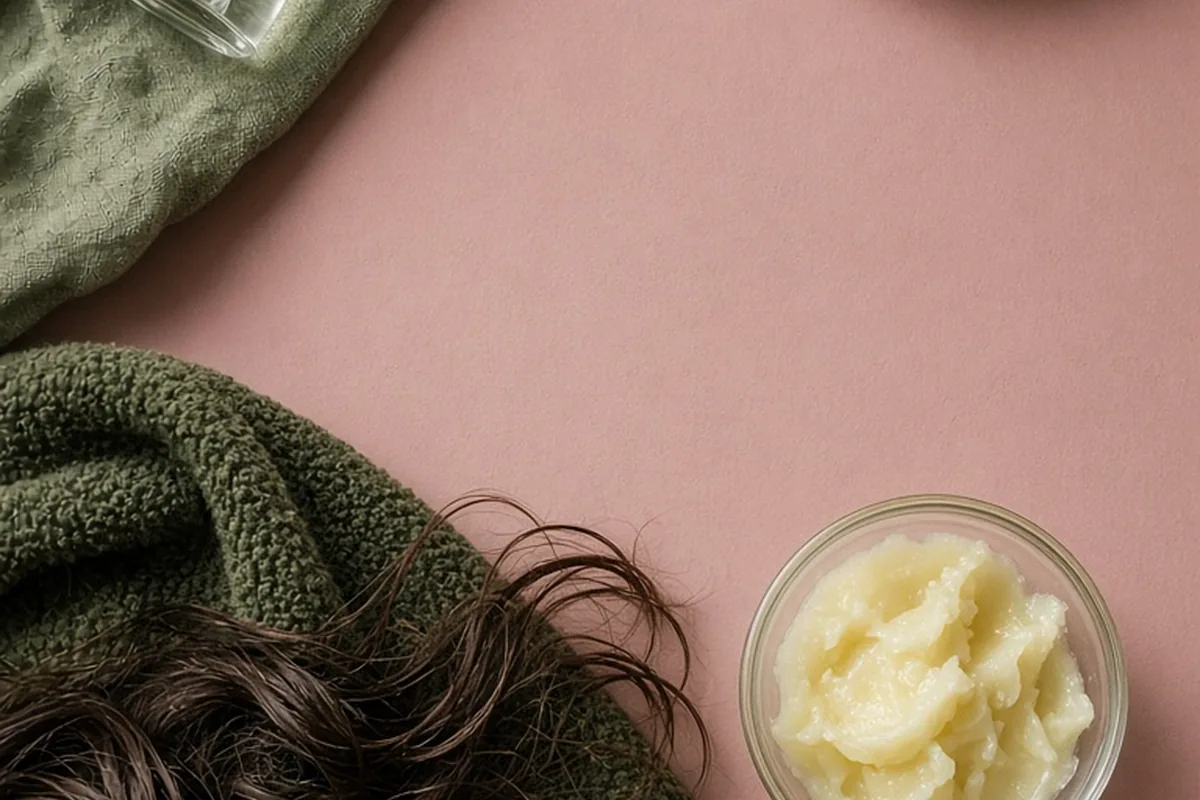
Water supplies hydration to the inner hair shaft, but it does not moisturize hair on its own. For women over 40, natural sebum production drops significantly, meaning hair lacks the protective lipid barrier needed to lock that water inside. Wetting hair without an emollient or occlusive sealant causes rapid evaporation, leaving mature strands rougher, more fragile, and drier than before.
Many women find that the hair routines that kept their locks soft and manageable in their twenties and thirties stop working once they reach their forties.
How Water and Hair Fibers Interact in Women Over 40
Hair is naturally hygroscopic, which means it readily absorbs water from the environment, from the shower, or from a spray bottle. When water penetrates the outer cuticle layer, it enters the inner cortex and causes the strand to swell. In younger hair, an intact lipid barrier known as the 18-methyl eicosanoic acid layer repels excess external moisture while holding an ideal amount of internal moisture in balance. As women cross forty, hormonal shifts associated with perimenopause and menopause trigger noticeable structural changes in the hair follicle and scalp environment.
Estrogen levels begin to fluctuate and decline, which typically reduces the activity of the sebaceous glands on the scalp. Without this natural protective coating of sebum, individual hair strands become increasingly porous. When mature hair absorbs water, it swells quickly, but because the lipid protective layer is diminished, that water evaporates just as rapidly into the ambient air. This continuous cycle of swelling and contracting stretches and weakens the delicate protein fibers inside the hair shaft. Rather than softening the hair, frequent exposure to water without a lipid barrier leads directly to brittleness, split ends, and a dull, coarse texture.
The Difference Between Hydrating Strands and Sealing Moisture
In discussions of hair care, the terms hydration and moisture are often used interchangeably, but they perform two distinct physical functions. Hydration refers specifically to the infusion of water into the core of the hair fiber. Moisture, in the context of cosmetic chemistry and hair physiology, refers to the retention of that water using lipids, oils, esters, and fatty alcohols. Water provides flexibility and elasticity to the inner cortex, but water molecules cannot remain bound to keratin proteins without an external seal.
For women managing age-related hair changes, understanding this distinction is the key to preventing chronic dryness. Applying pure water delivers hydration, but without a subsequent moisturizing step, that hydration vanishes within minutes. Effective hair moisturizers combine water with humectants, which attract water molecules, and emollients or occlusives, which form a hydrophobic shield over the cuticle. If you rely solely on water mists or frequent rinsing to refresh dry hair, you are hydrating without moisturizing, which accelerates moisture depletion.
Why Spritzing Plain Water Leaves Mature Strands Drier
A common piece of daily advice for dry or textured hair is to mist strands with plain tap water each morning to reshape curls or calm morning frizz. While this technique may work on younger hair that still possesses an ample natural oil coating, it almost always backfires on aging hair. When you mist dry, unsealed strands, the water droplets sit on the surface and lift the edges of the cuticle scales. As the dry room air draws the water molecules away, it pulls out whatever trace internal moisture was already resting within the hair shaft.
This phenomenon often leads to a condition known to cosmetic chemists as hygral fatigue, where repeated wetting and drying degrades the structural integrity of the hair cuticle. Over time, the raised cuticle scales fail to lie flat again, creating friction between neighboring strands. Women often mistake this resulting rough texture for a sign that their hair simply needs more water, creating a frustrating cycle of misting, drying, cuticle degradation, and worsening breakage.
Building an Effective Moisture Routine for Aging Hair
To properly hydrate and moisturize mature hair, you must apply products in an order that respects the physics of water retention. The foundation begins on clean, damp hair where water is introduced alongside a film-forming humectant. Ingredients like glycerin, aloe vera leaf juice, panthenol, and hyaluronic acid help hold onto water molecules within the outer layers of the hair. These ingredients ensure that the water you apply during washing or styling does not immediately dissipate.
Immediately following your humectant or leave-in conditioner, you must introduce an emollient or lightweight oil to seal the cuticle layer. Emollients smooth down lifted cuticle shingles, filling in the gaps where natural sebum is no longer present. Plant oils containing oleic and linoleic acids, such as argan, jojoba, or squalane, mimic the natural lipid structure of scalp oils. By smoothing a small amount of oil or a lipid-rich styling cream over damp strands, you trap the water inside the shaft, preserving softness and elasticity throughout the day.
Navigating Wash Day Water Quality and Temperature
The characteristics of the water you use during cleansing play an overlooked role in how dry or moisturized your hair feels afterward. Hot water dissolves the natural oils remaining on your scalp and strips away the protective lipid layer of the hair fiber far more aggressively than lukewarm water. For women over forty whose sebum output is already reduced, scalding showers can leave the hair shaft completely vulnerable to immediate dehydration and frizz once you step out.
Water hardness is another critical variable. Municipal tap water containing high levels of dissolved calcium, magnesium, and mineral salts forms an insoluble film over the hair cuticle. This mineral buildup blocks beneficial conditioners and leave-in treatments from penetrating the strand, while simultaneously preventing natural moisture from remaining inside. If you live in an area with hard tap water, installing an effective shower filter or incorporating a gentle chelating rinse once a month can restore your hair cuticle's ability to absorb and hold real conditioning agents.
Selecting Emollients and Sealants Based on Strand Thickness
Because hormonal shifts can cause some women's hair to thin into fine strands while causing others to develop coarse, wiry silver textures, a single moisturizing formula does not suit everyone over forty. Women whose hair diameter has become finer require featherweight sealants that will not weigh down volume or leave a greasy sheen. For fine strands, lightweight water-based leave-in conditioners containing panthenol followed by a single drop of hemi-squalane or jojoba oil provide sufficient moisture retention without collapse.
Conversely, women dealing with coarse, resistant silver hairs or dense natural textures require richer occlusive agents. Gray hair fibers often lack the core melanin granules that contribute to strand suppleness, making them naturally stiffer and more prone to moisture loss. Heavier plant butters like shea or murumuru, combined with dense oils like castor or avocado, provide the mechanical weight and surface sealing needed to soften wiry strands. Evaluating your current strand diameter in natural light helps you choose the correct lipid density for your personal hair routine.
Illustrative Scenarios
Daily Water Spritzing on Thinning Waves
Diane, a forty-eight-year-old teacher, noticed her shoulder-length wavy hair turning rough and frizzy at the crown. Assuming her hair was simply dehydrated from indoor heating, she kept a fine-mist water spray bottle on her dresser and spritzed her mid-lengths and ends every morning before brushing. Within three weeks, her hair felt like rough straw and snapped easily whenever she tied it into a ponytail. Diane consulted a stylist specializing in mature hair, who explained that the unsealed tap water was evaporating rapidly and stripping her hair cuticles of their diminishing natural lipids. Diane replaced the plain water spray with a water-based leave-in conditioner followed by two drops of jojoba oil smoothed over damp ends. Her frizz diminished noticeably within two weeks.
Key point: Water evaporates quickly without a lipid seal, so replace plain misting with a leave-in conditioner topped by a light protective oil.
Hard Water Buildup on Developing Silver Curls
Miriam, a fifty-three-year-old accountant transitioning to her natural silver curls, struggled with persistent dryness despite applying rich hair masks weekly. Her hair felt constantly parched, leading her to rinse it under warm shower water daily to restore suppleness, but her strands only became stiffer and more tangled. Realizing her municipality had hard water, Miriam recognized that mineral deposits were bonding to her cuticles, creating an impermeable barrier that prevented deep conditioning treatments from absorbing. She installed a showerhead filter and switched from daily warm-water rinses to washing twice weekly with lukewarm water, finishing with an emollient curl cream on wet hair. Her silver curls regained their bounce and softness once the mineral barrier and constant wetting stopped.
Key point: Frequent rinsing in hard water accumulates mineral deposits that block moisture; use filtered water and limit wetting to actual wash routines.
Frequently asked questions
Can drinking more water improve hair dryness after forty?
Drinking adequate water supports overall follicle health and cellular function, but it cannot directly lubricate the dead keratin fibers that make up your hair lengths. Once a hair strand grows past the scalp surface, its moisture levels depend entirely on topically applied lipids and proper mechanical care.
Should women over forty stop wetting their hair every day?
Yes, unless you are actively washing and conditioning, wetting mature hair daily under the shower or with a spray bottle is generally counterproductive. Frequent wetting leads to hygral fatigue and cuticle damage because mature strands lack sufficient natural sebum to protect against repeated expansion and rapid evaporation.
Is leave-in conditioner better than water for refreshing mature hair?
A formulated leave-in conditioner is significantly better than plain water for refreshing aging hair. These products contain balanced humectants to attract hydration along with emollients and fatty alcohols that seal the cuticle, preventing the moisture from evaporating into the air.
How do gray hairs handle water differently than pigmented strands?
Gray hairs have a coarser, less pliable outer cuticle layer and often possess higher porosity due to structural changes inside the cortex. While they absorb moisture quickly, they also lose it just as fast, requiring richer conditioning creams and sealing oils than pigmented strands.
Your next step
Examine your hair products today to confirm that every hydrating step with water or mist is immediately followed by a cream or oil containing real emollients to lock in moisture.