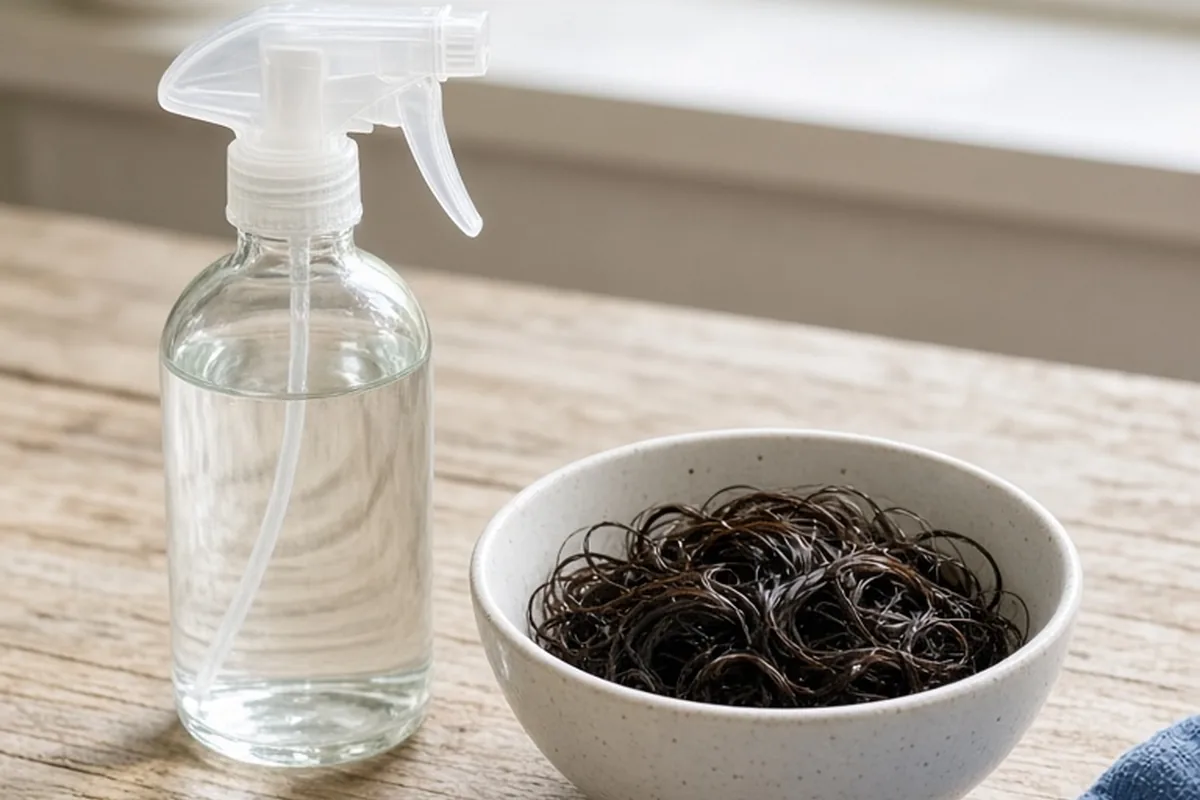
Water is the foundation of hair hydration, but water alone cannot keep hair moisturized. Without emollients or occlusive agents to trap moisture within the cortex, plain water quickly evaporates. Frequent wetting without sealing strips natural sebum, lifts the cuticle, and leads to brittle strands, frizz, or structural damage. True hair moisture requires delivering water into the strand and locking it in with properly formulated conditioning products.
Many hair care routines treat a daily spritz of plain water as the quickest cure for parched curls, waves, or straight strands. While water provides the fundamental moisture that keratin fibers require for flexibility, relying solely on water often leaves hair feeling stiffer, rougher, and more prone to breakage than before.
How Water Interacts with the Hair Shaft and Cuticle
Hair is composed primarily of a tough, fibrous protein called keratin, organized into an inner cortex and protected by an outer layer of overlapping scales known as the cuticle. The flexibility and elasticity of each strand depend on temporary hydrogen bonds formed within the keratin structure. Water enters the porous cortex, binds to these proteins, and temporarily softens the fiber, making it supple and manageable. In this biological sense, water is the only substance that truly hydrates hair, as dry oils, butters, and silicones contain no water molecules of their own.
However, the physical structure of hair does not naturally hold onto pure water indefinitely. As relative humidity shifts and ambient air circulates around the head, unbounded water inside the hair cortex evaporates rapidly through the cuticle layer. If the cuticle scales are raised or damaged, this evaporation happens within minutes. When water evaporates without a protective lipid layer to slow the process, it carries away microscopic traces of the hair's natural surface lipids. The result is a fiber that feels even more depleted and brittle than it was prior to wetting.
Mistake 1: Mistaking Daily Water Spritzing for Deep Hydration
One of the most widespread hair care mistakes is treating a spray bottle filled with tap water as a daily moisturizer. When strands feel dry or frizzy in the morning, spraying them with plain water provides an immediate illusion of softness because the hair fiber swells and gains temporary pliability. Yet as soon as that moisture meets room-temperature air, rapid evaporation begins. This cycle of wetting and drying forces the hair shaft to repeatedly expand and contract, lifting the edges of the cuticle and accelerating moisture loss throughout the day.
To break this dehydrating cycle, any water introduced to dry strands must be paired with film-forming conditioning agents. Instead of plain water, refreshing hair calls for a formulated leave-in mist containing humectants like glycerin, aloe vera, or panthenol, combined with light conditioning ingredients. These compounds hold water molecules close to the shaft while leaving a micro-barrier that prevents rapid evaporative loss, keeping strands supple until your next full wash cycle.
Mistake 2: Applying Pure Oils and Butters Over Dry Hair Strands
A common point of confusion in hair care is the fundamental difference between a moisturizer and a sealant. Plant oils such as coconut, jojoba, argan, and castor oil, as well as dense plant butters like shea or cocoa butter, are lubricants and occlusives rather than hydrators. They contain fatty acids that coat the hair and smooth down rough cuticle scales, but they contain zero water content. When applied to completely dry hair, oils cannot impart hydration; instead, they create an impermeable barrier over a parched fiber.
Applying a heavy oil directly to dry hair seals atmospheric moisture out, preventing any subsequent leave-in product or water vapor from entering the cortex. Over several days, hair coated in oil without underlying hydration becomes stiff, greasy on the outside, and brittle on the inside. To use oils effectively, always apply them to damp hair that has already absorbed water and a water-based leave-in conditioner. In this sequence, the oil fulfills its intended purpose by locking the existing water inside the strand.
Mistake 3: Misjudging Hair Porosity When Wetting and Sealing
Porosity refers to how easily your hair cuticles open and close to absorb and retain moisture. Applying water without factoring in your hair porosity often leads to persistent dryness or heavy product buildup. Low-porosity hair features tightly bound, flat cuticle scales that resist water penetration. When you spray low-porosity hair with cool water, the droplets tend to bead up and sit on the surface rather than entering the cortex, leaving the inner fiber completely dry.
Conversely, high-porosity hair has raised, chipped, or naturally open cuticles that absorb water almost instantly, but lose it just as fast. For low-porosity hair, applying warm water or gentle indirect heat during conditioning helps lift stubborn cuticles, allowing hydration to enter before being sealed with lightweight emollients. High-porosity hair requires richer leave-in conditioners, restorative protein treatments, and heavier sealants to physically patch the gaps in the cuticle and prevent the rapid escape of absorbed water.
Mistake 4: Inducing Hygral Fatigue Through Excessive Wetting and Soaking
While insufficient water leaves hair brittle, excessive exposure to water causes a destructive condition known as hygral fatigue. Every time hair becomes thoroughly wet, the inner cortex absorbs water and swells, pushing the cuticle outward. When the hair dries, the cortex shrinks back to its original size. If hair is kept wet for hours on end, washed excessively, or repeatedly soaked without adequate protein structure to support it, this constant expansion and contraction weakens the cell membrane complex binding the hair together.
Hair suffering from hygral fatigue feels gummy, mushy, or limp when wet, stretches excessively without snapping back into shape, and breaks easily during detangling. To protect strands from this structural stress, avoid prolonged soaking, overnight wet conditioning, and wearing sopping wet styles for extended periods. Incorporating balanced rinse-out conditioners with hydrolyzed proteins helps reinforce the structural matrix of the hair fiber, giving it the tensile strength required to handle normal hydration cycles.
Mistake 5: Washing with Hard Water and Neglecting Clarifying Washes
The chemical composition of your tap water plays a major role in whether washing hydrates or harms your hair. Hard water contains elevated concentrations of dissolved minerals, primarily calcium, magnesium, and iron. As you wash your hair, these mineral ions attach to the negatively charged surface of the hair shaft, forming a persistent, chalky film that binds tightly to the cuticle. This mineral shield prevents water molecules and moisturizing conditioners from penetrating into the cortex.
Over time, washing with untreated hard water leaves strands feeling dry, tangly, and straw-like, regardless of how many deep conditioning treatments you apply. Standard moisturizing shampoos cannot break the bond between these mineral deposits and the hair shaft. Resolving this issue requires using a dedicated chelating shampoo periodically to strip away mineral buildup, paired with an effective showerhead filter designed to reduce hardness and chlorine exposure.
Designing a Balanced Water-and-Seal Hair Routine
Achieving lasting hair hydration requires a deliberate, multi-step approach that respects the physics of moisture absorption and retention. The foundation of any successful moisturizing routine begins on clean, clarified hair during wash day. Clean hair allows clean water to fully penetrate the cortex. Once the hair is saturated with warm water, applying a rinse-out conditioner with both humectants and fatty alcohols works to deposit conditioning agents directly onto the opened cuticle scales.
After rinsing, the sealing phase begins while the hair is still damp. Depending on your hair texture and density, choose a systematic layering method such as the Liquid-Oil-Cream (LOC) or Liquid-Cream-Oil (LCO) approach. In these methods, the liquid component is water or a water-based leave-in conditioner, the cream provides emollient slip and softness, and the oil or butter acts as the final sealant to trap the liquid beneath the cuticle. Tailoring the weight of these layers to your individual strand thickness ensures all-day hydration without weighed-down, greasy buildup.
Frequently asked questions
Can misting my hair with water every morning replace a leave-in conditioner?
No, plain water evaporates quickly and can strip natural protective oils from the cuticle. A formulated leave-in conditioner contains water alongside humectants and emollients that actively bind moisture to the hair shaft and slow evaporation.
How can I tell if my hair is dry or experiencing hygral fatigue?
Dry hair typically feels rough, coarse, and brittle, snapping quickly when stretched. Hair with hygral fatigue feels overly soft, mushy, or gummy when wet, stretching excessively without bouncing back and breaking under minimal tension.
Does applying oil to wet hair trap water effectively?
Yes, applying a small amount of oil to damp, freshly conditioned hair helps seal water inside the cortex. However, applying oil to bone-dry hair creates a barrier that prevents future moisture from getting in.
How often should I clarify my hair to ensure water can penetrate?
Most hair types benefit from a clarifying or chelating shampoo once every three to four weeks to remove product buildup, silicones, and hard water minerals. If you use heavy styling butters or live in an area with very hard water, clarifying every two weeks may be necessary.
Your next step
Evaluate your current hair porosity, stop spraying plain water onto dry strands, and transition to applying a water-based leave-in conditioner sealed with a light oil while your hair is still damp.