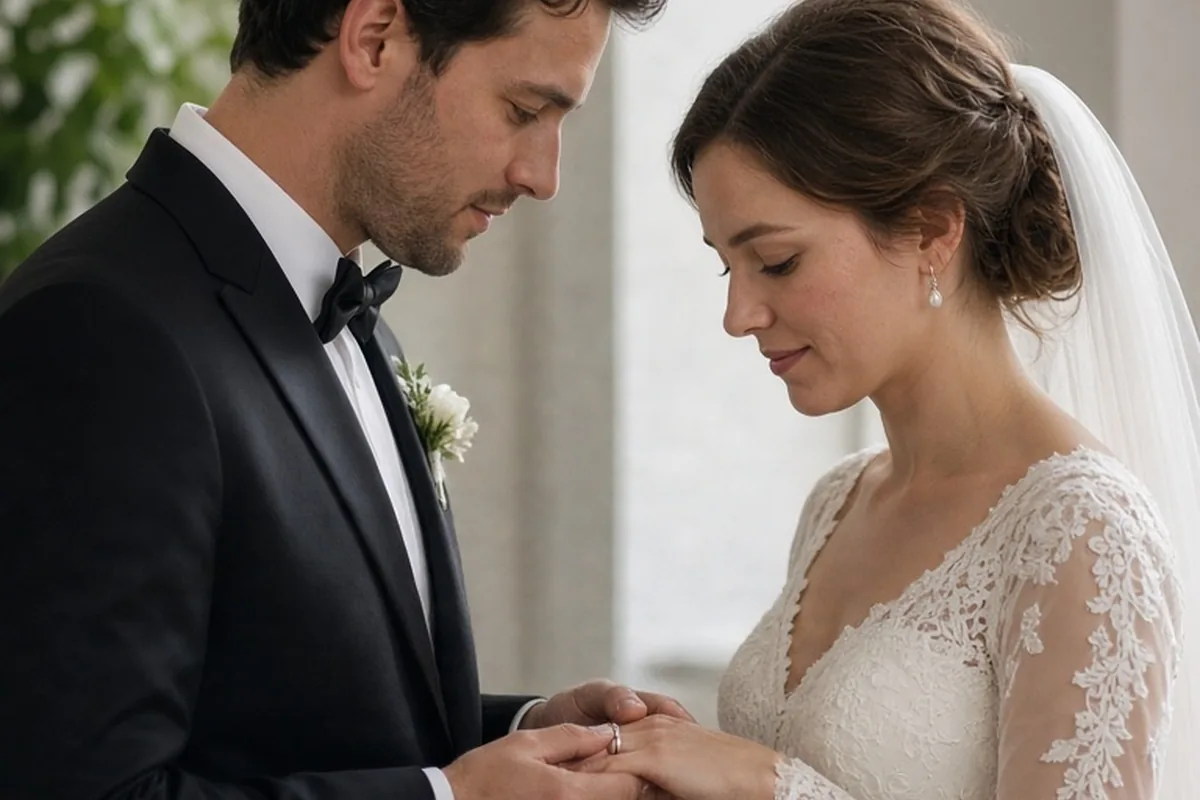
The groom puts the wedding ring on the fourth finger of the bride's left hand by gently holding her hand from underneath and sliding the band smoothly over the knuckle. Facing slightly toward guests or the photographer ensures a clear view, while pausing at the base of the finger allows for a calm, meaningful exchange and great ceremony photos.
The exchange of wedding bands represents one of the most photographed and emotionally resonant points in any wedding ceremony. While the gesture feels intuitive in concept, pre-ceremony jitters, tight bands, and awkward angles can create unnecessary stress in the moment.
Understanding Hand Placement and Body Angles
In traditional Western ceremonies, the groom places the wedding band on the fourth finger of the bride's left hand, commonly known as the ring finger. To perform this action gracefully, position yourself slightly turned toward the officiant and your partner rather than squaring your back directly to the guests. Extend your left hand to support the underside of the bride's left hand, cupping her fingers lightly from below. This provides physical stability, particularly if either of your hands feels slightly shaky from adrenaline or excitement.
Use your right hand to slide the ring down her finger. Avoid grasping her hand from the top, which blocks the sightline for your guests and prevents the photographer from capturing a clean shot of the band. If you hold her hand palm-up or at a soft forty-five-degree angle toward the audience, the ring remains visible throughout the gesture. A common trade-off to consider is ceremony staging: standing completely open to the crowd can sometimes feel unnatural or detached from your partner, so aim for a natural semi-profile that maintains intimate eye contact while keeping your hands visible.
Navigating the Engagement Ring Placement
A practical logistical question that arises before the ceremony is what the bride should do with her engagement ring. Tradition suggests that the wedding band sits closest to the heart at the base of the finger, with the engagement ring stacked on the outside. To achieve this during the ceremony without fumbling, the bride can temporarily move her engagement ring to her right hand before walking down the aisle, leaving her left ring finger completely bare for the groom.
Alternatively, if the engagement ring does not fit comfortably on the right hand due to slight differences in finger size, the bride can leave the ring on her left hand and allow the groom to slide the wedding band over it. After the ceremony or during the post-ceremony photo session, she can easily switch the order of the two rings in private. Both methods work well, but deciding on the approach in advance eliminates hesitation and awkward adjustments at the altar.
How to Handle a Ring That Resists or Sticks
Warm weather, elevated heart rates, and humidity often cause fingers to swell slightly on the wedding day. If you attempt to slide the band on and encounter resistance at the knuckle, avoid forcing or shoving the ring down with excessive pressure. Forcing the ring can cause discomfort, draw unwanted attention to the snag, and heighten nervous tension for both of you.
Instead, use a gentle, twisting motion to guide the band over the wider part of the knuckle. If the band stops halfway and does not easily glide further, simply leave it resting comfortably at the knuckle for the duration of the ceremony. Your partner can subtly adjust it later once her hands cool down, or you can finish sliding it on together once you step away from the altar. Prioritizing a calm, graceful reaction keeps the ceremony flowing smoothly without making a minor physical snag feel like a disruption.
Coordinating the Movement with Spoken Vows
The exchange of rings usually coincides with specific spoken promises, such as repeating phrases after the officiant or reciting personal vows. A frequent challenge for grooms is multitasking: trying to hold a microphone, remember vocal cues, and slide a small metal ring into place simultaneously can feel overwhelming.
To make this sequence effortless, practice dividing the action into distinct beats. Begin sliding the ring gently over the tip of her finger as you start speaking, and bring it to rest at the base of the finger just as you conclude your final phrase. If your officiant holds the microphone for you, keep both hands free for the ring. If you must hold a card or paper for vows, hand it off to the best man or officiant before you take the ring, ensuring your full attention remains on the physical act and the meaning behind your words.
Coordinating the Hand-Off with the Best Man
A smooth ring exchange depends heavily on how the ring is stored and transferred right before the moment arrives. In most traditional ceremonies, the best man keeps the bride's wedding band secure in his jacket pocket. Rather than leaving the ring loose where it could fall through a pocket seam, it should be kept in a slim box or securely slipped into a designated, accessible interior pocket.
When the officiant asks for the rings, turn smoothly toward the best man to receive it. Take a brief, conscious second to establish a firm grip on the band with your thumb and forefinger before turning back to your partner. If a young ring bearer carries the pillow down the aisle, ensure the bands on the pillow are tied with decorative faux rings or loose ribbon that releases instantly without knotting, while the real rings remain safely in the best man's pocket until the exchange.
Managing Ceremony Nerves and Sweaty Palms
Physiological reactions to public speaking and intense emotion are completely normal during a wedding. Sweaty palms or minor hand tremors can make gripping a polished metal band feel precarious. Acknowledging that these reactions happen helps take the pressure off performing perfectly.
Take a slow, deep breath through your nose before extending your hands. You can discreetly touch your fingertips to your trouser fabric before stepping forward to ensure a dry grip. Most importantly, give yourself permission to slow down. Wedding ceremonies tend to feel like they are moving at double speed to the couple; consciously taking an extra two or three seconds to place the ring creates a grounded, memorable moment and prevents rushed mistakes.
Carrying the Symbol into the First Year of Marriage
While placing the ring on your partner's finger takes only a few seconds, the gesture sets the tone for how you navigate shared commitments. The ring serves as an enduring physical reminder of the shared values and daily support you promised during the ceremony. In the first year of marriage, daily routines and practical challenges will inevitably test your patience and communication skills.
Viewing the band not just as a ceremonial relic, but as an ongoing choice to show up for your partner, helps maintain emotional connection. When friction arises over finances, household responsibilities, or family adjustments, taking a moment to look at your hands can serve as a grounding reminder of the mutual respect and devotion you established at the altar.
Frequently asked questions
Which finger does the groom put the wedding ring on?
The groom places the wedding ring on the fourth finger of the bride's left hand in traditional Western ceremonies. Some cultural and religious traditions place the band on the right hand instead.
What should the groom do if the ring does not fit past the knuckle?
Do not force the ring down if it meets resistance. Gently wiggle it slightly or let it rest at the knuckle until the ceremony concludes, after which it can be adjusted comfortably.
Does the wedding band go above or below the engagement ring?
Tradition holds that the wedding band sits closest to the hand at the base of the finger, with the engagement ring stacked on top. The bride can wear her engagement ring on her right hand during the ceremony to accommodate this.
Your next step
Take a moment during your wedding rehearsal to practice holding hands at a gentle angle and guiding the ring into place so you feel confident and relaxed on the big day.