Hair breakage for fine hair occurs because each individual strand has a narrower diameter and fewer protective cuticle layers than medium or coarse hair, leaving its internal cortex vulnerable to friction, tension, heat, and chemical stress. Stopping fine hair breakage requires balancing lightweight hydration with gentle structural proteins, switching to wide-tooth detangling tools on conditioned hair, using protective silk accessories, keeping thermal styling temperatures low, and trimming split ends regularly before fractures travel upward.
Caring for fine hair requires a fundamentally different strategy than managing thicker textures. Even when you have high hair density with thousands of individual strands, the small diameter of each strand makes it inherently delicate and quick to snap under routine physical pressure.
Why Fine Hair Strands Are Vulnerable to Snapping
The fundamental vulnerability of fine hair lies in its physical architecture. Every human hair strand consists of an outer protective cuticle layer made of overlapping scales, an inner cortex that provides strength and elasticity, and sometimes a central core called the medulla. Fine hair strands possess significantly fewer cuticle layers than medium or coarse strands and frequently lack a medulla entirely. This structural difference means that the cortex in fine hair has minimal protective shielding against daily friction, environmental exposure, and styling habits. When stress is applied, the force required to fracture a fine strand is substantially lower than that needed to break a thicker hair.
Understanding this vulnerability helps clarify the crucial difference between normal shedding and genuine hair breakage. Shedding is a natural part of the biological hair growth cycle where complete strands release directly from the follicle, identifiable by a tiny white bulb at the root end. Breakage, by contrast, happens when a strand fractures anywhere along the shaft, resulting in uneven lengths, split ends, frayed tips, and excessive short pieces accumulating on your clothing or styling tools. Recognizing breakage early allows you to modify your routine before cumulative structural damage creates widespread thinning and uneven volume across your perimeter.
Washing and Conditioning Routines That Protect Delicate Strands
Daily or frequent cleansing routines can unintentionally accelerate breakage if fine strands are handled aggressively while wet. Wet hair swells with water, temporarily lifting the cuticle scales and stretching the internal hydrogen bonds, which leaves fine hair in its most fragile state. When washing, apply shampoo primarily to the scalp and roots where sebum, sweat, and product residues accumulate. Avoid gathering your lengths into a pile on top of your head, as the friction generated by scrubbing lengths against each other creates micro-tears in the delicate cuticle. Instead, allow the suds to run down the mid-lengths and ends naturally as you rinse with lukewarm water.
Conditioning requires a careful balance between providing sufficient slip and avoiding heavy residues that weigh fine hair down. Focus conditioner application strictly on the mid-lengths and ends, working the product through with your fingers to smooth raised cuticles without coating the scalp. Look for lightweight rinse-out formulas containing ingredients like jojoba esters, cetyl alcohol, or light botanical extracts rather than heavy butters or dense mineral oils that cause fine strands to clump together and snap under their own weighed-down tension. Periodically using a gentle clarifying cleanser prevents product buildup from creating surface roughness that catches on adjacent strands.
Balancing Protein and Moisture in Fine Hair Formulations
Maintaining structural integrity in fine hair depends heavily on preserving the harmony between moisture and protein. Hair needs moisture to remain flexible and pliable, preventing the strand from becoming brittle when bent or brushed. At the same time, fine hair relies on protein to reinforce weak areas in the cortex where keratin bonds have eroded from styling or environmental wear. When fine hair lacks moisture, it snaps under minimal stretch and feels rough; when it lacks protein, it feels overly soft, stretchy, mushy when wet, and fails to hold any structural shape.
However, fine hair is exceptionally sensitive to protein overload. Applying heavy keratin treatments or intensive reconstructive masks too frequently can deposit excess protein onto the narrow hair shaft, causing strands to become stiff, board-like, and prone to catastrophic snapping under normal tension. For fine textures, prioritize products with hydrolyzed proteins, such as hydrolyzed silk, wheat, or quinoa, because these smaller molecules can integrate smoothly into cuticle gaps without forming a rigid outer shell. Alternate between lightweight moisturizing conditioners and mild protein-infused masks once every few weeks, adjusting your cadence based on how supple the strands feel between washes.
Safe Detangling and Drying Techniques to Prevent Wet Hair Damage
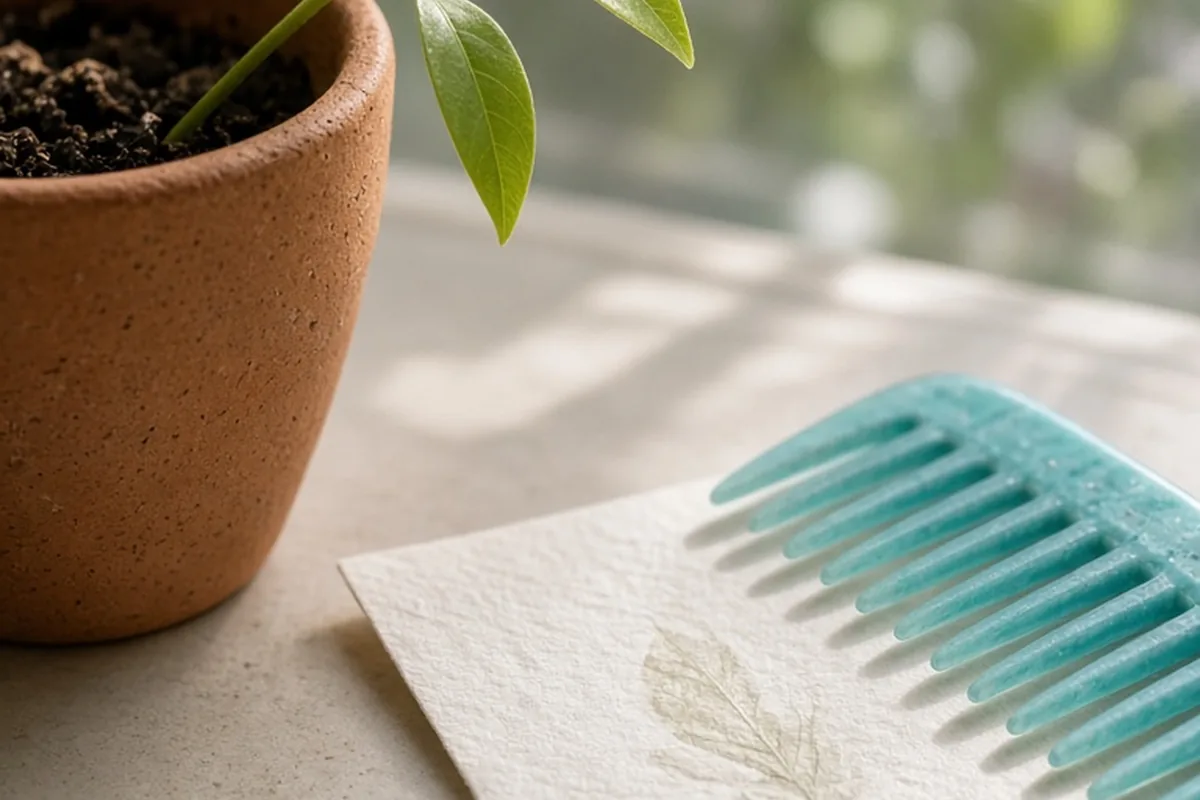
The mechanical act of detangling is one of the most common sources of mid-shaft breakage for fine hair. Ripping a fine-toothed comb or dense paddle brush through damp tangles stretches the elastic cortex beyond its recovery point, leading to immediate fracturing. Always detangle fine hair only when it has been treated with a high-slip conditioner or a dedicated leave-in detangling spray. Use a wide-tooth comb or a brush designed specifically for wet hair featuring widely spaced, flexible bristles that yield when encountering resistance rather than forcing knots apart.
Always adopt a bottom-up detangling method. Start by gently releasing knots at the very tips of your hair, working in small sections, before moving your comb upward toward the mid-lengths and eventually the roots. When transitioning to drying, replace rough terrycloth towels, which have coarse woven loops that snag fragile cuticle edges. Instead, gently squeeze excess moisture out of your hair using a smooth microfiber towel or a soft cotton t-shirt. Avoid aggressive wringing or rubbing motions, which disrupt the cuticle alignment and leave individual fine strands weakened before styling even begins.
Heat Styling Safeguards and Mechanical Stress Reduction
Thermal tools present a severe risk to fine hair because high temperatures rapidly degrade the keratin proteins within the thin cortex and vaporize essential internal moisture. If you use blow dryers, curling irons, or flat irons, always apply a silicone- or polymer-based heat protectant thoroughly from mid-lengths to ends beforehand. These ingredients create a thin protective barrier that slows thermal transfer and reduces cuticle friction. Keep hot tools on the lowest effective temperature setting, rarely exceeding medium heat ranges, and never apply direct iron heat to damp or unconditioned fine hair.
Everyday mechanical friction from lifestyle accessories also contributes heavily to chronic breakage around the crown, nape, and hairline. Standard elastic hair ties with metal closures or abrasive elastic threading cut directly into fine hair shafts when wrapped tightly. Replace these with smooth silk or satin scrunchies, spiral plastic coils, or gentle claw clips, and avoid wearing high-tension ponytails or tight buns in the exact same spot daily. Additionally, sleeping on a smooth satin or silk pillowcase minimizes the overnight friction that causes tangles, allowing delicate fine strands to glide freely as you shift positions during sleep.
Managing Chemical Services and Regular Trimming Schedules
Chemical processing—including bleaching, permanent color lifting, relaxing, and chemical straightening—substantially alters the internal disulfide bonds of the hair shaft. Because fine hair has a much smaller cortex volume, chemical processing penetrates deeper and compromises structural integrity much faster than it does on coarse hair. If you choose to color or bleach fine hair, consult with a professional colorist who can adjust developer strength, use bond-building additives to protect structural linkages, and apply localized glosses or demi-permanent dyes that deposit color without opening the cuticle excessively.
Even with pristine care routines, the ends of fine hair will eventually wear down from environmental exposure and friction against clothing. Once a strand develops a split end, the fracture naturally travels upward along the shaft, splitting the hair into weaker segments that snap off unpredictably. Scheduling routine dusting or micro-trims every six to ten weeks removes these microscopic splits before they travel upward into healthy hair. Consistent micro-trims maintain dense, blunt perimeters and preserve overall hair health without sacrificing noticeable overall length.
Frequently asked questions
How can you tell the difference between fine hair shedding and breakage?
Examine the fallen strand closely under good lighting. A shed hair is full-length and features a tiny, firm white bulb at the root end, representing normal follicular turnover. A broken strand is noticeably shorter than your total hair length, lacks a root bulb, and may have frayed, jagged, or split ends on one or both sides.
Can split ends on fine hair be permanently repaired?
No product can permanently fuse a split hair strand back together. Split end menders and bonding serums temporarily glue frayed cuticle layers using polymers and silicones to improve appearance and reduce immediate snagging, but the only permanent solution for eliminating splits is trimming them with sharp hair shears.
How often should you use protein treatments on fine, fragile hair?
Most fine hair types thrive with mild protein treatments applied only once every two to four weeks. If your hair feels limp, gummy, or unusually stretchy when wet, incorporate a light hydrolyzed protein mask; if it feels stiff, crunchy, or snaps easily when dry, pause protein treatments and prioritize lightweight hydrating conditioners.
What is the best type of brush for fine hair prone to snapping?
A brush featuring soft, highly flexible synthetic bristles or a blend of gentle boar and nylon bristles is ideal for fine hair. Flexible bristles bend when meeting resistance instead of tearing through tangles, while natural bristles help distribute scalp sebum evenly down the shaft to provide natural lubrication.
Your next step
Inspect your hair tools and accessories today: replace harsh elastic bands with silk scrunchies, switch to a wide-tooth comb for wet detangling, and book a subtle dusting trim to eliminate existing frayed ends before they migrate up your strands.