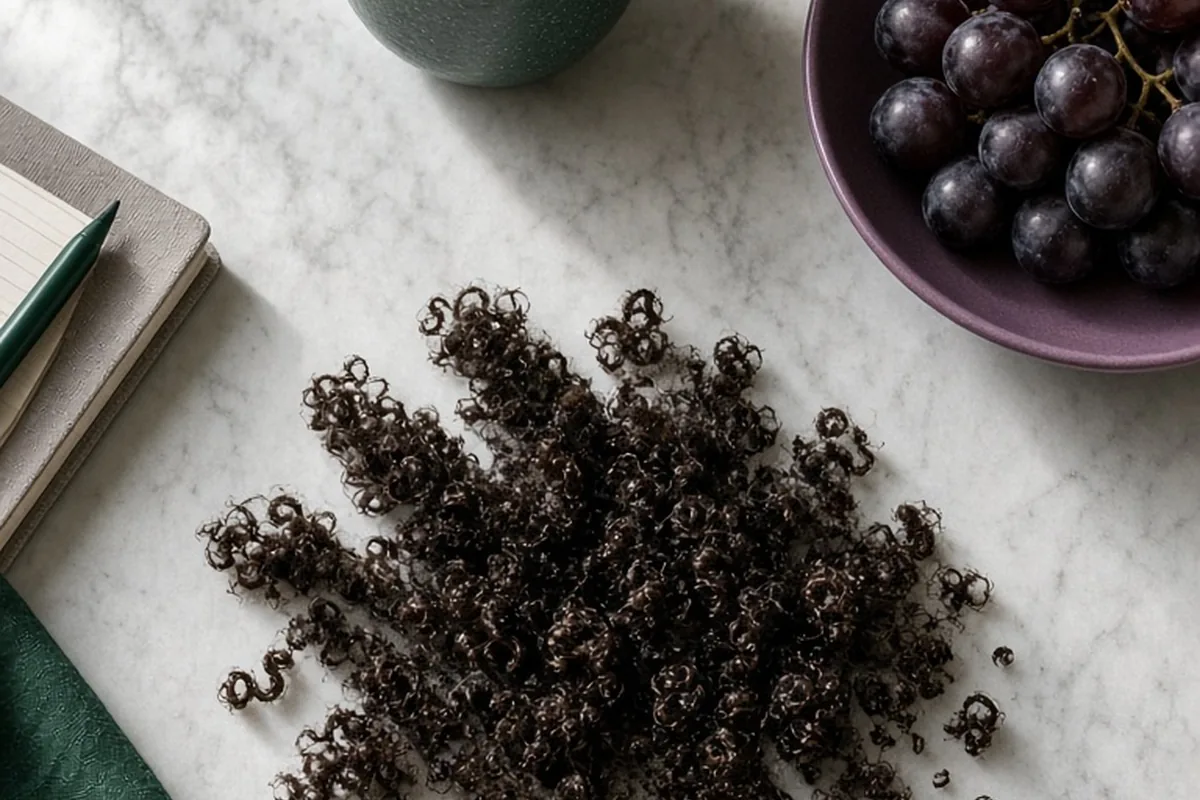
Hair breakage for textured hair occurs when individual strands snap due to mechanical friction, excessive tension, moisture depletion, chemical processing, or heat exposure. Because curls and coils have elliptical cross-sections and natural bends where the cuticle naturally lifts, they are structurally more fragile than straight strands. Halting breakage requires diagnosing whether strands lack moisture or structural protein, detangling strictly with water and high-slip conditioners, reducing physical styling tension, and protecting ends with breathable lubricants.
Managing textured hair requires understanding how curl architecture influences fiber strength and moisture retention. When daily handling or chemical services compromise the outer cuticle layer, fragile coily and curly strands quickly snap instead of stretching under everyday tension.
Identifying Breakage Versus Normal Shedding in Textured Hair
Before changing your hair routine, you need to distinguish between natural hair shedding and active fiber breakage. Shedding is an internal biological process where hair follicles release mature strands at the end of their natural growth cycle. A shed hair strand typically measures your full hair length and features a small, white, bulbous root at one end. In contrast, broken hair consists of short, uneven fragments without a visible root bulb, often landing on your shoulders, bathroom counters, or styling tools during normal manipulation.
To assess the location and severity of strand snapping, examine broken pieces under bright, direct light. Clean, sharp fractures often indicate mechanical trauma from fine-toothed combs, tight hair ties, or dry styling. Frayed, split, or feathered ends usually point to progressive moisture loss, chemical erosion, or thermal degradation. If your sink gathers short, fragmented curl segments every time you comb or style, the structural integrity of your hair fiber has been compromised and requires immediate intervention.
Why Textured Hair Strands Are Structurally Vulnerable to Snapping
Textured hair—encompassing loose waves, springy curls, tight coils, and zig-zag patterns—possesses an elliptical or flattened cross-sectional shape rather than a circular one. Every turn, twist, and bend along the curl spiral creates a localized stress point where the outer protective cuticle scales slightly lift and separate. These natural structural bends make textured hair inherently more vulnerable to physical stress, environmental dryness, and external friction than straight hair fibers.
Additionally, the winding pattern of curls and coils impedes the natural flow of sebum from the scalp down the length of the hair shaft. While straight hair allows scalp oils to travel smoothly to the ends, textured strands often remain dry along the mid-lengths and tips. Without this natural lipid coating to seal in moisture and reduce inter-strand friction, curly and coily hair loses elasticity. When an unlubricated strand lacks flexibility, any mechanical resistance from styling or brushing causes the hair fiber to fracture at its weakest curvature.
Balancing Protein Treatments and Deep Hydration to Restore Elasticity
Halting breakage requires establishing a careful balance between fiber hydration and internal protein reinforcement. Hair elasticity relies on moisture to remain pliable, while keratin proteins provide the tensile strength needed to resist physical snapping. If your hair stretches excessively when wet, feels mushy, or breaks without bouncing back, it suffers from hygral fatigue and weak internal protein bonds. In this scenario, incorporating a hydrolyzed protein treatment or bond-building formulation helps patch microscopic gaps in the damaged cuticle layer.
Conversely, if your strands feel stiff, brittle, rough, or snap instantly with zero stretch, your hair is likely experiencing protein overload or severe dehydration. In this state, applying additional protein will worsen breakage by making the hair shaft increasingly rigid. Shift your focus toward intensive moisturizing masks formulated with fatty alcohols, humectants like glycerin or aloe vera, and natural emollients like shea butter or jojoba oil. Apply deep conditioning treatments under gentle steam or a warm thermal cap for fifteen to twenty minutes to allow hydration to penetrate past lifted cuticles.
Mechanical Detangling Techniques That Prevent Snapping
Mechanical manipulation during washing and styling represents one of the most common causes of textured hair breakage. Detangling dry textured hair is particularly damaging because dry curl clumps interlock, forcing combs to rip through knots rather than separate them. Never manipulate dry curls with styling tools; always detangle damp or wet hair that is thoroughly saturated with a high-slip conditioner or water-based detangling milk.
Begin the detangling process by dividing your hair into four to six manageable sections and securing them with non-snag clips. Coat each section thoroughly with your conditioning product to coat the cuticle and reduce surface friction. Use your fingers first to gently separate large knots and feel for single-strand knots, also known as fairy knots. Follow with a wide-tooth seamless comb or a flexible-bristle detangling brush, working methodically from the very ends of the hair upward toward the roots to prevent compacting tangles into tight, unbreakable masses.
Evaluating Tension and Friction in Daily Styling and Sleep Routines
Protective styling is commonly used to shield textured ends from environmental wear, but improper installation and maintenance can accelerate breakage. Braids, twists, weaves, and cornrows installed with excessive tension pull violently on the delicate follicle and weaken the hair shaft along the hairline and nape. Heavy extensions add sustained downward weight to natural strands, causing tension breaks at the attachment point. If a style causes scalp tenderness, bumps, or headaches, the tension is too high and will lead to mechanical snapping.
Everyday friction during sleep also strips moisture and shears fragile curl cuticles. Standard cotton pillowcases act like absorbent sponges, pulling essential oils and moisture out of your hair while creating rough abrasive friction as you toss and turn. Protect your strands at night by wrapping hair in a smooth silk or satin bonnet, using a satin scarf, or sleeping on a high-grade satin pillowcase. For longer curls, loosely gathering hair at the crown of your head using a satin scrunchie—often called the pineapple method—preserves curl definition and prevents ends from rubbing against bedding.
Managing Thermal and Chemical Damage on Fragile Curls and Coils
Chemical services such as relaxers, texturizers, permanent color, and lighteners alter the hair’s internal keratin structure by breaking disulfide bonds. Overlapping chemical treatments on previously processed sections severely weakens strand integrity, creating a distinct line of demarcation where the hair will inevitably snap. If you choose to chemically treat textured hair, space appointments several weeks apart, apply treatments exclusively to new growth, and consistently incorporate reparative conditioning routines to offset structural loss.
Thermal styling tools like blow dryers, flat irons, and curling wands pose an equal threat when used incorrectly. High temperatures vaporize moisture trapped inside the hair cortex, leading to microscopic bubbling and blistering along the shaft known as bubble hair deformity. When heat styling, keep temperatures moderate, never pass hot plates over the same section multiple times, and always apply a silicone- or polymer-based heat protectant to create a physical thermal shield over the outer cuticle.
Trimming Schedules and Maintenance to Halt Splitting Hair Shafts
A split end that is left unaddressed will continue to unravel upward along the hair shaft, turning a minor tip fracture into major strand breakage. While various cosmetic serums can temporarily seal split ends by gluing the cuticle down with polymers, no topical product can permanently repair a split hair fiber. The only definitive solution for damaged ends is clean, mechanical removal using professional-grade shears.
Inspect your ends every eight to twelve weeks to evaluate wear and tear. Look for single-strand knots, rough thinning ends, and split tips that catch on neighboring strands. Avoid using dull household scissors, which crush and fray the hair fiber rather than slicing cleanly across it. Schedule regular trims or micro-dusting sessions with a stylist experienced in cutting textured hair, removing just enough damaged material to keep your ends blunt, smooth, and resistant to tangling.
Frequently asked questions
How can I tell if my textured hair has protein overload or needs moisture?
Perform a wet elasticity test on a clean strand. If the strand feels stiff, rough, and snaps immediately when gently stretched, it likely has protein overload and needs deep moisturizing treatments. If it stretches endlessly, feels gummy or limp, and snaps without bouncing back, it lacks protein structure.
Can split ends and broken hair shafts be permanently repaired without cutting?
No product can permanently fuse a split or broken hair shaft back together. Hair bonding treatments and protein conditioners temporarily patch structural gaps and smooth the outer cuticle, but trimming damaged ends with sharp hair shears is the only permanent solution.
How often should textured hair be trimmed to prevent severe breakage?
Most textured hair benefits from a trim or light dusting every eight to twelve weeks, depending on daily styling habits, heat usage, and chemical processing. If you rarely use heat and wear low-manipulation styles, you may extend trims to every three to four months.
Are protective styles always effective at stopping hair breakage?
Protective styles only prevent breakage when installed loosely without scalp tension, kept clean and moisturized, and removed carefully. Leaving styles in too long or installing heavy extensions creates matting, follicle strain, and significant breakage during takedown.
Your next step
Inspect several shed strands under bright light to confirm whether they show root bulbs or broken ends, then switch your next wash day to a sectioned routine using a high-slip conditioner and a wide-tooth tool.