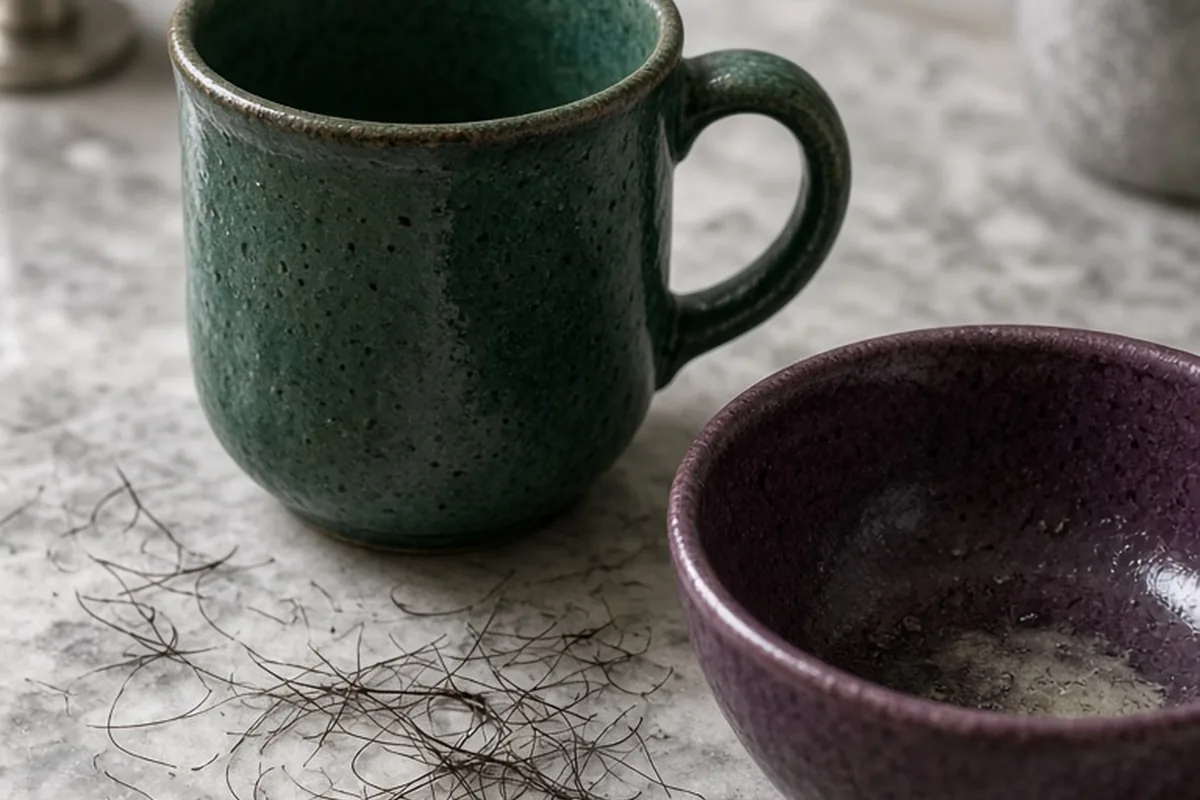
To stop hair breakage and foster healthy hair, minimize mechanical tension, lower thermal exposure, and maintain a functional balance between moisture and structural protein. Detangle wet hair gently with wide-tooth combs using slip-enhancing conditioners, sleep on friction-reducing silk or satin pillowcases, avoid tight hairstyles that strain follicles, and always apply a thermal protectant before heat styling. Regular trims every eight to twelve weeks also prevent existing split ends from migrating upward.
Noticing short, snapped strands on your bathroom counter or hairbrush can be frustrating, especially when you are trying to grow your hair out or preserve its thickness. Breakage occurs when the protective outer cuticle layer becomes compromised, leaving the delicate inner cortex vulnerable to snapping under routine daily handling.
Distinguishing Hair Breakage from Normal Daily Shedding
Before changing your hair regimen, you need to confirm whether your strands are snapping mid-shaft or shedding naturally from the root. Every person naturally loses hair each day as follicles complete their growth cycles and transition into a resting phase. A naturally shed hair shaft will feature a tiny, firm, white or clear bulb at one end, which represents the root base that released from the scalp. These shed strands are typically the full length of your hair and indicate normal biological turnover rather than physical damage to the hair fiber itself.
Breakage looks noticeably different upon close inspection. Broken hairs are generally shorter than your overall hair length, lack a root bulb entirely, and often feature blunt, jagged, or split ends where the hair snapped in half. You might also notice uneven, frizzy patches concentrated along your crown, temples, or nape, where friction and mechanical tension are highest. Mistaking breakage for root shedding often leads people to purchase expensive scalp serums or density supplements when the underlying issue is actually cuticle erosion and rough mechanical handling along the mid-lengths and ends.
Modifying Wet Hair Detangling and Washing Routines
Hair is at its most structurally vulnerable when fully saturated with water. Water temporarily breaks the internal hydrogen bonds that give the hair shaft its natural strength, allowing the cortex to stretch significantly further than it can when dry. While this elasticity can be beneficial, pulling a fine-tooth comb or stiff bristle brush through wet hair easily stretches the fibers past their physical return point, causing the cuticle scales to crack and the strand to snap under tension.
To protect wet hair, always apply a conditioner, mask, or dedicated detangling lotion with plenty of slip before running any tool through your lengths. Slip refers to lubricating ingredients, such as fatty alcohols and silicones, that coat each fiber to reduce friction between crossing strands. Use a wide-tooth comb or a paddle brush equipped with soft, flexible bristles, and divide your hair into manageable sections. Always start detangling at the bottom ends, gently clearing knots before moving an inch higher up the strand, gradually working your way to the roots without forcing through snags.
Thermal Styling Adjustments That Shield Cuticle Integrity
Excessive heat removes moisture from deep within the hair shaft and physically alters the keratin proteins that give hair its strength and shape. When blow dryers, curling wands, or flat irons touch unprotected hair, the trapped water inside the cortex can rapidly heat and expand, creating microscopic bubble-like cavities along the fiber known as bubble hair deformity. This internal void drastically weakens the strand, making it prone to snapping off completely the next time it is brushed or tied back.
Never apply direct heated irons to hair that is damp or wet. Ensure your hair is entirely dry before using flat irons or curling irons, and always apply a dedicated thermal protectant spray, cream, or serum beforehand. These products contain heat-stable ingredients that distribute thermal energy more evenly across the surface and slow down heat transfer to the inner core. Additionally, adjust your styling tools to the lowest effective temperature setting for your texture, and avoid passing a hot iron over the exact same section of hair multiple times in a single session.
Balancing Moisture and Protein in Brittle Hair Fibers
Healthy hair requires a continuous balance between moisture, which provides flexibility, and protein, which provides structural rigidity. If your hair experiences moisture deficiency, it feels dry, rough, and coarse, breaking cleanly when subjected to minimal tension because it cannot bend. Conversely, hair with adequate moisture bends smoothly and retains an elastic quality that snaps back into place without tearing.
However, excessive or misapplied protein treatments can also cause severe breakage. Products formulated with hydrolyzed wheat protein, keratin, or amino acids temporarily patch structural gaps along a damaged cuticle, which temporarily strengthens weakened strands. If you use intensive protein reconstructors too frequently without accompanying emollient moisture, the hair becomes overly rigid, stiff, and brittle, snapping like uncooked pasta when manipulated. If your hair feels unusually stiff or straw-like after a treatment, pause protein-heavy formulas and use deep conditioners rich in fatty oils, humectants, and conditioning alcohols to restore elasticity.
Nighttime Friction and Gentle Protective Everyday Styling
A substantial amount of mechanical hair damage occurs while you sleep. Traditional cotton pillowcases feature coarse, porous weaves that absorb natural conditioning oils from your hair fibers throughout the night. As you turn during sleep, the cotton fabric grabs individual hair shafts, creating abrasive friction that frays the cuticle layer and leads to morning tangles and snapping. Switching to a smooth silk or satin pillowcase allows your hair to glide effortlessly without catching, preserving cuticle alignment and moisture.
Daytime styling choices also determine how much continuous strain your hair absorbs. Standard elastic bands with metal seams act like miniature shears, pinching and severing hair fibers at the point of tension. Replace these with seamless microfiber ties, fabric scrunchies, or smooth claw clips that distribute pressure over a broader surface area. If you regularly wear ponytails or buns, avoid placing them in the exact same spot every day. Securing an elastic in the identical location daily creates concentrated mechanical stress fatigue on the same section of hair, eventually producing a horizontal band of broken, uneven strands across the back of your head.
Chemical Processing Realities and Color Care Precautions
Chemical services, including bleaching, permanent hair color, relaxers, and perms, work by intentionally lifting the outer cuticle and dissolving internal bonds within the hair cortex to alter color or curl pattern. While modern chemical formulations can be used safely, each chemical process permanently removes a fraction of the hair's protective lipid layer. Over time, chemically compromised hair becomes highly porous, meaning it absorbs moisture rapidly but loses it just as quickly, leaving the core dry, fragile, and prone to splintering.
To minimize chemical-induced breakage, avoid overlapping treatments onto hair that has already been processed. When touching up highlights or root color, your stylist should apply the lifting agent strictly to the new growth rather than running it through previously lightened ends. If your hair is showing signs of breakage, allow extended intervals between appointments to let new, strong growth emerge. Incorporate bond-building treatments containing active ingredients designed to re-link compromised disulfide bonds, and schedule routine chelating washes if you wash your hair in hard water, as mineral buildup can make chemically treated fibers feel excessively stiff and brittle.
Maintenance Trims to Stop Split Ends from Migrating Upward
While many serums and split-end menders claim to repair broken ends, split ends cannot be permanently glued back together. Once the hair cuticle has completely separated at the tip, the internal cortex is exposed to the elements. Without a protective outer layer, the split naturally travels upward toward the mid-lengths like a run in a pair of nylon stockings. What begins as a microscopic split at the very bottom of your strand can rapidly result in several inches of frayed, broken hair that must eventually be cut off.
Consistent maintenance trims are essential for preserving length rather than sacrificing it. Removing a quarter-inch of hair every eight to twelve weeks eliminates damaged tips before they have the opportunity to split further up the fiber. If you are actively growing your hair out and want to retain as much length as possible, ask your stylist for a light dusting. During a dusting, the stylist snips only the frayed ends protruding along the hair shaft without removing overall perimeter length, keeping your ends uniform, dense, and resistant to snapping.
Frequently asked questions
Can damaged hair breakage be permanently repaired?
Hair is biologically non-living tissue, so broken or split strands cannot permanently heal themselves once the cuticle is lost. Bond-building products and deep conditioners can temporarily patch weaknesses and improve elasticity, but removing split ends through regular trims is the only permanent solution to prevent further upward damage.
How do I know if my hair needs moisture or protein?
Perform a simple wet strand test by taking a single fallen hair strand and gently pulling both ends. If the hair stretches slightly and returns to its shape, it has a healthy balance; if it stretches excessively and snaps without returning, it lacks protein; if it feels stiff, rough, and snaps immediately with no stretch, it requires deep moisture.
Is brushing hair dry better than brushing it wet?
For straight to wavy hair types, detangling when dry or damp with a detangling spray is generally safer because hydrogen bonds are intact and the fiber has higher tensile strength. For tightly coiled or curly hair textures, detangling dry can cause severe friction and snapping, making it safer to detangle wet hair coated with a slippery conditioner using a flexible tool.
Does wearing hats or helmets cause hair to snap?
Hats and helmets can cause breakage if they fit too tightly or feature rough internal fabrics that create constant friction along the hairline and crown. Choosing headwear lined with satin or silk, or wearing a thin silk cap underneath helmets, significantly minimizes friction and preserves the hair cuticle.
Your next step
Inspect your hairbrush and bathroom counter today to determine whether your fallen strands have root bulbs or jagged ends, then replace any metal-seamed hair elastics with seamless fabric ties.