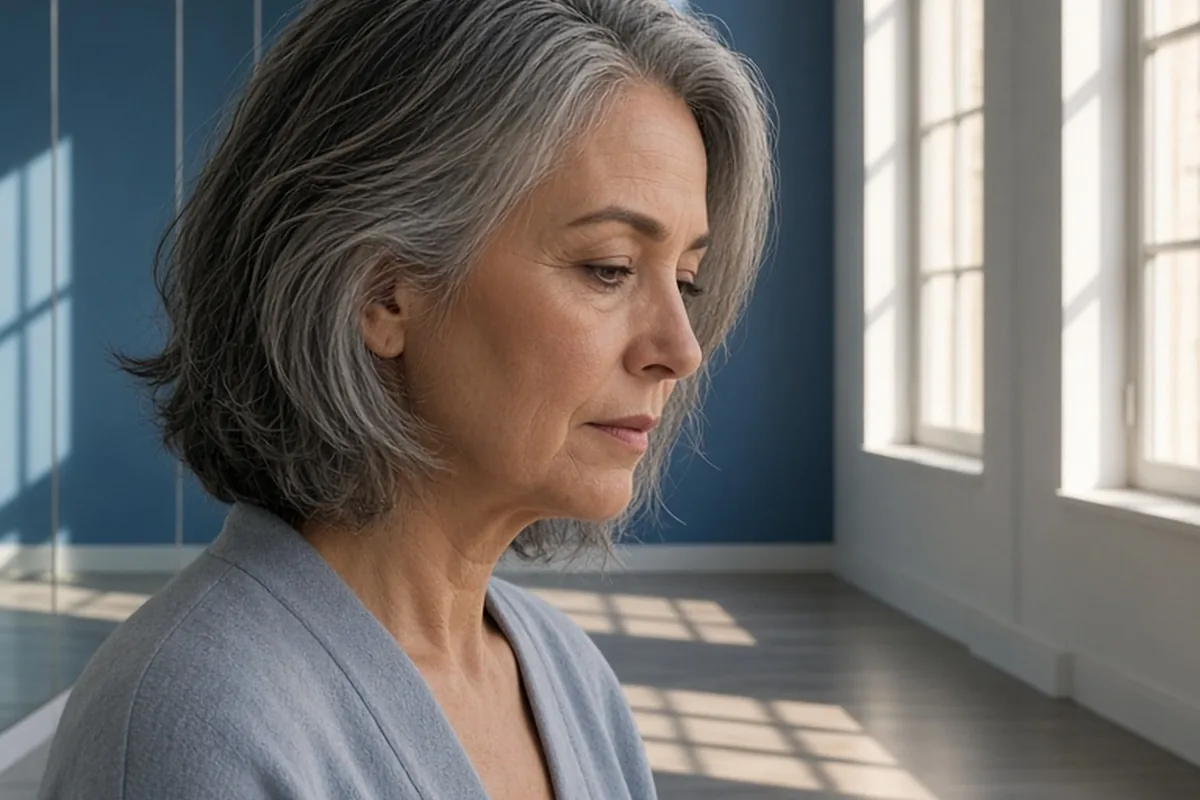
Hair care after menopause focuses on replenishing lost moisture, minimizing physical stress, and maintaining a healthy scalp environment. Shifting hormone levels often lead to finer strands, slower growth, increased dryness, and diffuse thinning. To maintain strong and vibrant hair, switch to sulfate-free hydrating shampoos, increase deep conditioning, reduce heat styling, handle fragile strands gently, and consult a healthcare professional for persistent shedding.
Menopause marks a substantial biological transition that reshapes how your body manages moisture, sebum production, and cellular renewal. For many women, these internal changes become immediately apparent in the mirror as hair texture feels noticeably coarser or unexpectedly fine, parts widen, and moisture seems to evaporate within hours of washing.
Recognizing Post-Menopausal Shifts in Hair Texture, Density, and Scalp Oils
During and after menopause, the body experiences a natural decline in estrogen and progesterone levels, shifting the balance toward relative androgen dominance. Because estrogen helps keep hair in its active growth phase while supporting natural sebum production from the sebaceous glands, this hormonal change directly alters hair follicle behavior. As oil production decreases, the scalp often becomes dry, tight, or easily irritated, which strips the hair shaft of its primary protective coating and leaves strands vulnerable to environmental weathering.
At the same time, individual hair follicles may undergo a process known as miniaturization, where the diameter of each emerging strand becomes progressively thinner. You might notice that your hair feels less dense overall, tangles more easily, or exhibits a wiry, uneven texture that behaves differently than it did in earlier decades. Recognizing that these structural changes stem from fundamental shifts in moisture balance and follicle biology is the first step toward building an effective, supportive daily routine.
Adjusting Cleansing Frequency and Choosing Moisture-Rich Formulations
When sebum output drops, the daily washing schedules that worked in earlier years can quickly lead to chronic dryness, cuticle damage, and brittle ends. Most post-menopausal hair benefits from extending the time between washes to several days, allowing what little natural lipid barrier remains to protect the hair shaft. When you do cleanse, the primary objective is removing product residue and environmental debris from the scalp without stripping the hair fibers of essential moisture.
Look for gentle, sulfate-free cleansers that rely on mild surfactants such as coco-glucoside or sodium cocoyl isethionate, paired with humectants like glycerin, hyaluronic acid, or aloe vera. When applying shampoo, focus your lathering effort strictly on the scalp and roots where dead skin cells and buildup collect, letting the rinse water clean the mid-lengths and ends. Follow every single wash with a rich, emollient conditioner containing ceramides, fatty alcohols, or lightweight plant lipids like squalane, which help smooth the cuticle layer and lock in hydration.
Nurturing the Scalp Environment to Support Follicle Function
A healthy scalp serves as the literal foundation for resilient hair growth, yet it is often neglected until flaking, itching, or tenderness appears. Post-menopausal scalp skin experiences the same thinning and reduction in barrier lipids as facial skin, making it far more sensitive to harsh chemical formulations, dry indoor air, and intense ultraviolet exposure. Incorporating gentle scalp care into your weekly routine helps maintain an optimal environment for hair follicles to function without chronic inflammation.
Consider integrating a regular scalp massage into your routine using light fingertip pressure or a soft silicone scalp brush during or before cleansing. Massage encourages local microcirculation and helps distribute natural lipids evenly across the surface. If you experience dry, flaky buildup, opt for gentle chemical exfoliants like mild lactic acid or polyhydroxy acids designed specifically for the scalp, rather than abrasive physical scrubs that can tear fragile hair shafts or irritate vulnerable skin.
Modifying Heat Styling, Color Services, and Mechanical Handling
Because individual strands are naturally finer and drier after menopause, their threshold for mechanical and thermal damage is considerably lower. High-temperature styling tools, aggressive brushing, and tight hairstyles can easily snap weakened fibers, creating the illusion of hair loss through breakage even when follicles are still producing hair. Modifying how you style and handle your hair provides an immediate defense against progressive fiber degradation.
When using blow dryers, curling irons, or straighteners, always lower the heat setting to the minimum effective temperature and apply a dedicated heat protectant containing silicones or conditioning polymers to buffer the cuticle. Replace stiff-bristled brushes with flexible detangling brushes or wide-tooth combs, starting your detangling process at the ends and gradually working upward toward the roots. If you color your hair to blend or cover gray strands, discuss gentler semi-permanent or demi-permanent glosses with your colorist, or space permanent processing sessions farther apart to give the hair shaft time to recover.
Evaluating Topical Treatments and Professional Clinical Options
When lifestyle adjustments and moisturizing products are not sufficient to manage progressive thinning, targeted topical treatments and clinical interventions offer additional avenues for support. Over-the-counter topical solutions such as minoxidil remain widely used to prolong the growth phase of the hair cycle and encourage follicle recovery, though results require consistent application over extended periods and should be discussed with a medical professional to ensure suitability.
In addition to topical formulas, professional dermatological care may involve in-office evaluations to determine whether prescription anti-androgens, specialized topical compounds, or light-based therapies align with your specific pattern of thinning. It is essential to approach all active interventions with realistic timelines, as hair grows slowly and noticeable improvements in density or retention often require several months of continuous, disciplined adherence to an agreed-upon clinical plan.
Supporting Follicles Internally and Knowing When to Consult a Dermatologist
Hair production is an energy-intensive biological process that relies on steady nutritional building blocks, including adequate dietary protein, essential fatty acids, and key micronutrients such as iron, zinc, and vitamin D. Restrictive dieting or unintended nutritional deficits can prompt follicles to enter a resting phase prematurely, exacerbating post-menopausal shedding. Ensuring balanced meals that feature complete proteins, colorful vegetables, and healthy fats provides your body with the raw resources needed for cellular turnover.
While mild diffuse thinning and textural changes are common during post-menopause, sudden patches of hair loss, rapid shedding that clogs drains daily, or scalp pain and burning warrant a prompt medical evaluation. A board-certified dermatologist can perform a physical examination, scalp dermoscopy, and targeted blood tests to rule out underlying conditions such as thyroid irregularities, autoimmune alopecia, or specific nutritional deficiencies before recommending a personalized treatment strategy.
Frequently asked questions
Can post-menopausal hair loss and thinning be reversed?
While natural age-related thinning cannot always be completely reversed, targeted treatments and gentle hair care practices can significantly reduce breakage, improve strand thickness, and stimulate dormant follicles. Consulting a dermatologist helps identify whether your hair loss is standard female pattern thinning or related to an addressable underlying condition.
How often should you wash post-menopausal hair?
Most women find that washing their hair two to three times a week, or even once a week for very dry textures, helps preserve natural oils and prevent brittle breakage. The best frequency depends on your individual scalp oiliness, physical activity level, and personal comfort.
Why does hair become wiry or coarse after menopause?
As estrogen decreases and natural sebum production slows, individual hair shafts receive less lipid coating and hydration. Additionally, gray hair fibers naturally have a slightly different protein structure and irregular surface cuticle, which makes them feel coarser and less pliable than pigmented strands.
Are hair supplements helpful for thinning hair after menopause?
Supplements can be beneficial if your hair thinning is driven by a diagnosed nutrient deficiency, such as low iron or insufficient vitamin D. However, taking high doses of unverified supplements without a blood test is rarely effective and may cause unnecessary side effects, so consult your doctor before starting any regimen.
Your next step
Schedule a baseline evaluation with a board-certified dermatologist to assess your scalp health and rule out underlying deficiencies before investing in new clinical hair treatments.