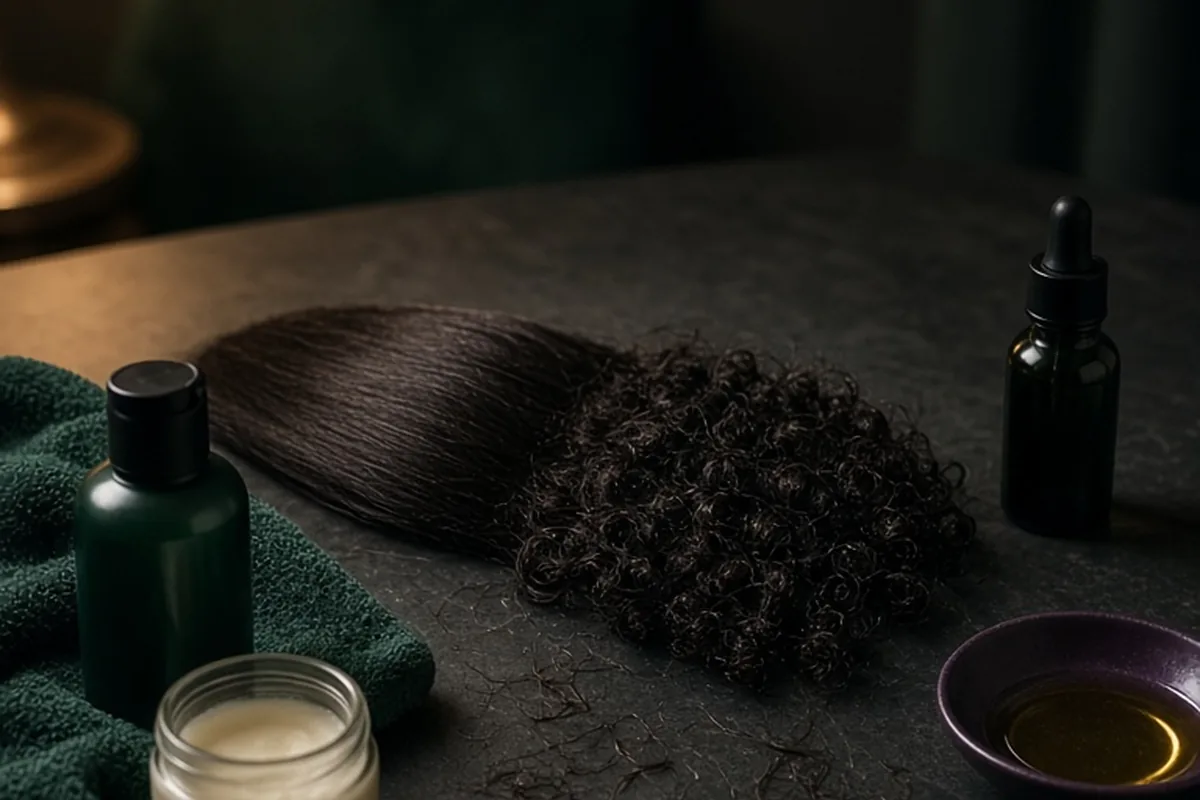
Caring for chemically relaxed curly hair requires balancing deep moisture with structural protein support while protecting the fragile line of demarcation where natural curls meet straightened strands. Effective maintenance involves washing weekly with sulfate-free hydrating cleansers, deep conditioning under gentle heat, applying leave-in moisturizers sealed with lightweight oils, minimizing direct hot-tool exposure, and spacing relaxer touch-ups to prevent chemical overlapping.
Chemical relaxers alter the natural disulfide bonds inside naturally curly hair to create a straighter pattern, which inherently lowers the hair shaft's tensile strength and natural moisture retention. Establishing a consistent, low-manipulation maintenance routine allows you to enjoy smooth styling while protecting hair elasticity, preserving root density, and preventing preventable chemical breakage.
Structuring a Weekly Wash Day for Chemically Relaxed Curls
A healthy wash day for relaxed curly hair begins before shampoo ever touches the scalp. Applying a pre-shampoo oil treatment—using penetrating oils like coconut or olive oil on dry strands for twenty minutes before cleansing—creates a protective lipid buffer that reduces hygral fatigue, which is the weakening of the hair shaft caused by rapid swelling and contracting as water enters and exits. When selecting a cleanser, choose a sulfate-free, moisture-rich formula designed to lift sebum and environmental debris without stripping away the essential surface lipids that relaxed strands struggle to produce naturally. If you use styling serums or edge controls, incorporate a gentle chelating or clarifying shampoo once every four to six weeks to prevent residue accumulation that blocks conditioning agents.
Water temperature and handling techniques during the wash process significantly influence moisture retention and strand integrity. Always rinse with lukewarm water rather than hot water, as excessively high temperatures lift the cuticle layer excessively and exacerbate existing porosity issues. When working shampoo into your hair, focus solely on massaging the scalp with your fingertips in linear motions rather than circular rubbing, which mats the hair and strains the delicate roots. Allow the running suds to cleanse the mid-lengths and ends passively. After cleansing, gently squeeze out excess water with a soft microfiber towel or cotton t-shirt rather than a coarse terrycloth towel, which creates friction, roughs up the outer cuticles, and initiates mechanical snapping.
Balancing Moisture and Protein to Prevent Structural Snapping
Because the chemical relaxing process breaks down internal keratin structures to reshape the hair, relaxed hair inherently possesses higher porosity and lower structural resilience than unprocessed curls. Maintaining a strict balance between moisture and protein treatments is necessary to prevent two distinct types of breakage: brittle snapping from protein overload and limp, mushy breakage from excessive moisture without structural support. Perform an elasticity test on a wet, shed strand: if the hair stretches endlessly without returning to shape and feels spongy, it requires hydrolyzed proteins; if it snaps immediately with zero stretch and feels stiff or rough, it is moisture-deprived and requires deep emollient hydration.
Incorporate a rich deep conditioning mask after every wash, letting it sit under a heated conditioning cap or hooded dryer for fifteen to twenty minutes to encourage cuticles to open and absorb fatty alcohols like cetyl and stearyl alcohol, glycerin, and panthenol. For structural repair, integrate a light-to-medium protein treatment containing hydrolyzed keratin, silk amino acids, or hydrolyzed wheat protein once every two to four weeks, depending on your hair's density and chemical processing history. Always follow any dedicated protein treatment with an ultra-hydrating conditioner to restore softness and flexibility, ensuring that the newly reinforced internal matrix remains pliable rather than brittle.
Managing the Line of Demarcation Between New Curly Growth and Relaxed Ends
The line of demarcation is the precise junction where naturally curly, coiled new growth meets the previously straightened, chemically altered hair shaft. Because these two textures possess vastly different diameters, moisture levels, and curl patterns, mechanical stress concentrates intensely at this exact meeting point, making it the most vulnerable zone on the entire head. When detangling, never pull a comb from root to tip in a single continuous stroke. Instead, work in small, manageable sections, coating the hair with a high-slip leave-in conditioner or detangling spray, and gently work upward from the ends to the mid-lengths, only addressing the curly roots once the ends are completely free of knots.
To minimize tension at this fragile cross-section between relaxer touch-ups, use styling methods that harmonize the two textures without relying on high-heat flat irons. Wet sets, roller sets, and heatless foam rods encourage the curly roots and straight lengths to adopt a uniform, smooth wave pattern simultaneously. Use wide-tooth seamless combs or flexible-bristle detangling brushes specifically designed to flex under pressure rather than catch on texture transitions. Keeping the new growth consistently lubricated with water-based moisturizers softens the tight root pattern and prevents the straightened ends from shearing off at the base.
Low-Manipulation Styling and Direct Heat Reduction
Frequent mechanical manipulation from daily combing, brushing, and heat styling represents one of the primary drivers of thinning perimeters and uneven lengths in relaxed hair. Prioritizing low-manipulation styles—such as loose chignons, flat twists, pin curls, or classic roller sets—allows the hair shaft to rest while preserving internal moisture. If you enjoy wearing your hair down, focus on styles that protect your delicate ends from brushing against coarse clothing materials like wool sweaters or synthetic coats, which draw out moisture and cause friction-induced splitting.
When direct thermal tools like flat irons or curling wands are used, strict heat defense protocols are mandatory. Ensure the hair is completely dry before applying any hot tool, as heat applied to damp strands vaporizes internal water molecules instantly, creating irreversible structural bubbles known as bubble hair. Apply a silicone-based heat protectant containing ingredients such as dimethicone or cyclopentasiloxane to create a protective thermal barrier, and keep tool temperatures below 350 degrees Fahrenheit (177 degrees Celsius). Limit direct heat passes to a single, smooth stroke per section rather than multiple passes, using the chase method with a heat-resistant carbon comb to distribute tension evenly.
Daily Hydration, Sealing, and Nighttime Protection Routines
Relaxed hair loses hydration rapidly throughout the day due to compromised cuticle integrity, requiring a consistent daily or alternate-day moisturization routine. Employ the Liquid-Oil-Cream (LOC) or Liquid-Cream-Oil (LCO) layering method based on your hair's thickness. Begin with a water-based leave-in spray or light lotion where water or aloe vera is the first listed ingredient to deliver true hydration to the cortex. Follow immediately with a dime-sized amount of a nutrient-dense styling cream, and finish by sealing the hair cuticles with a lightweight, non-comedogenic oil such as jojoba, argan, or sweet almond oil to trap the water molecules inside the strand.
Nighttime care is critical to protect relaxed hair from friction, tangling, and moisture depletion while you sleep. Cotton pillowcases act as desiccants, pulling moisture directly out of the hair fiber while generating rough abrasive friction that leads to breakage around the nape and hairline. Encase your hair in a high-grade satin or silk bonnet, or wrap the hair smoothly around the circumference of your head using a paddle brush and secure it with a silk scarf. For added security, sleep on a satin pillowcase so that your hair remains protected even if your headwear slips off during the night.
Safe Relaxer Touch-Up Intervals and Professional Application Standards
One of the most common and destructive errors in relaxed hair care is scheduling chemical touch-ups too frequently or overlapping new chemical cream onto previously relaxed strands. A safe touch-up window is generally every eight to twelve weeks, depending on the speed of your natural curl growth, ensuring there is at least one-half to one full inch of virgin new growth visible before applying chemicals. Touching up sooner than eight weeks significantly increases the likelihood that relaxer cream will inadvertently spread onto previously processed hair, leading to severe protein degradation, thinning, and catastrophic breakage along the shaft.
Before any chemical application, prep the scalp and previously relaxed hair thoroughly. Apply a petroleum-based base cream directly along the entire hairline, nape, ears, and across the scalp to prevent chemical burns and irritation. Additionally, apply a protein-rich conditioning barrier or heavy oil over the previously relaxed mid-lengths and ends to act as a physical shield in case of accidental overlap. The relaxer must only be applied to the virgin roots, smoothed with the back of a comb or gloved fingers—never raked through with comb teeth—and thoroughly neutralized with a color-indicating neutralizing shampoo washed through at least three to four consecutive times until the rinse water runs completely clear, confirming the chemical reaction has fully stopped.
Scalp Care, Trimming Schedules, and Diagnosing Chemical Stress
A healthy scalp environment is the foundation of steady hair growth, yet chemically treated scalps are prone to dryness, chemical residue sensitivity, and follicle inflammation. Avoid applying heavy petroleum or mineral oil greases directly to the scalp, as these create occlusive barriers that trap shed skin cells, bacteria, and sebum, leading to folliculitis or scaling. Instead, use lightweight, soothing botanical serums containing tea tree, peppermint, or rosemary extract to maintain clean follicle openings and stimulate microcirculation, applying these treatments sparingly between wash cycles.
Differentiating between normal daily shedding and chemical breakage is crucial for troubleshooting hair health. Shedding is a natural biological process characterized by full-length strands displaying a small white bulb at the root end. Breakage, conversely, presents as short, fragmented hair pieces without a bulb, often featuring frayed or split tips. To combat progressive splitting, schedule regular maintenance trims every ten to twelve weeks to remove split ends before they travel up the hair shaft. If you observe widespread breakage along the demarcation line, immediately pause all chemical applications, eliminate direct heat, and initiate an intensive six-week restorative regimen of bi-weekly deep hydration and gentle protein reinforcement.
Frequently asked questions
How often should I wash my relaxed curly hair?
Most relaxed hair thrives on a wash schedule of once every seven to ten days. Washing too frequently can strip essential natural oils from chemically compromised strands, while waiting longer than ten days can allow product buildup to accumulate on the scalp and block leave-in moisture from penetrating.
Can I color my hair if it is already chemically relaxed?
You can color relaxed hair, but combining permanent lifting dyes or bleach with chemical relaxers creates severe double-processing stress that often leads to breakage. If you choose to add color, opt for semi-permanent or demi-permanent glosses and rinses, or consult a licensed stylist who can evaluate your hair elasticity before application.
What should I do if my relaxed hair starts breaking at the roots?
If hair is breaking near the roots, it is typically snapping at the line of demarcation due to dryness, rough detangling, or chemical overlap from a recent touch-up. Immediately halt direct heat styling, increase weekly deep conditioning with added steam, switch to low-tension styles, and ensure you use a wide-tooth comb with ample leave-in conditioner.
How can I stretch my relaxer touch-ups safely without causing breakage?
To stretch relaxers past eight to twelve weeks safely, focus on softening the texture of the new growth using rich water-based moisturizers and leave-in conditioners. Use heatless setting techniques like roller sets or flexi-rods to blend the roots with the straight ends, avoid tight ponytails or high-tension braids, and sleep in a satin scarf every night.
Your next step
Inspect your hair elasticity today by testing a wet shed strand, and schedule your next deep conditioning session with a targeted moisture or protein mask based on how your hair responds.