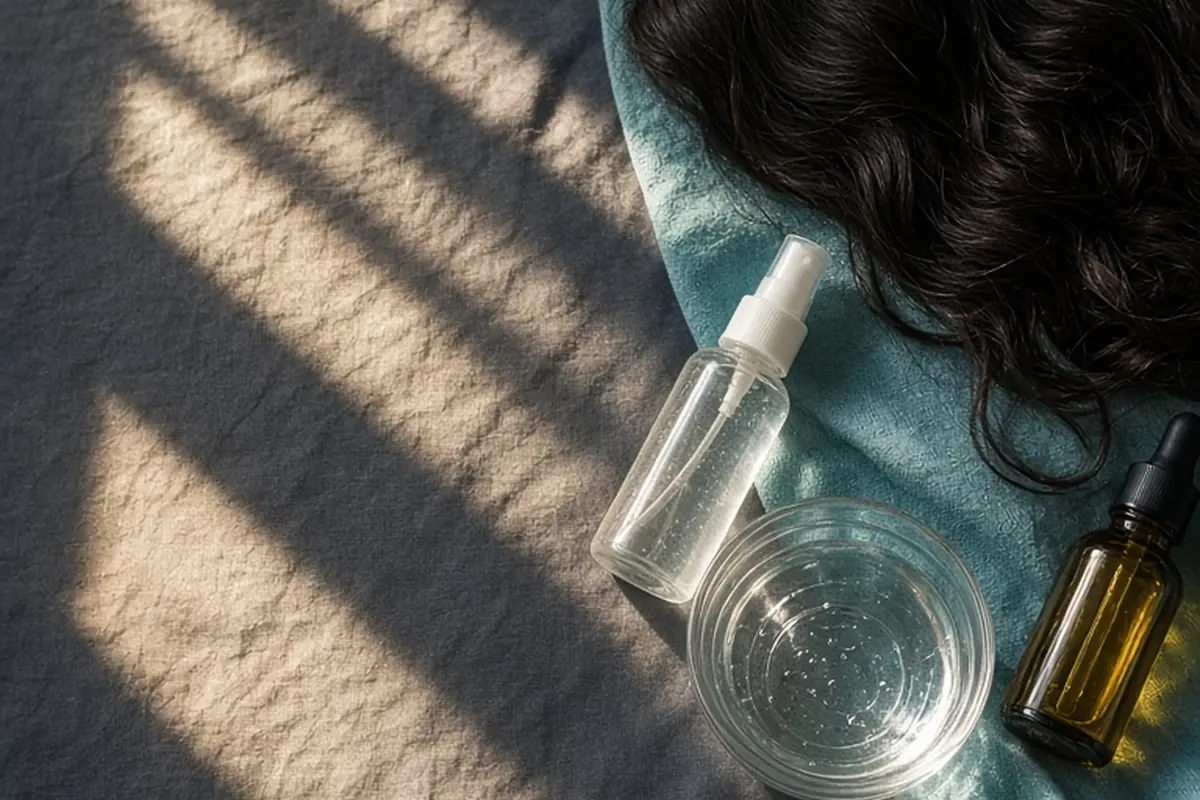
Caring for relaxed low porosity hair requires opening tightly bound cuticles with indirect warmth, using lightweight water-based hydrators, and preventing heavy product buildup. Because chemical straighteners weaken internal hair bonds while low porosity cuticles resist moisture absorption, the most effective routine relies on clarifying shampoos, heat-assisted deep conditioning, liquid leave-in conditioners with humectants like glycerin or aloe vera, and light sealing oils such as jojoba or grapeseed rather than heavy raw butters.
Managing relaxed hair with low porosity presents an unexpected styling paradox: the hair fiber has endured structural alteration from a chemical straightener, yet its outer cuticle layer continues to resist water and product penetration. Navigating this dynamic successfully comes down to matching your product textures and washing techniques to how your cuticles actually open, absorb, and hold moisture.
Recognizing How Low Porosity Behaves on Chemically Relaxed Hair
Chemical straighteners break and reform disulfide bonds within the cortex, an intervention that frequently strips the hair of its natural 18-MEA protective lipid layer. Conventional hair care advice assumes that all relaxed hair is inherently high in porosity, featuring raised, chipped, or missing cuticles that lose water rapidly. However, many individuals possess natural cuticle structures that are so densely layered and tightly aligned that even after chemical processing, the cuticle scales lay completely flat. When relaxed hair retains low porosity characteristics, it repels topical moisture rather than soaking it up, creating unique care requirements that contradict standard relaxed hair advice.
You can identify this hair profile through daily handling and wash routines rather than unreliable float tests in a glass of water. When you step into the shower, water runs off the surface of your relaxed strands for several minutes before the hair fully saturates. Conditioners and styling lotions sit visibly on the outside of your hair shaft like a milky film instead of disappearing into the fiber. Once saturated, your hair takes an unusually long time to dry naturally, yet it often feels parched, stiff, and brittle underneath touchable styling creams. Recognizing these indicators prevents you from treating your hair with heavy-handed treatments designed for porous, damaged textures.
Cleansing Protocols to Remove Buildup Without Stripping Fragile Ends
Because low porosity relaxed hair has a tight outer barrier, conditioning agents, styling oils, and leave-ins cannot fully penetrate and instead accumulate on the outer sheath. Over several wash cycles, this residue forms an occlusive barrier that blocks ambient humidity and liquid hydration from reaching the inner cortex. Relying exclusively on co-washing or ultra-mild, sulfate-free conditioning cleansers usually backfires on this hair type. Without proper surfactant cleansing, the hair develops chronic dryness beneath a dull, greasy exterior, increasing the risk of mechanical breakage during detangling.
Incorporate a gentle clarifying shampoo into your schedule every three to four weeks, alternating with a sulfate-free, chelating moisturizing shampoo for regular wash days. When washing, always use comfortably warm water rather than cold water. Warm water slightly swells the strand and gently softens the tightly aligned cuticles, allowing the surfactant to lift away sebum, silicones, and product film thoroughly. Focus the shampoo lather exclusively on your scalp and root area, allowing the suds to run downward through the relaxed mid-lengths and ends to clean them without mechanical abrasion or excessive lipid depletion.
Using Heat to Deep Condition Relaxed Low Porosity Strands
Applying a deep conditioner at room temperature and letting it sit under a standard plastic processing cap yields minimal benefit for low porosity relaxed hair. Without an external prompt to lift the cuticles, the nourishing lipids, fatty alcohols, and humectants simply coat the exterior of the hair shaft and rinse down the drain. Indirect heat serves as the critical tool that expands the cuticle layer just enough for conditioning molecules to migrate past the surface into the hair cortex.
Sit under a hooded dryer, wear an insulated microwavable heat cap, or use a handheld facial steamer for fifteen to twenty minutes during every deep conditioning session. Look for conditioners formulated with penetrating ingredients such as panthenol, cetrimonium chloride, hydrolyzed silk, and aloe vera juice rather than formulations packed with mineral oil or unrefined shea butter near the top of the ingredient list. After finishing the heated treatment, allow your hair to cool down for five minutes at room temperature before rinsing thoroughly with lukewarm water to set the smooth cuticle alignment without trapping product residue.
Selecting Daily Hydrators and Lightweight Sealing Oils
The popular liquid, oil, cream method frequently causes product overload on relaxed low porosity hair. Applying thick hair creams followed by heavy sealing oils results in limp, greasy strands that attract lint and turn crunchy within forty-eight hours. Because relaxed hair is physically finer and structurally less elastic than untreated hair, excessive product weight causes premature breakage along the lengths. Transitioning to a streamlined liquid-first approach allows moisture to enter without overwhelming the delicate relaxed fiber.
Start your post-wash regimen with a water-based leave-in spray that features water or aloe barbadensis leaf juice as the primary ingredient, accompanied by lightweight humectants like glycerin, sodium PCA, or panthenol. Follow this with a pea-sized amount of a lightweight leave-in milk or lotion, distributing it evenly from the demarcation line down to the ends. Seal in that hydration using a thin film of low-viscosity, high-slip oil such as jojoba oil, grapeseed oil, or sweet almond oil. Jojoba oil closely mimics natural human sebum and coats the strand without forming an impermeable grease layer, while grapeseed oil provides natural thermal protection and slip without flattening volume.
Balancing Protein Treatments to Avoid Over-Hardening Weakened Fibers
Relaxed hair inevitably requires supplemental protein because chemical straightening permanently depletes the hair's keratin matrix, leaving structural voids that make strands vulnerable to splitting. At the same time, low porosity hair is inherently protein-sensitive. Large protein complexes adhere stubbornly to tightly bound cuticles, causing the hair shaft to feel stiff, straw-like, and prone to snap when bent. Balancing this dynamic requires selecting the correct molecular size and regulating the frequency of your protein applications.
Avoid aggressive, salon-strength reconstructors that harden into a rigid shell unless you are dealing with catastrophic breakage directly following an accidental over-processing incident. Instead, seek out products containing hydrolyzed proteins—such as hydrolyzed silk, hydrolyzed wheat protein, or hydrolyzed keratin. The hydrolysis process breaks these proteins into tiny peptide chains capable of slipping into micro-fractures in the relaxed strand without sitting heavily on the cuticle surface. Limit protein-enriched conditioners to once every four to six weeks, and always follow any protein treatment with an intensely moisturizing, heat-assisted deep conditioning session to restore suppleness.
Protecting the Demarcation Line During Washing and Styling
The point where natural low porosity new growth meets previously relaxed hair represents the most vulnerable zone on your entire head. New growth retains its natural curl pattern and cuticle tightness, while the relaxed ends are straightened and internally depleted. Because both sections share low porosity traits, products often fail to soften this junction adequately, leading to severe friction, matting, and breakage during detangling sessions.
Never attempt to manipulate or detangle your hair when it is dry or only partially damp. Work in four to six distinct sections, misting each section thoroughly with warm water and applying a generous coat of a high-slip, water-based detangler before introducing a styling tool. Use a wide-tooth seamless comb or a flexible-bristle detangling brush, beginning at the very tips of your hair and gently working upward toward the scalp. Support the hair with your free hand near the demarcation line to absorb mechanical tension, preventing physical stress from snapping the weakened relaxed section away from the root.
Adjusting Chemical Touch-Ups for Low Porosity New Growth
A common pitfall during relaxer touch-ups involves mistaking low porosity hair's resistance to water absorption for chemical resistance. Professional relaxers are strongly alkaline formulations designed to penetrate the cuticle through chemical expansion rather than moisture mechanics. Stylists who misread slow wetting as coarse, resilient hair may be tempted to use super-strength lye formulas or leave standard relaxers on past recommended processing windows, causing devastating chemical burns to the inner cortex.
Ensure your stylist works with a mild or regular strength relaxer formula and applies an oil-based protective base cream to your scalp, hairline, and previously relaxed lengths prior to application. Touch-up applications should be strictly confined to new growth, leaving a buffer zone of at least a quarter inch before reaching the old line of demarcation. Never allow fresh relaxer paste to sit on or be dragged through previously straightened ends during rinsing, as this compounded chemical exposure will strip whatever structural resilience remains in your low porosity cuticles.
Frequently asked questions
Can low porosity hair be relaxed without suffering extreme breakage?
Yes, low porosity hair can be safely relaxed if the chemical service is performed by an experienced professional using a mild or regular strength formula. Breakage typically occurs when stylists leave the chemical on too long because they believe the tightly closed cuticles need extra time to process. Proper pre-treatment basing and strictly avoiding overlapping onto previously relaxed hair keeps the fiber intact.
Why does my relaxed low porosity hair feel dry even after applying moisturizing oils?
Oils do not contain water and therefore cannot moisturize your hair on their own; their primary function is to seal in existing hydration. Because low porosity cuticles resist moisture, applying oil directly to dry strands simply coats the surface and locks dryness inside. You must first saturate the hair with warm water and a water-based leave-in humectant before applying a lightweight oil.
How often should I wash relaxed low porosity hair?
Washing once every seven to ten days is generally ideal for this hair profile. This frequency allows you to clear away inevitable product accumulation without stripping the delicate, chemically straightened lengths through constant mechanical manipulation. If you exercise heavily or use daily styling products, consider washing every five to seven days with a gentle, sulfate-free cleanser.
Your next step
Inspect your current hair product lineup tonight, replace any heavy raw butters or mineral oils with a water-based liquid leave-in and jojoba oil, and schedule your next deep conditioning session under a hooded dryer or warm heat cap.