A hair extensions consultation for textured hair evaluates your natural curl pattern, density, porosity, and scalp health to determine the safest attachment method and best hair match. During the visit, a stylist examines your hair tensile strength, discusses your daily styling routine, tests sample textures against your curl type, and maps out a custom installation and maintenance schedule to protect against traction damage and moisture loss.
Navigating extensions on wavy, curly, coily, or kinky hair requires technical precision because textured strands have unique structural vulnerabilities, varying shrinkage rates, and specific moisture demands. A dedicated consultation bridges the gap between your aesthetic goals and your natural hair long-term health.
Evaluating Curl Patterns, Density, and Strands During the Assessment
A proper consultation begins with a detailed physical evaluation of your curl pattern, ranging from loose waves in the type 2 category to tight coils and zig-zag patterns in types 3 and 4. Textured hair often features multiple curl patterns on a single head, with tighter textures around the crown or nape and looser coils near the hairline. A knowledgeable stylist will examine these pattern transitions in both dry and wet states to understand how your hair behaves under ambient humidity, how much shrinkage occurs after washing, and how the added extension hair must transition across distinct zones.
Beyond pattern, the stylist must assess strand diameter and overall density. Fine textured strands can be dense in number but physically fragile under mechanical weight, whereas coarse strands have a thicker individual diameter but may require specialized blending to avoid visible demarcation lines. Scalp condition and root elasticity are also evaluated to establish your threshold for tension, ensuring that any added weight supports natural movement rather than pulling at the follicle base.
Choosing Safe Attachment Methods for Textured Hair Profiles
Attachment techniques must balance your lifestyle, styling preferences, and structural strand tolerance. Traditional sew-in weaves utilize a braided foundation that tucks your natural hair away entirely, offering high protection against environmental manipulation. However, the braid pattern must be customized with calibrated tension, because excessively tight anchor braids can cause traction inflammation and localized thinning along fragile perimeters.
Braidless options, such as microlink wefts, I-tips, tape-ins, and keratin fusion bonds, offer greater styling versatility and direct access to the scalp for routine hydration. Microlinks and I-tips allow your natural texture to blend seamlessly with individual strands or lightweight wefts, but they require sufficient natural density to conceal the anchor points. During the consultation, your stylist should weigh your willingness to maintain regular move-up appointments against your desire for low-manipulation styles, steering you away from methods that concentrate weight on small sections of fragile hair.
Sourcing and Matching Texture: Raw Hair, Steam Texturing, and Processing
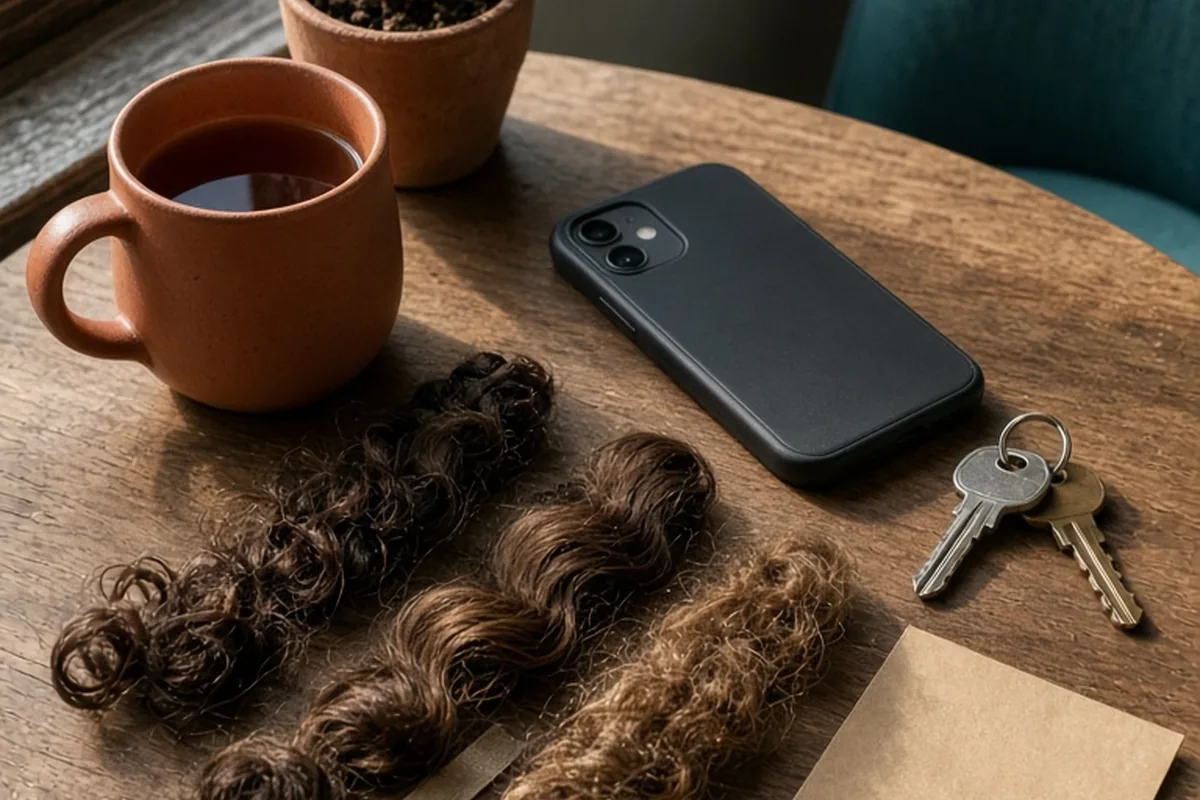
Matching textured hair extensions involves more than choosing an approximate color; it requires matching cuticle health, luster, and structural behavior. High-grade extensions for textured hair generally fall into raw hair or steam-textured human hair categories. Raw hair retains its natural, unprocessed cuticle alignment and mimics natural sheen without synthetic coatings. Steam-textured bundles undergo a chemical-free heat process that permanently shapes straight or wavy donor hair into precise kinky, coily, or deep curly patterns that react naturally to water, leave-in conditioners, and air-drying.
During your appointment, the stylist should show physical hair swatches to evaluate how closely the donor hair sheen matches your natural porosity. If your hair is low-porosity and matte, ultra-shiny chemically treated extension bundles will look artificial and require excessive heat styling to blend. The consultation confirms whether the chosen hair can withstand regular cleansing, conditioning, and diffusing without losing its structural curl definition over successive wear cycles.
Key Discussion Points and Diagnostic Questions for Your Stylist
An effective consultation is a collaborative interview where you assess the practitioner technical competence with textured hair. Ask to review their portfolio specifically for installations performed on your curl type, paying attention to how natural the hairline and parting areas look. Inquire about their protocol for prep services, such as whether they perform an in-salon clarifying wash, deep steam hydration, and split-end dusting prior to installing the foundation.
You should also discuss the operational lifespan of the installation and the maintenance cadence. Clarify how often the anchors need tightening, whether the salon performs safe removals, and what specific steps are taken to avoid matting at the root zone. A competent stylist will outline realistic limits, explaining if your current hair density cannot safely support your desired length or volume without causing structural stress.
Understanding Quotes, Labor Variables, and Total Cost Factors
The financial commitment for textured hair extensions consists of multiple independent components: the raw hair bundles, preparatory salon treatments, installation labor, blending cuts, and recurring maintenance visits. Because textured hair often requires specialized steaming or sourcing to match intricate curl configurations, the hair purchase price varies significantly depending on donor quality, bundle weight, and custom texturing processes.
Labor costs vary based on the complexity of the installation method. Micro-point installations and intricate braidless sew-ins require hours of precision handwork, which commands higher professional fees than standard clip-in fittings. To avoid unexpected expenses, request an itemized quote that clearly separates the cost of the hair from the application fee, and ask for a price schedule covering routine adjustment appointments and eventual professional removal.
Preparing Your Natural Hair for the In-Person Consultation
To give your stylist an accurate view of your hair true behavior, arrive with your hair freshly washed, thoroughly detangled, and dried in its natural state without heavy styling products. Avoid using heavy butters, thick edge-control gels, or silicone-based oils immediately prior to your appointment, as these build-ups mask your genuine strand porosity, diameter, and natural luster.
If you plan to wear your extensions primarily in a blown-out or heat-styled state, communicate this clearly, but still allow the stylist to observe your natural curl pattern first. Bring photographs representing your realistic aesthetic goals, and be prepared to disclose your complete chemical history, including past coloring, relaxers, texturizers, or keratin treatments, as these alter strand elasticity and dictate how much weight your roots can safely bear.
Warning Signs and Red Flags to Watch for in the Salon
Be cautious of any stylist who bypasses a hands-on physical scalp check or attempts to install extensions immediately without analyzing your natural curl pattern. If a salon claims that a single extension method works identically for all hair textures, or dismisses concerns about tension headaches and pulling, they may lack the specialized training needed to preserve textured hair integrity.
Another significant warning sign is a reluctance to disclose hair sourcing details or refusal to present physical texture swatches prior to installation. Extension applications should never involve painful pulling or excessive tightness. A stylist who prioritizes healthy hair will emphasize long-term follicle preservation over extreme transformations that compromise your natural crown.
Illustrative Scenarios
Managing Anchor Tension on Fine Type 4 Coils
A client with fine-diameter, high-density Type 4A coils sought added volume and length for everyday wear. During the consultation, the stylist performed a gentle strand pull test and noted that while the client had substantial hair count, individual strands were prone to mechanical breakage under concentrated point tension. The client originally requested individual fusion bonds, but the stylist demonstrated how micro-bead wefts distributed along wider horizontal tracks would spread the structural load across a broader base of natural hair.
Key point: Consulting on strand diameter rather than relying solely on visual density prevents clients from choosing attachment methods that place excessive mechanical strain on individual follicles.
Frequently asked questions
How should I style my hair when attending an extensions consultation?
Arrive with your hair clean, fully detangled, and styled in your natural curl pattern without heavy styling waxes or thick butters. This allows the stylist to accurately assess your true curl geometry, shrinkage rate, density, and natural porosity.
Can I get extensions if my textured hair is fine or recovering from damage?
Yes, but your stylist must recommend lightweight attachment methods, such as delicate hand-tied wefts or low-tension braid foundations, that distribute weight evenly. The consultation will determine whether your natural strands are strong enough to support added hair or if a restorative care period is needed first.
What is the difference between raw textured hair and steam-textured extensions?
Raw textured hair is completely unprocessed donor hair with naturally occurring wave or curl patterns, offering high longevity and natural variance. Steam-textured hair uses gentle heat and moisture to mold straight or wavy human hair into specific, uniform curl or coil patterns while keeping cuticles intact.
How long does a textured hair extensions consultation usually take?
A thorough consultation typically takes between 30 and 45 minutes. This window provides sufficient time for structural strand tests, lifestyle and routine discussions, physical hair matching, and detailed pricing reviews.
Your next step
Schedule a dedicated consultation with a licensed textured hair specialist, and bring an open record of your styling habits, chemical history, and natural hair routine to establish a safe installation plan.