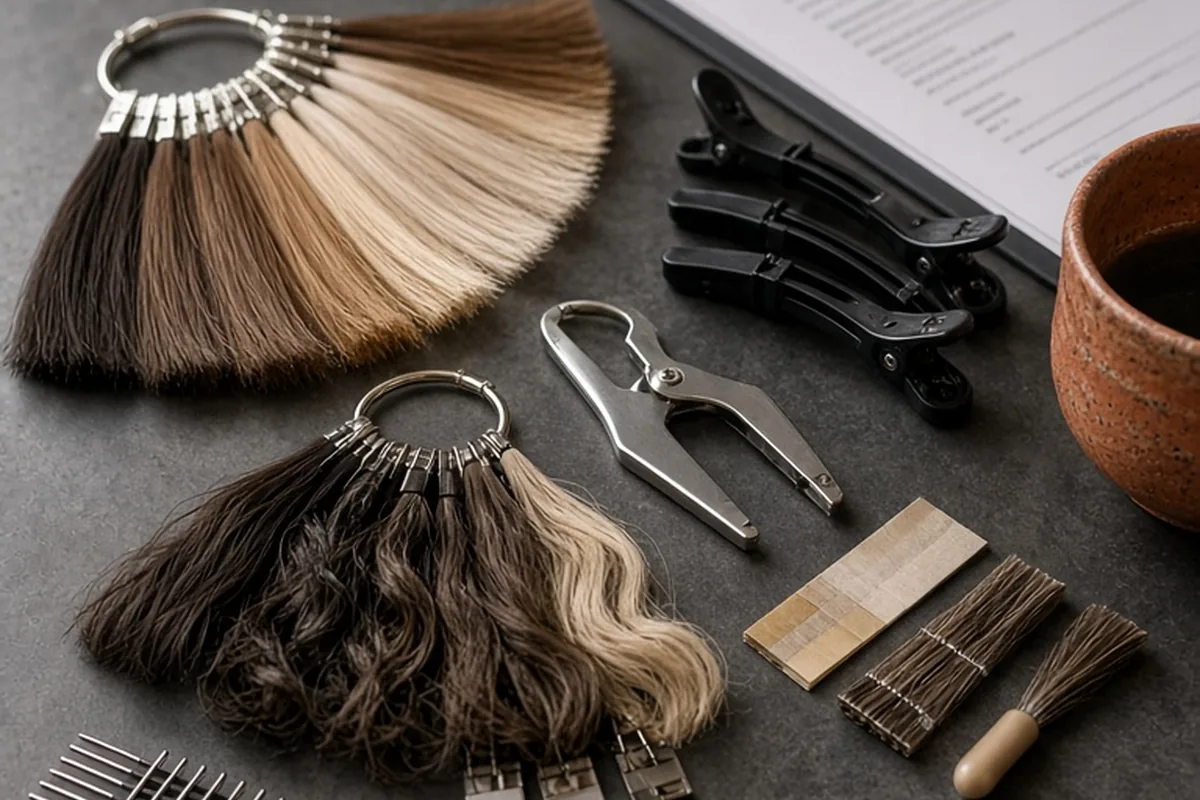
Hair extensions consultation products for beginners include physical color rings, texture sample rings, multi-method practice wefts, a scalp caliper or density comb, sectioning clips, and client consultation intake sheets. Beginners use these specialized evaluation tools before any service to match hair shade, test hair density, assess scalp tolerance, and demonstrate installation methods like tape-ins, hand-tied wefts, or keratin bonds so clients can make informed, realistic choices.
Starting out with hair extension services requires more than installation tools; it demands an organized consultation kit that bridges client expectations with realistic hair capabilities. A structured consultation kit removes guesswork, protects client hair integrity, and sets clear maintenance standards before anyone invests in expensive hair bundles.
Core Evaluation Tools Every Beginner Consultation Kit Needs
A consultation kit is an objective diagnostic setup that helps you determine whether a client is a viable candidate for added hair. Beginner stylists frequently make the mistake of relying solely on verbal conversations or digital photos sent across messaging apps. Photos often distort tone, mask underlying breakage, and fail to reveal hair density. Having physical evaluation items laid out on your workstation signals thoroughness and establishes immediate professional boundaries regarding what can realistically be achieved.
Your base kit should feature mechanical evaluation tools alongside visual samples. This includes fine-toothed metal tail combs for clean parting, tension clips that do not pull or snag sensitive strands, and a flexible tape measure to calculate natural hair length against targeted placement zones. It is equally important to stock professional clarifying test pads or alcohol wipes to test scalp oiliness and verify whether a client has residual silicone buildup from home care products. These tactile items allow you to examine the perimeter and crown where hair is thinnest and most vulnerable to tension alopecia.
When assembling your initial kit, keep the focus on clarity and tactile experience. A client who can hold a bundle, feel the weight of a keratin bond, or see how a beaded row sits against their own part line will feel far more confident than someone reviewing pictures on a phone. Investing in a dedicated consultation caddy or case keeps these items organized, sanitary, and separated from your everyday cutting and chemical implements.
Physical Color Rings and Lighting Tools for Accurate Swatching
A multi-brand or supplier-specific master color ring is the centerpiece of any extension consultation. Novice stylists often try to match hair using digital online charts or single-donor photographs, but variations in display calibration and studio lighting regularly lead to mismatched orders. A physical color swatch ring contains authentic treated hair samples spanning level one jet blacks to level ten platinums, along with multi-tonal balayage, rooted, and piano-blend samples. Having access to these swatches lets you isolate root shades, mid-lengths, and ends independently.
Accurate swatching requires understanding how ambient lighting changes pigment perception. Salon overhead lights, particularly warm incandescent fixtures or high-glare LEDs, can mask cool ash tones or falsely emphasize gold undertones. Beginners should incorporate a handheld 90-plus Color Rendering Index (CRI) inspection light or physically move the client near a natural daylight window during the color assessment. Hold the individual swatch strands parallel to the mid-shaft and exterior mantle of the client's hair rather than laying them flat against the crown, because extensions reflect light differently depending on how they drape over natural layers.
Because extension hair does not lighten with bleach the same way raw hair does, matching the lightest dimension accurately is critical. Swatch rings allow you to illustrate why ordering a dual-blend or rooted shade yields a seamless transition without forcing aggressive chemical processing on the client's natural hair. Keep separate swatch rings for 100 percent human Remy hair and synthetic blends if you offer both, as fiber composition drastically alters how color reflects across varied environments.
Hair Extensions Consultation Products for Demonstrating Attachment Types
Clients often arrive requesting a specific attachment method they saw on social media without knowing whether their hair density or daily routine can support it. Beginner stylists benefit immensely from keeping method-specific sample wefts prepared specifically for tactile client demonstration. These include small working samples of hand-tied wefts, machine-sewn wefts, tape-in tabs, I-tips with silicone-lined micro-beads, and individual fusion keratin tips. Handing these samples to a client lets them physically compare the bulk, weight, and flexibility of each option before committing to an entire installation.
Demonstration wefts clarify the maintenance requirements of each technique. For instance, holding an ultra-thin hand-tied weft next to a sturdier machine weft helps the client understand why hand-tied hair cannot be cut across the seam without unraveling, whereas a machine weft offers structural durability for coarser hair textures. Similarly, showing a client a pair of sandwich tape-in tabs clarifies why oily styling products must be kept away from the root zone to prevent slippage. When clients touch the hardware and understand the contact points, their compliance with home aftercare improves substantially.
To make these demonstration tools last, mount your sample wefts on labeled binder rings or display boards stored in clear, dust-free pouches. Do not use hair that has been degraded by improper storage or excessive heat styling for client demonstrations; the samples must look and feel luxurious to accurately represent the quality of the raw materials you intend to install.
Scalp and Follicle Assessment Aids to Prevent Hair Damage
The safety of any extension service hinges on an accurate assessment of the client's scalp health and natural strand strength. Beginner kits should include a handheld digital trichoscope or an optical magnifying loupe. While high-end trichoscopes connect to tablets via wireless connections, simple illuminated magnifying lenses are equally effective for observing the follicle base. These magnification tools allow you to check for scalp redness, active psoriasis, seborrheic dermatitis, follicular miniaturization, or signs of traction distress that would rule out immediate extension placement.
In addition to visual magnification tools, include a hair elasticity testing setup in your consultation station. A simple spray bottle with room-temperature water and a clear measuring guide allows you to test strand elasticity when wet. Taking a few shed strands from the client's brush or perimeter, dampening them, and gently stretching them demonstrates whether the hair cortex retains adequate tensile strength. Hair that stretches and snaps immediately without springing back indicates severe chemical compromise, serving as clear physical proof that the client needs restorative care before bearing the weight of extensions.
Density gauges or cross-section combs also assist beginners in quantifying hair density. When you measure the circumference of a client's ponytail or isolate a one-inch square section near the parietal ridge, you can determine whether their natural hair density falls into fine, medium, or thick categories. This measurement dictates the safe weight limit for added hair, preventing root snapping caused by overloading fine follicles.
Intake Forms and Digital Record Systems for Client History
A successful consultation requires documenting lifestyle factors, medical history, and daily habits that influence extension longevity. Beginners should develop comprehensive intake paperwork, available either as printed forms on a firm consultation clipboard or as digital templates loaded onto a tablet. The questionnaire must cover recent scalp surgeries, medication changes, thyroid fluctuations, daily workout routines, chlorinated pool exposure, and heat-styling habits. These variables directly dictate which bond types and adhesives are suitable.
Your documentation products must also include explicit aftercare agreements and photo release waivers. Documenting the pre-existing condition of the client's scalp, nape, and crown from multiple angles using a tablet camera protects both parties against misunderstandings regarding pre-existing thinning or chemical damage. Having the client initial specific policy disclosures—such as required re-tabbing intervals, mandatory brushing protocols, and the salon's cancellation policy—establishes accountability before any deposits are exchanged.
Organizing client documentation digitally using secure salon management apps or cloud-based client folders makes referencing past appointments seamless. Store color swatch notes, measured head circumference, bundle grams ordered, and strand-test outcomes in the client's permanent record. When re-ordering hair for maintenance or seasonal shade shifts, having precise historical records prevents costly procurement errors.
Organizing and Sanitizing Your Consultation Products Between Appointments
Hygiene and organization play an essential role in client perception during the consultation phase. Every tool that contacts a client's scalp or hair—including sectioning clips, tail combs, density gauges, and swatch samples held against the roots—must adhere to strict state cosmetology board sanitization guidelines. Beginners should stock a dedicated hospital-grade disinfectant spray, antibacterial surface wipes, and a clearly labeled, sealable container for dirty implements awaiting chemical immersion.
Natural hair swatches and method sample wefts require special sanitization routines because they cannot simply be soaked in standard liquid barbicide without degrading the hair cuticle and adhesive bonds. Stylists should lightly mist sample wefts with an alcohol-based sanitizing aerosol designed for dry styling tools, gently brushing them out with a sanitized loop brush before returning them to protective storage sleeves. Keeping sample hair clean and tangle-free ensures that every prospective client receives a fresh, hygienic experience.
Store your consultation kit in an easily transportable, compartmentalized case rather than mingling it with your active cutting shears or coloring bowls. When an appointment begins, placing a clean consultation mat on your station and arranging your tools deliberately demonstrates professional preparedness. This structured presentation builds client trust, reinforces your expertise, and establishes why high-end extension services command premium pricing.
Frequently asked questions
Can I use digital photos instead of buying a physical color swatch ring?
Digital photos are unreliable for matching hair extensions because monitor calibration, camera filters, and ambient room lighting significantly distort color tones. Physical swatch rings allow you to hold real hair fibers directly against the client's natural layers under natural daylight, preventing costly reorders and color mismatches.
What is the best way to clean extension demonstration wefts between clients?
Demonstration wefts should be lightly misted with a specialized alcohol-based sanitizing spray made for hair extensions and tools, then gently brushed out with a sanitized loop brush. Never immerse bonded or taped samples directly into liquid disinfectant tubs, as the chemicals will break down the seams and adhesives.
How many hair extension methods should a beginner showcase during a consultation?
Beginners should focus on two or three methods they are thoroughly certified in and comfortable installing, such as tape-ins and hand-tied wefts. Presenting too many unfamiliar methods can overwhelm the client and lead to requests for installation techniques you have not yet mastered.
Your next step
Assemble your baseline consultation caddy this week with a master color swatch ring, three method demonstration samples, and clean density combs before scheduling your next extension assessment.