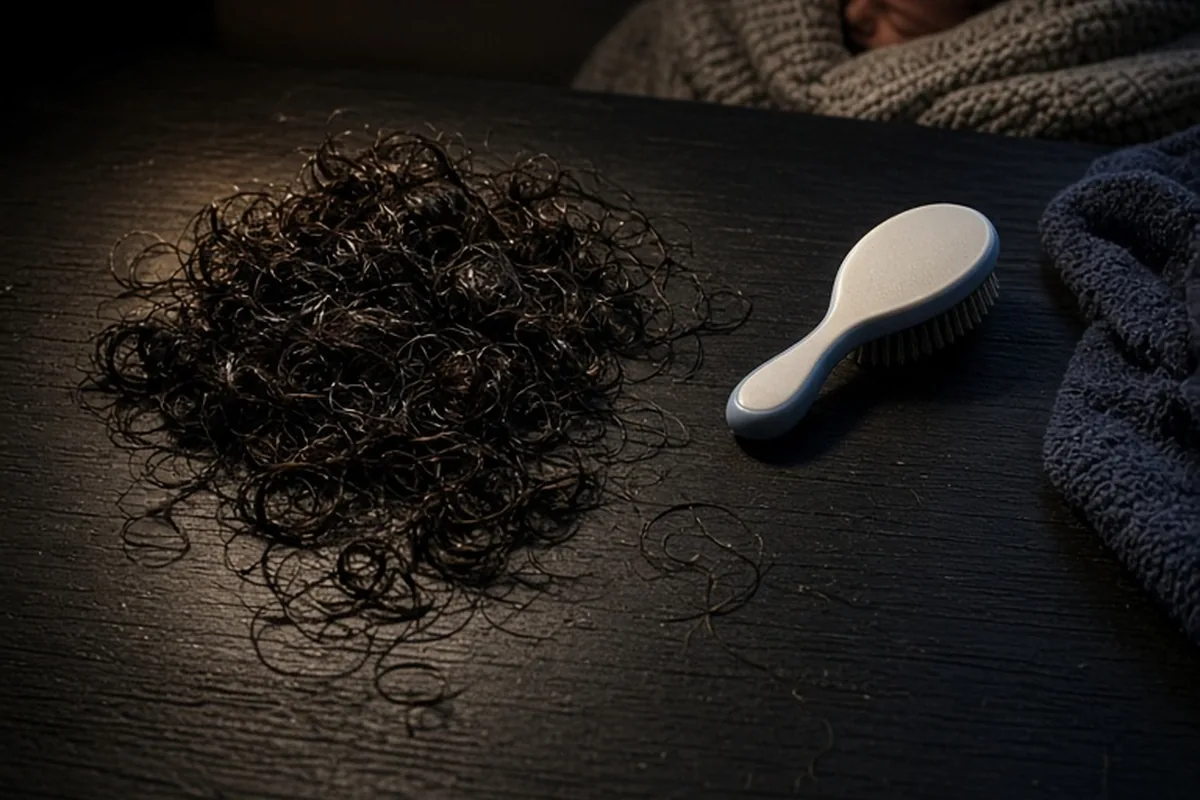
Postpartum hair loss for curly hair occurs when estrogen levels drop after childbirth, shifting hair from the prolonged growth phase into a resting and shedding phase. Because curly and coily patterns trap shed strands within curl clumps, shedding often appears suddenly as alarming tangles or large clumps during wash days. Gentle detangling with plenty of slip, zero-tension styling, and consistent moisture protect fragile curls while new growth naturally resets over time.
Navigating hair changes after welcoming a baby can feel overwhelming, especially when caring for textured hair that already requires thoughtful moisture and detangling techniques.
Why Postpartum Shedding Appears More Dramatic in Curly Hair
Postpartum shedding, known clinically as telogen effluvium, is a normal physiological response to shifting hormone levels following pregnancy. During gestation, elevated levels of estrogen and progesterone prolong the active anagen growth phase of the hair cycle. As a result, daily natural shedding decreases noticeably, leaving many people with thicker, fuller-looking curls. Following childbirth, hormone concentrations drop rapidly, signaling a significant percentage of follicles to enter the telogen resting phase at roughly the same time. Several months later, those resting hairs shed simultaneously to make room for new growth.
For individuals with textured, wavy, curly, or coily hair, this shedding phase can look uniquely intense. Straight hair allows naturally shed strands to slide away continuously throughout the day onto clothing or pillows. In contrast, the bends, spirals, and interlocking structure of curly hair physically trap shed strands within adjacent curl clumps. These hairs remain suspended in the hair canopy until detangling or washing occurs. When you finally cleanse and comb through your curls, hundreds of accumulated shed hairs release at once, creating large balls of loose hair that can look startling even though they represent normal trapped shed fibers.
Distinguishing Between Postpartum Shedding Roots and Curl Breakage
Before adjusting your hair regimen, it is essential to determine whether your volume loss is primarily caused by telogen effluvium shedding or mid-shaft mechanical breakage. Take a close look at the fallen strands during your wash day under bright, direct light. A shed hair has reached the end of its natural life cycle and will feature a tiny, translucent white or pale bulb at the root tip. These hairs will generally match the full length of your current hair canopy, indicating that the follicle has simply released the strand to prepare for a new cycle.
In contrast, hair breakage produces shorter, fragmented pieces without a root bulb. Breakage often exhibits frayed, split, or jagged ends and typically results from mechanical stress, extreme dryness, or friction against clothing and pillowcases. If you notice uneven patches of short, fuzzy hairs around your crown or nape without white bulbs, fragile strands may be snapping under excess friction rather than shedding from the root. Identifying this distinction allows you to focus on the right solution, balancing gentle scalp support for root shedding with deep moisture and lubricity to halt mechanical breakage.
Adjusting Wash-Day Detangling to Protect Fragile Postpartum Curls
Detangling curly hair during a period of heavy shedding requires patience and maximum surface lubricity to prevent sound hairs from being pulled out alongside loose strands. Never attempt to detangle postpartum curls while dry, as the friction between dry spirals creates high tension and snaps weakened strands. Instead, thoroughly saturate your hair with warm water and apply a generous layer of a slippery, silicone-free conditioner or detangling primer with substantial slip. Look for formulas rich in marshmallow root extract, flaxseed, aloe vera, or plant oils that allow tools to glide effortlessly through knots.
Work in small, manageable sections rather than attempting to detangle your entire head at once. Begin detangling with your fingers first to gently tease apart shed hair webs and large knots without snagging. Once the largest tangles are separated, follow with a wide-tooth seamless comb or a flexible-bristle detangling brush, working strictly from the ends upward toward the roots. If you encounter resistance, add more water and conditioner to the specific section rather than pulling through the knot. Removing shed hairs systematically with minimal tension reduces unnecessary mechanical strain on follicles that may already be sensitive.
Navigating Hormonal Changes in Curl Pattern and Porosity
Many postpartum individuals observe that their curl pattern, elasticity, and porosity shift noticeably after childbirth. You may find that your previously tight ringlets loosen into softer waves, or that certain sections around the temples and crown become coarse and resistant to hydration. These shifts occur because hormonal fluctuations temporarily alter the biochemical environment of the hair follicle, influencing the cross-sectional shape of newly emerging hair shafts and changing how outer cuticle layers lay against one another.
To manage these textural transitions, adapt your styling products to your hair's current behavior rather than relying on previous habits. If your hair feels unusually parched and drinks up moisture instantly, your cuticle layer may be elevated, requiring richer leave-in conditioners and light sealing oils to lock in hydration. If your curls have become softer or easily weighed down, transition to lightweight milk leave-ins, airy styling foams, and botanical gels that encourage clump formation without flattening your roots. Giving your hair time to stabilize while responding to its real-time texture helps preserve overall curl definition.
Low-Manipulation and Zero-Tension Styling for Postpartum Scalp Comfort
Textured hair is especially susceptible to traction-related stress, which can compound postpartum shedding if protective styles are installed too tightly. High, tight ponytails, sleek topknots, and firm braids exert continuous pulling force along the hairline and temples—the very zones where postpartum thinning is often most noticeable. This sustained mechanical stress can damage weakened follicles and exacerbate hair thinning over time.
Prioritize loose, low-manipulation styles that distribute weight evenly across your scalp. Loose low buns secured with soft silk or satin scrunchies, gentle flat twists, loose French braids, or a relaxed wash-and-go allow curls to rest without scalp tension. When sleeping, protect your curls with a smooth satin or silk bonnet, or sleep directly on a silk pillowcase to eliminate cotton friction that snags fragile curls. If you prefer to pineapple your curls overnight, secure them very loosely at the crown with an oversized scrunchie to avoid pulling on delicate edges.
Supporting Scalp Health and Choosing Gentle, Lightweight Curl Products
A healthy scalp environment provides the foundation for resilient new curl growth as postpartum shedding naturally winds down. With less personal time and disrupted sleep routines, it can be tempting to rely heavily on dry shampoos to extend wash cycles. However, excessive dry shampoo powders and heavy scalp butters can accumulate around follicle openings, causing buildup, inflammation, and flaking that hinder optimal regrowth.
Cleanse your scalp regularly with a gentle, sulfate-free moisturizing shampoo or an occasional clarifying rinse to remove sebum and product residue. Incorporating a gentle two-minute scalp massage with your fingertips while washing helps stimulate surface circulation and promotes relaxation. When selecting styling products, avoid heavy petroleum or dense mineral oil pastes directly on the scalp, opting instead for water-based hydrators, soothing botanical rinses, and lightweight plant oils like jojoba or squalane applied strictly to mid-lengths and ends.
Recognizing When Postpartum Hair Loss Requires Medical Evaluation
While telogen effluvium is a standard postpartum experience that generally self-corrects as hormones stabilize, ongoing or severe thinning warrants professional guidance. Postpartum shedding typically peaks between three and six months after delivery and gradually resolves over the subsequent months. If your hair continues shedding heavily past the first year postpartum, or if you observe distinct, smooth round bald patches rather than diffuse, overall thinning, it is advisable to speak with a board-certified dermatologist or primary healthcare provider.
Medical evaluation can help rule out underlying systemic factors that frequently coincide with the postpartum period. Thyroid imbalances, postpartum thyroiditis, low ferritin or iron deficiency, and vitamin deficiencies can mimic or prolong postpartum shedding. When meeting with your doctor, bring a brief log detailing when your shedding began, your typical wash-day routine, and any accompanying symptoms such as fatigue, cold intolerance, or brittle nails. A standard blood panel can provide clarity and ensure that your body has the nutritional and hormonal support needed for healthy hair recovery.
Frequently asked questions
How long does postpartum hair loss last for curly hair?
Postpartum shedding usually begins around two to four months after delivery and peaks near the four-to-six-month mark. For most people, shedding gradually subsides within six to twelve months as hormone levels normalize and the hair growth cycle resets.
Why does my curly hair shed in massive clumps instead of individual strands?
The curved, interlocking structure of textured hair naturally holds onto shed strands instead of letting them fall away freely throughout the day. When you wash or detangle your hair, all the naturally shed strands that were trapped inside your curl clumps release simultaneously, creating the appearance of large clumps.
Can I prevent postpartum hair loss on curly hair?
Postpartum shedding cannot be entirely prevented because it is triggered by an internal drop in hormones that shifts resting hairs out of the growth phase. However, you can prevent excessive secondary breakage by avoiding tight hairstyles, detangling gently with conditioner, and protecting your curls with satin accessories.
Will my baby hairs and edges grow back with the same curl pattern?
Regrowing edges and baby hairs often start as short, fine strands that may initially feel softer, wavier, or slightly frizzier than the rest of your hair. As these new strands lengthen and mature over several months, they typically integrate back into your natural curl pattern.
Your next step
Switch your current routine to a low-tension style secured with a silk scrunchie, and make sure your next wash-day detangling session is done on thoroughly conditioned, soaking-wet curls.