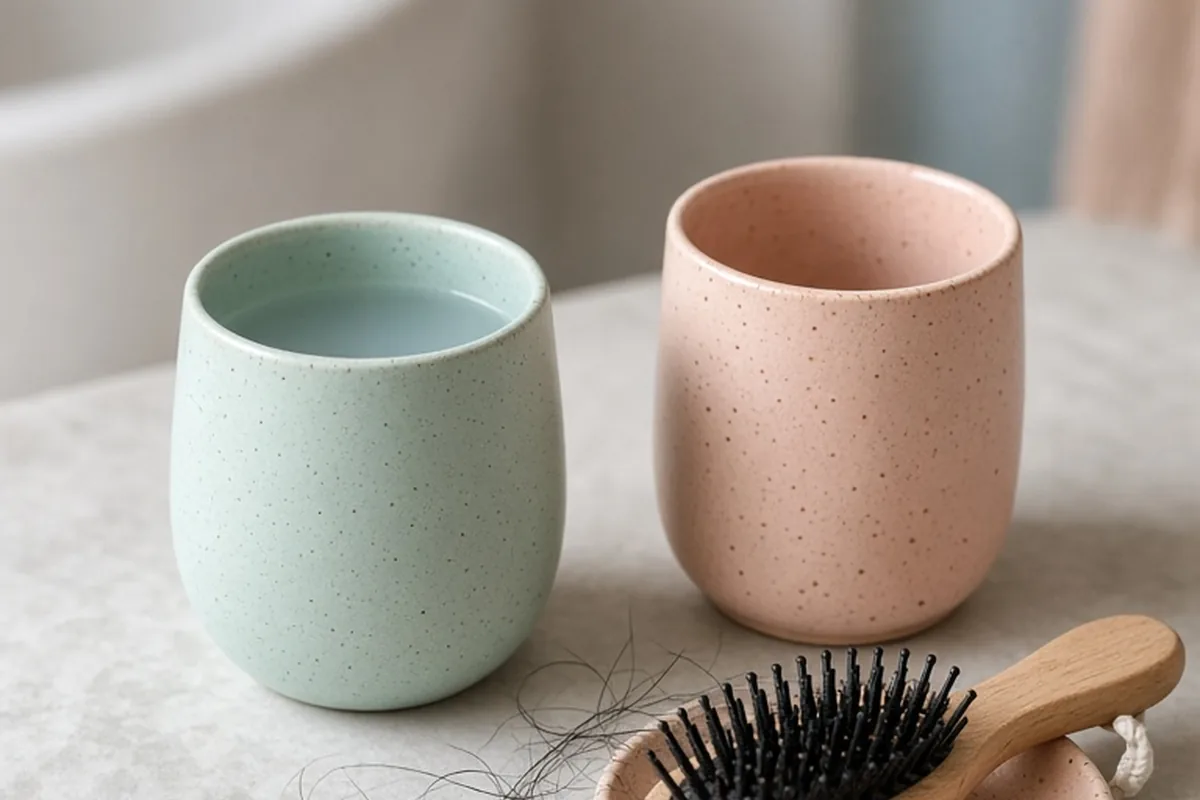
A beginner postpartum hair loss routine focuses on minimizing physical stress on fragile follicles while maintaining a clean, balanced scalp. To start, wash two to three times weekly with a mild, sulfate-free volumizing shampoo, condition only from mid-lengths to ends, detangle gently with a wide-tooth comb while saturated with conditioner, avoid tight hairstyles, and protect fragile baby hairs along your hairline from heat and friction.
Noticing sudden handfuls of hair in your shower drain or hairbrush several months after giving birth can feel alarming, but this shedding is a standard physiological response to shifting hormone levels. Establishing a simple, protective daily routine helps you manage shed strands without panic, reduces unnecessary breakage, and nurtures the scalp environment as new regrowth gradually begins to emerge.
Postpartum Hair Loss Wash Day: Gentle Cleansing Without Stripping
The foundation of managing postpartum shedding starts with how you wash your hair. During pregnancy, elevated estrogen keeps hairs anchored in an extended growth phase; once hormone levels drop postpartum, those delayed resting hairs release in clusters. Washing hair can feel intimidating when you see increased shedding in the basin, but withholding washes often leads to sebum buildup, product residue, and dead skin cells collecting around follicular openings, which can compromise the environment needed for healthy new growth.
Choose a mild, sulfate-free shampoo formulated for fine or thinning hair. Rather than scrubbing vigorously in circular motions, which tangles strands and increases mechanical tension, focus your lather strictly on the scalp. Use the soft pads of your fingertips to make slow, linear back-and-forth motions along your scalp to lift excess oil and environmental residue. Rinse thoroughly with lukewarm water, as hot water can dry out sensitive scalp tissue and leave the hair cuticles raised and vulnerable to snagging.
Space your wash days according to your natural scalp type rather than arbitrary rules. If your scalp is naturally oily, cleansing every other day prevents pore clogging, whereas drier scalp types may only require washing twice a week. If you need a refresh between wash cycles, use a lightweight dry shampoo sparingly at the roots, making sure to wash it out thoroughly within a day or two to prevent powdery buildup around delicate emerging strands.
Detangling and Conditioning Without Pulling Fragile Strands
Conditioning requires a strategic approach when shedding is active. Postpartum hair is often prone to dryness due to shifts in body hydration and routine changes, yet heavy moisturizing creams and rich masks can weigh down remaining density or cause slippage at the root if applied incorrectly. Apply a lightweight, strand-strengthening conditioner exclusively from the mid-lengths down to the ends, keeping the product at least two inches away from the scalp surface.
Detangling should happen when hair is fully lubricated with conditioner in the shower or after applying a dedicated leave-in detangling spray on damp hair. Never drag a standard fine-tooth brush through wet, unconditioned hair, as wet keratin bonds are stretched and easily snapped. Use a wide-tooth comb or a flexible-bristle wet detangling brush, beginning at the very bottom ends of your hair and slowly working upward in small, gentle sections.
If you encounter a stubborn knot, apply a dime-sized amount of extra conditioner or slip-enhancing leave-in spray directly to the tangle and tease it apart horizontally with your fingers before running the comb through. Once rinsed, avoid rubbing your hair with a coarse terrycloth bath towel. Instead, squeeze excess water out gently using an old cotton T-shirt or a soft microfiber hair wrap, which absorbs moisture without abrasive friction against delicate hair cuticles.
Scalp Care Practices That Support Healthy New Follicle Growth
A healthy scalp environment provides the optimal baseline for new hair fibers to emerge smoothly as shedding naturally subsides. Beginners do not need an overwhelming roster of expensive treatments; a few targeted, consistent scalp habits deliver the most dependable support. Incorporating a gentle manual scalp massage for three to five minutes before bed or right before washing can help maintain local tissue mobility and evenly distribute natural oils.
When performing a scalp massage, apply light, rhythmic pressure using your fingertips without scratching with fingernails. If you choose to introduce a topical scalp serum, prioritize lightweight, water-based formulations featuring soothing ingredients like panthenol, peptide complexes, or aloe vera rather than heavy, thick botanical oils that require harsh shampoos to remove. Heavy oils can trap dead skin and sebum around hair follicles if not washed away completely.
Be cautious with highly stimulating essential oils or concentrated active ingredients if your scalp feels unusually sensitive, itchy, or tender postpartum. Always conduct a patch test on a small area of skin behind your ear or along the nape of your neck before applying any new botanical extract or serum across your entire scalp, watching for any redness, burning, or flaking over a forty-eight-hour window.
Low-Tension Daily Styling to Prevent Breakage and Traction
Physical tension is one of the most common ways to worsen the appearance of postpartum shedding. With a newborn, pulling hair back into a quick, high ponytail or tight topknot is an understandable habit, but repeated pulling places mechanical strain on follicles that are already loose in the telogen phase. Over time, high tension can cause traction along the hairline and temples, which are often the areas most visibly impacted by hormonal shedding.
Shift toward low-tension, protective styling choices. Swap rigid elastic hair ties for wide silk, satin, or soft microfiber scrunchies, or use smooth, seamless claw clips positioned loosely at the nape of your neck. If you prefer to keep hair off your face, try soft fabric headbands with gentle elastic or loosely pinned side twists that do not exert backward pull on your temples or forehead fringe.
Nighttime habits are equally important for protecting fragile hair. Sleeping on a smooth satin or silk pillowcase reduces friction as you toss and turn, preventing tangling and surface breakage around delicate baby hairs. Alternatively, loosely gathering hair into a low, unstructured bun secured with a silk scrunchie helps prevent strands from getting caught under shoulders or bedding during sleep.
Volumizing Strategies to Disguise Thinning While Regrowth Happens
While you wait for shedding to stabilize and short regrowth to fill in, strategic styling techniques can create the visual appearance of fuller, denser hair without causing damage. One of the simplest adjustments is shifting your natural part. Hairs that have settled into a flat, habitual parting often reveal more scalp; flipping your part a half-inch to the left, right, or creating a soft zig-zag parting instantly lifts hair at the root.
When choosing styling products, prioritize airy, weightless textures. A light volumizing foam applied to damp roots before air-drying or rough blow-drying on a cool setting provides structural lift without stiff residue. Avoid heavy waxes, heavy pomades, or greasy silicone serums, which cause individual strands to clump together and expose wider areas of the scalp underneath.
Consider visiting a hairstylist for a subtle shaping cut rather than waiting out the shedding phase in frustration. Adding soft, face-framing layers, blending in light curtain bangs, or taking a few inches off overall length removes downward weight, giving remaining hair natural bounce and seamlessly blending in the shorter sprouting hairs that typically appear along the front hairline a few months into recovery.
Nutritional Baseline and Knowing When to Consult a Doctor
Hair follicles are non-essential tissues from a survival standpoint, meaning your body prioritizes vital organs and milk production over hair growth during postpartum recovery. Maintaining a steady nutritional baseline is critical for replenishing internal stores. Continuing your postnatal vitamins, staying consistently hydrated, and including balanced sources of dietary protein, iron, zinc, and essential fatty acids in your meals supports overall recovery alongside your external hair routine.
It is important to understand the normal timeline and limitations of postpartum shedding. For most individuals, increased shedding begins between two and four months after childbirth and gradually tapers off within six to twelve months as follicle cycles realign. Because postpartum shedding is driven by normal hormonal drops, topical routines cannot instantly freeze shedding that has already entered the resting phase, but they prevent unnecessary additional loss from friction and breakage.
Consult a primary care physician, dermatologist, or OB-GYN if you experience warning signs that fall outside typical telogen effluvium. These include distinct circular bald patches, severe scalp scaling, redness, burning pain, or shedding that continues intensely beyond twelve months postpartum. A healthcare provider can order basic blood panels to evaluate thyroid function, ferritin and iron levels, or vitamin deficiencies that might be contributing to prolonged shedding.
Frequently asked questions
How long does postpartum hair loss typically last?
Postpartum shedding usually begins around two to four months after delivery and peaks around four months. For most people, the shedding naturally slows down and hair begins returning to its normal growth cycle between six and twelve months postpartum.
Does brushing my hair make postpartum shedding worse?
Brushing does not cause the underlying hormonal shedding, as those hairs have already entered the release phase beneath the scalp. However, using a harsh brush or tugging aggressively can snap healthy, growing hairs, so always use a gentle wide-tooth comb or flexible detangling brush.
Can taking special hair supplements stop postpartum hair shedding immediately?
No supplement can instantly stop the shedding of hairs that have already shifted into the resting phase following pregnancy hormone drops. A balanced postnatal vitamin supports general nutritional recovery and future regrowth, but realistic time and gentle hair handling are the primary factors in recovery.
Should I wash my hair less frequently to keep it from falling out?
Washing less often does not prevent hair loss; it simply causes the hairs that have already detached from follicles to accumulate and come out all at once during your next wash. Cleansing on a regular schedule keeps the scalp clean and avoids pore buildup that could hinder new growth.
Your next step
Switch to a gentle, wide-tooth comb and replace tight hair elastics with soft silk scrunchies today to eliminate unnecessary tension on fragile follicles.