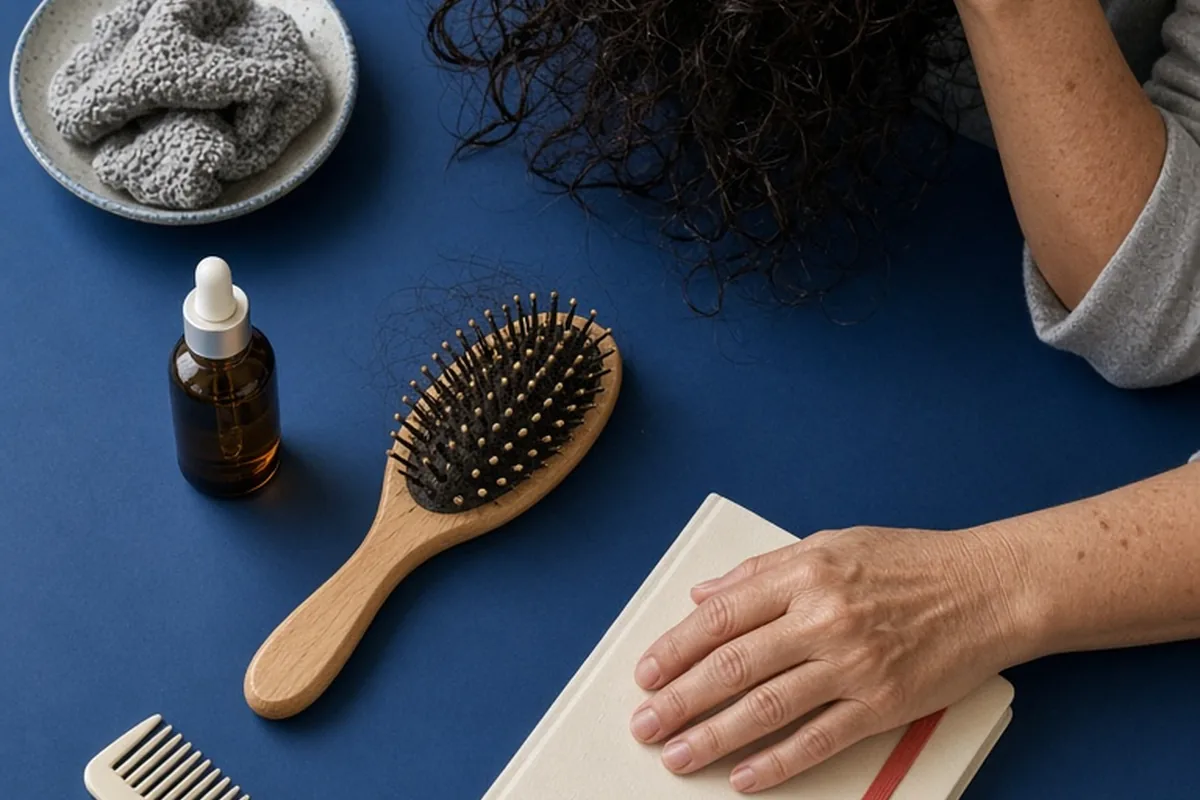
A hair loss during menopause maintenance schedule combines consistent daily strand protection, structured weekly scalp care, and regular medical check-ins. Daily care focuses on gentle detangling, low-tension styling, and targeted topical treatments. Weekly routines center on scalp-cleansing washes, deep moisture conditioning, and low-heat drying. Monthly and quarterly reviews track shedding patterns, adjust product hydration levels, and ensure proper coordination with your primary care provider or dermatologist.
Hormonal fluctuations during perimenopause and menopause frequently shift the hair growth cycle, leading to diffuse thinning, slower regrowth, and increased strand dryness. Establishing a predictable care schedule helps minimize mechanical breakage, calms scalp inflammation, and creates the best possible environment for sustained follicle health.
Structuring Your Daily Scalp and Strand Care Routine
A reliable daily routine serves as the foundation for preserving strand density when estrogen levels decline. Estrogen supports hair growth duration and follicle diameter, so lower levels leave strands finer, drier, and more susceptible to friction damage. Start each morning with low-manipulation styling practices that do not place tension on the frontal hairline, crown, or nape. Using wide-tooth combs or flexible detangling brushes starting from the ends and working upward prevents unnecessary strand snapping. If you apply leave-in conditioning sprays or water-based hydrating mists, distribute them evenly along the mid-lengths and ends rather than saturating the scalp, which can lead to product buildup.
Evening maintenance is equally critical to prevent friction-induced thinning while you sleep. Swapping cotton pillowcases for silk or satin slips reduces surface drag against fragile strands throughout the night. If your hair is long enough to gather, secure it in a loose pineapple or high gather using a soft satin scrunchie rather than elastic ties that cinch the cuticle. For those prescribed daily topical solutions, such as topical minoxidil or compounding scalp lotions, apply them directly to a clean, dry scalp at night, giving the product ample time to absorb fully before resting your head on bedding.
Weekly Cleansing, Deep Conditioning, and Scalp Care Cadence
Washing frequency must balance two competing needs: keeping the scalp clear of sebum, dead skin cells, and residue without stripping moisture from vulnerable hair shafts. For most straight, wavy, or loosely curled hair types experiencing menopausal dryness, washing one to three times weekly provides adequate cleansing. Textured, coily, or dry hair types typically thrive on a once-weekly or bi-weekly wash schedule. Use sulfate-free shampoos that cleanse gently while maintaining natural moisture barriers, massaging the scalp with your fingertips in small circular motions rather than rough scrubbing.
Follow every wash with a concentrated deep-conditioning or protein-moisture balancing mask, leaving it on for ten to fifteen minutes under a shower cap. This step replenishes lipid layers compromised by shifting oil gland activity during menopause. Prioritize formulas containing emollients, fatty alcohols, and humectants like glycerin or panthenol. Rinse thoroughly with lukewarm water, as excessively hot water dehydrates the scalp and prompts irritation. Finish your wash day by pressing excess moisture out with a microfiber towel or soft cotton cloth instead of rubbing vigorously.
Monthly Progress Checkpoints and Regimen Adjustments
Because hair grows at a natural rate of roughly half an inch each month, immediate daily changes in density are difficult to assess objectively. Establishing a dedicated monthly review allows you to track shedding trends, scalp comfort, and overall hair response without unnecessary anxiety. Choose a consistent day each month to take clear photos of your part line, temples, and crown under consistent, natural lighting. These visual records provide tangible data that help differentiate temporary seasonal shedding from persistent hormonal thinning patterns.
Use your monthly checkpoint to inspect your scalp for signs of inflammation, chronic dryness, redness, or flaking, which signal that a product formulation or wash frequency needs adjustment. If product buildup is visible around follicle openings, incorporate a single gentle clarifying wash followed by a hydrating mask. This monthly milestone is also the ideal moment to evaluate your styling tools, replacing worn brush bristles and ensuring hair ties have not lost their protective fabric coverings.
Adapting Menopause Maintenance for Textured and Coily Hair
Textured, curly, and coily hair types (types 3 and 4) require deliberate modifications during menopause because natural curl geometry makes it harder for sebum to travel down the shaft, accelerating dryness. A menopause maintenance schedule for textured hair must prioritize moisture sealing and friction reduction. Instead of frequent lathering, integrate hydrating co-washes between full shampoo days, or pre-treat strands with botanical oils before cleansing to preserve internal lipid stores.
Protective styles such as twists, loose braids, or satin-lined wraps protect delicate ends from environmental stressors and reduce daily manipulation. However, during menopause, protective styles must never pull tightly on the scalp, as weakened follicles are particularly vulnerable to traction alopecia along the hairline and nape. Ensure styles are installed loosely, take them down every four to six weeks to cleanse and clarify the scalp thoroughly, and avoid heavy extensions that add downward weight to fragile roots.
Coordinating Topical Products and Medical Evaluations
A successful maintenance schedule bridges home cosmetic care with professional medical oversight. Menopausal hair thinning frequently presents as female pattern hair loss, telogen effluvium triggered by life stressors, or nutritional shifts related to iron, ferritin, zinc, or thyroid function. Scheduling a comprehensive consultation with a board-certified dermatologist or trichologist establishes a clinical baseline. These specialists can conduct scalp examinations, blood work, or trichoscopy to pinpoint the exact mechanisms driving your hair loss.
When integrating clinical interventions like prescription topicals, oral anti-androgens, or platelet-rich plasma treatments into your calendar, consistency is vital. Most medical topicals require three to six continuous months of daily adherence before visible changes in follicle retention or hair caliber appear. Coordinate your home washing and styling schedule around these clinical applications so your scalp remains clean, receptive, and unburdened by heavy silicones that could impede topical absorption.
Seasonal Shifts, Styling Safeguards, and Long-Term Consistency
Environmental conditions change throughout the year, requiring slight shifts in your maintenance timeline. During colder, drier winter months, indoor heating saps ambient moisture, making hair shafts brittle and prone to split ends. Increase the frequency of deep conditioning treatments and introduce steam hydration sessions to keep curls and straight strands pliable. During summer, protect your scalp and hair from ultraviolet light exposure by wearing wide-brimmed hats or using UV-protective hair mists, as sunburn on exposed part lines damages delicate follicles.
Throughout all seasons, maintain clear boundaries around thermal and chemical styling. Keep blow dryers on low to medium heat settings, hold diffusers several inches away from the roots, and apply a dedicated heat protectant before any warm airflow touches damp strands. Space out chemical processes like color applications, glosses, or relaxers to at least eight to ten weeks apart to allow the hair cuticle and scalp barrier adequate recovery time.
Frequently asked questions
How long does it take to see results from a menopause hair maintenance schedule?
Most individuals notice reduced breakage and improved scalp comfort within four to six weeks of following a gentle routine. Visible changes in strand density, reduced shedding, or new growth typically require three to six months of consistent daily and weekly care due to the natural hair growth cycle.
Should I wash my hair less often if it is thinning during menopause?
Washing less often can reduce friction, but washing too infrequently allows excess sebum, dead skin, and yeast to accumulate around follicles, potentially triggering inflammation. Tailor your wash schedule to your scalp type, usually one to three times weekly for straight or wavy hair and weekly to bi-weekly for textured hair.
Can over-the-counter supplements replace a topical and physical maintenance schedule?
Supplements alone cannot substitute for gentle handling, scalp hygiene, and targeted topical care. While addressing verified nutritional deficiencies supports follicle function, physical maintenance protects existing strands from breakage, and professional evaluations address underlying hormonal drivers.
When should I consult a dermatologist about menopausal hair shedding?
Consult a dermatologist if you experience sudden, patchy hair loss, scalp pain, intense itching, or noticeable widening of your part that persists beyond several months. A clinical assessment helps rule out underlying conditions like thyroid disorders, nutritional deficiencies, or scarring alopecias.
Your next step
Take three clear baseline photographs of your scalp and part line in natural light today, then establish a gentle, low-tension washing and styling routine for the next four weeks.