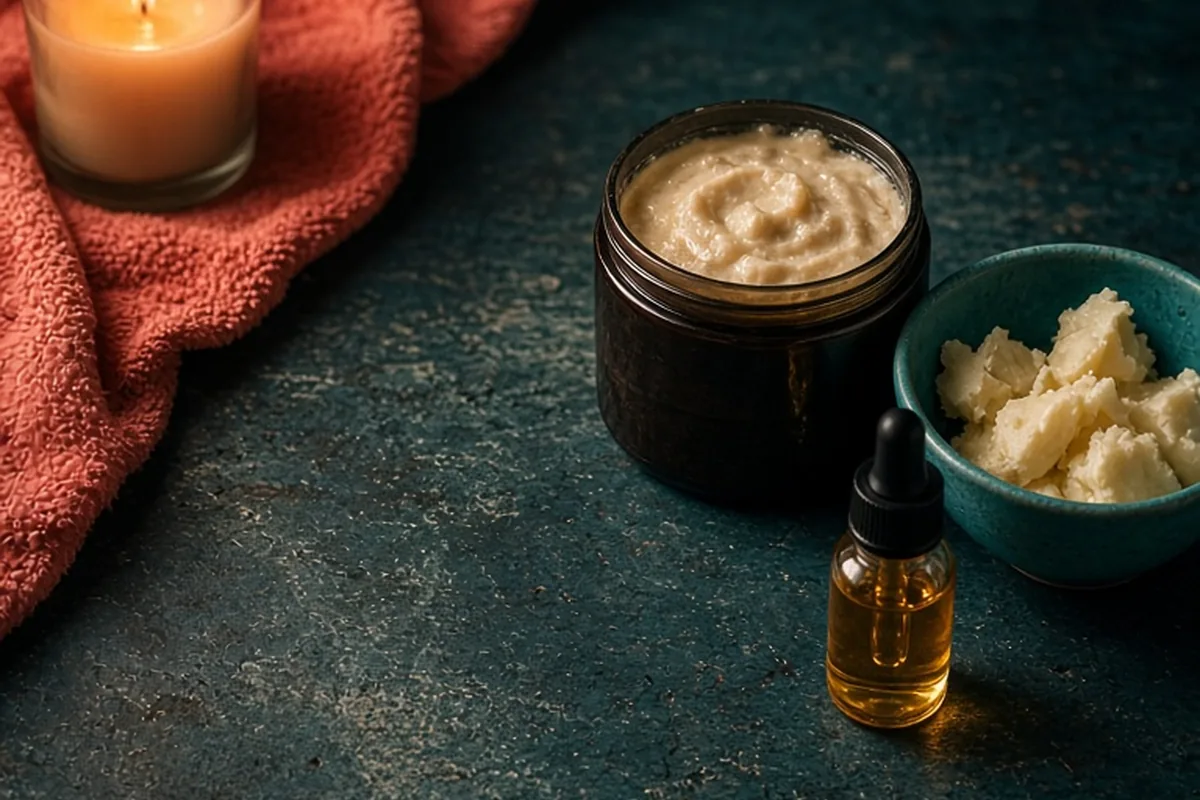
A hair mask for dry textured hair should prioritize rich humectants like glycerin and aloe vera combined with emollient plant butters and penetrating oils like shea, murumuru, or argan to restore flexibility. For coiled, curly, or wavy patterns prone to chronic dryness, select formulas free from drying alcohols, apply the product evenly in sections across damp hair, and use gentle indirect heat for fifteen to thirty minutes to encourage optimal cuticle penetration.
Textured hair types, including loose waves, distinct curls, and tight coils, naturally struggle with moisture distribution because the bends along the strand prevent natural sebum from traveling efficiently from root to tip. When external stressors such as environmental changes, mechanical manipulation, or chemical processing deplete the strand's moisture reserves, hair becomes brittle, prone to breakage, and dull. Introducing a targeted, deeply hydrating mask into a regular wash routine provides concentrated nourishment that standard daily conditioners cannot match.
Evaluating Formulations: Key Ingredients for Textured Hair Masks
Finding an effective mask begins with reading the ingredient list to confirm that the formulation delivers both hydration and lipid replenishment. Hydration refers to introducing water content into the hair shaft, while moisture retention relies on oils and butters that coat the strand and seal that water inside. Effective formulations for textured strands combine film-forming humectants such as aloe vera leaf juice, vegetable glycerin, honey, and panthenol with rich emollient bases. These humectants attract ambient moisture to the strand, helping restore suppleness to dry coils.
Emollients and occlusives represent the second essential half of a balanced formulation. Heavy plant butters, including raw shea butter, cupuacu butter, and mango seed butter, create a protective barrier over lifted cuticle scales, preventing internal moisture from evaporating. Penetrating oils like coconut oil, avocado oil, and olive oil contain smaller fatty acid chains capable of entering the hair cortex to lubricate inner fibers. Conversely, sealing oils like jojoba, castor, or argan sit closer to the surface, delivering shine, smoothing rough textures, and shielding fragile strands from friction during styling.
It is equally critical to monitor the presence of hydrolyzed proteins such as silk amino acids, hydrolyzed wheat protein, or hydrolyzed quinoa. While dry textured hair primarily requires moisture, small amounts of protein reinforce weak points along the curl pattern where bends create structural vulnerabilities. However, masks designed strictly for dry hair should feature protein low on the ingredient list rather than near the top, ensuring the product emphasizes softening hydration rather than structural hardening.
Matching Hair Porosity to the Right Mask Texture and Weight
Porosity describes how readily your hair absorbs and retains moisture, making it one of the most reliable criteria for choosing a mask. Low-porosity textured hair features tightly bound, overlapping cuticle layers that resist water absorption. If you apply a heavy, butter-laden mask to low-porosity curls, the product often sits on the exterior of the strand, creating a greasy film without quenching internal dryness. For low-porosity hair, seek out lighter formulations centered on aloe vera, sweet almond oil, sunflower seed oil, and glycerin, and always incorporate indirect heat during treatment to gently lift the cuticle.
High-porosity textured hair exhibits gaps, tears, or naturally open cuticles, often caused by past color treatments, frequent heat styling, or natural strand architecture. This porosity type absorbs water rapidly but loses it just as quickly through evaporation. High-porosity hair thrives on thick, dense masks rich in raw butters, hydrolyzed keratin, and heavier oils such as castor or avocado oil. The dense consistency physically fills the gaps along the cuticle layer, fortifying the strand and locking water into the cortex so hair remains soft days after washing.
Medium-porosity hair possesses balanced cuticles that absorb and retain hydration with relative ease. If your hair falls into this category, you can alternate between moisturizing treatments and light protein-infused masks without risking extreme dryness or heavy product accumulation. Focusing on medium-weight oils like argan, jojoba, and marula provides sufficient lubrication without weighing down looser curl or wave patterns.
Applying a Hair Mask for Dry Hair for Textured Hair Step by Step
Proper application technique determines how effectively a mask's active ingredients penetrate the hair shaft. Begin by cleansing your scalp and hair with a gentle, sulfate-free shampoo or a clarifying cleanser to remove residual styling products, silicones, and sebum. Masking on top of product buildup creates an impenetrable barrier that prevents hydrating agents from reaching the cortex. After rinsing, gently squeeze out excess water with a microfiber towel or cotton T-shirt until strands are damp rather than dripping wet, which prevents water from diluting the treatment.
Divide your hair into four to six manageable sections using non-snag clips. Working section by section, scoop a moderate amount of mask and emulsify it between your palms. Apply the product starting two inches away from your roots down to the very ends, paying special attention to the tips, which represent the oldest and most vulnerable portion of the hair. Use the 'praying hands' smoothing method down each section to encourage cuticle alignment, then gently finger-detangle to distribute the formula evenly from mid-lengths to ends.
Once every section is thoroughly coated, clip the hair up and cover it with a plastic processing cap. Adding gentle, indirect warmth—such as sitting under a hooded dryer, using a heated gel cap, or wrapping a warm, damp towel over the plastic—causes the hair cuticles to slightly expand, allowing the nourishing ingredients to absorb deeply. Allow the mask to work for fifteen to thirty minutes. Avoid leaving treatments on for hours or sleeping in them, as prolonged saturation with water and product can weaken hair fibers through hygral fatigue. Rinse thoroughly with lukewarm or cool water to seal the cuticles.
Balancing Conditioning Frequency with Your Overall Wash Schedule
Establishing the right cadence for deep conditioning depends on your strand diameter, curl density, and everyday styling routine. For severely dry, tight coils (Type 4 textures) or chemically processed strands, masking once every week or every wash day is often appropriate until elasticity and softness improve. The tight bends in coily hair present numerous points where moisture escapes, requiring consistent replenishment to keep the fiber pliable and resistant to snap breakage during detangling.
For fine-textured curls or loose waves (Type 2 and 3 textures), applying a rich mask on every wash day can lead to weighed-down roots and limp definition. In these cases, deep conditioning once every two to three weeks provides sufficient moisture maintenance without compromising natural volume. On intermediate wash days, a standard rinse-out conditioner delivers adequate surface slip and light moisture without overloading the strands.
Pay close attention to seasonal shifts when planning your treatment frequency. During dry, cold winter months or periods of high indoor heating, hair loses moisture to the surrounding air at an accelerated rate, warranting more frequent masking sessions. During humid summer months, you may need to reduce your mask frequency or switch to formulations containing fewer strong humectants to avoid excessive moisture uptake that leads to frizz.
Diagnosing Moisture Overload Versus Protein Sensitivity in Curls
When attempting to resolve dry hair, it is common to misdiagnose the underlying condition of the strand. Hair that suffers from moisture fatigue (hygral fatigue) often feels excessively soft, limp, mushy when wet, and stretches far past its normal length before breaking without snapping back. This occurs when hair is masked too frequently or left under deep conditioners for excessive periods, damaging the cell membrane complex inside the fiber. If your textured hair exhibits these symptoms, pause heavy moisture masks and introduce a light protein treatment to restore tensile strength.
Conversely, protein overload manifests as hair that feels stiff, rough, brittle, and straw-like, snapping immediately when subjected to slight tension. This happens when individuals use reconstructive, bond-building, or protein-heavy masks on hair that simply needs water and lipid replenishment. If you suspect protein buildup, perform a clarifying wash with a gentle chelating shampoo to strip away excess surface deposits, then follow with a strictly moisture-focused, protein-free mask rich in aloe vera, panthenol, and shea butter.
A simple elasticity test on a single wet shed strand can help guide your treatment decision. Gently stretch the strand between your fingers: healthy hair stretches slightly and returns to its original curl pattern; protein-deficient hair stretches excessively without bouncing back; and protein-overloaded or severely dehydrated hair snaps almost instantly with zero stretch.
Post-Mask Styling: Retaining Hydration with the LOC and LCO Methods
Rinsing out a deep conditioning mask is only the first part of managing dry textured hair; preserving that newly acquired moisture requires deliberate post-wash layering. The LOC (Liquid/Leave-in, Oil, Cream) and LCO (Liquid/Leave-in, Cream, Oil) methods provide structured layering frameworks designed to trap hydration inside the strand for days between wash cycles.
In both methods, the process starts with a water-based leave-in conditioner or hydrating mist applied to damp hair. This liquid layer serves as the baseline hydration source. If you follow the LOC method, you apply a thin layer of penetrating oil next to coat the strand, followed by a heavy styling cream or butter to create a dense outer shield. This approach works particularly well for coarse, high-porosity coils that lose moisture rapidly through an open cuticle layer.
The LCO method alters the order by applying the styling cream immediately after the water-based leave-in, finishing with a light sealing oil across the exterior. Many people with fine curls or low-to-medium porosity prefer the LCO method because it allows the moisturizing cream to absorb directly into the hair fiber before the oil locks everything in place, minimizing greasy surface residue and maximizing curl clumping and definition.
Preventing Mask Buildup and Dealing with Hard Water Complications
Even the most nourishing mask will fail to produce results if mineral deposits or synthetic polymers accumulate on the hair shaft. Hard water contains high concentrations of dissolved minerals like calcium and magnesium, which bind to hair fibers, forming an insoluble film. This mineral crust repels water and prevents conditioning agents from penetrating, causing hair to feel perpetually dry, stiff, and unresponsive to even the heaviest conditioning treatments.
To counter this issue, incorporate a dedicated chelating shampoo into your regimen once every four to six weeks if you live in an area with hard water. Chelating agents, such as disodium EDTA or tetrasodium EDTA, actively bind to and lift mineral ions from the hair shaft, resetting the surface so masks can work as intended. Installing an attachable shower filter can also help reduce chlorine and sediment, though true water softening requires whole-house or ion-exchange filtration systems.
Similarly, monitor your product ingredients for non-water-soluble silicones such as dimethicone or amodimethicone. While these ingredients provide excellent initial slip and heat protection, they require regular clarifying with gentle surfactants to prevent a buildup layer that locks out external moisture over time. Balancing clarifying washes with deep conditioning ensures a clean foundation for every mask application.
Frequently asked questions
Can I leave a hair mask on my textured hair overnight for extra moisture?
Leaving a mask on overnight is not recommended because hair fibers can become waterlogged, leading to hygral fatigue and cuticle weakening. Most masks achieve their maximum conditioning benefit within twenty to thirty minutes, after which prolonged dampness increases fragility rather than hydration.
How often should I use a deep conditioning mask on dry, curly hair?
For moderately dry or healthy textured hair, using a mask once every one to two weeks is typically sufficient. If your hair is severely dehydrated, color-treated, or recovering from heat damage, you can use a mask weekly until moisture levels and elasticity stabilize.
Should I apply a hair mask to wet or dry textured hair?
Hair masks should generally be applied to freshly washed, damp hair with excess water gently squeezed out. Applying a mask to damp hair allows humectants to bind with existing water molecules, while applying to dirty or completely dry hair can prevent the formula from distributing evenly across the strands.
What is the difference between a daily conditioner and a deep conditioning mask?
Daily conditioners primarily work on the surface of the hair shaft to provide immediate slip, detangling ease, and light cuticle smoothing. Hair masks feature higher concentrations of active lipids, butters, and smaller penetrating molecules designed to absorb into the cortex for longer-lasting structural hydration.
Your next step
Check the ingredient label of your current deep conditioner to confirm it balances humectants like glycerin or aloe with rich plant butters, then apply it with indirect heat on your next wash day to test your hair's moisture response.