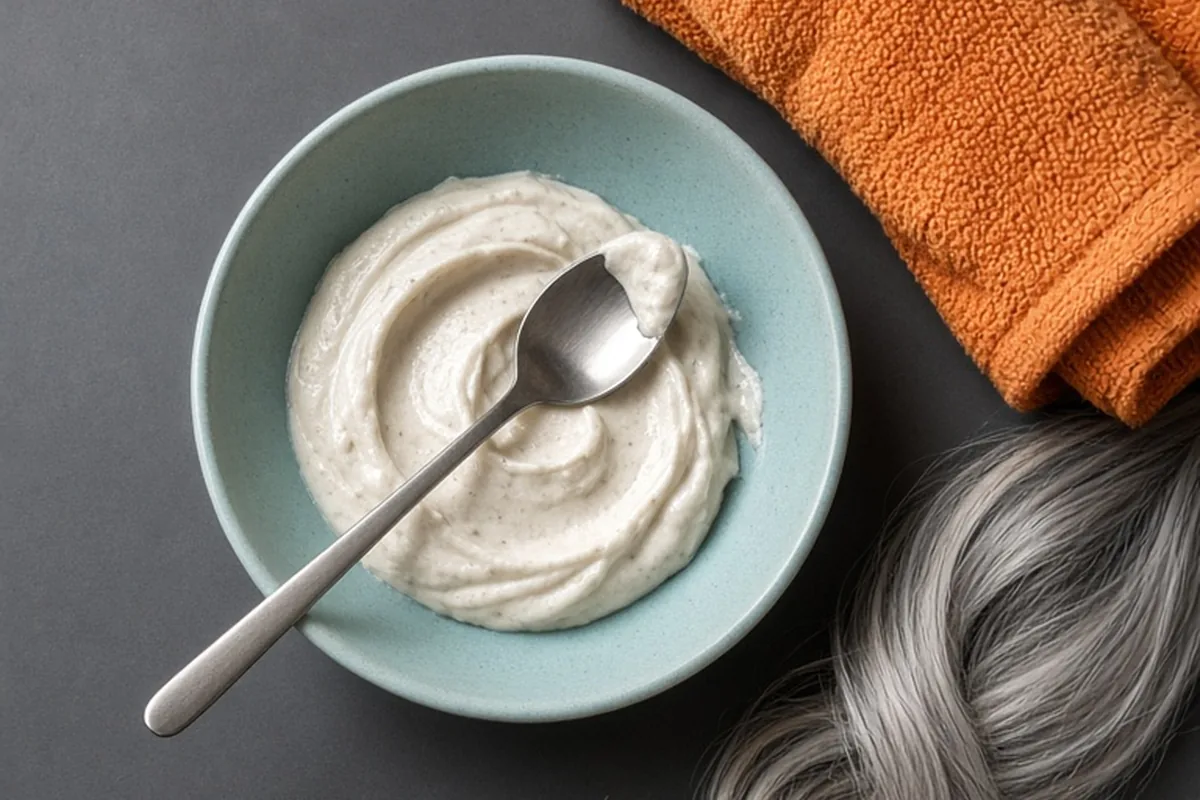
Women over forty experiencing dry hair should choose a restorative hair mask rich in emollient lipids, humectants, and fatty acids, such as squalane, ceramides, argan oil, and panthenol. As natural sebum production declines and cuticle porosity increases during perimenopause and menopause, hair fibers lose moisture rapidly. A weekly deep conditioning treatment that replenishes lost lipids without overloading strands with stiffening proteins restores elasticity, softens coarser silver strands, and protects aging hair fibers from ongoing mechanical breakage.
Hair changes after forty often catch women by surprise when trusted routines suddenly stop delivering soft, manageable results. Understanding how hair fiber biology evolves with age makes it easier to select targeted treatments that restore softness and resilience rather than weighing hair down with ineffective surface coatings.
Why Hair Moisture Retention Declines After Age Forty
Hair aging involves both internal biological shifts and cumulative external exposure. As women enter perimenopause and menopause, shifting estrogen and progesterone levels alter the behavior of sebaceous glands on the scalp. These glands produce noticeably less sebum, the natural lipid-rich oil responsible for coating the hair shaft and locking moisture inside the cortex. Without this continuous protective barrier, moisture evaporates quickly through the cuticle layer, leaving hair dry, fragile, and prone to static or frizz.
At the same time, the cellular architecture of individual hair fibers changes. Aging follicles produce strands with reduced natural lipid content, particularly the loss of 18-methyleicosanoic acid, which provides the hair cuticle with its natural water-repellent seal. Decades of routine heat styling, brushing friction, ultraviolet sunlight, and chemical coloring compound this depletion by lifting and chipping the overlapping cuticle scales. Once the cuticle is compromised, the inner protein structure of the hair becomes exposed to environmental drying, requiring targeted lipid replenishment to mimic the missing natural oils.
Navigating the Texture Changes of Emerging Gray and Silver Hair
Gray hair is not merely hair that has lost its pigment; it has distinct physical and chemical properties that alter how it responds to moisture. When melanocytes cease producing melanin, the follicle produces hair fibers that often grow out with a thicker, more irregular cuticle layer. This structural change gives silver strands a wiry, unruly texture that feels rougher to the touch and can resist normal surface conditioning.
Despite feeling coarse and thick, gray hair is often internally more porous and brittle than pigmented hair. The irregular cuticle scales allow moisture to enter and escape rapidly, making gray hair especially vulnerable to humidity swelling in warm weather and parched dryness in winter. A nourishing mask must penetrate these stubborn outer scales without relying on heavy waxes that sit on the surface, leaving silver hair looking dull, yellowish, or greasy rather than radiant and supple.
Selecting a Hair Mask for Dry Hair for Women Over 40
Choosing an effective hair mask requires reading ingredient formulations rather than relying on marketing labels. Mature hair requires biomimetic lipids and moisture-binding humectants. Look for ingredients such as ceramides, squalane, cholesterol, and fatty alcohols like cetyl and cetearyl alcohol. These ingredients integrate directly into the intercellular spaces of damaged cuticles, sealing gaps and preventing water loss without leaving behind an oily film.
In addition to lipids, quality masks should incorporate gentle humectants that draw ambient moisture into the hair shaft, paired with nourishing plant oils. Panthenol, glycerin, hyaluronic acid, and sodium PCA help restore flexibility to brittle strands. Lightweight oils such as argan, jojoba, and camellia seed oil mimic natural sebum, smoothing the cuticle and imparting natural shine. For thicker, coarser hair types, denser emollients like shea butter or murumuru butter provide rich protection, whereas finer textures benefit from lighter oil blends that rinse out cleanly.
Avoiding Protein Overload and Heavy Build-Up Ingredients
A common pitfall when treating dry mature hair is mistaking dry, brittle strands for hair that needs heavy protein reconstruction. Many commercial masks designed for damaged hair are packed with hydrolyzed keratin, wheat protein, and collagen. While chemically damaged or bleached hair benefits from occasional structural reinforcement, hair that is primarily dry from aging becomes stiff and brittle when overloaded with proteins. Excess protein deposits cause strands to lose their natural flexibility, leading to snapping and shedding during daily brushing.
Similarly, beware of formulas loaded with non-water-soluble silicones such as dimethicone or mineral oils high on the ingredient list. While these provide an instant feeling of synthetic smoothness, they coat aging hair in an impermeable barrier over repeated washes. Without regular clarifying, this build-up prevents water, humectants, and beneficial oils from reaching the hair shaft, leaving the core of the strand increasingly dry underneath an artificial coating. Selecting water-dispersible silicones or plant-derived lipid complexes prevents this moisture-blocking residue.
Application Techniques That Maximize Deep Conditioning Results
Proper preparation before mask application makes a substantial difference in how effectively mature hair absorbs nutrients. Begin by washing hair with a gentle, sulfate-free shampoo to remove surface pollutants and styling residues. Before reaching for your mask, gently squeeze out excess water with a soft microfiber towel until hair is damp rather than soaking wet. When hair is dripping wet, water fills the porous cortex, diluting the active conditioning agents and preventing rich lipids from adhering to the cuticle.
Distribute a moderate amount of mask evenly through the mid-lengths and ends, using a wide-tooth comb or flexible detangling brush to coat every strand. Keep the formula several inches away from the scalp to avoid clogging follicles and flattening root volume. Because older cuticles are often closed and resistant, applying mild heat significantly improves treatment absorption. Cover your hair with a plastic shower cap and wrap a warm, damp towel around it for ten to twenty minutes. Finish by rinsing thoroughly with lukewarm water to close the cuticle and preserve elasticity.
Building a Cohesive Weekly Regimen Around Mask Treatments
A hair mask performs best when supported by a thoughtful daily and weekly routine. Using an intensive mask once a week is generally optimal for dry hair over forty. For hair that is naturally very thick, highly porous, or heat-styled frequently, applying a mask every five to seven days maintains softness. Overusing deep treatments, however, can lead to hygral fatigue, a condition where hair fibers weaken from repeatedly swelling with excess moisture and shrinking as they dry.
Between mask sessions, protect hair by switching to a mild, moisture-replenishing conditioner and applying a water-based leave-in conditioning spray before detangling. Always apply a dedicated heat-protectant serum or spray before using blow dryers, curling wands, or flat irons. Reducing heat styling tool temperatures by twenty to thirty degrees preserves fragile mature cuticles, ensuring that the hydration gained during your weekly mask treatment lasts throughout the week.
Troubleshooting Dullness, Limpness, and Stubborn Coarseness
If your hair feels weighed down, limp, or greasy after using a mask, the formula is likely too dense for your strand diameter. Fine hair over forty often struggles with rich butters like shea or cocoa, which flatten the hair and attract surface dust. Switch to an emulsion-based mask centered on squalane, jojoba oil, or hydrolyzed silk that rinses away easily. Incorporating a clarifying wash once a month will clear stubborn residue and restore natural movement.
Conversely, if hair remains stiff, rough, and stubbornly dry despite regular masking, examine external factors such as home water quality and heat habits. Hard water deposits minerals like calcium and magnesium onto hair strands, forming a crust that blocks conditioning agents from penetrating. Installing a shower filter and pausing all direct high-heat styling for two weeks often allows deep conditioning masks to finally penetrate and soften resistant hair fibers.
Illustrative Scenarios
Resolving Brittleness from Unintended Protein Overload
Elena, a 48-year-old graphic designer with color-treated hair, noticed her mid-lengths becoming stiff, dull, and prone to breaking off during morning brushing. Assuming her hair was damaged from coloring, she began using a popular keratin-infused deep reconstruction mask twice a week. Within a month, her hair felt like rough straw and snapped easily under light tension. Elena consulted a trichology-focused stylist who explained that her hair was suffering from protein buildup rather than structural deficiency. She stopped the keratin treatment entirely and transitioned to a lipid-focused mask featuring ceramides, squalane, and argan oil used once every ten days under a warm shower cap.
Key point: Mature hair requires targeted lipid replenishment and moisture balance, as excessive protein treatments stiffen delicate fibers and accelerate breakage.
Managing Wiry Silver Strands Without Sacrificing Fine Volume
Brenda, a 54-year-old teacher with fine, wavy hair, developed scattered patches of coarse, wiry gray hair around her hairline and crown. In an effort to soften these wiry strands, she purchased a heavy shea butter mask and applied it all over her scalp and lengths, leaving it on overnight. While her gray patches softened slightly, the rest of her fine hair became flat, greasy, and difficult to style. Brenda shifted her technique by applying a lightweight panthenol and jojoba mask exclusively from mid-lengths to ends for fifteen minutes once weekly, while spot-treating resistant silver strands around her face with a tiny drop of leave-in squalane oil.
Key point: Mixed-texture aging hair responds best to lightweight overall hydration paired with minimal, targeted application of richer emollients only where coarse gray patches require extra softening.
Frequently asked questions
How often should a woman over 40 use a hair mask?
For most women in their forties and fifties, using a deep conditioning mask once every one to two weeks is ideal. Hair that is frequently colored, bleached, or heat-styled benefits from weekly treatments, while untreated or finer hair may only need an application every ten to fourteen days. Using deep masks during every wash can oversaturate fibers, causing limpness and moisture overload.
Can a hair mask reverse age-related hair thinning or stimulate new growth?
No, a hair mask cannot stimulate new hair growth or reverse follicle-level thinning. Masks work exclusively on the external hair fiber to improve moisture retention, restore elasticity, and prevent mechanical breakage. Scalp-level thinning requires targeted medical evaluation, hormonal assessment, or scalp treatments rather than conditioning masks applied to the hair lengths.
Should a hair mask be applied directly to the scalp or only on the hair ends?
Hair masks should generally be applied from the mid-lengths down to the ends, keeping the product a few inches away from the scalp. Because the scalp naturally secretes sebum, applying dense conditioning agents near the roots can clog hair follicles, cause buildup, and make hair appear flat. Focus application where hair is oldest, driest, and most exposed to weathering.
How can I tell whether my dry hair needs moisture or protein?
You can assess your hair's needs by performing a gentle elasticity test on a clean, damp strand. Gently stretch a single strand between your fingers; if it stretches slightly and returns to its original length, its protein and moisture levels are balanced. If the strand snaps immediately with no stretch, it lacks moisture and lipids, whereas hair that stretches excessively and feels gummy requires gentle protein reinforcement.
Your next step
Check your current deep conditioner's ingredient label today, and if hydrolyzed proteins or heavy drying alcohols appear in the first five ingredients, swap to a lipid-replenishing formula rich in ceramides, squalane, and plant oils to restore natural flexibility.