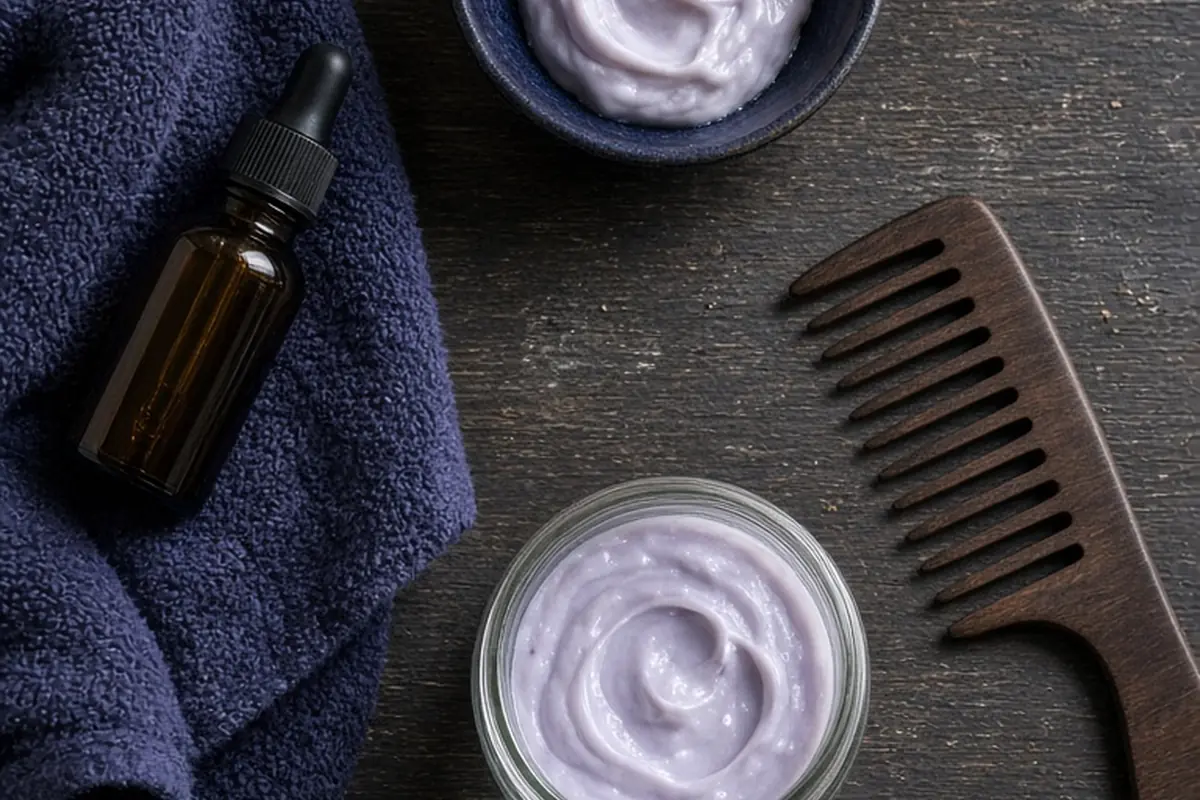
A beginner routine for dry hair starts by using an intensely hydrating hair mask once each week immediately after shampooing. Squeeze out excess shower water, distribute a quarter-sized amount from your mid-lengths down to the ends, and detangle gently using your fingers or a wide-tooth comb. Allow the mask to sit for five to ten minutes before rinsing thoroughly with lukewarm water, finishing with a small dab of standard conditioner to lock in hydration.
Dry hair feels brittle, stiff, and rough to the touch because its outer protective cuticle has lifted, allowing essential moisture to evaporate rapidly into the surrounding air. While everyday rinse-out conditioners smooth the outer surface of strands temporarily, a targeted deep-treatment mask delivers concentrated conditioning agents that penetrate more deeply to restore flexibility, softness, and shine.
Recognizing Dehydration Versus Structural Damage
Before selecting a conditioning treatment, it is important to determine whether your strands are experiencing pure dryness or structural damage. Dry hair is a hydration problem: it lacks moisture, oils, or both, causing it to feel rough, look dull, and generate static or flyaways. In contrast, damaged hair has sustained physical compromise to the internal protein structure of the hair shaft, typically caused by chemical bleaching, alkaline relaxers, or repeated extreme heat styling without thermal protection.
A practical way to tell the difference is to evaluate strand elasticity when the hair is damp. Dry hair tends to feel stiff, unyielding, and coarse, but it generally holds its natural shape once handled gently. Mechanically damaged hair often stretches excessively when wet without springing back, feels unusually mushy or gummy, or snaps with very minimal tension. If your primary symptoms are dullness, rough texture, and general unruliness, your hair is primarily dehydrated and will thrive on lipid-rich, moisturizing formulations.
Choosing the wrong product category can worsen how your hair feels. Masks formulated primarily around heavy doses of hydrolyzed vegetable protein, keratin, or wheat protein are engineered to reinforce compromised hair fibers, but applying them frequently to hair that is merely thirsty can make strands feel even stiffer and more prone to breakage. Beginners dealing with standard dryness should seek products emphasizing humectants like glycerin and aloe, alongside rich softening emollients like plant butters and seed oils.
Selecting Formula Ingredients Based on Hair Thickness and Porosity
Not all dry hair behaves the same way, which means a mask that rescues one person's texture might leave someone else's limp or greasy. Hair thickness plays a major role in how much rich emollient a strand can support. Fine, dry hair has a narrow diameter that is easily weighed down by heavy mineral oils, petrolatum, or dense unrefined shea butter. If your strands are fine, look for lighter plant oils such as jojoba, argan, or sunflower seed oil, which coat the fiber lightly while restoring glide.
Medium and coarse dry hair, on the other hand, possesses a much broader diameter and often features a naturally irregular cuticle that requires dense conditioning agents to soften. For thicker hair types, rich plant lipids such as cupuacu butter, murumuru butter, avocado oil, and coconut oil provide the substantive weight necessary to smooth rough fibers, reduce friction between neighboring strands, and keep coarse textures pliable throughout the week.
Porosity is the second critical factor determining which formulation will perform best. Low-porosity hair has tightly bound, overlapping cuticle scales that resist moisture absorption, meaning thick masks may simply sit on the surface without penetrating. This hair type benefits from masks featuring lightweight humectants and slightly warmer rinse temperatures to encourage product uptake. High-porosity hair has gaps and tears along the cuticle that absorb moisture rapidly but lose it just as fast, demanding heavier occlusive oils that form a protective barrier against moisture loss.
Pre-Wash and Cleansing Preparations Before Treatment
A frequent beginner oversight is spreading a rich hair mask directly over dry or dirty hair before cleansing. Hair that has accumulated everyday environmental grime, natural scalp oils, silicone smoothing serums, and styling resins cannot effectively absorb conditioning ingredients. Applying a hydrating mask on top of this layer creates an uneven coating that mostly rinses down the drain without penetrating the hair fiber.
Always begin your routine with a gentle, sulfate-free or moisturizing shampoo. Cleanse the scalp thoroughly using the pads of your fingers, working the lather down the length of your hair to lift away residual buildup without scraping or roughing up the fragile cuticle. If your hair feels particularly coated from heavy styling products or hard water mineral buildup, use a clarifying shampoo once or twice a month prior to masking, which clears the strand surface completely.
Once your hair is thoroughly washed, take a moment to manage water content before touching your mask. Hair that is completely saturated and dripping with shower water acts like a filled sponge; water fills the porous spaces inside the strand and dilutes the active conditioning formula. Gently squeeze out excess water with your hands, and if time permits, lightly blot lengths with a microfiber towel until damp rather than dripping wet.
The Complete Step-by-Step Hair Mask for Dry Hair Routine for Beginners
Applying your mask correctly ensures consistent hydration from roots to tips without leaving oily roots or missed patches. Start by scooping or pumping a sensible portion of product into your palms. For chin-length or fine hair, a nickel-to-quarter-sized amount is usually sufficient; longer or coarser hair may require a silver-dollar-sized portion. Rub your palms together to warm and evenly distribute the product across your hands before reaching for your hair.
Focus your application strictly on the mid-lengths and ends of your hair, which are the oldest and most vulnerable segments of each strand. The hair closest to your scalp receives a continuous supply of natural sebum and rarely suffers from severe dryness. Unless a product is specifically formulated as a dry scalp treatment, keep heavy masks at least two to three inches away from the scalp to avoid clogging hair follicles or leaving roots looking flat and greasy.
Divide your damp hair into two loose sections over your shoulders to ensure even distribution. Smooth the product downward along each section, following the natural downward lay of the cuticle scales to minimize tangling. Once the mask is distributed, use either your fingers or a wide-tooth comb to gently detangle from the bottom up, working out small snags at the very ends before passing the comb smoothly through the mid-lengths.
Timing, Temperature, and Rinsing Mechanics for Best Results
More time does not automatically translate to better conditioning results. Most commercial moisturizing masks are formulated to reach peak absorption within three to ten minutes. Leaving a mask on for several hours or sleeping with it overnight under a damp cap is rarely beneficial for standard dry hair and can lead to hygral fatigue, a state where the hair fiber repeatedly swells and contracts until the cuticle becomes structurally weakened and overly fragile.
If your hair is severely dry or resistant to moisture, you can boost performance using gentle heat rather than extended time. After applying the mask, clip your hair loosely on top of your head and cover it with a reusable plastic shower cap. The cap traps natural body heat radiating from your scalp, creating a warm, humid environment that gently coaxes the hair cuticle open so conditioning lipids can penetrate deeper into the strand.
When your processing time is finished, rinse the hair thoroughly with lukewarm water until the stream runs completely clear and your hair feels silky rather than slippery. Water that is uncomfortably hot can strip away the delicate layer of conditioning lipids you just deposited, while icy water can cause some heavy plant butters to solidify into a waxy coating. If your hair is very thick or coarse, finishing with a small dime-sized amount of regular rinse-out conditioner can help adjust the hair surface and lock in moisture.
Managing Weekly Frequency and Preventing Buildup Over Time
Consistency is far more effective than sporadic deep-conditioning marathons. For most beginners managing dry hair, using a hydrating mask once a week serves as a dependable starting baseline. This frequency delivers enough conditioning replenishment to offset standard drying factors like environmental wind, indoor air conditioning, and daily detangling friction, without overwhelming the strands with unnecessary product buildup.
Pay close attention to how your hair behaves over a three-to-four-week trial period and adjust your schedule accordingly. If your hair begins feeling unusually limp, heavy, greasy, or stringy within twenty-four hours of washing, you may be masking too frequently or using a formula that is too rich for your strand diameter. Reduce application to once every two weeks. Conversely, if your hair continues to feel dry, brittle, and rough by day three after treatment, you can safely increase your routine to twice a week.
Over time, even the highest-quality conditioning ingredients can leave residue on the hair shaft if they are not periodically removed. When residue accumulates, hair often paradoxically feels dry and brittle even right after masking because fresh moisture cannot penetrate the barrier. If your mask seems to stop working after several weeks of great results, wash once with an effective clarifying shampoo to reset your hair fibers before continuing your routine.
Post-Treatment Care Habits That Keep Moisture Locked Inside
A successful hair mask routine does not end at the shower drain; the way you treat your hair immediately following treatment dictates how long that hydration lasts. After rinsing, avoid vigorously rubbing your head with a standard rough terrycloth towel. Coarse loops of cotton cause friction against the softened cuticle, creating frizz and snagging delicate damp fibers. Instead, gently press and squeeze water out using a smooth microfiber towel or a soft cotton t-shirt.
Applying a light leave-in conditioner or hydrating mist to damp hair provides an extra layer of humectants before you begin styling. If your hair tends to lose moisture very quickly, sealing the ends with two to three drops of a lightweight plant oil, such as argan or jojoba oil, establishes a flexible barrier that slows down water evaporation throughout the day. This simple step helps the conditioning benefits of your weekly mask endure across multiple wash cycles.
Finally, be mindful of mechanical stress while your hair finishes drying. Keep heat tools at moderate temperatures and always apply a dedicated heat protectant spray beforehand if blow-drying or heat styling. At night, sleeping on a smooth satin or silk pillowcase minimizes the friction and moisture absorption that standard cotton pillowcases inflict on vulnerable hair ends, allowing your freshly treated hair to remain supple and manageable.
Frequently asked questions
Can I replace my regular conditioner with a hair mask on every wash?
Using a hair mask on every single wash is generally unnecessary and often causes product buildup, limpness, and flat roots. Standard conditioners are formulated for quick surface smoothing and daily pH balancing, whereas masks are higher-concentration treatments meant for deeper weekly or biweekly hydration.
Should a hair mask be applied to soaking-wet or damp hair?
Hair masks perform best when applied to damp hair that has been gently squeezed free of dripping water. When hair is completely waterlogged, the excess moisture dilutes the treatment formula and prevents the conditioning emollients from adhering effectively to the hair shaft.
How long does it take for a dry hair mask routine to show visible improvement?
You should feel immediate softness, improved detangling, and less surface friction after your very first application. Long-term improvements in suppleness, manageable texture, and reduced breakage typically become noticeable after three to four consistent weekly treatments.
Will a hydrating hair mask help with a dry or flaky scalp?
Most standard hair masks are designed specifically for hair lengths and contain rich emollients that can clog scalp pores or worsen irritation if applied directly to skin. If your scalp itself is uncomfortably dry, look for a lightweight treatment specifically labeled for scalp barrier support rather than a hair fiber mask.
Your next step
Assess your strand thickness, choose a mask rich in humectants and plant oils, and incorporate one ten-minute treatment on towel-damp hair during your next weekly wash.