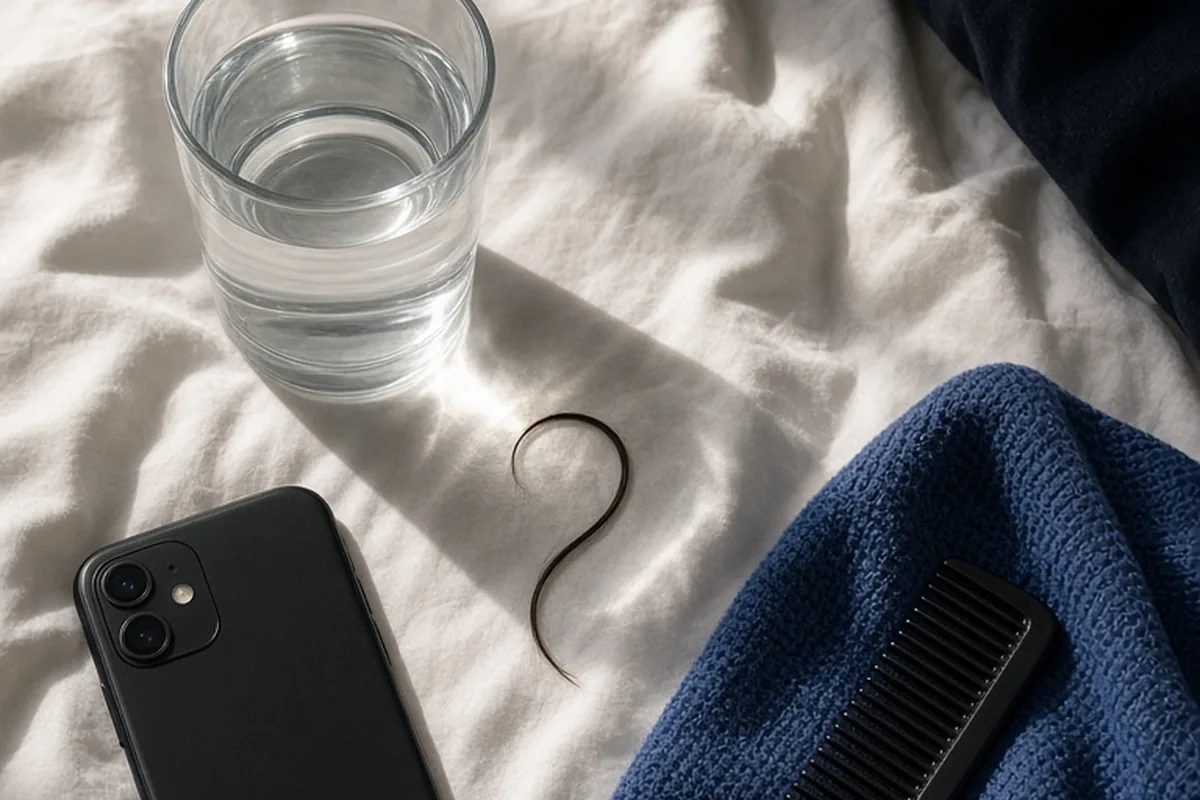
Hair porosity at home is typically assessed using informal methods like the mist or slide test, which provide a quick baseline for how your hair behaves with moisture. Salon assessments rely on professional tactile evaluation, chemical history analysis, elasticity checks, and specialized magnification tools. While home tests offer immediate, zero-cost clues for product selection, salon evaluations provide precise insight into structural cuticle damage, preventing product buildup, unnecessary protein treatments, or ineffective styling routines.
Determining whether your strands readily drink in hydration or stubbornly repel it completely changes how you select conditioners, oils, and styling products. While popular advice makes porosity testing look as simple as dropping a strand into a cup of water, real-world cuticle structure is far more nuanced, requiring a clear look at what DIY checks reveal and where professional hands make the difference.
Cuticle Mechanics and What Hair Porosity Truly Measures
Hair porosity refers to your hair shaft's capacity to absorb, transport, and retain moisture. This behavior is governed entirely by the outermost protective layer of the strand, known as the cuticle. Under normal conditions, the cuticle consists of overlapping, scale-like cells made of hardened keratin that lay flat against the cortex, resembling shingles on a roof. When cuticles remain tightly bound and flat, water has difficulty penetrating the inner fiber, but once absorbed, that moisture remains locked inside. When cuticles are raised, chipped, or missing, water enters freely but evaporates just as quickly, leaving the hair chronically parched.
Porosity is rarely uniform from the root to the tip of a single strand. New growth near the scalp is protected by natural sebum and has suffered minimal mechanical friction, UV exposure, or thermal degradation, meaning it typically exhibits lower porosity. In contrast, the mid-lengths and ends have weathered months or years of washing, brushing, heat styling, and environmental oxidation. These cumulative stressors gradually erode the lipid layers binding the cuticle scales together, transforming low or medium porosity roots into high porosity ends. A single overall diagnosis can therefore oversimplify your routine if you treat the entire length as identical material.
Why Popular At-Home Tests Often Produce Misleading Results
The most widely circulated DIY diagnostic is the water float test, where a shed strand is placed into a glass of room-temperature water to observe whether it floats or sinks. Despite its popularity, this test is fundamentally flawed due to basic fluid dynamics. Surface tension alone can keep a severely damaged, highly porous strand floating indefinitely on the surface of the water. Additionally, natural scalp oils, residual styling silicones, heavy butter buildups, or conditioning polymers create a hydrophobic coating around the strand. This artificial barrier repels water regardless of the underlying cuticle health, causing damaged hair to mimic low-porosity characteristics.
More reliable home observations involve evaluating hair response under controlled conditions rather than passive submersion. The spray bottle mist test offers a clearer indication: by lightly misting a clean, product-free, air-dried section with fine water droplets, you can watch how quickly the beads vanish. If the water remains beaded up on the surface for several minutes, the cuticle is firmly closed. If it sinks in within seconds, the cuticle is open. Similarly, the slide test involves holding a single dry strand taut between two fingers and gently sliding the pads of the thumb and forefinger from the tip upward toward the root. A smooth glide suggests intact, flat cuticles, while a raspy, rough, or catching sensation indicates lifted or degraded cuticle scales.
What Happens During a Professional Salon Hair Porosity Evaluation
When an experienced cosmetologist or trichologist examines your hair porosity, they bypass superficial immersion tricks in favor of multi-factor physical diagnostics. A stylist begins by evaluating the chemical and thermal record of your hair, noting previous applications of bleach, permanent color, chemical straighteners, perms, and recurring heat tool usage. Because chemical lifting agents explicitly work by opening the cuticle layer through alkaline swelling, any chemically altered section has an inherently elevated porosity that requires different moisture-to-protein ratios than virgin growth.
Stylists also utilize wet stretch and elasticity assessments to evaluate the cortex integrity alongside cuticle condition. By isolating a small group of damp strands and gently extending them, an expert measures how much tension the hair tolerates before snapping and whether it rebounds to its original length. Healthy hair with intact cuticles stretches roughly one-third of its length and returns naturally; hair with compromised cuticles feels mushy, stretches excessively without snapping back, or breaks under minimal resistance. Furthermore, specialized salons utilize high-definition trichoscopy cameras to magnify the strand several hundred times on a digital screen, allowing you to visibly inspect cuticle abrasion, split ends, and product build-up in real time.
At-Home Diagnostics vs. Professional Salon Consultations: Core Trade-Offs
At-home porosity testing provides immediate, accessible convenience without scheduling hurdles or consultation fees. For individuals with relatively healthy, untreated hair who simply want to know whether to buy a lightweight leave-in conditioner or a heavier cream, careful at-home observation is often sufficient. By conducting a mist test after washing with a clarifying shampoo that removes all silicone residue, you can gain a functional working hypothesis that informs your everyday wash routine and product texture choices.
The limitation of home testing lies in its inability to distinguish between actual structural porosity and surface contamination. Many people mistakenly conclude they have low porosity hair simply because heavy styling products have formed an impenetrable plasticized barrier over their cuticle layer, causing water to bead up. A professional salon consultation resolves this ambiguity. A stylist can perform a professional-grade chelating or clarifying treatment to strip away mineral deposits from hard water and synthetic buildup before conducting tests, giving you an accurate baseline that DIY evaluations frequently misread.
Formulating a Product Regimen Based on Low, Medium, or High Cuticle Openings
Once your porosity is accurately determined, your product choices must align with how easily moisture travels across the cuticle boundary. Low porosity hair features stubborn, tightly packed cuticles that resist water ingress. For this profile, heavy sealants like unrefined shea butter, castor oil, and thick waxes should be minimized, as they sit on top of the strand, attracting dust and turning brittle. Instead, focus on lightweight humectants like glycerin, aloe vera, and hydrolyzed silk, accompanied by indirect heat—such as a warm shower cap or hair steamer—to gently expand the cuticle plates during deep conditioning sessions.
High porosity hair requires the exact opposite intervention: moisture enters effortlessly but escapes almost immediately, leading to chronic dryness, tangling, and dullness. This pattern thrives on layering techniques like the Liquid-Oil-Cream method, where hydration is introduced with a water-based leave-in, fortified with strengthening hydrolyzed proteins to fill structural gaps in the cuticle, and sealed with dense botanical oils or butters. Medium porosity hair sits in the ideal physiological middle, accepting moisture readily and maintaining hydration for days with balanced leave-in conditioners and minimal need for intensive heat or specialized protein interventions.
Recognizing When Professional Intervention Outweighs DIY Observation
While routine product selection can be handled at home, certain clinical hair behaviors indicate that DIY porosity adjustments are no longer sufficient. If your hair experiences flash drying—where wet strands instantly feel stiff, crunchy, and dry the moment a product touches them—you are likely facing a severe imbalance between surface mineral deposits, protein overload, and extreme cuticle disruption. Attempting to fix this dynamic at home with random deep conditioners often compounds the issue, weighing down the hair fiber or accelerating breakage.
Similarly, hair that has undergone aggressive bleaching, high-lift coloring, or chemical relaxing often develops localized high porosity where the cuticle has been permanently stripped away in patches. A licensed stylist can administer in-salon bond-building services that cross-link broken disulfide bonds within the cortex, followed by acidic glosses or treatments formulated with a low pH. These acidic rinses chemically constrict the cuticle scales, temporarily smoothing the exterior surface and restoring tensile integrity in ways that standard retail conditioners cannot replicate.
Practical Questions to Ask Your Stylist Before Starting Any Treatment
When you schedule a salon visit for a porosity or conditioning assessment, arriving with focused questions ensures you get actionable insights rather than generic product pitches. Ask your stylist to evaluate your hair when dry, fully clarified, and wet, as each state provides distinct information regarding cuticle behavior. Inquire specifically about the elasticity of your mid-lengths compared to your ends to understand whether you need multi-zone conditioning during your home wash days.
You should also ask your stylist to explain the pH levels of the products they recommend. Shampoos with alkaline formulas lift the cuticle, which can benefit low porosity hair during cleansing but can severely damage high porosity strands. Conversely, acidic sealers help close the cuticle and lock in moisture. Understanding where your current routine sits on the pH spectrum allows you to make informed purchases rather than guessing based on marketing buzzwords.
Frequently asked questions
Is the popular glass of water float test accurate for determining porosity?
No, the glass of water float test is largely unreliable. Natural oils, leave-in product residues, and water surface tension can keep even severely damaged, porous hair floating at the top. Conversely, a clean low-porosity strand might sink if pushed through the surface tension, leading to an incorrect diagnosis.
Can your hair porosity change over time?
Yes, hair porosity changes as strands grow and face environmental stress. Virgin roots naturally feature lower porosity, while mid-lengths and ends develop higher porosity over time from heat styling, UV exposure, brushing, and chemical processing. You cannot alter your genetic porosity, but damage permanently increases porosity until damaged sections are trimmed.
Does low porosity hair need protein treatments?
Low porosity hair rarely requires intensive protein treatments because its cuticle structure is already intact and tightly packed. Introducing large protein molecules often leads to protein buildup, making low porosity hair feel stiff, brittle, and straw-like. If protein is used, it should be lightweight and hydrolyzed, applied sparingly.
What is the difference between dry hair and high porosity hair?
Dry hair is a temporary condition caused by a lack of moisture, sebum, or humidity, which can affect any porosity level. High porosity hair is a structural state where the cuticle layer is raised, cracked, or missing. While high porosity hair is frequently dry due to rapid moisture evaporation, low porosity hair can also become dry if products cannot penetrate its tightly closed cuticles.
Your next step
Wash your hair with an unmedicated clarifying shampoo, let a clean section air dry completely without applying any oils or conditioners, and perform the fine mist test to establish your baseline before investing in salon treatments or new product lines.