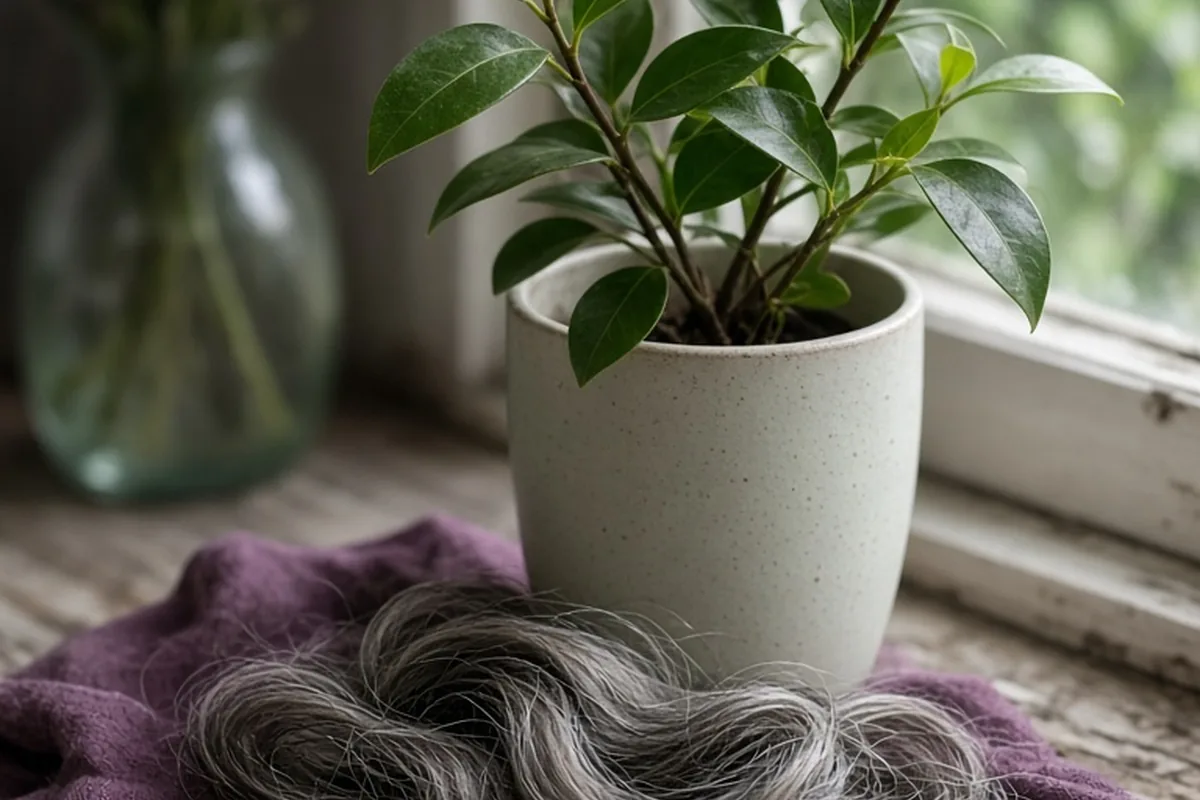
Hair porosity for women over 40 refers to how easily your hair absorbs and holds moisture, which often shifts due to hormonal changes, natural graying, and cumulative styling. Mature hair frequently transitions toward high porosity from structural thinning or low porosity from coarse, resistant gray strands. Knowing your porosity level allows you to choose the right balance of lightweight hydrators, sealing oils, and gentle warmth.
Navigating hair care in your forties and beyond often feels unpredictable because products that worked for decades suddenly leave strands dry, greasy, or brittle. Understanding your current hair porosity provides a clear framework to restore softness, manageability, and lasting hydration to changing hair.
Why Hair Porosity Changes After Age Forty
Hair porosity is determined by the condition and arrangement of your hair cuticles, the overlapping protective scales that form the outer layer of each strand. In your twenties and thirties, consistent sebum production and a steady hormonal baseline help keep cuticles relatively uniform. As women enter perimenopause and menopause, estrogen and progesterone levels decline, which directly reduces the amount of natural oil produced by the scalp. Without this consistent lipid coating, cuticles can become vulnerable to lifting, chipping, and weathering.
Simultaneously, the biological process of graying alters the internal architecture of the hair fiber. When pigment-producing melanocytes slow down, the newly unpigmented gray strands often emerge with a thicker, more compact cuticle layer that resists moisture absorption, presenting as low porosity. Conversely, years of routine coloring, chemical smoothing, environmental exposure, and heat styling can degrade the outer cuticle, creating high porosity where moisture enters rapidly but escapes just as quickly. Many women over forty experience a combination of both textures on different parts of their scalp.
Accurate Ways to Test Mature Hair Porosity at Home
Determining your current porosity requires simple observation rather than complex tools. The popular glass-of-water float test often yields inaccurate results for mature hair because surface tension and product residue can make light, thinning strands float regardless of their true porosity. A more reliable diagnostic is the spray bottle test. Mist a clean, product-free section of dry hair with room-temperature water. If the water beads up indefinitely on the surface without sinking in, your hair has low porosity. If the water absorbs immediately and leaves the strand feeling damp, you are dealing with high porosity. If it sits momentarily before absorbing steadily, your hair has medium or normal porosity.
You can also assess porosity through drying time and tactile feedback. Slide your thumb and index finger up a single strand of clean hair from the tip toward the root. If the strand feels completely smooth and slick, the cuticle lies flat and closed, indicating lower porosity. If you feel roughness, bumps, or friction along the fiber, the cuticle is raised and porous. Observing how long your hair takes to air dry also provides valuable context: low-porosity hair often takes many hours to dry completely because water gets trapped under tightly packed scales, whereas high-porosity hair absorbs water fast but dries unusually quickly as moisture evaporates through open cuticle gaps.
Hydrating and Sealing High-Porosity Mature Strands
High-porosity mature hair features gaps and tears along the cuticle layer, making it prone to chronic dryness, frizz, and tangling. Because this hair type absorbs moisture easily but cannot hold onto it, your primary objective is to infuse deep hydration and immediately seal the cuticle with emollient barriers. Water-based leave-in conditioners formulated with humectants such as glycerin, panthenol, and hyaluronic acid help pull moisture into the cortex. Applying these products to damp hair creates an essential foundation of hydration.
To prevent that moisture from escaping into the air, follow your leave-in conditioner with a medium-to-rich sealing oil or butter. Plant-derived oils such as argan, jojoba, and sweet almond mimic natural sebum and smooth down raised cuticles without weighing down finer mature strands. For coarser high-porosity textures, shea butter or avocado oil offers a more robust barrier. Finishing your wash routine with an acidic rinse, such as a diluted apple cider vinegar rinse or a low-pH conditioner, helps contract the cuticles, flattening them down to lock in moisture and enhance natural shine.
Softening Low-Porosity Gray and Aging Hair
Low-porosity hair in women over forty is often characterized by resistant gray strands that repel water and cause products to sit heavily on the surface. Because the cuticles are tightly bound and overlap closely, standard conditioners cannot easily penetrate the hair shaft. The key to managing low-porosity mature hair is using gentle, indirect heat during conditioning to temporarily lift the cuticle scales and allow nourishing ingredients to enter.
Incorporate a warm conditioning cap, a warm damp towel wrapped over a shower cap, or a gentle hooded steamer for ten to fifteen minutes during your weekly deep-conditioning treatment. Choose lightweight, water-soluble hydrators that feature ingredients like aloe vera, flaxseed extract, and hydrolyzed silk rather than heavy waxes or mineral oils that cause dulling buildup. Clarifying your scalp and strands once or twice a month is also vital for low-porosity hair, as removing mineral and product residue ensures your cuticles remain accessible to moisture.
Managing the Protein-Moisture Balance on Fragile Hair
As hair ages, the natural keratin structure weakens, leading to reduced tensile strength and elasticity. Finding the right balance between protein treatments and pure moisture is essential for preserving mature hair integrity. High-porosity hair usually benefits from regular, gentle protein applications—such as hydrolyzed wheat, soy, or keratin proteins—because these microscopic fragments temporarily patch the holes in a damaged cuticle, restoring structure and preventing breakage.
Low-porosity mature hair, however, easily becomes stiff and brittle if exposed to excessive protein, as the proteins accumulate on the tightly closed exterior rather than integrating into the shaft. To test your hair's current need, perform an elasticity test on a wet shed strand. Gently stretch the strand between your fingers; if it stretches slightly and returns to its original length, your protein-moisture balance is healthy. If it stretches excessively without bouncing back and feels mushy or limp, it requires protein. If it snaps immediately with little to no stretch and feels rough, it needs deep moisture without added proteins.
Adjusting Wash Day Routines and Styling Habits
Adjusting mechanical and environmental factors during wash day can dramatically improve how mature hair retains moisture regardless of porosity. Begin by lowering your shower water temperature. Hot water strips away the scalp's dwindling natural oils and lifts cuticles aggressively, which exacerbates dryness in high-porosity hair and causes cuticle swelling in low-porosity hair. Washing with lukewarm water protects your lipid layer, while a cool water rinse at the end helps smooth the outer hair surface.
Swap harsh sulfate-based cleansers for gentle, sulfate-free shampoos or cleansing conditioners that preserve natural moisture. When drying your hair, avoid vigorous rubbing with traditional terry cloth towels, which creates micro-tears and raises cuticles through friction. Instead, gently squeeze excess water out using a microfiber towel or a soft cotton shirt. Sleeping on a silk or satin pillowcase minimizes overnight friction, reduces morning tangles, and prevents fabric from absorbing essential hydration from your strands while you rest.
Illustrative Scenarios
Adjusting for Coarser Silver Growth
At forty-seven, Elena noticed that her newly emerging gray hair felt dry and straw-like despite applying heavy hair oils daily. The oil sat visibly on her hair, making it look greasy yet feel coarse and unmanageable. Suspecting low porosity in her silver strands, she stopped applying heavy raw oils and switched to a lightweight aloe-based leave-in spray combined with a heated conditioning cap once a week. Within three weeks, the warm heat allowed moisture to penetrate her tight cuticles, softening the wiry texture without any heavy residue.
Key point: Coarse gray hair often repels heavy topical oils; applying gentle heat with lightweight water-soluble hydrators is far more effective for opening closed cuticles.
Restoring Color-Treated Fragile Strands
Fifty-two-year-old Sandra colored her hair every six weeks to cover grays and noticed her hair absorbed leave-in conditioners instantly but turned frizzy and parched within an hour. Realizing her color treatments had created high porosity, she shifted from light lotions to the liquid-oil-cream layering technique, finishing with a drop of argan oil to seal the shaft. She also added a bi-weekly hydrolyzed keratin mask, which filled the structural gaps in her cuticles and allowed her hair to retain softness between washes.
Key point: Color-treated mature hair often requires both gentle protein reinforcement and occlusive sealing oils to prevent absorbed moisture from evaporating.
Frequently asked questions
Can your hair porosity change from low to high after age 40?
Yes, hair porosity often changes over time due to hormonal fluctuations, chemical processing, and heat styling. While new gray growth typically starts with low porosity, repeated permanent coloring, highlighting, and heat tools can wear down the cuticle, turning those same strands highly porous over time.
How often should women over 40 deep condition based on porosity?
High-porosity mature hair generally benefits from deep conditioning once a week to maintain moisture and reinforce structural strength. Low-porosity mature hair typically thrives with deep conditioning every ten to fourteen days, provided that mild heat is used to help the treatment penetrate the cuticle.
Is apple cider vinegar safe for mature, low-porosity hair?
Diluted apple cider vinegar is safe when used occasionally as a clarifying rinse to remove stubborn product buildup from low-porosity hair. However, because it has an acidic pH that closes cuticles tightly, use it sparingly—about once a month—so you do not make it harder for moisture to penetrate during regular conditioning.
Does gray hair always have low porosity?
Not always, although unprocessed gray hair commonly begins with low porosity due to tightly packed cuticle scales. If gray hair has been bleached, dyed, permed, or extensively heat-styled, the cuticle layer becomes damaged and shifts into a high-porosity state.
Your next step
Test a clean, product-free section of your hair with a water spray bottle today to identify whether your cuticles repel or absorb moisture, then select either a heat-assisted light hydrator or a rich sealing oil to match your specific porosity.