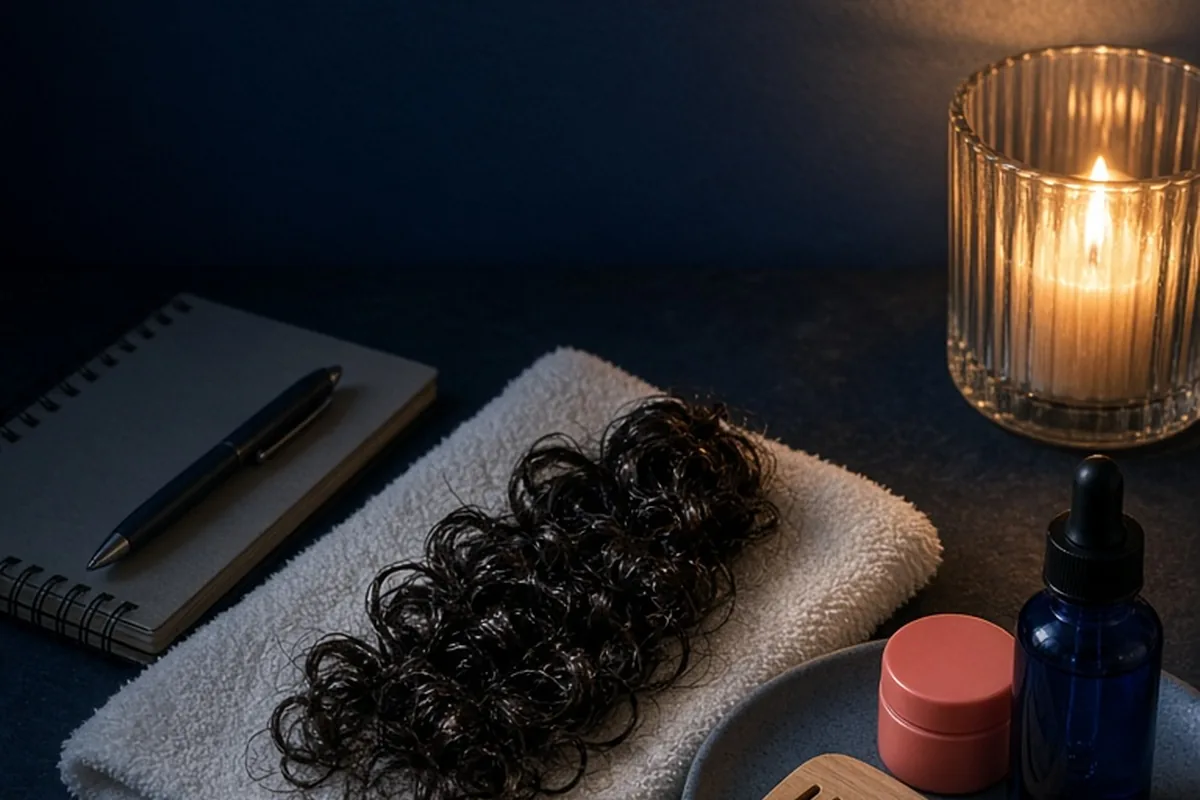
A hair porosity maintenance schedule aligns cleansing, conditioning, protein treatments, and styling with how your hair cuticles absorb and retain moisture. Low porosity hair requires weekly clarifying, heat-assisted deep conditioning, and monthly light protein. High porosity hair requires weekly deep conditioning, bi-weekly structural protein treatments, and layered sealant butters. Medium porosity hair thrives on balanced bi-weekly alternating moisture and light protein cycles.
Establishing a reliable hair care routine requires understanding the physical state of your hair cuticles rather than relying on curl pattern alone. By aligning your maintenance frequency with cuticle behavior, you can prevent both moisture deprivation and heavy product buildup.
Determining Cuticle Behavior Before Setting a Wash Calendar
Hair porosity refers to your hair strand's ability to absorb, retain, and release water and conditioning agents. This physical characteristic is dictated primarily by the condition of the outer cuticle layer. Flat, tightly overlapping cuticle scales create low porosity hair, which resists moisture entry but holds onto hydration once absorbed. Raised, chipped, or missing cuticle scales create high porosity hair, which absorbs liquids almost instantly but loses hydration just as rapidly through evaporation. Medium porosity hair features cuticles that are moderately open, allowing balanced moisture uptake with minimal retention issues.
Attempting to manage hair without diagnosing porosity often results in chronic product frustration. For instance, applying heavy natural butters to low porosity hair creates an impenetrable barrier on the surface that blocks subsequent hydration attempts. Conversely, applying featherweight, water-based leave-in conditioners to high porosity hair leads to rapid drying, frizz, and structural snapping within hours. Before setting dates on a calendar, observe how your hair behaves when wet: low porosity strands take hours to fully saturate in the shower and days to air dry, whereas high porosity strands saturate instantly and air dry in a fraction of the time.
Your baseline porosity can also vary across different sections of your scalp. Roots and newly emerged growth frequently exhibit low or medium porosity, while older mid-lengths and ends that have experienced ultraviolet light, friction, or heat styling often develop high porosity. Structuring an effective schedule requires factoring in these transitional zones so you can target intensive treatments where cuticles are compromised without overloading healthier sections.
Designing a Low Porosity Maintenance Schedule
Low porosity hair requires a schedule centered on gentle heat application, clarifying agents, and lightweight humectants. Because tightly packed cuticles act like a shield, product residues readily accumulate on the strand exterior rather than penetrating the cortex. A successful low porosity calendar relies on a dedicated weekly wash routine paired with minimal mid-week interference. The foundation of this regimen is a clarifying wash every seven to ten days using warm water, which gently lifts the cuticle layer and strips away residual emollients.
Deep conditioning for low porosity strands should occur once every seven to fourteen days, always accompanied by indirect heat. Utilizing a thermal heat cap, warm damp towel, or hooded dryer during deep conditioning expands the compact cuticle scales, allowing water-binding ingredients such as glycerin, honey, and aloe vera to enter the hair fiber. Heavy plant waxes, petrolatum, and unrefined shea butter should be excluded from regular application because they settle on top of closed cuticles, attracting dust and causing dull, limp strands.
Protein treatments must be scheduled sparingly for low porosity hair, typically once every four to six weeks. Since the structural integrity of low porosity cuticles is intact, excess protein quickly accumulates on the exterior, leading to brittle, stiff strands that crack under mechanical manipulation. When incorporating protein, choose hydrolyzed silk or keratin formulations that have smaller molecular weights, and always follow up with a dedicated moisturizing treatment to maintain elasticity.
Structuring High Porosity Repair and Sealing Cycles
High porosity hair operates under the opposite mechanical challenge: cuticles are perpetually open, torn, or porous due to chemical processing, bleaching, mechanical stress, or genetic structural traits. The primary objective of a high porosity maintenance schedule is patching gaps along the hair shaft and locking in hydration before it evaporates. This necessitates a weekly regimen anchored by frequent deep conditioning, layered sealing techniques, and consistent structural reinforcement.
A standard high porosity weekly schedule begins with a sulfate-free, moisturizing cleanser or a cleansing conditioner to avoid stripping natural lipids from an already vulnerable fiber. Immediately following cleansing, a rich deep conditioner containing fatty alcohols, ceramides, and natural oils should sit on the hair for fifteen to twenty minutes. Rinsing with cool or lukewarm water helps to encourage open cuticle edges to lie flatter against the shaft. Following the rinse, applying the Liquid-Oil-Cream (LOC) or Liquid-Cream-Oil (LCO) layering method creates a physical barrier that slows moisture evaporation across multiple days.
Rebuilding high porosity hair requires a scheduled protein treatment every one to two weeks. Formulations containing hydrolyzed wheat protein, collagen, or gelatin temporarily bond to damaged points along the cuticle, filling voids and restoring tensile strength. Without this regular protein scaffolding, high porosity hair absorbs ambient humidity, swells unevenly, and breaks. However, balancing these treatments with emollient-rich deep conditioning masks is necessary to prevent the hair from becoming overly rigid.
Managing Balanced Medium Porosity Hair Throughout the Month
Medium or normal porosity hair features cuticles that accept and retain moisture with minimal intervention. The maintenance schedule for medium porosity focuses on preservation, steady cleansing, and proactive defense against external damage. Because this hair type maintains a stable internal hydration level, over-treating it with dense butters or excessive proteins can disrupt its natural balance and shift the cuticles toward low or high porosity behavior.
A bi-weekly alternating schedule works best for medium porosity hair. On week one, focus on a hydrating wash day with a balanced moisturizing conditioner and a lightweight leave-in serum. On week two, introduce a mild restorative conditioner containing light hydrolyzed proteins to replenish lost structural integrity without overwhelming the cuticle. Washing frequency generally ranges from every four to seven days depending on scalp oil production, physical activity levels, and personal preference.
Deep conditioning for medium porosity hair should be performed every two to three weeks. In general, ambient heat or a brief five-minute warm wrap provides sufficient cuticle relaxation for moisture penetration. Daily styling products should remain lightweight; botanical gels, light argan or jojoba oils, and milk-based leave-in conditioners offer adequate protection from ambient air without causing premature buildup that requires harsh stripping.
Mid-Week Hydration and Refresh Routines by Porosity Type
Wash day results rarely last an entire week without intentional mid-week maintenance. The strategy used to revive dry sections on day three or four must reflect how your cuticles interact with surrounding air and added liquids. For low porosity hair, mid-week refreshing should avoid the addition of heavy creams. Instead, apply a fine mist of warm water or an aloe-based tonic to lightly soften the strand, followed by gentle finger-detangling under a satin bonnet.
High porosity hair requires a more substantial mid-week intervention to prevent severe moisture depletion. By day three, water has typically escaped through the open cuticles, leaving strands dry and vulnerable to friction breakage. A high porosity mid-week refresh involves lightly dampening the mid-lengths and ends with a water-and-leave-in blend, immediately followed by a small amount of heavier sealant oil, such as castor, avocado, or shea butter, to re-establish the protective outer shield.
Nighttime protection remains a vital component of mid-week maintenance across all porosity profiles. Friction against standard cotton pillowcases absorbs moisture from the hair fiber and lifts cuticle scales. Sleeping on a satin or silk pillowcase, or securing hair within a satin scarf or bonnet, prevents mechanical damage and extends the intervals between necessary hydration refreshes.
Modifying Your Schedule for Chemical Treatments and Weather Shifts
A static hair maintenance schedule cannot accommodate environmental shifts and salon chemical services. External weather plays a profound role in how hair behaves: during hot, humid summers, high porosity hair rapidly absorbs airborne water vapor, causing extreme swelling and frizz, while dry winter indoor heating pulls moisture out of all hair types. Adjust your schedule by increasing sealant weights in dry winter months and incorporating anti-humectant styling serums in high humidity.
Chemical processing—including permanent coloring, bleaching, perming, and chemical relaxing—alters hair porosity, almost universally shifting strands toward higher porosity. Bleaching agents degrade the protective lipid layer and dissolve internal protein bonds to remove pigment, leaving cuticles permanently propped open. Following any chemical service, your maintenance schedule must immediately pivot to accommodate high porosity needs, doubling protein treatment frequency and increasing deep conditioning sessions.
Thermal styling with flat irons or curling wands also induces localized cuticle degradation. If your schedule includes regular blow-drying or heat styling, incorporate a dedicated heat protectant into every wash cycle and reduce the temperature settings. Introduce a weekly bonding or ceramide-infused conditioning treatment to patch heat-weakened cuticle edges before they split into irreversible high porosity damage.
Identifying Schedule Breakdowns: Protein Buildup Versus Hygral Fatigue
When an established porosity schedule begins to fail, the issue typically stems from an imbalance between moisture and protein. Protein overload occurs when structural treatments are applied too frequently relative to your porosity level. Strands suffering from protein accumulation feel rough, straw-like, shed excessively, and snap easily when stretched. If these signs emerge, temporarily eliminate all protein-containing products from your schedule and commit to two consecutive weeks of deep moisturizing treatments paired with gentle clarifying.
Hygral fatigue is the opposite condition, caused by excessive water absorption and retention that repeatedly swells and contracts the hair cortex until the cuticle tears. This condition occurs frequently in high porosity hair subjected to daily soaking without adequate protein reinforcement or sealing agents. Strands affected by hygral fatigue feel mushy, gummy when wet, lack bounce, and stretch excessively without returning to their original shape. Resolving hygral fatigue requires introducing a concentrated protein treatment and scaling back the frequency of prolonged wet deep conditioning sessions.
Conducting a monthly manual check allows you to fine-tune your schedule before severe imbalances develop. Take a clean, shed strand of hair and gently pull both ends. Hair with balanced moisture and protein will stretch slightly and return to its original length; hair lacking moisture will snap immediately; and hair lacking protein will stretch endlessly before breaking. Use this diagnostic feedback to adjust your calendar intervals for the upcoming month.
Frequently asked questions
How often should I wash low porosity hair?
Low porosity hair should generally be washed once every seven to ten days. Using a gentle clarifying or chelating shampoo during these sessions removes accumulated product buildup that otherwise prevents moisture from entering closed cuticles.
Can your hair porosity change over time?
Yes, hair porosity can change due to chemical processing, heat styling, sun exposure, and mechanical damage. While natural new growth will reflect your genetic baseline, mid-lengths and ends often transition to higher porosity as cuticles experience ongoing wear and tear.
Do I need heat to deep condition high porosity hair?
High porosity hair does not strictly require external heat because its cuticle scales are already raised and permeable. However, mild warmth can assist deep penetration of conditioning agents, provided treatments are rinsed with cool water to encourage cuticles to settle.
What is the best daily oil for sealing high porosity hair?
Denser oils with higher fatty acid contents, such as castor oil, avocado oil, and unrefined shea butter, provide the best seal for high porosity hair. These heavy lipids create a substantial external barrier that dramatically slows moisture loss through open cuticles.
Your next step
Examine a clean, dry strand of your hair today to determine your baseline cuticle behavior, then schedule your next wash day with either heat-assisted lightweight moisture or intensive protein sealing based on your porosity type.