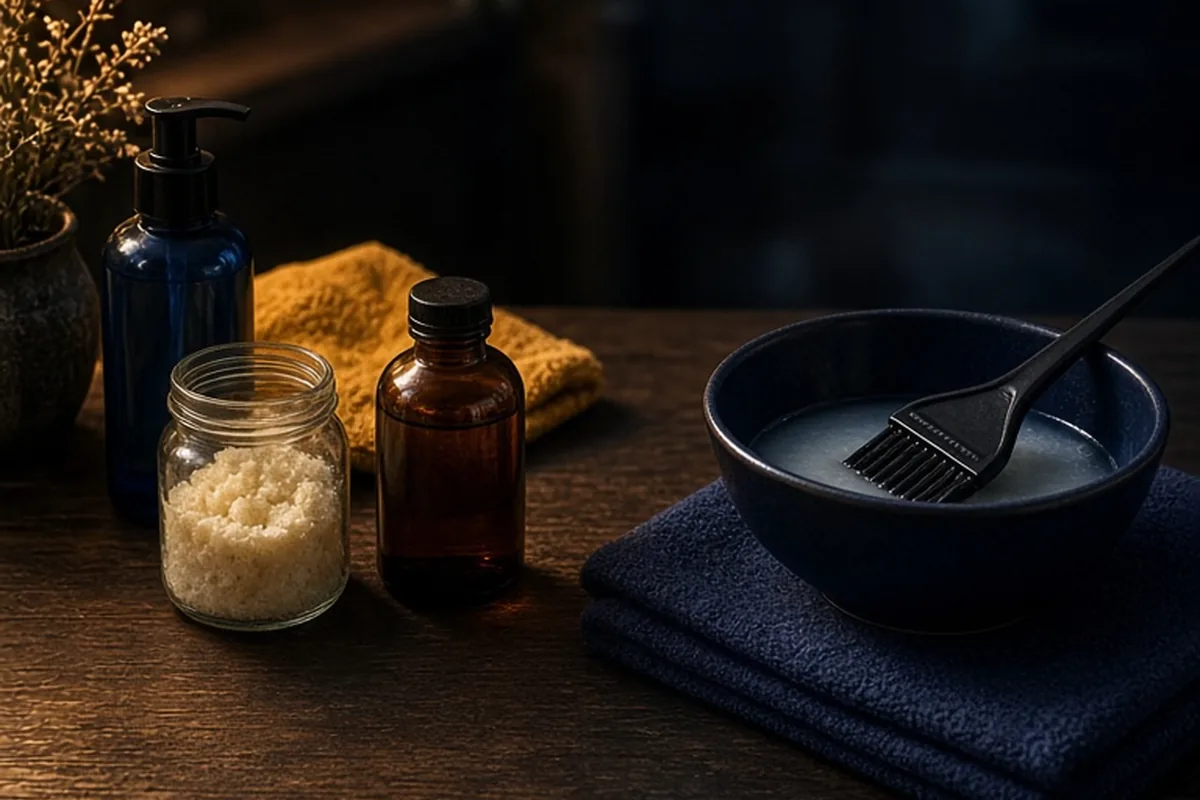
Removing hair product buildup at home with clarifying shampoos, scalp scrubs, or diluted acidic rinses is economical and effective for mild, routine styling residue. Professional salon treatments, such as chelating washes, concentrated chemical exfoliants, and prescriptive deep detoxes, are better suited for heavy silicone films, waxy butter accumulation, mineral binding, or fragile, color-treated hair. Choose home methods for periodic maintenance, but consult a professional salon when your hair feels persistently coated, gummy, or brittle despite regular clarifying.
Styling gels, dry shampoos, silicone serums, and rich botanical butters help define texture and protect strands, but they can accumulate over time. When everyday washing fails to restore natural movement and softness, choosing between an at-home clarifying routine and a specialized salon treatment depends on the underlying ingredients, your hair health, and the buildup severity.
Signs That Differentiate Product Buildup From Dryness or Damage
Hair product buildup occurs when styling aids, conditioning agents, and environmental particulates form an invisible, stubborn coating over the hair shaft and scalp. Unlike general dryness, which leaves strands feeling rough and thirsty for moisture, buildup creates a deceptive texture where hair can feel simultaneously greasy at the roots and straw-like at the ends. Common signs include a persistent white or grayish film when scraping the scalp gently with a fingernail, hair taking unusually long to get fully wet in the shower, and styling products failing to absorb or deliver their usual hold. When you apply hydrating conditioners or oils over this barrier, they simply sit on the surface, making the strand look dull, limp, and lifeless.
True chemical or mechanical damage involves structural compromise to the hair cuticle or inner cortex, leading to split ends, snapping, and excessive porosity. In contrast, heavy product residue mimics damage by weighing strands down, restricting natural curl patterns, and inhibiting elasticity. A simple way to check involves sliding two fingers down a clean, dry strand of hair; if it feels tacky, gummy, or waxy rather than naturally textured, coating is the primary issue. Recognizing these distinctions prevents you from mistakenly applying more heavy restorative masks or protein treatments, which only worsens the coating and suffocates the cuticle further.
At-Home Buildup Removal: Shampoos, Rinses, and Mechanical Scrubs
Home remedies and over-the-counter clarifying shampoos serve as the primary defense against routine styling accumulation. Clarifying formulas rely on anionic surfactants like sodium laureth sulfate, ammonium laureth sulfate, or potent plant-derived alternatives designed to strip away non-polar oils and water-insoluble silicones. Using a dedicated clarifying shampoo once every one to two weeks can reset your strands without disrupting natural oil production, provided you follow the wash with an intensive conditioner to replenish lost lipid moisture. Applying the cleanser directly to wet roots, massaging thoroughly for two to three minutes, and distributing lather through the lengths before rinsing thoroughly yields the best results.
Beyond commercial clarifying shampoos, home regimens frequently incorporate chemical or physical exfoliants such as apple cider vinegar rinses and scalp scrubs. Diluted apple cider vinegar helps lower the hair's pH, smoothing raised cuticles and gently dissolving light mineral films and water-soluble styling residue without stripping essential lipids. Scalp scrubs containing sugar, salt, or jojoba beads offer manual exfoliation to dislodge stubborn flakes and styling paste near follicle openings. However, home methods have clear limitations; they can struggle against cross-linked silicone polymers, heavy petrolatum, and combinations of product residue with hard water minerals, where aggressive scrubbing risks causing mechanical breakage.
Professional Salon Treatments: Chelating, Scalp Detox, and Acidic Washes
When over-the-counter products cannot break down stubborn residue, professional salon services offer specialized chemical approaches tailored to your hair's specific chemistry. Stylists use salon-grade chelating treatments formulated with high concentrations of binding agents like tetrasodium EDTA or citric acid derivatives. These active chelators specifically bind to hard water minerals, chlorine, and synthetic polymers, lifting compounds that standard clarifying shampoos cannot dissolve. Professional treatments often incorporate controlled heat or steam to open the cuticle slightly, allowing active cleansing agents to penetrate beneath resilient silicone and polymer layers without requiring harsh physical agitation.
Salons also provide advanced scalp detoxifying treatments that use medical-grade salicylic acid, glycolic peels, and enzymatic cleansers paired with micro-mist hydration or high-frequency scalp wands. These services clean around follicle openings to eliminate compacted sebum, dry shampoo starch, and chemical residues while protecting the scalp's protective moisture barrier. Following a deep professional clarifying or chelating service, stylists immediately administer balanced protein and acidic conditioning glazes to reseal the cuticle and re-establish optimal pH. This comprehensive post-treatment care minimizes moisture loss and preserves color integrity far more reliably than self-directed home processes.
Matching Your Buildup Strategy to Hair Porosity and Color Treatments
Your hair's porosity, texture, and chemical history should dictate whether you treat buildup at home or seek professional assistance. Low-porosity hair features tightly bound, overlapping cuticle scales that naturally resist product penetration, causing heavy oils and butters to pool on the surface. While low-porosity strands handle stronger surfactant shampoos relatively well, high-porosity or bleach-damaged hair requires extreme care. Highly porous hair absorbs styling products deep into its compromised structure, making removal difficult because strong home clarifying shampoos can strip fragile internal moisture, resulting in severe snapping, frizz, and accelerated color fading.
Color-treated and chemically relaxed hair faces distinct risks during residue removal. Traditional drugstore clarifying shampoos are notoriously harsh on permanent hair dye, demi-permanent toners, and keratin smoothing treatments, frequently causing rapid brassiness or premature fading. If you maintain vibrant fashion colors, blonding services, or permanent waves, visiting a salon ensures the stylist can select color-safe chelators and customized acidic cleansers that remove styling residue without compromising your underlying color or chemical service. For natural, virgin hair with mild residue from waxes or mousses, careful home treatment remains safe and convenient.
Budgeting and Service Considerations: Home Regimens vs Salon Visits
Evaluating the financial trade-offs between home care and professional salon services involves comparing ongoing product costs against customized professional labor and formulation safety. At-home clarifying bottles and scalp scrubs require a modest initial purchase and provide multiple months of regular applications, making them an economical choice for routine maintenance. However, repeatedly misdiagnosing buildup and buying multiple ineffective drugstore shampoos, moisture masks, and leave-ins to fix lifeless hair can lead to unnecessary cumulative expenses without solving the underlying problem.
Salon treatments represent a higher single-visit investment because the price includes professional diagnosis, specialized chelating or clarifying products, dedicated labor, and restorative post-cleanse conditioning treatments. Pricing for salon detoxes and clarifying services varies significantly based on salon location, stylist seniority, hair length, hair density, and whether the treatment is booked as a standalone service or added to a blowout or haircut. When seeking quotes, ask whether the clarifying service includes a deep conditioning or bonding step, as skipping restorative hydration after intense salon cleansing can leave strands vulnerable to dryness.
Preventing Product Residue While Maintaining Moisture and Hold
Establishing a balanced hair routine minimizes the need for aggressive clarifying treatments while preserving the styling benefits of your favorite products. Start by assessing your product formulations and identifying ingredients prone to accumulation, such as dimethicone, amodimethicone, heavy mineral oils, and natural butters like shea or cocoa butter. If your hair is fine or low in porosity, opt for water-soluble silicones or lightweight botanical extracts that rinse away during ordinary washing. Avoid layering dry shampoo continuously over multiple days, as aerosol starches mix with natural scalp oils to create a dense paste that chokes hair follicles and dulls the hair shaft.
Proper application techniques also significantly reduce product accumulation. Focus rinse-out conditioners and styling oils strictly from the mid-lengths to the ends of your hair, keeping heavy emollients away from your scalp and root area. Emulsify creams and gels thoroughly between your palms before applying them to ensure even distribution rather than concentrated deposits. Implementing a light, scheduled clarifying wash once every two weeks prevents product accumulation from reaching the point where salon intervention becomes necessary, allowing your styling products to perform cleanly and consistently.
Illustrative Scenarios
Balancing Daily Styling Residue and Color Preservation
Jordan noticed her fine, color-treated waves had grown limp, sticky near the mid-lengths, and resistant to moisture after months of using leave-in creams and weekly dry shampoo. An over-the-counter clarifying shampoo left her ends feeling brittle and stripped without dissolving the waxy residue near her crown. Rather than repeating harsh home treatments, she booked a salon consultation. The stylist identified a mix of silicone accumulation and hard water mineral deposits, applying a targeted chelating wash paired with an acidic moisture mask. Jordan transitioned to a balanced bi-weekly home clarifying routine, restoring bounce and shine without stripping her color.
Key point: Layering heavy styling agents alongside hard water creates stubborn hybrid buildup that often requires a professional chelating reset before an at-home maintenance routine can work effectively.
Frequently asked questions
How often should I remove hair product buildup?
Most hair types benefit from clarifying once every one to two weeks depending on styling product usage and wash frequency. If you use heavy silicones, waxes, or daily dry shampoo, weekly clarifying may be necessary to prevent dullness. Those with dry, fragile, or color-treated hair should limit home clarifying to once every two to three weeks to avoid stripping essential moisture.
Can clarifying shampoos completely remove silicones and waxes?
Water-soluble silicones wash out easily with mild surfactants, but non-water-soluble silicones like dimethicone and heavy mineral waxes require potent anionic surfactants. If these ingredients have built up over months, standard clarifying shampoos may take several washes or leave hair feeling stripped. In cases of dense, polymer-heavy residue, a salon chelating treatment can dissolve the coating more safely in a single session.
Does hair product buildup cause hair loss or scalp irritation?
While product buildup does not directly damage the hair follicle root, severe residue can clog scalp pores and trap dead skin cells and bacteria. This accumulation can trigger scalp inflammation, itching, and conditions like contact dermatitis or seborrheic dermatitis. In severe cases, untreated scalp inflammation and vigorous scratching can weaken hair shafts and lead to temporary shedding.
Will removing product buildup strip my hair color or toner?
Harsh clarifying shampoos can accelerate the fading of semi-permanent dyes, toners, and fresh color treatments due to their strong cleansing agents and higher pH. To protect your color, use color-safe clarifying formulas at home or visit a salon where a stylist can apply a low-pH chelating formula and restorative toner. Always wait at least one to two weeks after a fresh color service before clarifying.
Your next step
Examine your current styling products to identify heavy silicones or waxes, then perform a single clarifying wash at home followed by a deep conditioner to evaluate whether your strands regain their natural texture or require a salon-grade chelating treatment.