To remove hair product buildup as a beginner, start with a thorough warm-water rinse to loosen surface debris. Next, massage an undiluted clarifying shampoo directly onto your wet scalp for two to three minutes, using your fingertips rather than your fingernails. Rinse completely, repeat with a smaller second lather if residue persists, and always follow with a rich, silicone-free deep conditioner on mid-lengths and ends to replenish lost moisture.
Styling creams, heat protectants, leave-in sprays, and dry shampoos help create everyday hairstyles, but over several weeks they leave behind a persistent film that normal washing cannot dissolve. When strands feel simultaneously coated and brittle, a targeted clearing routine resets your hair and scalp back to a healthy baseline.
Recognizing Hair Product Buildup Versus Dry Scalp or Dandruff
Before changing your wash technique, it is helpful to verify that product accumulation is the real culprit behind your hair issues. Product buildup occurs when non-water-soluble silicones, natural but heavy butters, synthetic polymers, and conditioning agents cling to the cuticle layer of the hair shaft and the surface of the scalp. The classic physical signs include dull strands that lack shine even when freshly washed, hair that feels sticky or waxy to the touch, and styles that fall flat because the hair fibers are weighed down. You may also observe that your regular styling products seem to sit on the surface rather than absorbing properly, leading to increased stiffness and prolonged drying times after showering.
It is common to confuse product accumulation with dandruff or a dry, dehydrated scalp because all three conditions can produce surface flakes and itching. However, their physical characteristics differ considerably under close inspection. Product flakes tend to look gummy, irregular, slightly translucent, or off-white, and they clump together along the root shaft rather than sitting loosely on the skin. Dandruff, by comparison, often presents as oily, yellowish flakes accompanied by persistent scalp redness, while simple scalp dryness yields tiny, powder-like white specks alongside skin tightness. If your flakes disappear immediately after a thorough double-wash with a clarifying agent, they were almost certainly styling residue rather than a microbial or epidermal scalp issue.
Selecting the Right Clarifying Shampoo and Cleansing Tools
The cornerstone of any buildup removal regimen is a dedicated clarifying shampoo, also referred to as a deep-cleansing or detox shampoo. Standard daily shampoos are intentionally formulated with low surfactant concentrations and conditioning emollients so that they do not strip hair oils during frequent use. Clarifying shampoos use higher concentrations of anionic surfactants, such as sodium laureth sulfate, ammonium laureth sulfate, or stronger plant-derived surfactants like sodium C14-16 olefin sulfonate. These surfactants carry a negative electrical charge that bonds directly with oily, waxy residues, breaking down stubborn polymers and silicones so they can rinse cleanly away down the drain.
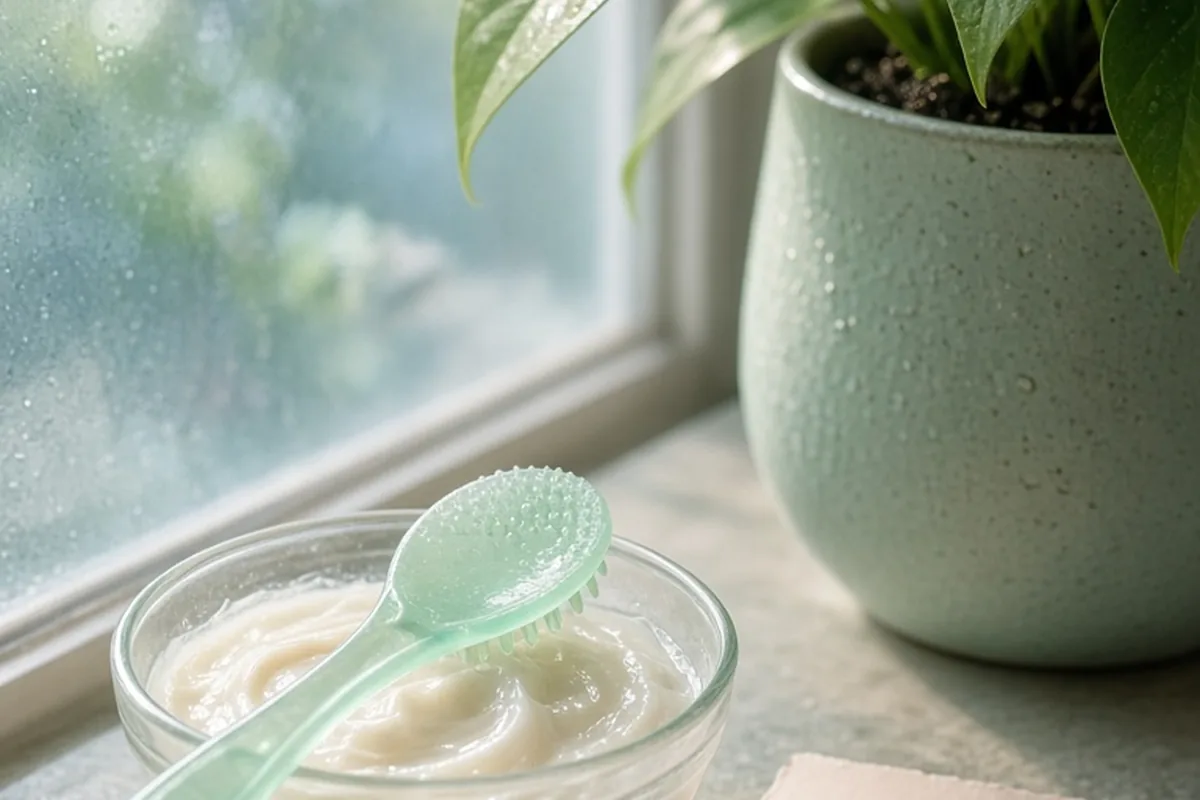
When browsing product aisles as a beginner, check the ingredient list for specific cleaning targets. If you regularly use silicone-heavy serums or edge-control waxes, choose a formula with a strong surfactant base rather than a gentle sulfate-free daily cleanser. If your hair is color-treated, chemically relaxed, or naturally fine, seek out chelating shampoos or clarifying products labeled as color-safe and enriched with mild chelators like tetrasodium EDTA to address mineral deposits without accelerating color loss. Along with your cleanser, consider acquiring a soft silicone scalp brush. A silicone massager helps dislodge stubborn residue from your roots evenly without scratching delicate scalp tissue the way plastic bristles or sharp fingernails can.
Step-by-Step Clarifying Wash Routine for Beginners
Executing your clarifying wash properly ensures you strip away unwanted coating without irritating your scalp or leaving your ends unmanageable. Begin by spending at least three full minutes saturating your hair beneath warm running water. Warm water encourages the outer cuticle layer to open slightly and begins softening wax-based styling agents before shampoo even touches your head. Do not rush this wetting step; thick or coarse textures in particular need ample water volume to ensure the cleanser can spread evenly down to the skin.
Dispense a quarter-sized portion of clarifying shampoo into your palms, rub your hands together to emulsify the liquid, and apply it directly to your scalp zone rather than your mid-lengths or ends. Part your hair in sections using your fingers so the shampoo reaches your hairline, crown, temples, and nape. Using the soft pads of your fingertips or a silicone brush, massage the cleanser in firm, small circular motions for two to three minutes. Focus your physical work strictly on the scalp; the suds will wash down the lengths of your strands during rinsing, carrying away surface debris without unnecessarily roughing up your ends. Rinse thoroughly with warm water until the water runs clear and no slippery lather remains.
Evaluate the feel of your roots before reaching for your conditioner. If your hair has several weeks of accumulated dry shampoo or heavy pomade, your first rinse might produce very little lather because the oils and waxes suppress bubbles. In this scenario, apply a dime-sized amount of clarifying shampoo for an immediate second wash. You will notice a much richer, thicker foam this time, signaling that the surface film has surrendered. Rinse completely once more, taking extra care around the back of the neck and behind the ears where suds easily hide and cause post-wash itchiness.
Restoring Moisture and Sealing the Hair Cuticle After Cleansing
Because clarifying shampoos strip away cosmetic build-up alongside natural sebum, your strands will feel rougher and more porous immediately after rinsing. Skipping hydration after a detox wash leaves the hair cuticle flared open, which causes friction, split ends, and immediate frizz. Therefore, compensating with an intensive deep conditioner or protein-balanced hair mask is an indispensable second phase of this beginner routine. Never use a light, rinse-out detangler in place of a deep treatment on a clarifying day.
Squeeze excess water out of your hair using your hands or a microfiber towel before applying your deep conditioner; soaked hair repels conditioning agents and dilutes the formula. Work a generous amount of mask through your mid-lengths down to your ends, steering clear of the fresh scalp you just cleaned. Use a wide-tooth comb to gently distribute the cream and detangle starting from the tips upward. Allow the conditioner to absorb for five to ten minutes under a shower cap. Finally, rinse with cool or lukewarm water. Cooler water helps flatten the raised cuticles, trapping hydrating ingredients inside the shaft and leaving hair soft, reflective, and manageable.
Using Pre-Wash Scalp Scrubs and Acid Rinses Effectively
For those who experience stubborn flaky residue or who prefer supplementary treatments, pre-wash physical scrubs and diluted apple cider vinegar rinses offer practical mechanical and chemical support. Physical scalp scrubs incorporate fine exfoliating particles like sugar or dissolvable beads within an oil or gel base. When applied directly to dry or damp roots prior to shampooing, they physically loosen flaking debris and dry shampoo layers. If you choose a scrub, apply it gently with light fingertip pressure once every few weeks, and avoid salt-based scrubs if you have tiny abrasions or sensitive skin, as salt can trigger stinging.
Diluted apple cider vinegar acts as a gentle, low-pH rinse that dissolves calcium deposits from hard water and smooths the hair shaft. Because pure vinegar is strongly acidic, you must always dilute it before use by mixing one part raw vinegar with four to five parts water in an applicator bottle. Pour this mixture over your scalp and strands after shampooing, let it sit for two minutes, and rinse thoroughly before applying your conditioner. This acidic rinse helps rebalance natural scalp pH, dissolves mild residual grime, and adds natural shine, though it should complement rather than fully replace a surfactant-based clarifying shampoo for heavy silicone waxes.
Tailoring Your Clarifying Frequency by Hair Type and Styling Habits
A common point of confusion for beginners is how often to perform this deep-cleansing routine. Clarifying too often removes beneficial natural lipids, prompting your sebaceous glands to overcompensate or leaving your hair brittle. Conversely, clarifying too infrequently allows buildup to accumulate into an occlusive barrier that prevents moisture from penetrating the hair cortex. The ideal interval depends on your natural hair texture, your local water quality, and the quantity of styling products you apply throughout the week.
If you have fine, straight, or oily hair and use daily leave-in products, dry shampoo, or hairspray, a clarifying routine every one to two weeks keeps roots lightweight and prevents greasy flattening. For individuals with wavy, curly, or coily hair that tends toward dryness, clarifying once every three to four weeks is usually sufficient, alternating with co-washes or sulfate-free cleansers on regular wash days. If you swim regularly in chlorinated pools, exercise heavily, or live in a municipality with very hard, mineral-dense tap water, you may need a clarifying or chelating session every seven to ten days to maintain scalp comfort and strand flexibility.
Beginner Mistakes That Accelerate Product Buildup Recurrence
After resetting your hair, avoiding common application errors will keep your strands clean much longer between clarifying sessions. The most widespread beginner error is applying rinse-out conditioners and rich styling creams directly to the scalp. Conditioners contain conditioning agents like cetrimonium chloride, behentrimonium methosulfate, and fatty alcohols designed to coat hair fibers. When massaged onto the skin, these ingredients bind with natural sebum and dead skin cells, forming a dense paste that blocks follicles and creates instant flaking within forty-eight hours.
Another frequent mistake is relying on dry shampoo to stretch styles for several consecutive days without washing. Dry shampoo works by absorbing surface sebum with starches and clays, but the powder remains sitting on the scalp, where it mixes with sweat and environmental dust. Layering fresh dry shampoo over old dry shampoo compacts this mixture into a suffocating crust. Limit dry shampoo to occasional emergency use rather than a daily routine, and make sure that any leave-in sprays or serums you purchase are formulated without heavy, non-soluble silicones like dimethicone unless you plan to clarify on a strict, regular schedule.
Illustrative Scenarios
Resolving Chronic Dullness in Low-Porosity Hair
Jordan had used heavy shea butter creams and leave-in styling oils for three months to fight dullness on low-porosity, wavy hair. Rather than softening her strands, the products accumulated into a gummy coating that resisted water and left her scalp uncomfortably itchy. She introduced a focused clarifying wash using a sulfate-based detox cleanser, working the lather directly across her scalp for three minutes, followed by a lighter, silicone-free moisture mask on her ends. The initial wash immediately lifted the waxy film, restored natural bounce, and allowed her everyday styling products to absorb evenly without leaving white flakes behind.
Key point: Heavy botanical butters can form an impermeable coating on low-porosity hair that only strong clarifying surfactants can remove, requiring lighter moisture products afterward.
Frequently asked questions
Can I use baking soda to remove product buildup from my hair?
Baking soda is not recommended because its high pH of around 9 is excessively alkaline compared to your scalp's natural pH of approximately 5.5. Applying baking soda can severely disrupt your moisture barrier, strip outer cuticle scales, and cause extreme breakage over time. A properly formulated clarifying shampoo with balanced surfactants is both safer and significantly more effective.
Will a clarifying wash fade my permanent or semi-permanent hair color?
Clarifying shampoos can accelerate color fading, especially on freshly dyed red, brunette, or vivid semi-permanent shades, because the strong surfactants open hair cuticles. To protect your color investment, select a clarifying formula specifically labeled color-safe, wait at least one week after dyeing before clarifying, and use cool water when rinsing.
How do I tell if my hair has buildup or if it is just naturally greasy?
Natural grease feels soft and slippery at the roots while mid-lengths and ends usually remain clean. Buildup, by contrast, feels stiff, tacky, or waxy, and coats the entire length of the hair fiber. Furthermore, if your hair feels coated even immediately after washing and drying it with your daily shampoo, the issue is product residue rather than excess sebum.
Can I use micellar shampoo instead of a strong clarifying shampoo?
Micellar shampoo serves as an excellent middle ground if your buildup consists mostly of light leave-in conditioners and dust rather than heavy silicones or styling waxes. Micelles trap light oils gently without stripping dry textures. However, if you rely on heavy pomades, edge tamer, or water-resistant silicones, a standard clarifying surfactant is still necessary for complete removal.
Your next step
Inspect your current hair care shelf today, identify any styling products containing non-water-soluble silicones or heavy waxes, and schedule your first clarifying wash for your next shower.