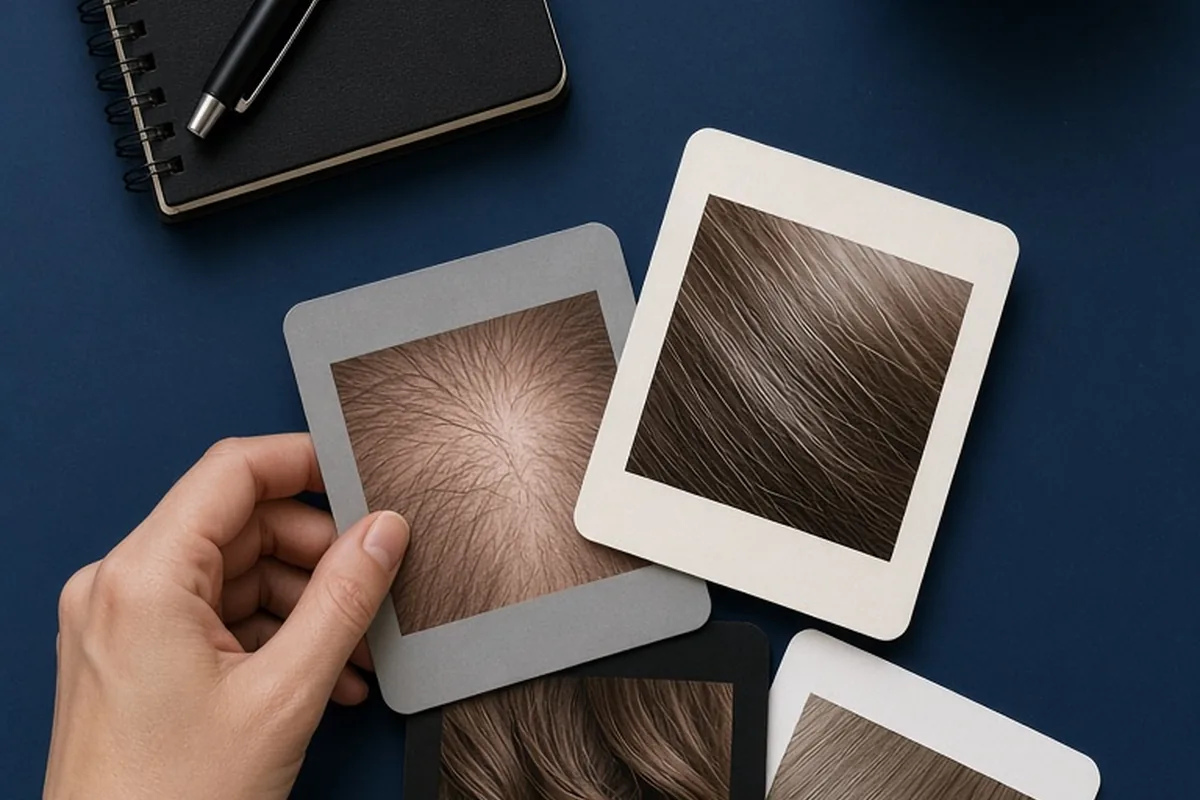
A hair salon consultation for fine hair is a dedicated pre-service evaluation where you and a stylist assess individual strand diameter, overall scalp density, daily styling habits, and chemical history. The goal is to select cuts, color formulas, and styling techniques that maximize fullness and movement while preventing mechanical breakage, over-processing, and excessive weight loss along the perimeter.
Fine hair has unique structural traits that require a deliberate approach to cutting, coloring, and styling. Walking into a salon appointment without clear expectations can lead to over-layered cuts or chemical damage that takes months to grow out.
Distinguishing Fine Strand Diameter from Scalp Density in the Chair
A successful salon consultation begins with separating hair diameter from hair density. Strand diameter refers to the individual thickness of each hair shaft, categorized as fine, medium, or coarse. Density refers to the total number of active follicles across the scalp, categorized as thin, average, or thick. A client can have high density with exceptionally fine strands, or sparse density with coarse strands. During your consultation, invite the stylist to physically examine your dry hair under salon lighting to feel the shaft texture and inspect your scalp coverage across the crown, temples, and nape.
When a stylist knows your specific combination of diameter and density, they can calibrate tension during cutting and adjust chemical processing times. Fine strands have a narrower cortex and fewer cuticle layers, which means they absorb moisture, lightener, and color rapidly but also lose structural integrity more quickly under heat or mechanical stress. Explaining whether your hair collapses under heavy moisture or struggles to hold a curl helps your stylist diagnose your hair fabric accurately before picking up shears or mixing developer.
Gathering Inspiration Photos That Reflect Realistic Fine Hair Density
Inspiration images are essential communication tools, but many popular reference photos feature hidden clip-in extensions, dramatic backcombing, or coarse hair textures that behave differently than natural fine hair. Before your consultation, search for images that feature models with similar perimeter thickness, natural growth patterns, and density around the hairline. Look closely at the ends of the hair in reference photos: if the bottom edge appears thick and blunt, it is often a realistic goal for fine hair, whereas wide-body barrel curls often require artificial density.
Present both what you want and what you want to avoid during the consultation. Show your stylist one or two photos demonstrating target silhouettes and one photo showing a shape you dislike, such as stringy ends or overly short shelf layers. Walk through the specific elements you like in each picture, whether that is the face-framing length, the way the ends fall on the collarbone, or the soft texture around the crown. This prevents misunderstandings about terminology, since words like volume, texture, and movement mean different things to different people.
Selecting Haircut Architectures That Protect Fine Hair Weight and Movement
Cutting fine hair requires geometric precision to maintain perimeter weight while creating internal movement. Discuss the overall baseline of the cut with your stylist before any cutting begins. Blunt perimeters, such as classic bobs, lob cuts, and solid one-length perimeters, create the visual appearance of thicker ends by keeping the maximum number of hair strands aligned at the hemline. If you prefer longer lengths, ask the stylist how they plan to support the perimeter so the bottom two inches do not appear translucent against your clothing.
Layering must be approached with caution on fine hair textures. Aggressive external layering can strip necessary bulk from the perimeter, leaving the ends wispy and limp. Instead, ask your stylist about internal texturizing methods, soft surface chipping, or subtle graduation at the crown that lifts the root without removing critical perimeter mass. Clarify whether they plan to use shears or razors; while razors can add soft movement to coarse hair, they can fray the cuticles of fine strands if the blade is not pristine or if applied with improper tension.
Planning Hair Color and Lightener Services Without Sacrificing Strand Integrity
Chemical services can benefit fine hair by swelling the cuticle slightly and creating a rougher texture that provides natural lift, but the margin for error is narrow. Because fine hair has a delicate structural core, strong bleaching agents and high-volume developers can cause rapid breakage or elasticity loss. In your consultation, disclose all past chemical treatments, including box dyes, glosses, keratin treatments, and hard water exposure, so the colorist can select the gentlest developer possible.
Discuss dimensional coloring techniques that add visual depth rather than solid, flat tones. Multi-tonal lowlights combined with strategic babylights create the illusion of thickness across the surface of the hair without requiring all-over lightening. Ask the colorist if they incorporate bond-building additives into their lighteners and toners to protect protein bonds during processing. If you are planning a significant blonde transformation, establish a multi-session plan rather than attempting aggressive lift in a single appointment.
Assessing In-Salon Chemical Treatments and Scalp Services for Fine Hair
Many in-salon smoothing treatments, deep-conditioning masks, and texturizing perms are formulated for coarse or unruly hair, which can leave fine hair looking greasy, flattened, or over-processed. During your consultation, ask how specific salon treatments alter hair diameter and weight. Traditional heavy keratin treatments coat the exterior shaft, which eliminates frizz but often removes natural body and leaves fine strands pasted to the scalp for weeks.
If you struggle with an oily scalp that weighs your roots down by midday, ask your stylist about scalp-clarifying treatments or light exfoliating protocols instead of heavy conditioning baths. For clients seeking structural volume, discuss gentle texturizing treatments or acidic glosses that seal the cuticle and add natural shine without leaving occlusive silicone residues behind. Clarify the longevity of any treatment and confirm how it interacts with your existing cut and color routine.
Building a Targeted Home Maintenance Routine and Product Strategy
A haircut or color service for fine hair is only as effective as the daily routine used to support it. Use the consultation to audit your current product lineup with your stylist. Bring a list or photos of your everyday shampoos, conditioners, leave-in sprays, and heat protectants. Fine hair easily suffers from product buildup, which pulls strands downward and makes clean hair look dull or greasy within hours of washing.
Ask your stylist to demonstrate proper product dosage and placement during the styling portion of the appointment. Fine hair generally thrives on lightweight liquid leave-in conditioners, root-lifting sprays, and dry texture sprays rather than heavy oils, butters, or thick creams. Request that they explain how to apply styling aids strictly to mid-lengths and ends to keep the root area clear and bouncy. Confirm the optimal blow-drying airflow direction and round-brush tension needed to replicate salon results at home.
Identifying Stylist Red Flags and Asking Critical Chairside Questions
A thoughtful stylist will listen carefully, run their hands through your hair while it is dry, and talk through the physical mechanics of the proposed cut and color before wetting your hair. Red flags include a stylist immediately reaching for aggressive thinning shears to remove bulk, ignoring your natural cowlicks or growth directions, or dismissing concerns about chemical fragility. If a stylist guarantees that heavy layers will automatically double your hair volume without explaining how they plan to preserve the bottom edge, pause and ask for clarification.
Keep the conversation productive by asking direct, practical questions. Ask how the proposed length will behave when air-dried versus heat-styled, how many weeks the cut will maintain its shape, and what the total estimated cost will be including glosses or bond builders. Taking a collaborative, inquisitive approach ensures both you and your stylist share the same vision before shears touch your hair.
Illustrative Scenarios
Adjusting Cut Architecture for Dense but Fine Strands
A client with fine individual hair strands and high scalp density experienced stringy, limp ends after receiving traditional heavy layers. During a consultation with a new stylist, they reviewed inspiration photos and evaluated the client's dry hair texture. The stylist demonstrated that aggressive layering was removing too much perimeter mass from fine strands, despite the high total follicle count. They agreed to cut a blunt perimeter base at collarbone length with light internal texturizing confined to the upper crown.
Key point: High density does not eliminate fine hair fragility; preserving a blunt baseline maintains edge fullness while targeted crown graduation provides movement.
Frequently asked questions
Should I arrive at my fine hair salon consultation with clean or dirty hair?
Arrive with clean, dry hair styled the way you normally wear it on a typical day. This allows the stylist to see your natural volume, cowlicks, parting habits, and oil production without masking your hair texture under dry shampoo or heavy product buildup.
Are thinning shears ever safe to use on fine hair?
Thinning shears should be used with extreme caution on fine hair because they create short, disconnected hairs that can poke through the surface or make the perimeter appear sparse. Most experienced stylists prefer point cutting or slide cutting with standard shears to create controlled, soft texture.
How long does a proper fine hair consultation usually take?
A dedicated consultation typically takes ten to fifteen minutes before a first-time service. This provides sufficient time to evaluate strand condition, review inspiration photos, discuss daily styling habits, and agree on a clear cut and color plan.
Your next step
Take three clear photos of your current dry hair in natural light and collect two realistic reference photos showing blunt-perimeter cuts to discuss at the start of your next salon appointment.