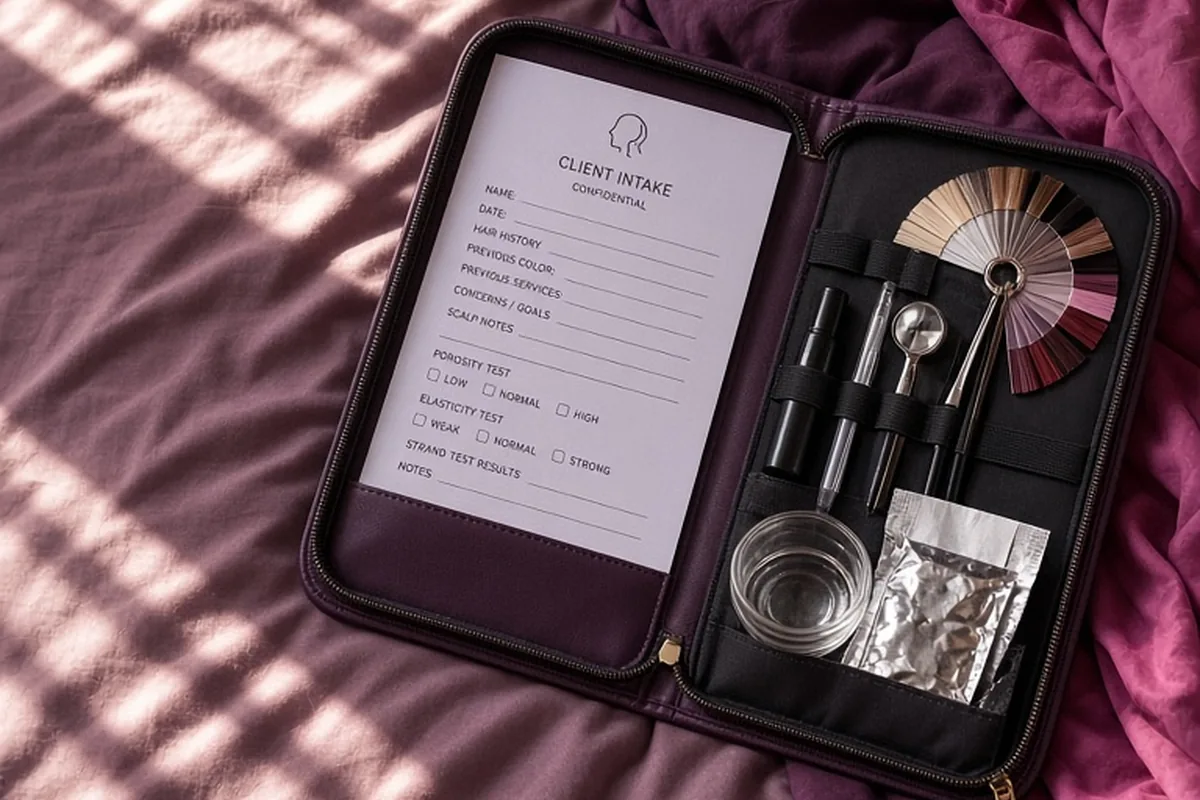
Hair salon consultation products for beginners include physical diagnostic tools, visual communication aids, and client record systems used before starting any service. Core starter products consist of level finders, color swatch rings, porosity and elasticity test solutions, scalp cameras or magnifying loupes, standardized digital or paper intake sheets, and strand testing supplies. These tools eliminate guesswork, clarify client expectations, evaluate baseline hair health, and protect both the stylist and client from unexpected chemical damage or color discrepancies.
Stepping behind the chair as a new stylist or opening a private studio requires more than technical cutting and coloring skills. The first ten minutes spent assessing a client determine whether a service succeeds, making a dedicated consultation kit one of the most practical investments you can make early in your career.
Physical Swatch Rings and Level Finders for Accurate Base Assessments
One of the most frequent sources of miscommunication between clients and beginner stylists is color terminology. A client asking for mushroom brown or honey blonde often envisions a shade completely different from standard cosmetology formulation charts. Color swatch rings and dedicated natural level finders provide a physical baseline that both you and the client can view together under balanced salon lighting. Standard level finders feature swatches ranging from Level 1 black to Level 10 ultra-light blonde, allowing you to hold individual hair tufts directly against the client's root area to accurately determine their natural starting level and percentage of gray.
Relying solely on digital inspiration photos shown on a smartphone screen introduces distortion due to varied screen brightness, automatic photo filters, and backlighting. Keeping a neutral-toned, physical swatch deck at your station allows you to anchor the conversation in real-world pigments. When selecting a starter swatch tool, look for rings that isolate cool, warm, and neutral tonal series on detachable rings. This allows you to hold specific undertones against a client's skin to demonstrate why a specific ash or golden reflection will either complement or wash out their complexion.
To get the most reliable reading, always view the swatch against clean, dry roots under 5000K neutral daylight bulbs rather than warm yellow styling station lamps. If a client arrives with heavy dry shampoo or root touch-up spray, gently brush through the section or wipe it with a damp towel before matching the level finder.
Scalp Scopes and Diagnostic Cameras for Baseline Follicle Health
Assessing the condition of the scalp is a vital safety step before applying lighteners, permanent colors, chemical relaxers, or permanent waves. Handheld digital trichoscopes and optical scalp magnifying loupes have become accessible diagnostic products for beginners. These compact tools connect via Wi-Fi or USB to a tablet or smartphone, displaying a magnified view of the scalp surface, follicle openings, and sebum levels directly on your screen.
Using a diagnostic camera during the consultation allows you to identify unseen abrasions, active dermatitis, heavy product buildup, or localized thinning before applying any chemical that could cause stinging or irritation. When clients can see their own scalp health in real time, they better understand why you might recommend a clarifying detox treatment or scalp-soothing protocol prior to a chemical service, or why an on-scalp bleach service must be postponed to protect their skin integrity.
Beginner stylists should look for scopes featuring built-in LED illumination and adjustable magnification levels. Prioritize devices with rechargeable batteries and easily cleanable, non-porous contact caps that can be submerged in or sprayed with hospital-grade disinfectant between every appointment.
Porosity, Elasticity, and Clarifying Pre-Treatment Test Supplies
A client's chemical history is not always visible to the naked eye, particularly when previous darker dyes have faded or mineral buildup coats the hair shaft. Assembling a physical texture and porosity testing station gives you the concrete data needed to choose the correct developer volume and processing time. Essential supplies include a fine-mist water spray bottle, clear glass test vials for float testing, clarifying pre-treatment sprays, and chelating test strips to detect hard water or chlorine deposits.
Performing a quick porosity check by misting a dry mid-shaft strand reveals how quickly the cuticle absorbs moisture. If water beads up indefinitely, you are working with low-porosity, resistant hair that may require extended processing or gentle heat. If the water absorbs immediately and the strand feels rough, the cuticle is compromised and requires a bonding additive or lower-volume developer. Wet elasticity pull tests can be performed simultaneously by taking a small grouping of ten to twelve hairs and assessing whether they stretch and return, or stretch and snap under slight tension.
Keep a fast-acting clarifying or chelating spray at your consultation station. If you suspect heavy silicone, metallic salt, or mineral accumulation from well water, misting a test strand can reveal unexpected heating or bubbling reactions before you ever mix a full bowl of lightener.
Strand Test Bowls, Foils, and Rapid Lightener Kits for Chemical Safety
The strand test remains the gold standard of professional risk management, particularly for major color corrections, vivid transformations, or clients transitioning from at-home box dyes. A beginner consultation cart should always feature a dedicated mini-service kit containing miniature tint bowls, micro-applicator brushes, precut consultation foils, and a small pump bottle of processing lotion or bleach developer.
Taking five minutes to mix a single teaspoon of lightener and applying it to an inconspicuous section near the nape provides definitive answers that visual inspection cannot. The strand test reveals the underlying artificial pigment layers, the speed of lift, and whether the hair maintains structural integrity under chemical stress. It also provides an undeniable visual reference for the client if their hair pulls uneven orange or begins to break, proving why their desired platinum result may require multiple sessions.
Ensure your kit includes gentle dry towels and a handheld spray bottle filled with cool water to quickly neutralize and wipe away the test product without having to walk the client back and forth to the shampoo bowl during the consultation.
Digital Intake Forms and Visual Lookbook Apps for Stylist Workstations
Paper consultation sheets are easy to misplace and difficult to cross-reference over time. Setting up a dedicated tablet equipped with digital consultation software or fillable intake forms streamlines record-keeping and protects you legally. Beginner intake forms must capture essential background details: past color history over the last three years, heat styling habits, daily home care products, water source types, and known allergies to PPD, fragrances, or latex.
Modern consultation apps also allow you to capture high-resolution baseline photographs of the client's hair from the front, sides, and crown under standard lighting. Storing these photos inside the client profile alongside precise formulation notes creates an accountable record. If a client returns months later claiming their toner faded faster than usual or asking for the exact tone they received previously, your digital intake history provides the exact measurements and processing duration used.
In addition to intake forms, digital visual lookbooks with curated diagrams of cutting angles, fringe styles, and placement patterns help bridge vocabulary gaps. When a client points to a photo illustrating face-framing layers versus blunt perimeter lines, you eliminate ambiguity before shears touch hair.
Setting Up Your Beginner Consultation Station and Rolling Cart
Having the right tools is only effective if they are organized logically at your workstation so you can access them without breaking eye contact or leaving the styling chair. An organized rolling consultation caddy or dedicated drawer inserts keep your diagnostic tools sanitized, charged, and presentable. Messy, cluttered stations can cause clients to doubt a beginner's professionalism before the service even begins.
Arrange your station into three functional zones: diagnostic tools on top, test mixing supplies in the middle tier, and sanitation/documentation supplies at the base. Top-tier items should include your sanitized level ring, clean scalp scope, and tablet stand. The middle tier houses your mini mixing bowl, developer, micro brushes, and foil strips. The bottom tier should hold your hospital-grade disinfectant wipes, spray bottles, and clean cotton towels.
Develop a standardized sanitation routine between every consultation. Wipe down the tablet screen with electronics-safe disinfectant, immerse or spray swatch rings according to the manufacturer's chemical guidelines, and store test bowls dry and covered to prevent contamination.
Budgeting and Sourcing Your First Salon Consultation Toolkit
Building a consultation kit does not require buying the most expensive branded equipment immediately. Beginner stylists should prioritize essential diagnostic accuracy over luxury accessories, investing first in high-utility items that directly prevent chemical mishaps. Sourcing items through licensed professional beauty supply distributors ensures your color rings and developer products meet current cosmetic manufacturing standards.
When purchasing your initial setup, focus your budget on a reliable level finder from a major professional color line, a sturdy tablet case with a built-in stand, and medical-grade disinfectant. Less expensive optical loupes and standalone mini tint bowls can be sourced economically from salon supply outlets without compromising diagnostic quality. As your client base and service revenue grow, you can upgrade to advanced high-definition Wi-Fi trichoscopes or specialized color formulation apps.
Check manufacturer warranties and replacement part availability before purchasing digital tools. Items such as scope lenses, rechargeable batteries, and swatch ring replacement tabs experience frequent wear, so choosing reputable brands with accessible customer support prevents costly full-unit replacements later.
Frequently asked questions
How long should a beginner hair salon consultation take?
A thorough initial consultation for a new client typically takes 10 to 15 minutes. For major color corrections, vivid transformations, or highly damaged hair requiring a chemical strand test, schedule 20 to 30 minutes to properly evaluate elasticity and discuss multi-step expectations.
What should a beginner stylist do if a client refuses a recommended strand test?
If a client declines a necessary strand test on compromised or heavily processed hair, politely explain that performing the chemical service without testing creates an unpredictable risk of severe breakage or scalp irritation. If they still refuse, decline the high-risk chemical service and offer safer alternative treatments, such as deep conditioning, haircutting, or gentle glossing.
Can digital consultation apps fully replace physical hair swatch rings?
Digital apps cannot completely replace physical swatch rings because digital screens render colors differently depending on screen brightness, ambient lighting, and color calibration. Physical swatch rings placed directly against natural hair under neutral salon lighting provide the only completely accurate assessment of depth, level, and natural undertone.
Which consultation product is the most critical for corrective color services?
A chemical strand test kit—including lightener, low-volume developer, micro-applicators, and foils—is the most critical tool for color corrections. It provides definitive physical proof of how underlying artificial pigments will lift and reveals the structural tolerance of the hair shaft before full application.
Your next step
Assemble a dedicated consultation tray containing a natural level finder, a water test sprayer, and mini strand test supplies before your next client appointment to practice standardizing your diagnostic routine.