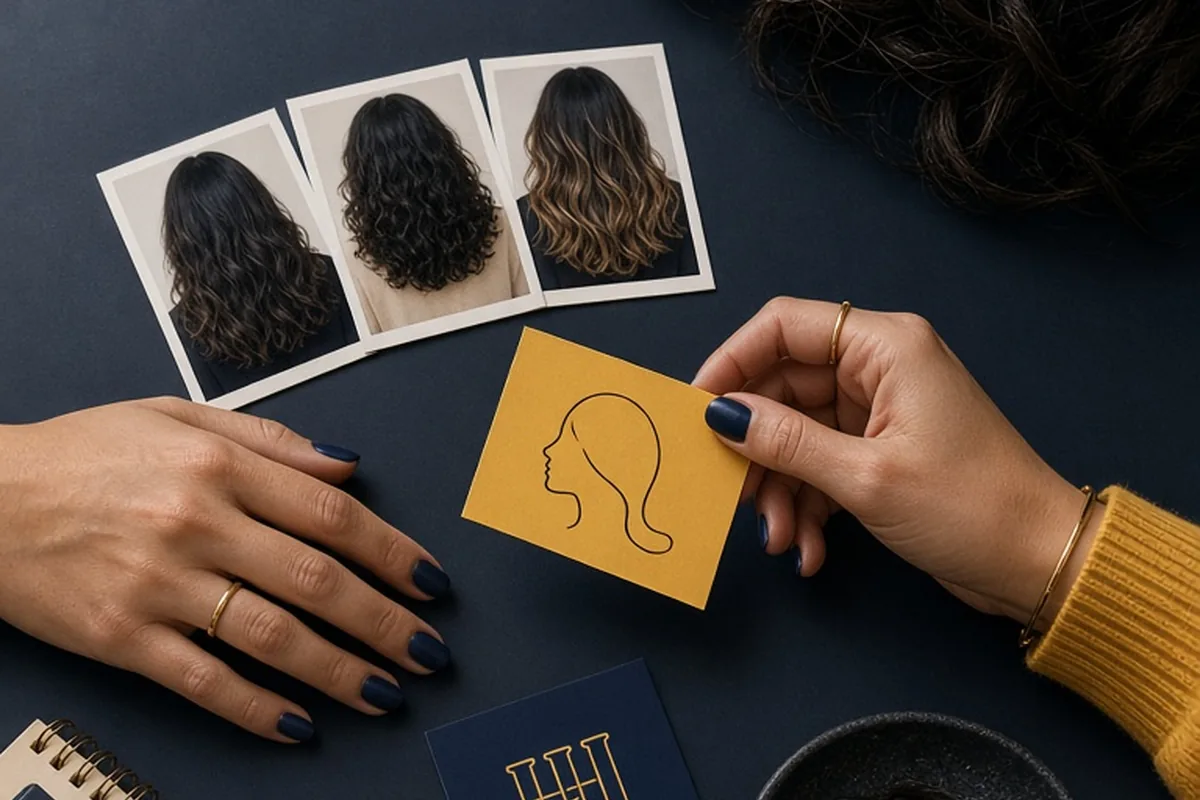
To ensure a successful hair salon consultation for healthy hair, arrive with clean, dry hair in its natural state, bring two or three realistic reference photos, and disclose your complete chemical and heat styling history. Clearly state your daily styling habits, monthly maintenance budget, and length boundaries. Ask for a physical assessment of your hair elasticity and density, and request a strand test before any significant lightening or chemical service.
A salon consultation is a collaborative assessment where you and your stylist determine what your hair can safely handle while aligning on a realistic aesthetic goal. Approaching this conversation prepared with the right details protects your hair structure, prevents costly misunderstandings, and establishes a clear maintenance plan tailored to your lifestyle.
Disclosing Your Full Chemical, Color, and Heat History
Hair carries an indelible record of every chemical process until it is physically cut off. During a consultation, disclosing past treatments is essential for safety, even if a service was performed months or years ago. Stylists need to know about any previous permanent color, box dye, bleach, glosses, chemical relaxers, keratin treatments, perms, or vegetable-based dyes like henna. Metallic salts in some boxed colors or herbal dyes can react violently with professional lighteners, leading to severe thermal reactions, breakage, or uneven color lifting. Providing a chronological overview of your hair over the past two to three years gives the professional the necessary context to formulate chemical mixtures accurately.
Your thermal styling habits at home also dictate how porous and fragile your hair strands are. Let your stylist know how frequently you use blow dryers, curling wands, or flat irons, including the typical heat settings and whether you use thermal protectant sprays consistently. Heat damage weakens the protein bonds inside the hair cortex, which reduces the hair's ability to retain color pigments and withstand further chemical processing. An open dialogue regarding your past routine allows your stylist to decide whether your hair needs bond-building treatments, gentler developer strengths, or a restorative period before undergoing major transformations.
Translating Reference Photos into Realistic Hair Goals
Inspirational photos are valuable communication tools, but they must be evaluated critically. When bringing photos to your consultation, select two or three images that capture the specific elements you like, such as the placement of highlights, the shape of the perimeter, or the overall tone. Additionally, bringing one photo that represents what you actively dislike can prevent miscommunication. Make sure to tell your stylist exactly what you appreciate about each photo, whether it is the coolness of the blonde, the softness of the face-framing layers, or the internal volume.
It is equally vital to understand the difference between digital styling and everyday reality. Many salon portfolio photos feature professional ring lighting, extensive extension installations, or single-use styling products that create temporary shine and density. A professional will evaluate how your natural base color, thickness, and texture compare to the photo. For instance, achieving a bright beige blonde on naturally dark, coarse hair often requires multiple sessions across several months to avoid catastrophic breakage. A good consultation involves translating visual inspiration into a customized, multi-phase roadmap that respects the structural limits of your specific hair type.
Evaluating Hair Density, Texture, and Scalp Health at the Chair
A thorough consultation must include a hands-on physical evaluation while your hair is dry. Hair density refers to the number of individual strands on your head, while texture refers to the diameter of each individual strand, categorized as fine, medium, or coarse. Curl pattern, ranging from straight to wavy, curly, or tight coils, adds another structural dimension. Fine hair absorbs chemical processing quickly and breaks easily under mechanical tension, whereas coarse or tightly coiled hair requires tailored hydration strategies and careful tension control during heat styling to preserve the natural curl pattern.
Scalp health directly influences hair growth and dictates which salon treatments are safe to perform. Discuss any concerns regarding scalp dryness, flakiness, excessive oiliness, itchiness, or localized sensitivity with your stylist. If you experience scalp tenderness or conditions like contact dermatitis or traction issues from tight styling, your stylist must avoid applying high-volume developers directly onto the scalp or using aggressive tension during round-brush blowouts. A skilled stylist will examine your scalp condition, partings, and hairline before finalizing any chemical or cutting plan.
Aligning Service Choices with At-Home Maintenance and Budget
Achieving healthy hair results requires an honest assessment of your lifestyle and daily routine. Certain cuts and colors demand substantial daily styling effort and frequent salon upkeep, while others grow out gracefully with minimal intervention. If you prefer to wash your hair and let it air-dry naturally, a precision haircut requiring a daily 30-minute blowout will likely cause frustration. Similarly, high-contrast, on-the-scalp platinum bleaching requires appointments every four to five weeks to avoid banding, whereas a lived-in balayage or root shadow can often go three to six months between major appointments.
Financial clarity before the service begins is critical for a stress-free relationship with your salon. Ask for a complete, itemized breakdown of costs, including base application fees, extra product bowl charges for thick or long hair, specialized bond-multiplying additives, glosses, and post-service blowouts. Furthermore, discuss the necessary at-home maintenance products, such as sulfate-free shampoos, deep conditioning masks, or leave-in UV protectants. Knowing the full cost of both the salon visit and the accompanying home regimen ensures that you can sustain the hair's health over the long term.
Requesting Strand Tests and Formulation Clarifications
A strand test is one of the most reliable diagnostic tools available in a salon, particularly when navigating significant color shifts, corrective color, or chemical transitions. During a strand test, the stylist isolates a small, hidden section of hair at the back of the head and applies the proposed chemical formula. This test reveals how the hair lifts, whether underlying artificial pigments create uneven patches, and how the hair's elasticity holds up under chemical stress. If the test strand becomes gummy, overly stretchy, or snaps, the stylist knows that a gentler formula or a restorative pause is required before processing your entire head.
Do not hesitate to ask questions about the formulation and techniques your stylist intends to use. Inquiring about whether they use low-ammonia or ammonia-free color, demi-permanent toners rather than harsh permanent dyes, or integrated bond-strengthening treatments demonstrates that you prioritize hair integrity over rapid results. If you have a history of allergies or sensitive skin, requesting a 24-hour to 48-hour patch test behind the ear or inside the elbow prior to an all-over scalp application is a standard and sensible precaution.
Setting Clear Boundaries on Trims, Thinning, and Cutting Techniques
Misunderstandings regarding haircut length are among the most common sources of salon dissatisfaction. Vague terms like taking off an inch can mean entirely different things to different people. To establish absolute clarity, use your fingers to physically demonstrate the exact length you want removed while standing or sitting in front of the mirror. Clarify whether you want a micro-trim or dusting to eliminate split ends while retaining length, or if you are ready to cut into healthy, dense hair to establish a new perimeter.
Cutting tools and texturizing techniques should also be discussed, especially for textured, curly, or fine hair. Thinning shears, texturizing shears, and razor cutting can create soft movement on certain hair types, but on curly or fine hair, aggressive thinning can lead to frayed ends, increased frizz, and loss of curl definition. If you prefer precision blunt cutting, point cutting, or dry-cutting methods that allow you to see your natural curl pattern in real time, communicate these boundaries clearly before the shears touch your hair.
Evaluating Salon Responses and Knowing When to Step Back
A healthy consultation is a two-way dialogue where your stylist actively listens, examines your hair physically, and offers constructive professional feedback. Green flags during a consultation include a stylist who asks about your daily styling habits, thoroughly checks the elasticity of your hair strands, explains the trade-offs of different services, and provides an honest timeline for complex color corrections. A conscientious professional will not hesitate to recommend a conservative approach or advise against an aggressive service if it poses a risk to the structural integrity of your hair.
Conversely, pay close attention to warning signs that indicate a rushed or dismissive environment. If a stylist escorts you directly to the shampoo bowl without discussing your hair history or looking at your dry hair, or if they promise an extreme, multi-level transformation in a single session without performing a strand test, your hair health may be compromised. You are never obligated to proceed with a chemical service or dramatic cut if you feel unheard, if the price estimate changes drastically, or if your boundaries are dismissed during the consultation.
Frequently asked questions
Should I wash my hair right before going to a salon consultation?
Arrive with clean, dry hair that has been styled in its natural everyday pattern without heavy styling powders, root cover-up sprays, or heavy dry shampoos. This allows the stylist to accurately assess your natural texture, oil production, growth direction, and existing damage.
What is the difference between a standalone consultation and a day-of consultation?
A standalone consultation is scheduled days or weeks before a major color correction, perm, or chemical transition, allowing ample time for strand testing and comprehensive planning. A day-of consultation takes place immediately before a routine service, covering the immediate plan, adjustments, and pricing.
How do I explain that I want to keep my length while getting rid of split ends?
Ask for a dusting or micro-trim focused exclusively on split ends throughout the layers rather than taking length off the main baseline. Use your fingers to visually show the stylist the maximum amount of hair you are comfortable losing.
What should I do if a stylist says my desired color is impossible without damage?
Trust their professional assessment and ask for an alternative, multi-step roadmap that prioritizes hair integrity. Discuss transitional tones, lower-contrast highlight placement, or bond-building treatments that gradually lighten your hair over multiple scheduled sessions.
Your next step
Review your hair history over the last two years, gather two clear reference photos, and book a dedicated 15-minute standalone consultation with your stylist to perform a physical elasticity check before committing to your next major service.