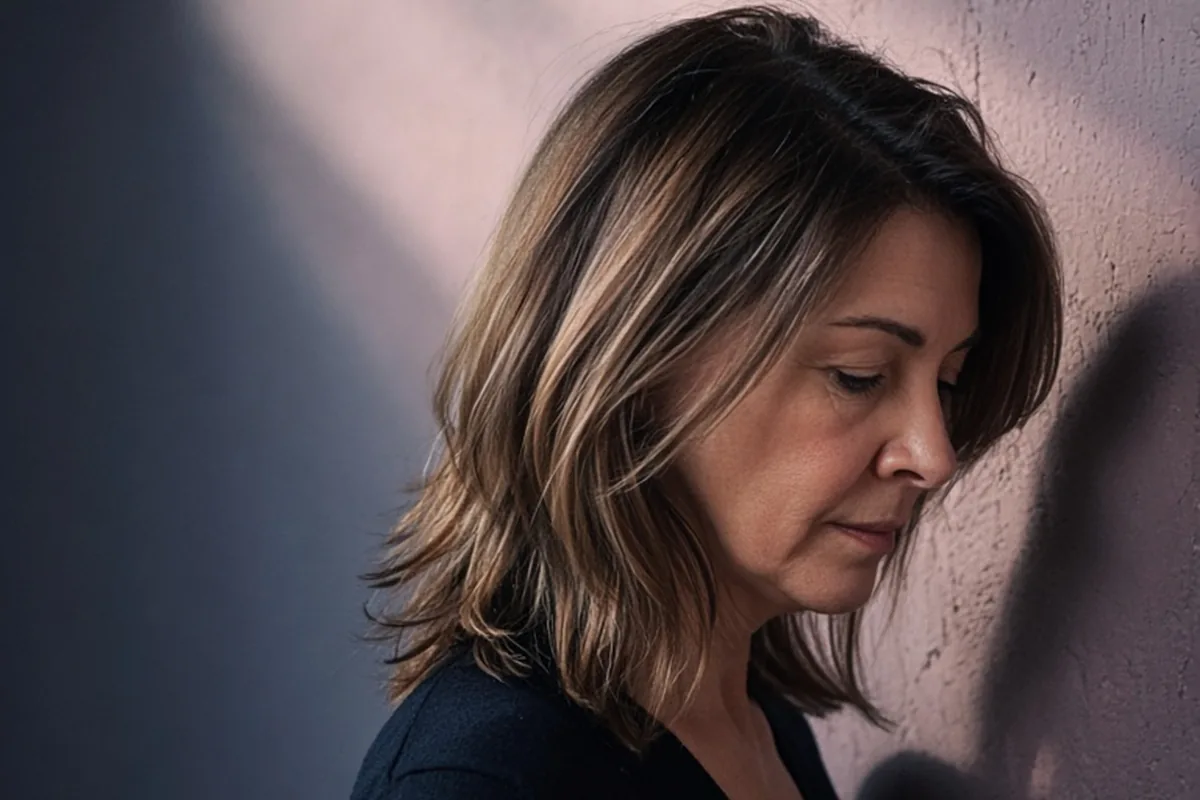
Styling fine hair after forty requires balancing delicate strand health with structural shaping. The most effective approach combines blunt perimeter cuts with internal texturizing to preserve edge density while introducing movement. Daily styling should prioritize heat moderation below three hundred degrees, root-lifting lightweight mousses over heavy waxes, and dimensional color placement that creates the optical illusion of fuller, thicker hair without causing unnecessary stress to fragile follicles.
Hormonal shifts, natural follicle maturation, and cumulative styling wear often change how fine hair behaves after age forty, leading many women to notice reduced density at the crown, increased fragility along the hairline, and a tendency for styles to fall flat quickly.
How Hair Density and Texture Shift After Forty
As women move through their forties, changing levels of estrogen and progesterone can alter the natural hair growth cycle. Follicles often produce strands with slightly narrower diameters, while the active growth phase shortens, leading to less overall density and a finer hand-feel. Concurrently, sebaceous glands produce less natural oil, making delicate hair drier at the ends even if the scalp remains prone to product buildup.
Recognizing these physiological shifts is critical because styling techniques that worked in earlier decades can now cause breakage or weigh down vulnerable strands. Rather than fighting natural texture with heavy pomades or aggressive teasing, modern styling approaches adapt to reduced diameter by preserving the hair cuticle, utilizing gentle tension, and establishing structural support at the scalp level.
Haircut Architecture That Builds Natural Lift and Fullness
The perimeter of a haircut serves as the foundation for fine hair. Overly shredded or heavily feathered ends can make thin hair look sparse, particularly around the collarbone and jawline. A blunt, strong base line—such as a structured bob, a soft lob falling just above the shoulders, or a textured pixie—creates an immediate visual density that makes strands appear significantly thicker than they are.
To introduce body without sacrificing baseline thickness, skilled stylists rely on internal debulking and subtle surface angling rather than deep perimeter layering. Point-cutting through the interior creates pockets of air that allow top sections to rest lightly above lower layers instead of collapsing. Wispy curtain bangs or soft side-swept fringes also redirect attention toward facial contours while disguising subtle thinning near the temples.
Choosing the right length requires honest evaluation of daily maintenance capacity. Longer lengths exert downward gravitational pull that flattens roots, whereas medium and short profiles naturally preserve natural bounce throughout the day with minimal mechanical intervention.
Blow-Drying and Heat-Styling Techniques for Delicate Strands
Applying heat to aging, fine strands requires strict temperature management to prevent cuticle scorching and moisture loss. Styling tools should ideally stay below three hundred to three hundred and twenty degrees Fahrenheit. Before introducing direct heat, allow hair to air-dry to roughly seventy percent dampness, which minimizes the mechanical stress of prolonged brushing on wet, fragile keratin bonds.
When blow-drying for root lift, directional airflow is paramount. Gently lifting roots upward with fingers or an open-vented brush while aiming the dryer nozzle toward the base creates sustained volume without requiring harsh round-brush tension. For added movement, flipping the head upside down during rough-drying sets root angles away from the scalp before sectioning.
When using thermal brushes or curling irons, opt for ceramic or tourmaline barrels that distribute warmth evenly without creating localized hot spots. Wrap moderate sections loosely around the barrel for only a few seconds, letting curls cool completely in the palm of your hand before running fingers through them to lock in shape without flattening the cuticle.
Selecting Lightweight Styling Products That Add Body Without Weight
Fine hair is exceptionally sensitive to product weight. Heavy silicones, rich plant butters, and thick oil serums coat the hair shaft, drawing strands together into separated clumps that expose the scalp. The ideal styling regimen relies on airy foams, liquid root mists formulated with lightweight polymers, and dry texturizing sprays that provide grip without oily residue.
Application technique matters as much as formula choice. Liquid volume sprays and mousses belong strictly at the roots, applied while hair is still slightly damp, while leave-in conditioners should be misted sparingly onto mid-lengths and ends only. Distributing product evenly with a wide-tooth comb prior to styling ensures no individual section is oversaturated.
Dry shampoo also serves as an effective styling tool when used proactively rather than reactively. Applying a light dusting of starch-based dry powder immediately after blow-drying absorbs emerging natural oils before they can weigh down the root zone, maintaining structural separation throughout the following day.
In-Salon Color Placement Strategies That Create Dimension
Monochromatic, uniform hair color can make fine hair appear flat and two-dimensional under direct lighting. Introducing strategic color contrasts creates the visual impression of depth and density. Lowlights placed in lower interior sections establish an artificial shadow that makes exterior layers seem fuller and more buoyant by comparison.
Subtle balayage and babylights around the crown and hairline add soft texture without harsh demarcation lines. However, chemical processing must be approached conservatively. Over-bleaching fragile hair breaks down internal protein chains, leading to frayed ends that collapse and lose volume. Semi-permanent glosses and gentle bond-supporting toners offer a reliable way to enhance shine and strand diameter without compromising structural resilience.
Daily Upkeep and Overnight Protection for Aging Fine Strands
Nighttime friction against standard cotton pillowcases can rough up delicate cuticles and cause morning tangles that break easily during detangling. Sleeping on a smooth silk or satin pillowcase allows hair to glide freely without snagging, preserving the shape of a blow-dry and minimizing morning restyling needs.
Between wash days, revive root volume using steam from a warm shower or a very light water mist rather than reapplying multiple layers of styling cream. Gently finger-raking the scalp while applying a short burst of cool air from a hair dryer resets flattened roots in seconds without adding product buildup that would require daily shampooing.
Illustrative Scenarios
Adjusting Cut Length to Reclaim Crown Volume
Elena, a 46-year-old consultant, noticed her chest-length fine hair looking increasingly stringy at the ends and flat at the crown. Her initial reaction was to apply heavy volumizing mousses and tease the crown with a fine-tooth comb, which left her strands dry and prone to snapping. During her next salon visit, she chose a structured collarbone-length bob with blunt ends and light internal texturing. By removing excess weight and switching to a featherlight root mist, she achieved all-day natural volume with five minutes of rough-drying.
Key point: Eliminating dragging length and harsh mechanical teasing restores natural lift and protects aging fine strands from unnecessary breakage.
Refining Product Layering for Finer Hairline Strands
Nora, 52, struggled with her fringe separating and revealing sparse patches near her temples by midday. She was applying a rich leave-in cream directly from root to tip to combat dry ends, inadvertently overloading her hairline. She shifted her routine by applying leave-in conditioner solely to the bottom two inches of her hair and dusting a mineral root powder across her crown and fringe. Her style maintained fullness and stayed clean-looking through evening hours.
Key point: Confining rich conditioning formulas to the ends and applying lightweight powders to roots prevents premature style collapse.
Frequently asked questions
How often should women over 40 wash fine hair?
Most women with fine hair find washing every two to three days provides the best balance between scalp cleanliness and moisture preservation. Daily washing can strip natural oils and prompt excess scalp dryness, while going too long causes oil buildup that flattens delicate roots. On non-wash days, a light starch dry shampoo keeps roots elevated.
Can layered haircuts work on very fine hair?
Yes, but layers must be executed with careful placement. Over-layering the perimeter can make the base look translucent and stringy. Instead, request soft internal layering or surface texturizing that leaves the outer perimeter blunt while allowing the top sections freedom of movement.
Are volumizing shampoos safe for dry, aging hair?
Volumizing shampoos are effective at cleansing away residue, but some formulas rely on strong surfactants that can feel drying on aging hair. Look for gentle, sulfate-free volumizing cleansers that utilize light amino acids or plant proteins rather than heavy stripping agents.
What is the best heat tool for styling fine mature hair?
An adjustable-temperature ceramic hair dryer paired with a lightweight ionic thermal brush or ceramic curling wand works best. Always set the appliance between two hundred eighty and three hundred twenty degrees to shape the hair without causing heat stress.
Your next step
Schedule a consultation with your stylist to assess your current perimeter shape, and replace any heavy styling waxes with a water-based root spray before your next wash day.