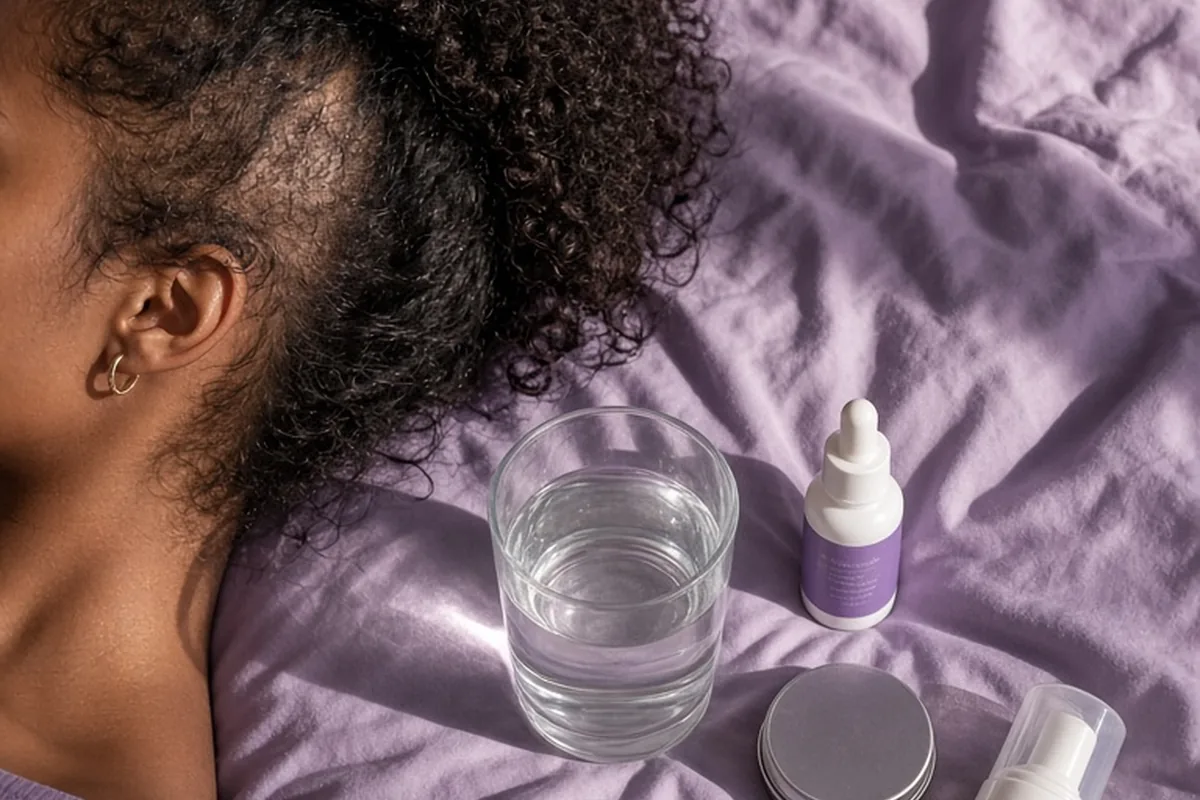
Beginners addressing hair thinning at the temples should start with an over-the-counter topical minoxidil foam or solution, paired with a mild, sulfate-free scalp cleanser and a nourishing peptide serum. For textured hair or traction-related thinning, incorporate lightweight edge oils, satin bonnets, and wide-tooth detangling tools. Because temple hair is exceptionally fragile, prioritize low-irritation formulas, stop mechanical tension from tight hairstyles, and allow three to six months to evaluate visible hair response.
Noticing sudden sparse patches or receding edges around your hairline can feel disorienting, yet thinning at the temples is one of the most frequent patterns women experience. Choosing effective starter products does not require complex routines, but it does require understanding what your scalp needs and avoiding products that cause further breakage.
Identifying Why Temple Thinning Starts Before Buying Treatments
The hair along your temples and hairline is naturally finer in caliber and possesses shallower follicles than the denser zones at your crown or occipital scalp. Because these strands are inherently delicate, they react swiftly to internal shifts and external stressors. Women commonly experience temple thinning due to androgenetic pattern changes, post-stress telogen shedding, nutritional shifts, hormonal adjustments, or chronic physical pull known as traction alopecia. Before selecting targeted formulas, observe whether your hairline shows overall miniaturization, patchy loss, or signs of localized irritation and broken stubble.
Your underlying trigger dictates your product selection. If the issue stems from mechanical strain, such as wearing tight ponytails, heavy extensions, or slicked-back buns, purchasing stimulating chemicals without loosening your hairstyle will yield minimal improvement. Conversely, if your thinning reflects genetic hairline recession or diffuse shedding, mechanical gentleness alone cannot replace active follicle-supporting agents. Clarifying whether your hair is experiencing follicle miniaturization or physical breakage saves money, prevents scalp irritation, and establishes realistic goals for any starter regimen.
Topical Minoxidil Formulations: Drops, Foams, and Starter Decisions
Topical minoxidil remains the primary over-the-counter ingredient recognized for supporting follicle activity and encouraging prolonged anagen growth phases in women. For a complete beginner, deciding between a liquid dropper and an unscented foam formulation is the first major practical hurdle. Liquid preparations frequently contain propylene glycol, an alcohol-based solvent that improves absorption but can cause itching, flaking, or redness on sensitive hairline skin. Foam preparations lack propylene glycol, dry faster, and tend to stay in place better without dripping down the forehead or toward the eyebrows.
Precision is essential when applying minoxidil to sparse temple zones. Use half a capful of foam or the designated dropper volume once daily, parting the hair cleanly and dabbing the formula directly onto the exposed scalp rather than coating the hair shafts. Hair shafts cannot absorb minoxidil; saturating strands merely leads to product buildup and unnecessary stiffness. Be prepared for a temporary shedding transition during the initial two to eight weeks of consistent use. This common shedding occurs as dormant telogen hairs vacate follicles to make room for emerging anagen strands, signaling that the follicle cycle is responding rather than failing.
Scalp Serums, Peptides, and Botanical Oils: Supporting Edge Health
If you prefer to begin with non-medicated options or want to complement an active topical treatment, peptide-based scalp serums and botanical edge treatments offer supportive benefits. Formulations containing copper tripeptides, red clover extracts, caffeine, and biomimetic signal peptides work to condition the skin barrier, supply moisture, and improve the appearance of hair density at the hairline. These serums are generally water-based, lightweight, and suitable for daily application without leaving behind greasy residues that weigh down limp strands or clog adjacent facial pores.
Botanical oils offer distinctive benefits, particularly for wavy, curly, and coily textures that demand moisture retention to prevent strand snapping. Natural oils such as jojoba, squalane, argan, and diluted rosemary oil blends lubricate the delicate perimeter and soften brittle hair fibers. However, heavy raw butters and unrefined castor oils should be used conservatively. Applying excessive thick oil onto the scalp can suffocate delicate follicles, trap dead skin cells, and cause seborrheic dermatitis, which worsens hair loss. Dab a minimal amount along the hair fiber rather than saturating the bare scalp skin.
Gentle Cleansers and Edge Care for Fragile and Textured Hair
A healthy hairline requires a clean, calm scalp foundation. When using targeted temple drops or edge styling products, residue accumulates quickly and can provoke inflammatory responses that undermine new growth. Select a clarifying or balancing shampoo that relies on gentle amphoteric surfactants rather than harsh, stripping sulfates. Wash your hairline with light fingertip pads rather than fingernails, gently massaging the perimeter to sweep away sebum and dry skin without exerting abrasive friction on fragile baby hairs.
Textured hair types require a deliberate balance between clarifying cleansing and essential moisture replenishment. If you have coily or afro-textured hair, your temples may be especially vulnerable to moisture depletion and mechanical manipulation. Pair your cleanser with a deeply hydrating rinse-out conditioner and an alcohol-free leave-in cream applied specifically along the fragile edges. Avoid edge-control styling gels formulated with high alcohol concentrations, which dry into brittle films that snap perimeter strands when brushed. Instead, select soft-hold pomades infused with humectants like glycerin or aloe vera.
Daily Styling Habits, Friction Reduction, and Mechanical Tension
Product efficacy drops sharply if your daily routines constantly shear or pull fragile temple strands. Mechanical friction occurs continuously throughout the day and night from rough pillowcases, coarse headbands, tight hats, and tension-heavy updos. Switching to a high-grade mulberry silk or satin pillowcase, or sleeping in a smooth satin-lined bonnet, reduces overnight drag against baby hairs. When edges glide freely across smooth fabric, delicate hairs remain anchored in their follicles instead of snapping off at the root surface.
Examine your daytime styling tools and hair accessories with equal scrutiny. Replace thin, rubberized elastic hair ties with wide silk scrunchies, soft seamless hair rings, or loose claw clips positioned away from the temples. When detangling, start from the ends and slowly work upward toward the roots using a flexible-bristle detangling brush or a seamless wide-tooth comb, never ripping through knots near the front hairline. If you wear protective braids, twists, or wigs, request that your stylist leave your sensitive perimeter unbraided or install tension-free anchor points to prevent traction-induced temple loss.
How to Evaluate Starter Results and Know When to Seek a Dermatologist
Hair regeneration is a prolonged physiological process that requires patience and methodical documentation. Follicles operate on a multi-month metabolic schedule, meaning visible changes in density, strand thickness, or coverage at the temples rarely appear before three to six months of uninterrupted care. Rather than inspecting your hairline daily in harsh bathroom mirrors, take standardized baseline photographs once a month in consistent, natural lighting with your hair pulled gently back. Look for fine, soft peach-fuzz hairs gradually maturing into pigmented terminal strands along the border.
There are clear boundaries where over-the-counter beginner products reach their limits and professional medical evaluation becomes necessary. If your temple thinning is accompanied by intense burning, persistent scaling, scalp pain, rapid circular bald patches, or eyebrow thinning, consult a board-certified dermatologist promptly. Certain conditions, such as frontal fibrosing alopecia or lichen planopilaris, are scarring forms of hair loss that cause permanent follicle destruction if left untreated by prescription interventions. Early clinical diagnosis ensures you do not waste critical months relying on cosmetic oils while active inflammation compromises your hairline.
Illustrative Scenarios
Adjusting Daily Tension and Nighttime Edge Protection
Danielle, a 34-year-old administrative coordinator, noticed that her hairline around both temples looked increasingly translucent after a year of wearing slicked-back high buns for work. Her immediate reaction was to buy multiple heavy hair growth pomades and brush her edges down firmly every morning to conceal the thinning areas. Within weeks, the increased tugging and dense product buildup caused tiny red bumps and more strand breakage along her front hairline. After recognizing the signs of traction stress, Danielle swapped her stiff nylon edge brush for a soft fingertip smoothing technique, switched to loose low clips, and slept in a satin bonnet. She also began applying a lightweight peptide serum nightly. Over five months, the tender bumps resolved and fragile baby hairs began filling in undisturbed.
Key point: Camouflaging thinning hairline areas with heavy pomades and stiff edge brushes increases mechanical strain; releasing tension and keeping the scalp clean must precede new growth.
Managing the Initial Shedding Phase with Topical Minoxidil
Elena, a 42-year-old teacher, observed widening gaps at her temples that persisted for several months following a prolonged period of work stress and mild hormonal changes. She chose an over-the-counter five-percent minoxidil foam and applied it to her temples every morning. At week four, she panicked when she observed increased strand shedding around her front hairline and assumed the product was damaging her scalp. Rather than discarding the treatment, Elena researched the hair cycle and confirmed that an initial telogen release is a common biological reaction. She continued applying the foam consistently once daily while keeping her scalp hydrated with a gentle, fragrance-free cleanser. By month four, shedding leveled off and faint new growth began bridging the gaps along her temple borders.
Key point: Early shedding during topical minoxidil use often signals that resting follicles are clearing the way for new anagen growth, making calm consistency essential.
Frequently asked questions
Can natural oils alone regrow hair thinning at the temples?
Natural oils condition, lubricate, and protect brittle strands from friction-related snapping, but they do not reverse hormonal or genetic hair miniaturization. Use botanical oils primarily as protective sealants for the hair shaft rather than relying on them as standalone medical remedies for thinning follicles.
Should beginners choose minoxidil foam or liquid for temple application?
Minoxidil foam is generally the superior choice for hairline application because it stays where you place it without dripping down your face. In addition, foam formulas lack propylene glycol, which significantly lowers the risk of developing itchy, flaking contact dermatitis on delicate temple skin.
How long does it take for beginner temple products to show visible results?
Most over-the-counter products require three to six months of regular daily application before visible improvements appear along the hairline. Hair follicles cycle slowly, meaning initial progress often looks like fine, translucent hairs before they gradually darken and thicken into mature strands.
Will washing my thinning edges too frequently make temple hair fall out faster?
Gentle washing does not cause hair loss; it simply releases strands that have already detached from their follicles within the natural shedding phase. Keeping the hairline clean removes sebum, dead skin cells, and product residues that could otherwise lead to follicle-clogging inflammation.
Your next step
Take clear, well-lit baseline photos of both temples today, choose one targeted topical product and a satin sleep cap, and commit to six months of consistent, tension-free care before evaluating your progress.