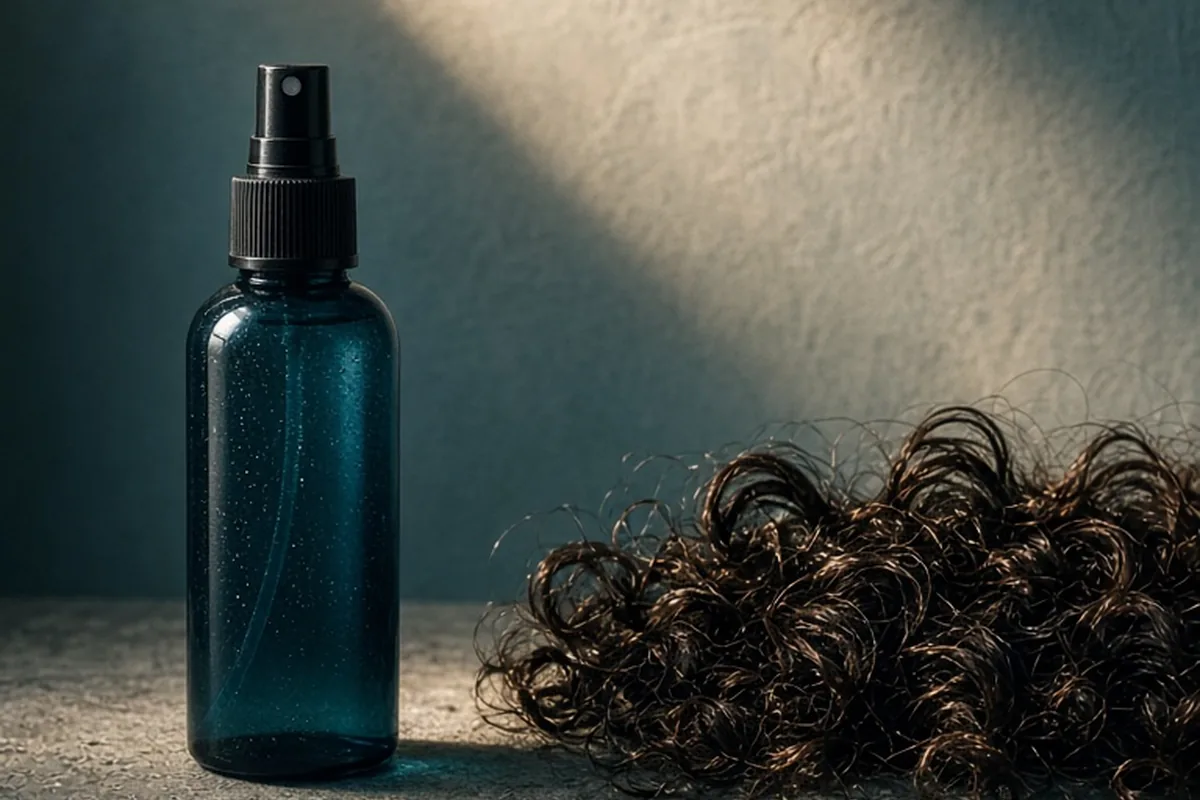
To use heat protectant on curly hair, apply it to clean, damp hair divided into four to six manageable sections. Distribute a quarter-sized amount of cream, lotion, or spray evenly from mid-lengths to ends, then use a wide-tooth comb or your fingers to coat every strand. If you plan to flat iron dry hair after blow-drying, lightly mist a dedicated dry thermal protectant section by section immediately before applying direct tool contact.
Curly hair has a naturally delicate architecture that requires specialized care whenever heat styling tools are introduced. Because each curve and twist represents a structural point where the outer cuticle layer can lift, thermal styling without proper preparation risks permanent pattern loss, moisture depletion, and breakage.
Why Textured and Curly Hair Demands a Specialized Heat Strategy
Curly hair differs fundamentally from straight hair in its geometry, moisture retention, and cuticle alignment. Straight hair shafts are round in cross-section, allowing scalp sebum to travel easily from root to tip. In contrast, curly, coily, and wavy strands possess oval or flattened cross-sections with natural bends along the hair shaft. These curves create points of friction where cuticles naturally flare open, allowing internal moisture to escape much more rapidly when exposed to hot air or hot plates.
When high temperatures touch unprotected curls, the moisture trapped inside the hair cortex can vaporize rapidly. This sudden expansion creates microscopic fractures within the keratin structure, leading to irreversible loss of elasticity, split ends, and limp curl formations. Applying an effective thermal barrier coats the cuticle with heat-dispersing agents, slowing the rate of heat transfer into the cortex and sealing in essential hydration.
Choosing Between Sprays, Creams, and Serums for Your Curl Pattern
Not all heat protectants perform the same role, and matching the formulation to your curl density, porosity, and planned styling technique is essential. Lightweight thermal sprays formulated with water-soluble silicones or botanical polymers work best for loose waves and fine type 3 curls that weigh down easily. These mists provide a sheer shield that disperses heat during diffuse drying without leaving a greasy or crunchy residue.
Medium to thick curl types, as well as dense type 4 coils, typically benefit from rich blow-dry creams, leave-in thermal lotions, or silicone-based serums containing ingredients such as amodimethicone or dimethicone. Creams provide the slip and emollience needed to stretch curls safely during tension blowouts, while dense serums create a lubricated seal that prevents dry friction during flat ironing or curling wand passes. Low-porosity curls require lightweight emulsions that absorb without sitting on the surface, whereas high-porosity curls need film-forming polymers that fill existing cuticle gaps.
- Mists and watery sprays: Ideal for fine waves, loose curls (types 2A to 3A), and quick diffuser drying sessions.
- Thermal creams and blow-dry lotions: Best for medium to coarse curls (types 3B to 4A) undergoing tension stretching or roller sets.
- Silicone oils and concentrated serums: Recommended for dense coils (types 4B to 4C) and high-temperature flat iron passes to eliminate friction.
Layering Thermal Protectants in Your Wash-Day Regimen
A common mistake when styling curly hair is applying heat protectant at the wrong stage of product application. For the best defense, your protectant must form an unhindered bond with the hair fiber. Begin on freshly cleansed, conditioned hair that has been gently squeezed with a microfiber towel until damp. Applying thermal products to soaking-wet hair dilutes the active protective polymers, causing them to drip off before they can adhere to the cuticles.
When layering, follow the rule of thinnest to thickest consistency, keeping total product load moderate. Apply your water-based leave-in conditioner first to impart core hydration. Follow immediately with your thermal protectant cream or spray, distributing it thoroughly before introducing styling gels, mousses, or heavy sealing butters. Applying heavy styling gels before your heat shield can create an uneven barrier where heat bakes styling polymers directly onto the hair shaft.
Sectioning and Distributing Protectant for Diffusing Natural Curls
Diffusing requires indirect heat, but prolonged exposure can still dehydrate fragile curl bundles if the product is applied unevenly. To ensure complete coverage, divide your damp hair into at least four quadrants: two in the front and two in the back. Working one section at a time ensures that internal strands receive the same level of protection as the visible outer canopy.
Dispense your protectant into your palms and rub them together to activate the emulsion. Use the praying-hands method to smooth the product down the lengths of your hair from mid-shaft to ends, avoiding the immediate root area to prevent weighed-down volume. Follow by gently raking through with your fingers or a flexible wide-tooth comb to distribute the formula across every individual curl bundle before scrunching to encourage your natural pattern.
Two-Phase Protection for Blowouts, Silk Presses, and Flat Irons
Achieving a smooth blowout or silk press on textured hair requires a two-phase application process because the hair undergoes two distinct thermal events: moisture evaporation during the blow-dry and dry heat compression during the flat iron pass. Relying on a single wet application rarely provides sufficient lubrication for high-heat plates once the hair is fully dry.
In phase one, apply a heat-activated blow-dry lotion to damp hair before stretching it with a paddle brush or blow-dryer comb attachment. Once the hair is completely dry, initiate phase two. Section the dry hair into small, half-inch subsections and mist a dry thermal spray or smooth a single drop of heat-protecting serum down each section immediately before making a pass with your flat iron. This secondary barrier reduces surface friction, prevents scorching, and leaves a high-gloss finish.
Selecting Safe Heat Settings and Tool Techniques by Curl Diameter
Even the highest-grade heat protectant cannot prevent structural damage if your tools exceed thermal safety limits. As a general rule, fine or chemically processed curls should never be exposed to temperatures exceeding 300 to 325 degrees Fahrenheit. Medium-textured curls can generally handle between 325 and 375 degrees, while coarse, highly resistant coils should remain between 375 and 400 degrees.
Tool movement is just as critical as the temperature dial. Never allow a flat iron, curling wand, or concentrated blow-dry nozzle to pause on a single patch of hair. Use continuous, fluid motions, and limit flat ironing to one slow, deliberate pass using the chase method with a fine-tooth carbon comb. Multiple fast passes over the same section strip moisture more aggressively than a single controlled pass at the proper temperature.
Recognizing Early Thermal Wear and Restoring Curl Health
Thermal wear rarely appears overnight; it accumulates over weeks of subtle depletion. The earliest indicator is a change in curl elasticity, where wet strands no longer spring back into their natural coil shape after gentle extension. You may also notice persistent mid-shaft dryness, a rough texture that catches when sliding your fingers down the strand, or straight, stringy ends that refuse to hold product.
If you observe these warning signs, pause direct heat styling immediately. Incorporate weekly deep-conditioning treatments formulated with hydrolysed vegetable proteins and fatty acids to rebuild internal strength and replenish lost lipid layers. Use a clarifying shampoo once a month to remove silicone residues from thermal protectants, allowing deep conditioning masks to penetrate cleanly into the cortex.
Frequently asked questions
Can I use heat protectant on completely dry curly hair?
Yes, but you should use a formula specifically designed for dry hair, such as an aerosol thermal spray or lightweight silicone dry oil. Standard water-based thermal lotions or wet-hair sprays can cause sizzling and bubbling inside the hair shaft if applied immediately before hot tool contact.
Does natural oil like coconut or argan oil work as a heat protectant?
Natural oils alone are not reliable substitutes for formulated heat protectants. While some oils have high smoke points, they do not create the uniform thermal-dispersing polymers required to shield the hair cortex from direct styling temperatures.
How often do I need to reapply heat protectant between wash days?
You only need to reapply heat protectant if you are introducing a fresh heat source to dry hair, such as touching up face-framing curls with an iron. Lightly mist the specific section you intend to style; there is no need to coat your entire head daily if you are not using heat.
Why does my hair feel sticky or smoky when I flat iron after using protectant?
Stickiness and smoke usually indicate that the hair was not 100 percent dry before ironing, that too much product was applied, or that old styling residue remained on the hair. Ensure hair is completely dry and limit product to small, measured amounts before using hot plates.
Your next step
Examine your thermal protectant bottle today to confirm its maximum heat rating, divide your damp hair into at least four clean sections on your next wash day, and ensure every strand is evenly coated from mid-lengths to ends before turning on your styling tools.