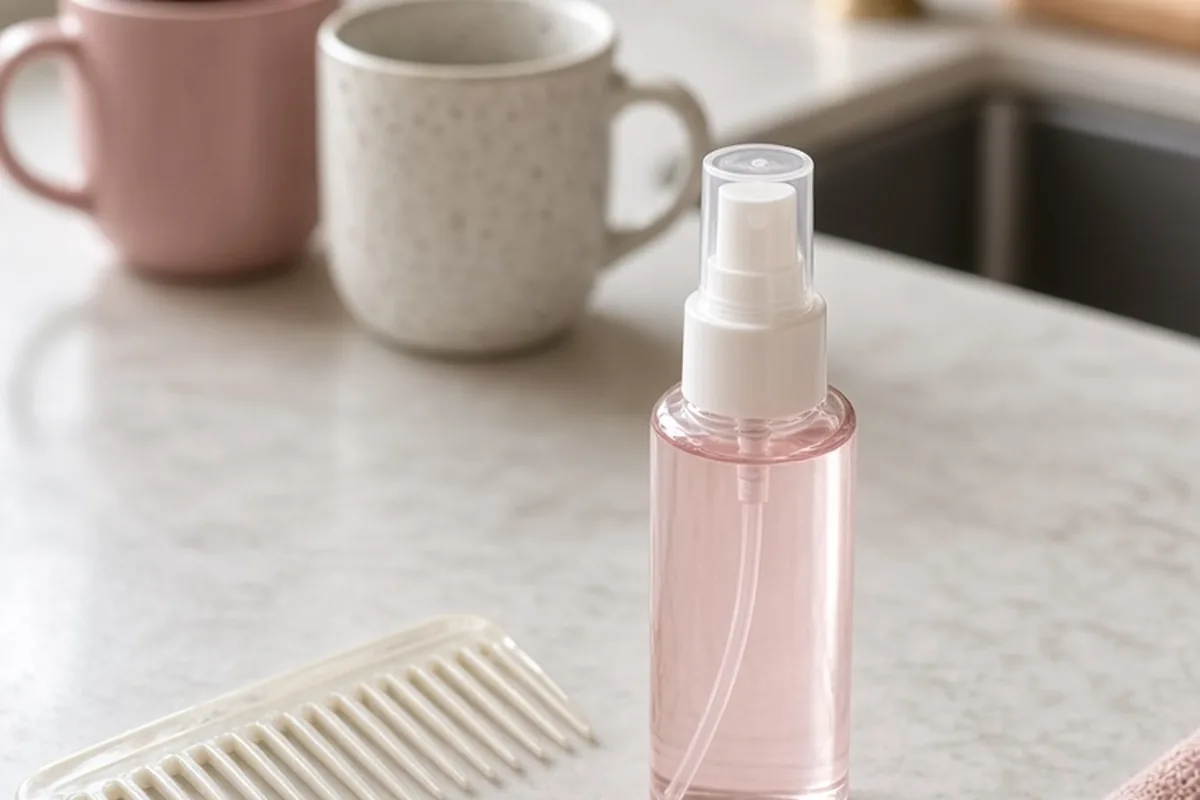
To use heat protectant on fine hair without weighing it down, select an ultra-lightweight mist or dry thermal spray formulated with lightweight silicones, hydrolyzed proteins, or polyquaternium polymers. Hold the nozzle six to eight inches away and apply the product in fine, sweeping mists through damp or dry mid-lengths and ends. Avoid spraying directly onto roots. Comb through with a wide-tooth comb to ensure uniform barrier distribution before applying blow dryers, flat irons, or curling wands.
Fine hair presents a unique challenge during thermal styling because its individual strand diameter is naturally smaller and contains less cortex mass than medium or coarse hair. Applying heavy styling barriers can instantly collapse natural volume and leave strands looking greasy, while skipping thermal protection leaves delicate cuticles vulnerable to irreversible heat damage, moisture loss, and split ends.
Selecting the Right Heat Protectant Formulas for Fine Strands
The primary reason heat protectants leave fine hair limp or oily is incorrect product formulation. Fine hair requires thermal barrier ingredients that provide surface slip and heat dissipation without leaving dense, occlusive residues. Traditional heat defense serums, heavy creams, and oil-based balms are designed for dense, coarse, or highly porous hair types that absorb substantial lipids. When placed on fine strands, these heavy molecules coat the hair shaft unevenly, bind individual fibers together, and eliminate all natural movement.
Instead, look for micro-fine aerosol sprays, water-based mist sprays, and dry thermal shields. These formulas rely on lightweight film formers such as hydrolyzed silk or wheat proteins, polyquaterniums, and volatile silicones like cyclomethicone or dimethicone copolyol. Volatile silicones evaporate quickly, leaving behind a microscopic protective layer that buffers heat exposure without accumulating residue. Water-based mists infused with light humectants provide adequate hydration while maintaining natural body and bounce throughout the styling session.
Always inspect the ingredient list for heavy plant butters and dense natural oils near the top of the deck. Ingredients like shea butter, coconut oil, castor oil, and pure argan oil provide exceptional conditioning for thick hair, but they create a heavy coating on fine hair that attracts dirt and collapses volume. If nourishing botanicals are desired, prioritize lightweight alternatives such as jojoba oil, meadowfoam seed oil, or squalane in modest concentrations near the middle or end of the formulation list.
Damp Versus Dry Application: Aligning Timing with Your Styling Tool
Applying heat protection at the wrong stage of your styling routine can compromise both your hair health and your final style. Wet and damp hair has a swollen cuticle layer, making it receptive to water-soluble thermal buffers prior to blow-drying. If you plan to rough-dry, diffuse, or round-brush your hair, apply your liquid or mist protectant while strands are freshly towel-dried and damp. This cushions the hair against high-velocity airflow and rapid moisture evaporation.
Hot tools such as flat irons and curling wands require a completely dry canvas. Using a wet mist protectant immediately before touching an iron to your hair causes the trapped water to flash-boil into steam within the strand, a phenomenon that fractures the hair cortex and creates structural bubbles inside the fiber. When preparing dry hair for flat-ironing or curling, always use a dedicated dry aerosol thermal spray or ensure your liquid leave-in has dried entirely before applying direct hot plates.
For a multi-step routine that involves both blow-drying and subsequent hot-iron styling, consider a two-tier approach with very light application. Use a featherweight leave-in thermal primer on damp hair before blow-drying, and if your strands require extra smoothing or curl memory, apply a minimal dusting of dry aerosol heat protectant immediately before hot iron contact. Keep the secondary layer exceptionally light to prevent thermal buildup or product stiffness.
Step-by-Step Misting and Distribution Technique for Fine Hair
Even distribution is critical when working with fine textures. Concentrating a liquid product in one spot results in saturated, greasy patches, while other sections remain completely unprotected from high temperatures. To achieve even coverage, begin by gently detangling your hair after blotting excess moisture with a microfiber towel. Avoid aggressive towel-rubbing, which ruffles the fragile cuticle scales of fine hair and increases friction.
Divide your hair into at least two or three horizontal working tiers: the bottom nape section, the middle crown section, and the top perimeter. Holding the spray bottle six to eight inches away from your head, deliver one or two sweeping mists across each section, directing the product strictly from the mid-lengths downward toward the ends. Avoid spraying the product directly onto the scalp or root zone, where natural sebum already provides sufficient lubrication and added product causes immediate flatness.
Immediately after spraying each section, pass a seamless, wide-tooth comb or a flexible detangling brush through the hair from root to tip. This crucial step pulls the micro-droplets evenly down the length of every individual fiber, ensuring comprehensive thermal coverage without saturating any single area. If your hair feels sticky or noticeably wet in any spot after application, gently brush through that zone once more to disperse the excess product before introducing heat.
Calibrating Heat Protectants and Tool Temperatures for Fragile Fibers
Heat protectants act as thermal buffers rather than absolute shields; they reduce the rate of heat transfer and preserve internal protein bonds, but they cannot prevent damage if styling tools are set to excessive temperatures. Fine hair contains a thinner protective cuticle layer and less internal protein mass than coarse hair, meaning it reaches styling temperatures much faster and suffers irreversible protein denaturation at lower thresholds.
When using adjustable flat irons, curling wands, or hot rollers, keep the temperature settings lower than standard salon defaults. A lower temperature range is typically more than sufficient to reshape the temporary hydrogen bonds in fine hair. If a hot tool offers variable heat dials, start at the lowest effective temperature and increase only if a section fails to take shape. Never assume maximum heat is necessary to achieve smooth or long-lasting results on fine hair.
Maintain continuous, steady motion whenever using direct-contact styling tools. Lingering on a single section for more than a couple of seconds concentrates extreme heat on unprotected cuticles and breaks down the protective polymer barrier applied by your styling spray. Work in clean, manageable sections that fit neatly within the width of your iron plates, and aim for a single, smooth pass rather than repeated passes over the same strand.
Layering Heat Defense with Volumizing and Styling Products
Fine hair routines frequently incorporate multiple styling products, such as root-lifting sprays, volumizing mousses, thickening lotions, and texturizing mists. Introducing several formulas simultaneously increases the risk of product overload, which makes fine hair feel gritty, weighed down, or dull. Managing product order and combining functional benefits ensures your hair retains body and movement alongside thermal protection.
Whenever possible, streamline your routine by choosing multi-tasking formulas that provide verified thermal protection alongside their styling benefits. Many modern volumizing mousses, blow-dry primers, and leave-in conditioning sprays contain built-in thermal polymers. If your volumizing product already includes thermal defense, you do not need to layer an additional standalone heat protectant on top, saving your fine strands from unnecessary weight.
If you must layer separate products, apply them in order of molecular density, starting with the lightest consistency on damp hair. Apply targeted root-lifting sprays solely to the base of the hair shaft, followed by your lightweight thermal mist strictly through the mid-lengths and ends. Distribute each product thoroughly with a comb before blow-drying, and refrain from adding heavy finishing oils or heavy silicone glosses once styling is complete.
Troubleshooting Common Application Mistakes on Fine Textures
If your fine hair feels stiff, crunchy, or weighed down after heat styling, you are likely applying product too close to the hair, using too many pumps, or applying an incompatible formula. A crunchy texture often indicates high alcohol content combined with strong hold polymers that were not combed through prior to drying. To remedy this, hold the nozzle farther away to allow the mist to disperse into a wider cloud, and always comb through before applying any heat.
A sizzling sound or visible vapor plume during flat ironing is a clear signal of excess moisture on the strand. While some dry thermal aerosols produce a light, odorless mist as volatile silicones flash off, any loud sizzle or damp resistance indicates that the liquid protectant has not completely dried or that the hair retains residual water. Stop immediately, allow the hair to air-dry or finish blow-drying with cool air, and then resume styling to prevent steam-induced cuticle blisters.
Over time, consistent use of heat protectants containing non-soluble polymers can lead to buildup that makes fine hair look stringy, matte, and unresponsive to styling. Integrate a gentle clarifying shampoo or an apple cider vinegar rinse into your hair care routine once every two to three weeks. Removing accumulated thermal residues restores natural buoyancy, enhances shine, and allows subsequent protective treatments to adhere evenly to clean hair fibers.
Frequently asked questions
Can I use hair oil as a heat protectant for fine hair?
Pure natural oils should not replace a formulated heat protectant on fine hair. Many natural oils have low smoke points, lack heat-dispersing polymers, and easily weigh down fine strands, leaving them limp and oily. Choose a lightweight mist specifically designed for thermal protection instead.
Do I need heat protectant if I only blow-dry on medium heat?
Yes, even medium airflow from a blow dryer can gradually deplete internal moisture and cause cuticle friction over time. A light mist of water-based thermal protectant cushions fine hair against rapid dehydration and mechanical brushing stress during blowouts.
How do I prevent my heat protectant from making my roots greasy?
Keep the spray nozzle at least six to eight inches away and target only the mid-lengths to ends of your hair. Natural scalp oils provide adequate lubrication near the base, so avoiding the first two inches of your roots prevents product accumulation and preserves volume.
Is spray or cream heat protectant better for fine hair?
Fine mist sprays and dry aerosols are generally far better for fine hair than rich creams or thick serums. Sprays disperse micro-droplets that coat individual strands evenly without clustering them together or adding unnecessary weight.
Your next step
Examine your current heat protectant formula today, switch to a lightweight water-based or dry aerosol mist if your current product feels heavy, and practice misting from mid-lengths to ends while keeping the nozzle at least six inches away.