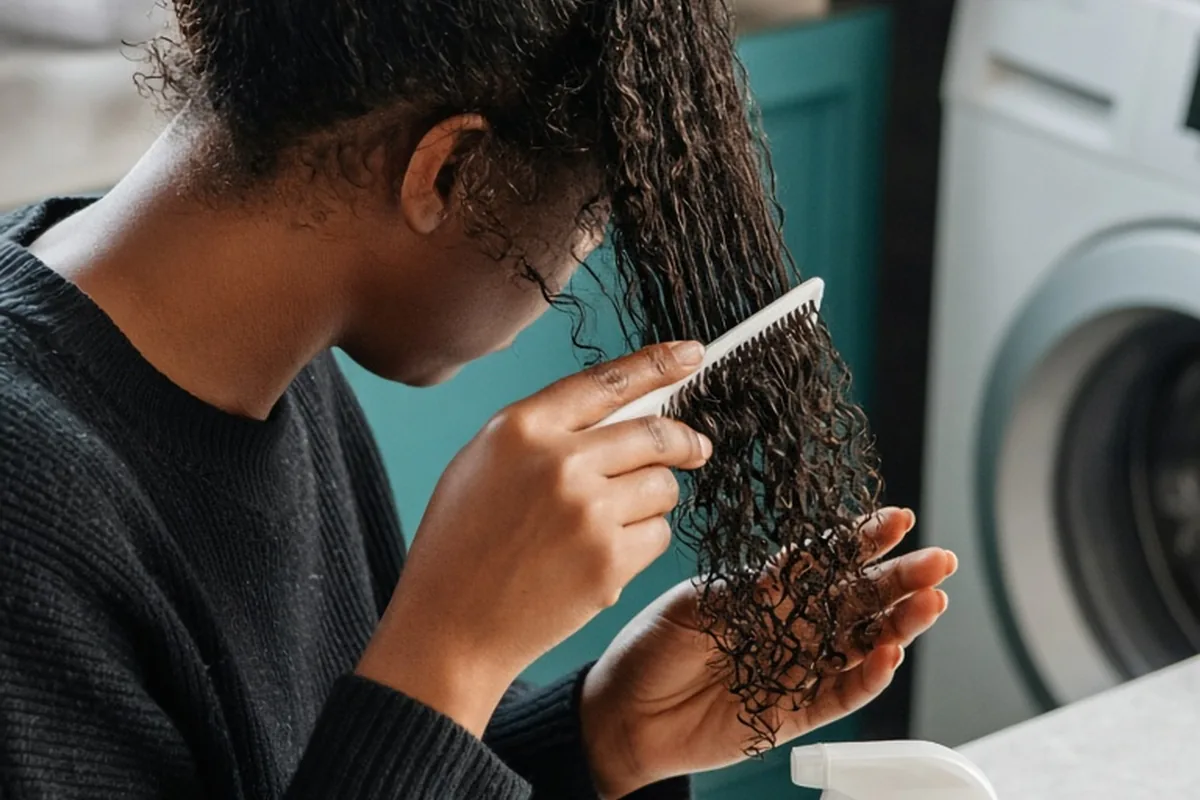
To use heat protectant on textured hair, apply a water-based or cream-based formula evenly to clean, damp strands in small sections from ends to roots, combing through for thorough distribution. Before using direct hot tools like flat irons, ensure the hair is entirely dry, then apply a lightweight thermal spray to each section immediately before heat contact. Match the formula to your tool type, maintain moderate temperatures, and never press damp or product-saturated strands.
Textured hair features unique bends, coils, and cuticle variations along each strand that make moisture retention challenging and structural protein bonds vulnerable to high temperatures. Integrating a thermal protectant into your styling routine requires an understanding of how distinct formulations interact with curl patterns, hair density, and varying porosity levels.
Matching Heat Protectant Formulas to Textured Hair and Porosity
Textured hair spans a wide spectrum from loose, fine curls to dense, coarse coils, meaning a one-size-fits-all thermal protectant rarely delivers optimal results. The two primary categories of thermal protectants are water-based lotions or leave-in creams and anhydrous, oil- or silicone-based serums and sprays. Water-based protectants formulated with humectants, hydrolyzed proteins, and lightweight conditioning agents work best on freshly washed, damp hair prior to blow-drying. They infuse moisture into the cortex while coating the cuticle layer to slow down the rate of internal water evaporation under warm airflow.
Conversely, anhydrous sprays and silicone-rich serums are engineered for dry hair styling with direct-contact tools such as flat irons, curling wands, and pressing combs. Silicones like dimethicone, amodimethicone, and cyclopentasiloxane create a slippery, heat-dissipating barrier that reduces friction and shields the delicate cuticle scales from hot metal or ceramic plates. Hair porosity plays a critical role in how these formulas absorb: low-porosity textured strands often benefit from lighter sprays that will not cause heavy buildup or prevent heat transfer, while high-porosity strands typically require richer, protein-fortified creams to fill in compromised gaps along the cuticle before any hot tool touches the head.
Prepping Textured Strands Before Thermal Application
A successful heat application begins long before you pick up a styling tool. Textured hair must be thoroughly cleansed to eliminate product buildup, heavy raw butters, and environmental debris. If you apply heat protectant over old styling products, the intense heat will bake those residual oils into the hair fiber, accelerating moisture loss and causing cuticle blister formation. Start with a clarifying or hydrating shampoo, followed by an intensive moisture-balancing deep conditioner that restores elasticity and softens the coil structure.
Rinse conditioner thoroughly with lukewarm water to encourage cuticle alignment. Gently squeeze out excess water using a microfiber towel or cotton t-shirt rather than a standard terrycloth towel, which creates friction and disrupts the natural curl pattern. The hair should remain evenly damp—not soaking wet or partially dry—when you begin applying your initial blow-dry protectant, ensuring the active thermal ingredients coat every strand consistently.
Application Steps for Blow-Drying and Stretching Coils
Even distribution is the single most critical factor when applying protectants to textured hair. Because tight curls and coils clump together naturally, misting a product over the outer surface leaves the inner strands completely exposed to thermal stress. Divide the hair into four to six clean quadrants, securing each with styling clips. Work with one quadrant at a time, subdividing it into one- to two-inch horizontal or vertical sub-sections depending on hair density.
Apply a quarter-sized amount of cream protectant or four to six pumps of spray evenly down the length of each sub-section, focusing heavily on the ends, which represent the oldest and most vulnerable portion of the hair. Use a wide-tooth comb or flexible detangling brush to distribute the product from root to tip, ensuring complete coverage. When blow-drying, utilize a tension comb attachment or a paddle brush to smooth the pattern under medium airflow, moving the dryer steadily down the strand to prevent concentrated hot spots.
Layering Secondary Thermal Defenses for Flat Ironing and Silk Presses
Blow-drying removes ambient moisture and stretches the curl pattern, but it does not prepare hair fully for direct-contact tools reaching higher temperatures. Never take a flat iron or curling wand to damp or wet hair; when trapped water boils inside the cortex, it expands rapidly and creates permanent structural voids known as bubble hair. Confirm that every section is entirely dry and cool to the touch before moving to direct heat styling.
Before passing a flat iron over each piece, apply a very light mist of specialized dry thermal protectant spray or a couple of drops of silicone-based serum down the section. Use the comb-chase method—guiding a fine-tooth carbon heat-resistant comb directly in front of the flat iron—to separate each individual strand and ensure consistent contact with the plates. This technique distributes tension evenly, smooths the cuticle efficiently, and minimizes the need for multiple passes over the same section of hair.
Temperature Boundaries and Tool Selection for Type 3 and Type 4 Patterns
Protectants raise the threshold at which heat causes structural denaturation, but they cannot make hair impervious to excessive temperatures. Textured strands vary widely in diameter: fine textured hair has a smaller cortex and lacks a continuous medulla, making it highly susceptible to burning at temperatures above 300 to 350 degrees Fahrenheit. Medium to coarse coils, while thicker, still face cuticle degradation if tools exceed 375 to 400 degrees Fahrenheit. Always start your styling tool at the lowest effective temperature and only adjust upward if the hair fails to smooth after proper mechanical tension.
The material of your hot tools also impacts how protectants perform. Ceramic plates provide uniform, gentle heat distribution that penetrates slowly, making them suitable for fine to medium curl types. Titanium plates heat up rapidly and transfer intense surface heat quickly, which can assist with coarse, resistant coils but carries a higher risk of hot-spot scorching if held in place too long. Tourmaline-infused plates emit negative ions that help seal the cuticle down against the silicone barrier, locking in residual moisture and reducing static flare-ups.
Common Application Mistakes That Lead to Thermal Damage
A frequent error in textured hair routines is substituting raw natural oils—such as coconut, olive, or castor oil—for a formulated heat protectant. While these oils are excellent sealants for protective styles, they have varying smoke points and do not contain the heat-dispersing polymers necessary to deflect thermal energy. Using pure heavy oils before hot tool contact effectively fries the cuticle layer, leaving strands brittle and prone to snapping.
Another prevalent mistake is re-applying heat protectant over several consecutive days to perform touch-ups without washing the hair. Layering thermal sprays or serums repeatedly creates a gummy film on the strands that attracts dirt and prevents natural moisture absorption. If a silk press or straight style begins to lose its shape due to humidity, prioritize non-thermal preservation methods—such as wrapping the hair at night in a silk scarf or using pin curls—rather than repeatedly subjecting coated strands to flat iron passes.
Post-Heat Recovery and Maintaining Elasticity Between Styles
After wearing a straight or thermally stretched style, the recovery process determines whether your natural curl pattern returns intact. When wash day arrives, thoroughly saturate the hair with warm water before applying a clarifying shampoo to dissolve the silicone layers and conditioning polymers used during heat styling. Follow with a deep reconstructive treatment containing balanced proteins—such as hydrolyzed silk, keratin, or wheat protein—and humectants to restore internal hydration.
Examine your wet curl pattern closely while the conditioner is sitting on the hair. Strands that spring back into defined spirals or coils indicate that the thermal shield successfully protected the hydrogen and disulfide bonds. If you notice limp, straight ends or irregular wave patterns that refuse to coil, your hair experienced heat fatigue; avoid further thermal exposure for several weeks and focus on weekly moisture masks and low-manipulation protective styling.
Frequently asked questions
Can I use the same heat protectant for both blow-drying and flat ironing?
While some hybrid protectants are labeled for both wet and dry styling, the best results on textured hair come from using a hydrating cream or lotion on damp hair for blow-drying and a dry, lightweight silicone- or oil-based thermal spray on dry sections before flat ironing. This dual approach ensures internal moisture balance during the drying stage and surface cuticle shielding during direct plate contact.
How much heat protectant should I apply to avoid greasy or stiff hair?
For damp hair, use a dime- to quarter-sized amount of cream protectant per quadrant, depending on hair density and length. For dry styling sprays, hold the canister six to eight inches away and deliver one or two quick mists per sub-section. Combing through immediately after application prevents localized product buildup and ensures an even, weightless barrier across all strands.
Does heat protectant completely prevent heat damage on type 4 coils?
Heat protectants significantly reduce cuticle degradation and internal water loss, but they do not make hair completely immune to extreme temperatures or repetitive passes. Proper sectioning, using well-maintained tools at moderate heat settings, and limiting thermal styling to occasional use are equally essential to maintaining curl elasticity.
Should I apply heat protectant before or after my leave-in conditioner?
Apply your leave-in conditioner first to clean, damp hair to deliver basic hydration and detangling slip, then apply your heat protectant over it to lock in moisture and create an outer thermal barrier. Alternatively, you can use a multi-benefit leave-in conditioner that explicitly contains verified thermal protection ingredients to minimize layering.
Your next step
Assess your textured hair's porosity and thickness today, select a dedicated cream protectant for damp blow-drying alongside a dry thermal spray for hot tools, and practice clean sectioning on your next wash day to safeguard your curl pattern.