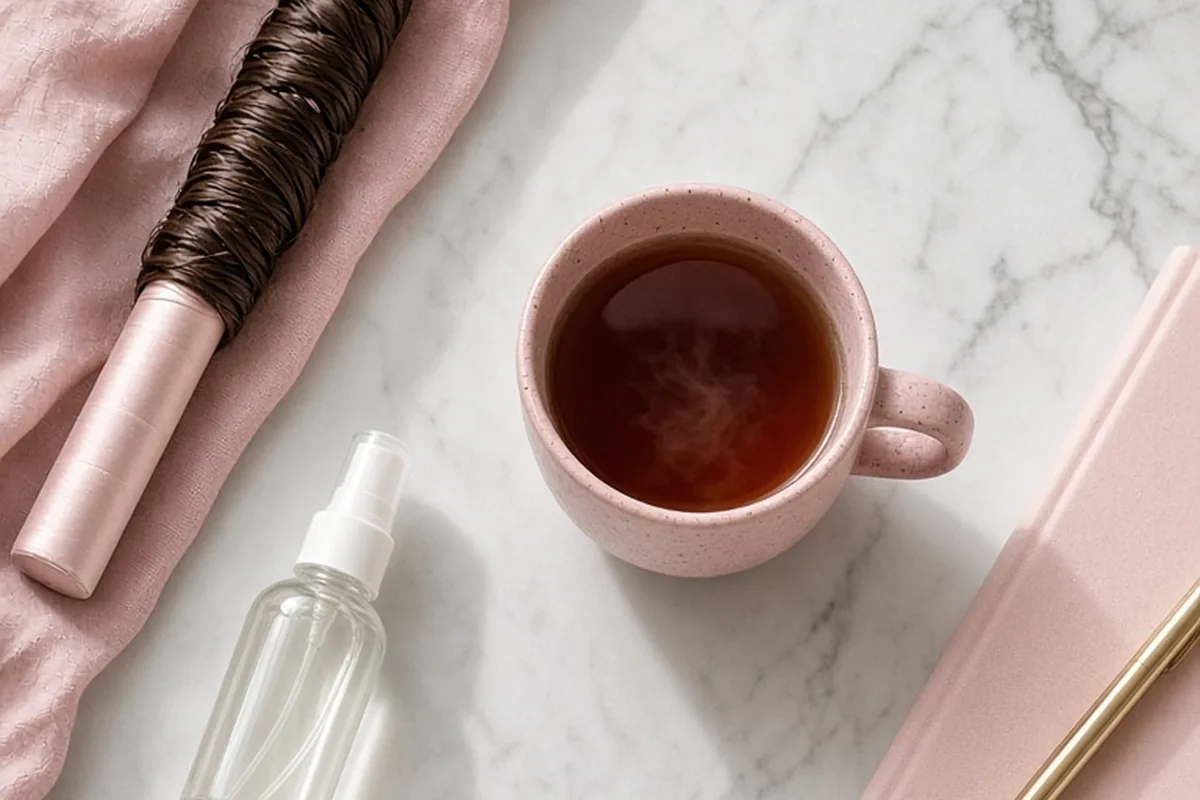
To get lasting heatless curls on low porosity hair, start with clean, eighty-five to ninety percent dry hair rather than soaking wet strands. Mist lightly with warm water to temporarily lift the tight cuticle layer, apply a lightweight water-based mousse or liquid setting lotion instead of heavy creams, wrap hair firmly around a silk or satin curling rod, and ensure the hair dries completely before unwrapping to lock the curl pattern in place.
Low porosity hair presents a unique styling paradox: its tightly sealed cuticles repel moisture when wet, yet trap water inside for hours once damp, often leaving heatless styling sets soggy, limp, or frizzy by morning.
Why Low Porosity Hair Resists Heatless Sets and Traps Moisture
Low porosity hair features flat, overlapping cuticle scales that form an exceptionally tight protective barrier along each strand. While this structure excels at retaining internal moisture once hydrated, it makes the initial absorption of water and styling products remarkably difficult. When traditional heatless curling tutorials recommend wrapping soaking wet hair, individuals with low porosity cuticles routinely wake up to cold, damp roots and collapsed curls. Because air cannot circulate through compact cuticles while hair is tightly bound against a foam or satin rod, the water remains trapped against the core of the hair fiber, preventing the hydrogen bonds from reforming into a stable, dry curl pattern.
Furthermore, product selection plays an outsized role in the success or failure of heatless styling on low porosity hair. Heavy plant butters, unrefined oils, and dense curl creams do not penetrate compact cuticles without sustained heat. Instead, these heavy formulas sit on the exterior surface of the hair shaft, weighing down fine to medium strands, attracting environmental moisture, and creating a sticky barrier that blocks natural evaporation. To achieve bouncy, structured heatless waves or curls that last for multiple days, the entire preparation, wrapping, and drying routine must be calibrated around how low porosity hair absorbs, holds, and releases water vapor.
Preparing Low Porosity Strands with Warm Water and Lightweight Stylers
Successful heatless styling begins during the preparation phase. Washing hair with a clarifying or gentle chelating shampoo removes mineral deposits and residual silicone or butter buildup that commonly coat low porosity cuticles. Once cleansed and conditioned with a rinse-out conditioner that contains hydrolyzed proteins or simple humectants, allow the hair to dry until it reaches roughly eighty-five to ninety percent dryness. Wrapping hair that is fully dry yields little to no shape change, whereas wrapping hair that is dripping wet guarantees an incomplete set. The sweet spot is hair that feels cool to the touch and slightly pliable, without showing visible water droplets.
If your hair dries completely before you begin styling, do not re-drench it under a faucet. Instead, use a continuous fine-mist spray bottle filled with warm distilled water. The gentle warmth helps relax the tightly bound cuticle scales just enough to accept moisture and light styling agents. Distribute a quarter-sized amount of lightweight, alcohol-free mousse, foaming wrap lotion, or a liquid setting spray with film-forming humectants such as flaxseed extract, aloe vera juice, or pectin. Avoid heavy castor oil, shea butter, or thick pomades during this step, as they coat the strand and extend drying time indefinitely without providing structural hold.
Selecting the Best Heatless Tools for Low Porosity Cuticles
The physical tools you choose directly influence both drying time and curl definition. Traditional foam rollers or dense sponge rods absorb some external moisture, but their textured surfaces can create friction, snagging delicate cuticles and generating halo frizz when removed. Satin or pure mulberry silk curling ribbons, cylindrical heatless rods, and flexible foam rods wrapped in smooth fabrics are generally superior. The low-friction surface of silk and satin allows hair to glide smoothly during application and removal, keeping the cuticle layer flat and reflective.
Rod diameter determines the tightness and longevity of the final curl. For low porosity hair, which tends to drop curl faster due to its smooth surface and resistance to product adhesion, a medium rod with a diameter between three-quarters of an inch and one inch often produces the most durable result. Extra-thick two-inch rods can create soft, loose waves, but low porosity strands may lose that subtle bend within hours unless reinforced with strong holding agents. For shorter hair or tighter corkscrew patterns, flexible foam rods or satin mesh flexi-tubes provide firmer grip and more uniform tension along the entire length of each section.
Wrapping Techniques to Prevent Dents, Slack Sections, and Wet Roots
Sectioning is critical when wrapping low porosity hair. Because density and thickness often accompany low porosity textures, dividing the hair into four to six clean quadrants ensures that air reaches the center of every wrapped bundle. Position your central heatless ribbon across the crown of your head, securing it at the top with a claw clip. Working from the front hairline downward, take small horizontal subsections no wider than one to two inches. Comb each subsection smoothly with a fine-toothed tail comb before wrapping to eliminate tangles that could dry into permanent kinks.
Wrap each section firmly around the rod using an over-and-under technique, integrating new hair from behind as you move down the shaft, similar to a French braid. Maintain consistent, snug tension without pulling uncomfortably on the scalp. If the wrap is too loose, the hair will shift during sleep, leading to inconsistent curl diameters and frizzy separation. Once you reach the ends, secure them with a soft silk or satin scrunchie rather than a tight elastic band to avoid creating permanent indentation marks. If the roots tend to dry slower than the mid-lengths, wrap slightly further away from the scalp or cross the two ends of the rod across the top of your head to expose the root canopy to ambient room air.
Drying Strategies to Ensure the Set Fully Hardens Overnight
The single most common reason heatless curls fail on low porosity hair is premature unwrapping. The chemical bonds responsible for holding temporary curl shapes are hydrogen bonds, which break when wet and reset into a new shape only when the hair is one hundred percent dry. If even five percent of residual moisture lingers in the center of the wrapped section, the curl will rapidly collapse under its own weight within thirty minutes of release.
To guarantee complete drying overnight, sleep in a well-ventilated room and avoid covering the wrapped rods with a non-breathable plastic shower cap. If you use a bonnet to protect your style while sleeping, select a breathable, single-layer satin bonnet or silk scarf that allows trapped water vapor to escape. If you wake up and suspect the core of your hair remains damp, keep the rods in place and use a hooded dryer or a handheld blow dryer fitted with a diffuser on low heat for ten to fifteen minutes. Allow the hair to cool completely to ambient room temperature before removing the rods, as releasing warm hair before bonds fully solidify will cause the curls to drop.
Unwrapping, Separating, and Preserving Definition Without Frizz
The unwrapping sequence requires patience and a delicate touch. Begin by gently sliding the silk scrunchies off the ends of the hair without tugging. Slowly lift the central rod upward and away from the crown, allowing the coiled sections to spiral downward naturally. Resist the urge to rake your fingers through the curls immediately; let the newly formed coils rest undisturbed for several minutes so the structure acclimates to the open air.
To separate and style the curls, apply two to three drops of a lightweight dry oil, such as squalane, jojoba, or argan oil, to the palms of your hands. Lightly coat your fingertips and use a gentle twirling motion to divide larger curl bundles into smaller, natural-looking sections. Always avoid using a dense bristle brush or fine comb on freshly formed heatless curls, as mechanical disruption will shred the defined curl clumps and cause low porosity hair to expand into a cloud of static frizz. For added volume at the roots, gently insert a wide-toothed pick at the scalp and lift upward an inch without combing through the ends.
Troubleshooting Low Porosity Heatless Curl Issues
If your heatless curls emerge stiff, crunchy, or coated in white flaking residue, your styler likely contained excessive drying alcohol or clashed with a leave-in conditioner applied beforehand. Low porosity cuticles cannot absorb competing layers of heavy creams and firm-hold gels simultaneously. Simplify your product stack to a single water-based foam or liquid setting lotion applied over lightly dampened, clean strands to preserve a soft, touchable feel.
When curls fall flat within an hour despite feeling dry at unwrapping, the underlying issue is typically insufficient tension during wrapping or an overly large rod diameter. Switching to smaller sections, increasing wrap firmness, and finishing with a light spritz of medium-hold humidity-resistant hairspray creates an invisible moisture barrier that protects low porosity hair from absorbing atmospheric humidity and losing its temporary hydrogen bond structure.
Illustrative Scenarios
Adjusting Moisture and Styler Weight for Dense Low Porosity Strands
An individual with dense, low porosity hair repeatedly experienced flat, half-damp curls after sleeping in traditional satin rod wraps applied to soaking wet hair with curl cream. By shifting to an eighty-five percent air-dried starting point, swapping heavy cream for a light flaxseed-based styling foam, and using warm water mist on individual sections before wrapping, the hair dried completely across eight hours of sleep and produced defined, multi-day curls.
Key point: Low porosity hair requires minimal initial moisture and lightweight, water-soluble styling products to allow full evaporation and reliable temporary bond formation.
Frequently asked questions
Should low porosity hair be wet or dry for heatless curls?
Low porosity hair styles best when it is approximately eighty-five to ninety percent dry. Wrapping soaking wet low porosity hair prevents water from evaporating overnight, leaving curls damp and limp upon release.
What styling products work best for low porosity heatless curls?
Lightweight, alcohol-free mousses, foaming wrap lotions, and water-based liquid setting sprays work best. Avoid thick butter-based creams, pomades, and heavy oils that coat the cuticle without absorbing.
How do you make heatless curls last longer on low porosity hair?
Ensure the hair is one hundred percent dry before unwrapping, use smaller wrapping sections with snug tension, and coat your fingertips with a drop of lightweight oil to separate coils without causing friction.
Why does low porosity hair take so long to dry in heatless rods?
The tightly closed cuticle layer of low porosity hair traps absorbed water inside the strand, while the tight physical wrap restricts airflow and blocks evaporation.
Your next step
Assess your current hair dryness level, switch from heavy creams to a lightweight styling foam, and test a single front section on eighty-five percent dry hair to establish your ideal drying time.