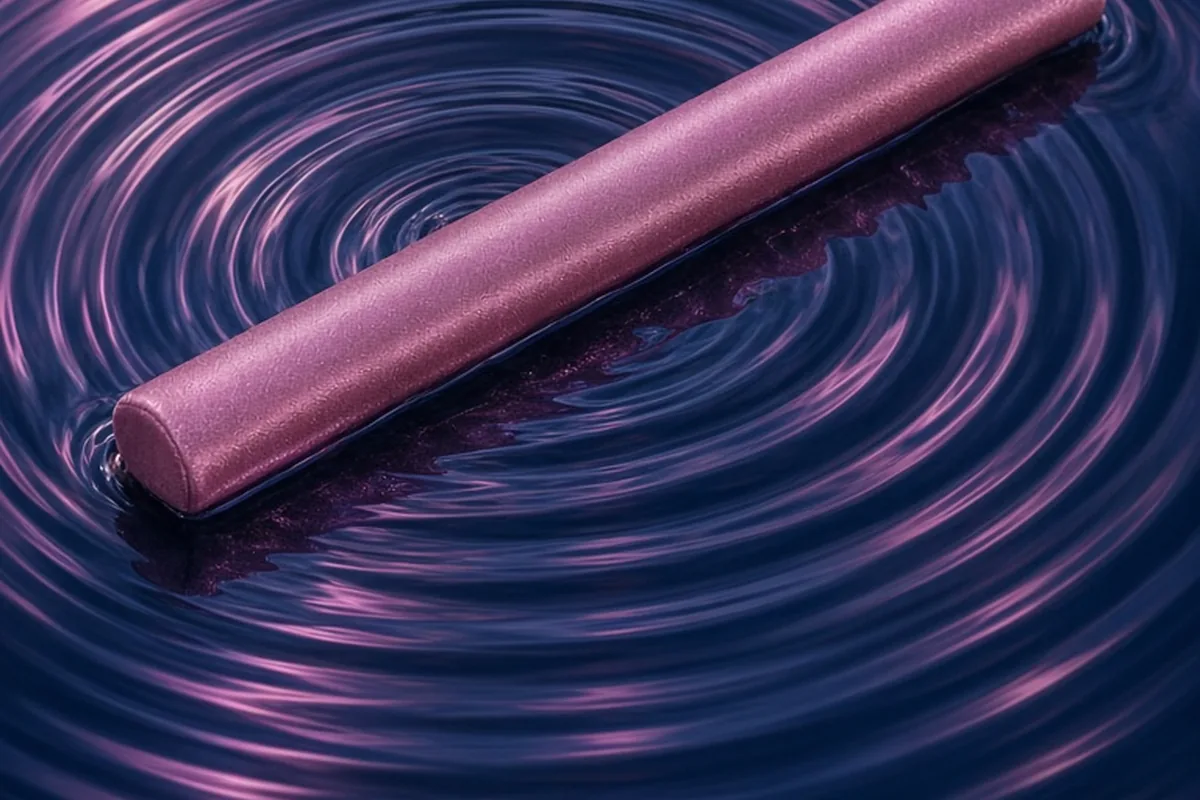
To create smooth, lasting heatless curls, wrap hair that is almost entirely dry with only a cool hint of moisture around a satin curling rod, working away from the face with consistent tension. The most common mistakes to avoid are rolling soaking-wet hair, winding sections with uneven pressure, skipping a lightweight setting foam, and unwrapping before the core is completely dry. Consistent sectioning and full evaporation lock in curl shape without thermal damage.
Switching to heatless styling protects delicate hair fibers from cumulative heat damage, but trading a curling iron for a fabric wrap requires an understanding of hair physics. Because heatless methods reshape hair through physical tension and evaporation rather than high temperatures, minor missteps in preparation or wrapping geometry can turn soft waves into an unruly, frizzy set.
Managing Hair Moisture: The Pitfall of Wrapping Damp Versus Soaking Hair
The most widespread error in heatless styling is wrapping hair that contains far too much water. Hair relies on temporary hydrogen bonds to establish its shape. When hair gets wet, water molecules break these temporary bonds; as the water evaporates and the fibers dry, those bonds re-form to lock in whatever physical shape the hair holds. However, foam, silk, and satin curling rods act as insulators that dramatically reduce air circulation around the wrapped hair. If you wrap hair straight from the shower or when it is damp to the touch throughout, the internal sections cannot breathe. By morning, the core of each curl remains damp and cold, causing the entire style to drop flat within moments of unwrapping.
The ideal state for wrapping is hair that feels visually dry but slightly cool to the palm, indicating a faint trace of residual moisture. If you wash your hair beforehand, allow it to air-dry thoroughly or use a blow dryer on a cool setting until it seems fully dry before lightly misting only the mid-lengths and ends with a fine water spray. Hair porosity plays a defining role here. Low-porosity strands repel external moisture and hold onto internal dampness stubbornly, meaning low-porosity hair must be wrapped virtually bone-dry. High-porosity hair absorbs surface mist quickly but loses internal hydration just as rapidly, requiring a nourishing primer before wrapping to prevent the resulting curls from turning dry and brittle.
Selecting Silk Curling Rods and Wraps Over Household Substitutes
While social media popularized using bathrobe belts, leggings, and cotton athletic socks for heatless styling, these household materials carry distinct disadvantages that compromise hair health and curl definition. Cotton and terrycloth are inherently absorbent and textured. When wrapped tightly against hair strands for an entire sleep cycle, rough textiles pull essential natural lipids and surface moisture out of the hair shaft. Furthermore, the coarse microscopic fibers of standard cotton grab and lift the hair cuticle, producing rough texture, dullness, and substantial morning frizz.
Investing in a dedicated curling ribbon covered in smooth mulberry silk or high-grade satin provides a frictionless foundation that preserves hair luster. The slick surface of silk allows hair strands to slide smoothly into place without catching, keeping the protective outer cuticle layer flat. In addition to fabric choice, consider the thickness of the curling tool. Slender, firm rods yield compact, well-defined spiral curls that hold well in straight textures, whereas thick, plush rods create wide, voluminous blowout waves. Selecting a rod diameter that matches your hair length is equally vital; attempting to wind short layers around an oversized rod will cause the ends to slip free before you ever reach your pillow.
Mastering Wrapping Tension and Angle Along the Hairline
How you direct and tension each subsection around the curling ribbon dictates whether you wake up with polished waves or distorted kinks. A common trap is pulling strands either with punishing tightness or with sloppy looseness. Applying extreme tension not only causes scalp tenderness and potential traction stress along the sensitive hairline, but it also creates harsh crimps near the scalp where the hair meets the rod. Conversely, wrapping strands too loosely allows individual sections to slide around during sleep, resulting in uneven loops, dropped spirals, and tangled knots.
To achieve balanced tension, secure the curling rod across the crown using a sturdy claw clip, centering it evenly on both sides. Begin with a modest subsection at the front hairline, combing it through to eliminate snags before smoothing it over the rod like a flat ribbon. When you twist the section like a tight rope before winding it, you create inconsistent wave patterns; keeping each strand flat against the surface ensures a wide, uniform wave. Use a gradual feed-in technique similar to a French braid: wind the first front section over and behind the rod, gather a new slice of hair from behind, merge it into the wrap, and direct both forward. Directing the sections backward away from the face opens up your facial features and keeps the final silhouette modern and lifted.
Choosing Styling Foams and Finishing Oils to Support Hair Memory
A critical mistake when attempting heatless curls is skipping setting products entirely, assuming that water alone can provide adequate hold. Without a structural styling agent, hair has minimal memory once exposed to ambient humidity, gravity, and bodily heat throughout the day. At the opposite extreme, applying heavy butter-based curling creams or rigid, high-alcohol gels creates frustrating problems. Heavy creams coat the strand, slowing down the already limited drying process and weighing down fine textures, while rigid gels dry into an unyielding shell that flakes into white debris during take-down.
The most effective approach is layering a palm-sized puff of lightweight styling foam or volumizing mousse through the mid-lengths and ends while the hair is barely damp. Modern styling mousses utilize flexible polymers that provide pliable hold, define the wave shape, and protect against humidity without feeling sticky or stiff. Once the set is completely dry and unwrapped the following morning, warm a tiny drop of lightweight botanical oil—such as argan or jojoba—between your palms and smooth it over the curls. This breaks any light cast formed by the mousse, seals the cuticle, and prevents friction between individual curl clumps as you move throughout the day.
Protecting the Wrap Overnight to Avoid Sleep Damage and Scalp Creases
Even a flawlessly executed wrap can be ruined overnight by the mechanical friction of moving against your pillow. As your head shifts, cotton pillowcases tug on exposed hair, working strands loose from the rod and creating a tangled halo of surface frizz. Another painful mistake is leaving rigid plastic claw clips clamped to the apex of the head while sleeping. Sleeping with clips creates acute pressure points on the scalp, disrupts deep sleep, and presses deep, unsightly indentations into the hair at the crown that cannot be brushed out without re-wetting.
Once your sections are wrapped and the ends are secured with wide, gentle silk scrunchies rather than thin elastic bands, remove the top anchor clip immediately. To prevent the rod ends from swinging loose or poking your neck, bring both tails around to the back of the head, cross them at the nape of the neck, and bring them back forward to tie or pin them into a low crown. Covering the finished wrap with a roomy silk bonnet or wrapping the head in a satin scarf provides an essential protective shield. This outer layer stabilizes the rod, preserves root smoothness, and keeps every strand contained safely against external friction.
Unwrapping and Dressing the Curls Without Prompting Unwanted Frizz
The moment you take down your heatless set is where many people inadvertently ruin hours of work. Rushing to pull the rod straight down through the hair snags fragile ends and separates the newly formed curl clumps prematurely, turning sleek waves into an unmanageable cloud of static. Another common misstep is immediately brushing the curls with a dense boar-bristle brush, which shatters the defined wave pattern before the hair fibers have had a chance to settle.
Take down your set with deliberate, gentle movements. First, slip off the bottom scrunchies without dragging them along the hair length. Grasp the top center of the rod and smoothly lift it straight up and out toward the ceiling, allowing your hair spirals to cascade freely off the sides. Once the rod is completely clear, resist the urge to rake your fingers through the curls immediately. Allow the hair to sit undisturbed for several minutes so the core of each spiral adjusts to the ambient room temperature and humidity. Afterward, gently separate the spirals using your fingers or a wide-tooth comb, working upward from the ends toward the roots to encourage volume while preserving clean definition.
Adapting Heatless Methods for Layered Cuts, Bangs, and Coarser Textures
A uniform wrapping strategy rarely works across varied haircuts and hair textures. Wrapping curtain bangs or short face-framing layers directly into the main curling rod often pulls them back at an awkward angle, leaving them sticking awkwardly sideways once released. Similarly, heavily layered hair often suffers from tapered ends poking out erratically along the rod, resulting in jagged, straight ends within an otherwise rounded curl pattern.
For curtain bangs and cheek-length layers, isolate these pieces entirely from the main wrap. Roll bangs forward over a soft foam roller or wrap them into a flat pin curl secured at the forehead to create soft, face-framing volume. For tiered layers, incorporate small, overlapping sections so that the longer hair consistently wraps over and pins down the shorter ends beneath it. Texture differences also dictate wrapping tension: naturally curly and coily textures benefit from being wrapped on stretched, lightly conditioned hair to produce uniform elongation. Attempting to wrap untreated, highly textured curls around a silk rod without preliminary detangling and light stretching often creates knotting and unpredictable shapes.
Troubleshooting Dropping Waves, Uneven Sides, and Root Cowlicks
It is common to discover that one side of your hair holds a crisp, bouncy wave while the other side looks limp and uneven. This disparity usually stems from side-sleeping habits, where direct pressure crushes the wave against the pillow, or from an unconscious habit of wrapping your dominant side with higher tension than your non-dominant side. To counteract this, deliberately match your hand positioning and tension on both sides, and tuck the ends into a balanced halo wrap rather than letting the rod tails rest loose against the bed.
If you encounter a flat crown or an awkward part line running down the back of your head, the root cause is almost always how you parted your hair before wrapping. Parting hair in a stark, straight line down the middle of the back leaves an exposed scalp gap that refuses to blend in the morning. Instead, use your fingers to create a soft, zig-zag parting down the back before splitting your hair into sides. Wrapping each section slightly upward and over the rod—rather than pulling it directly downward against the scalp—maintains root elevation and natural body, ensuring that your waves blend seamlessly across the back.
Frequently asked questions
Can I do heatless curls on completely dry hair?
Yes, you can achieve heatless curls on completely dry hair, but the style typically requires a lightweight styling product with flexible memory, such as a setting foam or texturizing spray, to help the hair hold its new shape. Applying a very fine mist of water to the lower lengths can also help temporary bonds re-form without prolonging drying time.
How do I keep the back of my hair from splitting open when using a curling ribbon?
Avoid making a straight center part all the way down to the nape of your neck before wrapping. Instead, create a soft zig-zag part across the back using your fingers, and angle your wrapping motion slightly backward so the hair covers the rear rod cleanly and falls naturally when unwrapped.
Why do my heatless curls turn out frizzy instead of smooth?
Frizz usually occurs when the hair was wrapped with rough cotton materials, pulled with inconsistent tension, or brushed out aggressively with a fine-bristle brush. To keep curls sleek, wrap smooth sections around silk or satin, ensure the strands are fully dry before unwrapping, and separate the curls gently using oiled fingertips or a wide-tooth comb.
How can I make heatless curls last in very fine, straight hair?
Fine, straight strands need lightweight structural support to hold shape throughout the day. Work a palm-sized portion of firm-hold styling mousse through the lengths before wrapping, choose a narrower rod for tighter curl definition, and refrain from touching or brushing out the curls until they have cooled and fully settled after removal.
Your next step
Before wrapping your hair tonight, press a dry paper towel firmly against your mid-lengths; if any dampness transfers to the paper, allow your strands to air-dry further until they feel cool but dry to the touch before placing your curling rod.