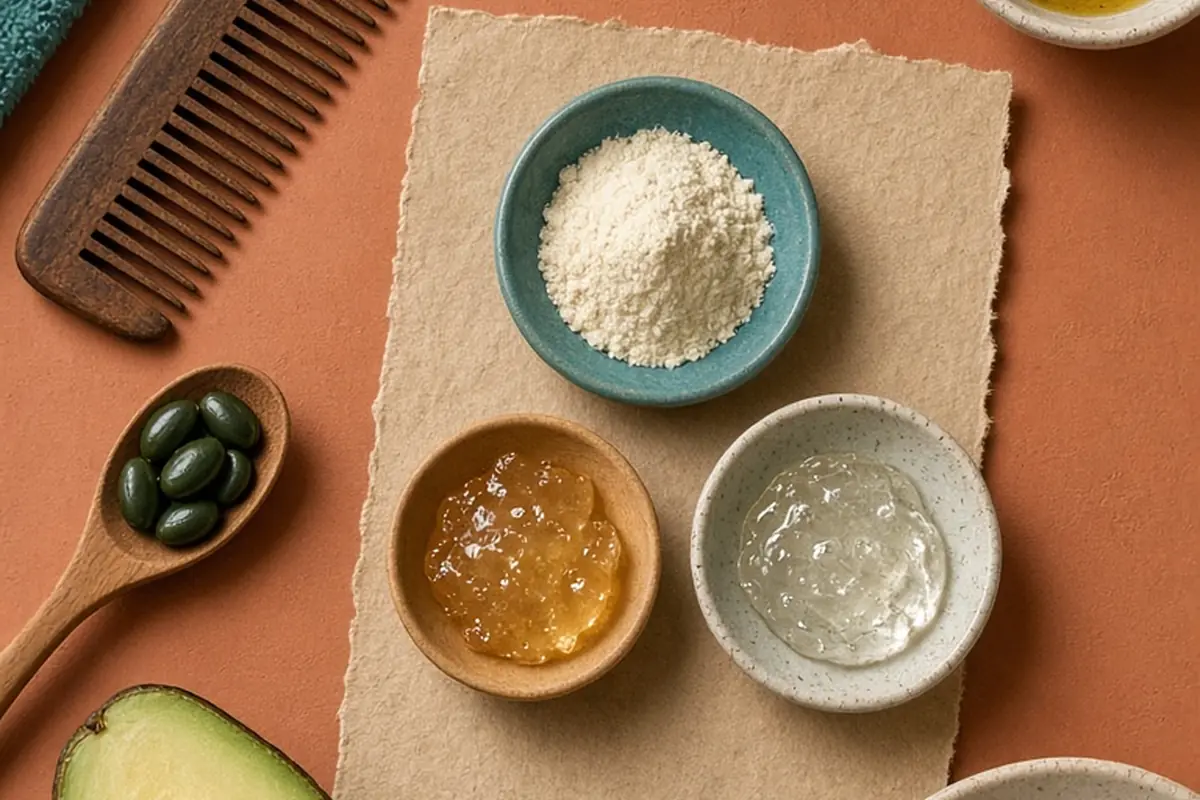
High porosity hair features raised, chipped, or naturally open cuticles that absorb water quickly but lose it just as fast. The most effective product ingredients include hydrolyzed proteins (such as silk, keratin, and wheat) to temporarily fill cuticle gaps, rich occlusive butters and oils (like shea butter, avocado oil, and castor oil) to seal moisture within the cortex, and film-forming humectants (such as aloe vera and flaxseed gel) that hold hydration without swelling the hair shaft.
Understanding the chemical behavior of high porosity strands transforms daily hair management from frustrating guesswork into a predictable routine. When the protective outer layer of the hair shaft cannot close completely, choosing products with the right molecular weight, lipid structure, and pH balance is essential to prevent chronic dryness, breakage, and frizz.
Cuticle Architecture and How High Porosity Hair Absorbs Formulations
Hair porosity refers to the ability of the hair shaft to absorb and retain moisture, driven primarily by the condition of the cuticle layer. The cuticle consists of overlapping, scale-like cells made of keratin that form a protective barrier around the inner cortex. In healthy, low-to-medium porosity hair, these scales lie relatively flat, regulating the passage of water and topical treatments. In high porosity hair—whether caused by genetics, heat styling, chemical processing, ultraviolet radiation, or mechanical wear—these scales are lifted, cracked, or completely missing in patches.
Because the outer shield is compromised, high porosity hair exhibits a high initial absorption rate. Water and aqueous solutions enter the inner cortex almost instantly upon contact. However, because there is no intact barrier to trap that hydration, moisture evaporates just as rapidly when exposed to dry ambient air. This cycle of rapid swelling with water followed by rapid contraction upon drying is known as hygral fatigue, which weakens the hair's structural integrity over time. Ingredients formulated for this hair type must perform two distinct tasks: reinforce the damaged internal framework and create a physical, semi-occlusive barrier on the surface to control moisture transit.
Hydrolyzed Proteins and Amino Acids That Fortify High Porosity Strands
Proteins are the structural backbone of human hair, but raw proteins like intact collagen or egg albumin are too large at a molecular level to penetrate the hair shaft. Formulations engineered for high porosity hair rely on hydrolyzed proteins, which have undergone enzymatic breakdown into smaller peptide fragments. These smaller molecules can slip beneath lifted cuticles and adhere temporarily to damaged keratin fibers through electrostatic attraction, filling the microscopic gaps that make the hair weak and overly porous.
Hydrolyzed wheat protein, hydrolyzed silk, and hydrolyzed keratin are among the most versatile options. Hydrolyzed wheat protein contains a high concentration of cystine, an amino acid that helps fortify the hair against tensile breakage during detangling. Hydrolyzed silk provides exceptional film-forming properties, giving rough cuticles a smoother texture and increasing light reflectivity without weighing down fine strands. Amino acids, such as arginine and glycine, offer the smallest molecular footprint, allowing them to penetrate deep into the cortex to support elasticity and prevent brittleness.
Dense Plant Butters and Emollients That Fill Cuticle Gaps
While proteins provide internal reinforcement, lipid-rich emollients are necessary to soften the rigid, exposed edges of lifted cuticles. High porosity hair loses its natural lipid layer (specifically 18-methyleicosanoic acid) much faster than non-porous hair, leaving the surface rough and vulnerable to friction. Heavy plant butters replace these missing lipids, smoothing down frayed edges and reducing the friction that leads to severe knotting and split ends.
Shea butter (Butyrospermum parkii) and cocoa butter (Theobroma cacao seed butter) are classic choices for high porosity formulations due to their high stearic and oleic fatty acid concentrations. These saturated and monounsaturated fatty acids create a rich, protective coating along the shaft that slows water loss. For tighter curl patterns and thicker strands, murumuru butter and cupuacu butter offer high water-retention capacity and rich phytosterol profiles, which restore suppleness to coarse textures without evaporating throughout the day.
Penetrating Versus Sealing Plant Oils for Deep Moisture Retention
Effective high porosity regimens balance penetrating oils with sealing oils. Penetrating oils possess a chemical structure—predominantly short-to-medium chain fatty acids—that allows them to migrate past the lifted cuticle and settle within the cortex. Coconut oil and avocado oil are prime examples; their high triglyceride and monounsaturated fatty acid content enables them to lubricate the internal structure, reducing protein loss during washing and heat styling.
Sealing oils, on the other hand, consist of longer fatty acid chains and higher viscosities that sit directly on the hair surface to form an occlusive shield. Jamaican black castor oil, jojoba oil, and argan oil act as physical barriers against environmental humidity and dry indoor air. Castor oil is particularly valued in high porosity regimens because its dominant component, ricinoleic acid, provides exceptional cling and thickness, keeping the underlying water and leave-in conditioners trapped within the fiber for days at a time.
Film-Forming Humectants Versus Simple Humectants in Varying Climates
Humectants attract water molecules from the surrounding environment into the hair shaft, but standard simple humectants like glycerin, sorbitol, and propylene glycol can be unpredictable on high porosity hair. In very high humidity, simple humectants can pull excessive moisture into the open cuticle, causing the shaft to balloon and lose shape into severe frizz. In extremely dry conditions, they can reverse their action, drawing water out of the cortex and into the dry air, exacerbating brittleness.
Film-forming humectants offer a far more stable solution for porous strands because they contain complex sugars and polysaccharides that create a breathable, gel-like net over the hair. Ingredients such as aloe vera leaf juice, marshmallow root extract (Althaea officinalis), flaxseed extract, and hydroxyethylcellulose draw in hydration while simultaneously forming a flexible film. This barrier prevents ambient humidity from swelling the cuticle while stopping existing moisture from evaporating, making them effective across diverse weather conditions.
Acidic pH Balancers and Bond-Repairing Compounds
The natural pH of human hair and scalp sebum is mildly acidic, sitting between 4.5 and 5.5. High porosity hair—especially hair damaged by chemical treatments like bleaching, permanent hair color, or alkaline relaxers—often has a disrupted surface charge that keeps cuticles raised. Products formulated with gentle acidic balancers, such as citric acid, lactic acid, or diluted apple cider vinegar, lower the pH of the hair fiber, encouraging the cuticle shingles to tighten and lie flatter against the shaft.
In addition to pH regulation, modern bond-building compounds provide structural support that goes beyond traditional conditioning. Actives like bis-aminopropyl diglycol dimaleate and maleic acid work on a molecular level by linking broken disulfide bonds within the cortex. While bond builders do not alter the inherent genetic porosity of new growth, they significantly reduce porosity caused by chemical lightening or thermal stress, turning highly porous, fragile zones into more resilient, manageable strands.
Formulations, Surfactants, and Drying Ingredients to Avoid
Caring for high porosity hair requires knowing which ingredients can worsen cuticle erosion. Harsh, high-stripping surfactants like sodium lauryl sulfate (SLS) and ammonium lauryl sulfate strip away the delicate lipid mantle that porous hair already struggles to maintain. Instead, cleansers containing mild amphoteric or non-ionic surfactants—such as cocamidopropyl betaine, sodium cocoyl isethionate, or decyl glucoside—cleanse the scalp effectively without leaving the lengths feeling straw-like or tangled.
Formulations with high concentrations of short-chain drying alcohols should also be avoided when listed in the first few ingredients on a label. Alcohols like SD alcohol 40, isopropyl alcohol, and alcohol denat evaporate rapidly, pulling essential surface moisture with them and leaving compromised cuticles even more brittle. Conversely, fatty alcohols like cetyl alcohol, stearyl alcohol, and cetearyl alcohol are beneficial emollients that add slip, lubricity, and moisture retention to conditioners and styling creams.
Frequently asked questions
Can products permanently change high porosity hair to low porosity?
No topical product can permanently change your hair's inherent porosity. Genetic porosity remains the same as new hair grows from the follicle, and chemical damage cannot be undone permanently. However, products with hydrolyzed proteins, acidic pH balancers, and sealing butters temporarily patch gaps and flatten cuticles, mimicking the behavior of lower porosity hair until the next wash.
How often should high porosity hair use protein treatments?
Most high porosity routines benefit from a dedicated protein treatment every one to three weeks, depending on the severity of damage and styling habits. Incorporating leave-in products with smaller amounts of hydrolyzed silk or wheat protein can be done more frequently, as long as hair maintains a balanced, pliable feel rather than feeling stiff or brittle.
Is glycerin bad for high porosity hair?
Glycerin is not inherently bad, but it can be difficult to manage in extreme climates. In moderate humidity, it hydrates effectively; in very high humidity, it can cause high porosity hair to swell into frizz, and in very dry air, it can pull moisture out of the hair. Layering glycerin products under rich sealing oils or swapping to film-forming humectants like aloe vera helps mitigate these issues.
What is the best way to layer products on high porosity hair?
The Liquid-Oil-Cream (LOC) or Liquid-Cream-Oil (LCO) method works best for high porosity hair. Start with a water-based leave-in conditioner or hydrating mist, apply a penetrating emollient cream with hydrolyzed proteins and plant butters, and finish with a heavier sealing oil to lock the hydration inside the cuticle.
Your next step
Review the ingredient lists on your current leave-in conditioners and stylers today, ensuring at least one product contains hydrolyzed proteins for internal strength and a dense emollient butter or oil to lock moisture into your cuticles.