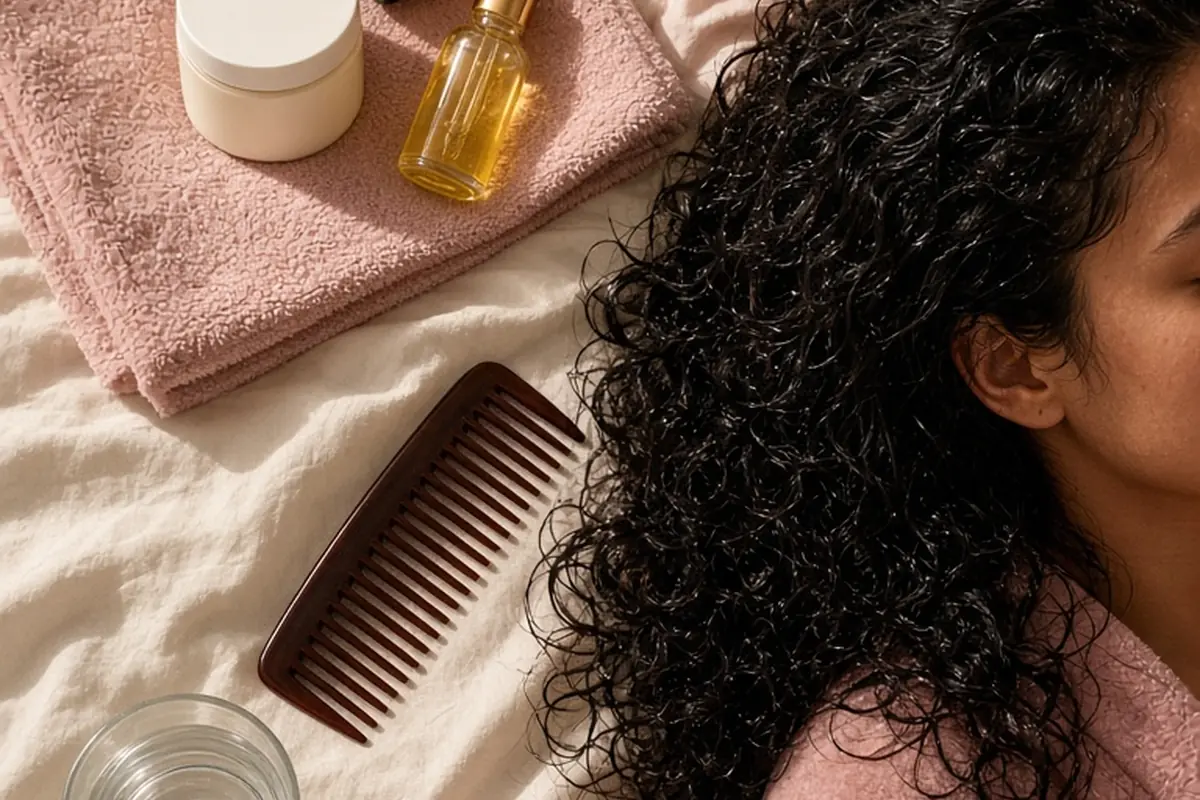
A beginner routine for high porosity hair centers on gentle cleansing, regular deep conditioning, and trapping hydration before it evaporates. Because raised or compromised cuticles absorb moisture rapidly but lose it just as fast, start by washing with a sulfate-free shampoo, applying a protein-balanced deep conditioner, coating damp strands with a water-based leave-in, and sealing with a rich cream or plant oil.
High porosity hair features raised, open, or chipped cuticle layers that allow moisture to enter freely but escape almost immediately. Whether your porosity is natural or the result of bleach, heat tools, or chemical processing, maintaining soft, pliable strands requires a deliberate routine built around continuous hydration and defensive sealing.
Recognizing High Porosity Hair Characteristics and Cuticle Structure
Hair porosity describes your strand's ability to absorb and retain water, governed entirely by the outermost layer known as the cuticle. Under normal conditions, cuticles lie relatively flat like overlapping shingles on a roof, regulating how fluids pass into the cortex. In high porosity hair, these shingles are widely spaced, raised, or structurally damaged, creating open pathways where water rushes in and departs just as rapidly.
You can often identify high porosity hair through daily performance rather than unreliable water glass float tests. Strands typically saturate immediately when placed under running water, dry unusually fast in room air, feel coarse or snag easily when running your fingers up the hair shaft, and tangle frequently. In humid environments, high porosity hair tends to puff and swell quickly as exposed inner fibers pull moisture directly from the surrounding air.
Understanding whether your porosity is genetic or acquired also influences your routine expectations. Naturally high porosity hair, often found in tighter curl patterns, requires lifelong moisture preservation and gentle handling. Acquired high porosity stems from chemical lifting, permanent color, excessive heat styling, or mechanical friction. While you cannot permanently alter your natural follicle output, and damaged lengths must eventually grow out, a consistent routine helps patch structural gaps and prevent premature breakage.
Step One: Gentle Cleansing and Pre-Wash Protection
Cleansing high porosity hair requires a careful balance between removing residue and preserving essential lipids. Because the cuticle is already raised, standard clarifying shampoos packed with harsh anionic surfactants can strip the hair fiber, leading to extreme tangling, stiffness, and hygral fatigue—the stress caused by rapid swelling and contracting of the hair shaft during washing.
Start your wash day with an optional pre-shampoo treatment, often called a pre-poo, using a penetrating oil such as coconut oil or babassu oil. Applying a modest amount of oil to dry lengths twenty to thirty minutes before washing coats the internal cortex, limiting the amount of water the hair takes in all at once and reducing fiber swelling. When you step into the shower, use lukewarm water rather than hot water, which can lift the cuticle even further.
Select a sulfate-free moisturizing shampoo or a conditioning wash cream that focuses cleansing action directly on the scalp. Massage the lather into your roots with your fingertips, letting the runoff rinse through your mid-lengths and ends without scrubbing the fragile ends together. If you use heavy styling butters regularly, rotate in a gentle chelating or mild clarifying shampoo once every three to four weeks to clear product accumulation without parching the strands.
Step Two: Deep Conditioning and Balancing Protein with Moisture
Standard rinse-out conditioners often lack the sustained contact time and density required to replenish high porosity strands. Incorporating a dedicated deep conditioning mask into every single wash day delivers concentrated emollients, fatty alcohols, and humectants directly into the open cortex, boosting elasticity and softening rough texture.
High porosity hair benefits significantly from balanced formulas that combine rich moisture bases with hydrolyzed proteins such as silk, wheat, keratin, or quinoa peptides. These small protein fragments temporarily deposit into the microscopic gaps along chipped cuticles, reinforcing the hair shaft, improving tensile strength, and slowing down rapid water loss. However, balance is essential: using heavy reconstructive protein treatments too frequently can make strands rigid and brittle, while omitting protein entirely leaves hair limp, overly stretchy, and unable to hold shape.
Apply your deep conditioner generously from mid-lengths to ends while hair is damp. Use your fingers or a wide-tooth comb to distribute the product evenly and gently ease apart early tangles. To maximize penetration through the cuticle layer, cover your hair with a reusable plastic shower cap and apply gentle indirect heat using a warm towel or hooded dryer attachment for fifteen to twenty minutes before rinsing thoroughly with cool to lukewarm water.
Step Three: Layering Moisture with the LOC and LCO Methods
Applying a single styling product is rarely sufficient for high porosity hair because water readily evaporates through the open cuticle within hours. To maintain prolonged softness, use a structured layering method: the LOC method (Liquid/Leave-in, Oil, Cream) or the LCO method (Liquid/Leave-in, Cream, Oil). Both approaches create a multi-tier barrier that traps water inside the cortex.
The first step in either sequence must always be a water-based liquid or leave-in conditioner applied to clean, soaking wet or damp hair. Look for formulas containing hydrating bases paired with film-forming humectants such as aloe vera, flaxseed extract, slippery elm, or marshmallow root, which hold onto moisture without pulling water out of the hair in dry climates.
For the subsequent layers, experiment to see whether your strand thickness prefers oil before cream or cream before oil. Heavier, coarser hair types often benefit from the LOC method, where a sealing oil is applied directly over the leave-in before being topped with a thick styling butter to lock everything down. Finer high porosity strands often respond better to the LCO method, applying a lightweight styling lotion first and finishing with a few drops of a pure sealing oil to smooth the cuticle without creating greasy buildup.
Step Four: Selecting Effective Sealing Oils and Rich Emollients
Choosing the right finishing products depends heavily on understanding the difference between moisturizing ingredients and sealing ingredients. Water, aloe vera, and aqueous leave-in conditioners provide hydration, whereas oils and butters do not moisturize hair on their own; instead, they function as hydrophobic shields that prevent water from evaporating into the surrounding air.
High porosity hair generally thrives when sealed with heavier plant butters and viscous oils that create an effective coating over irregular cuticle plates. Shea butter, murumuru butter, cupuacu butter, castor oil, and avocado oil are exceptional choices for medium to coarse textures because their dense molecular structures form durable protective films. If your hair is fine or easily weighed down, opt for moderate-weight oils like jojoba oil or argan oil, which mimic natural sebum and offer shine without flattening volume.
Apply your chosen sealant primarily to the oldest, most fragile portions of your hair—the mid-lengths down to the ends. Warm a nickel-to-quarter-sized portion between your palms and smooth it downward along the hair shaft using the praying hands method. This downward motion physically presses the raised cuticle scales flat, enhancing surface reflection, minimizing friction, and sealing the underlying hydration securely inside.
Step Five: Detangling, Styling, and Minimizing Mechanical Friction
Because high porosity cuticles are rough and catch on adjacent strands, mechanical damage during detangling and daily styling represents a major source of breakage. Never attempt to detangle high porosity hair when it is completely dry and unlubricated, as the dry friction can snap fragile fibers and strip cuticle fragments away entirely.
Always detangle when the hair is saturated with water and coated in a slippery conditioner or detangling primer. Work in small, manageable sections, starting at the absolute tips of the hair and gradually moving upward toward the roots using a flexible-bristle detangling brush or a seamless wide-tooth comb. If you encounter a stubborn knot, gently separate the individual strands horizontally with your fingers rather than forcing the tool through the cluster.
When drying and styling, reduce direct heat exposure whenever possible. Swap rough terry cloth bath towels for smooth microfiber towels or a soft cotton t-shirt, gently squeezing excess water from your hair instead of rubbing vigorously. If using a blow dryer, attach a diffuser, apply a dedicated heat protectant containing heat-resistant silicones or conditioning polymers, and keep the temperature setting on low to medium to avoid blistering the hair shaft.
Nighttime Protection and Mid-Week Moisture Maintenance
Even the most meticulous wash-day routine can be undone overnight if your hair rubs against moisture-absorbing fabrics. Standard cotton pillowcases act like blotters, drawing out leave-in conditioners and natural oils while creating friction that frays delicate cuticles as you shift during sleep.
Protect your hair each night by sleeping on a high-grade satin or pure silk pillowcase, or by wrapping your strands in a satin-lined bonnet or scarf. If your hair is long or curly, gather it loosely on top of your head in a loose high ponytail using a satin scrunchie—a method known as pineappling—which keeps your ends protected inside the crown area and prevents flattening your curl pattern.
Between wash days, high porosity hair often begins to feel dry by day three or four. Instead of washing your hair completely from scratch, perform a targeted mid-week refresh. Lightly mist dry sections with warm water or an herbal leave-in spray until slightly damp, smooth a tiny amount of leave-in cream over fuzzy patches to re-align the cuticles, and seal with two to three drops of oil on the ends to restore softness and control frizz until your next full wash.
Frequently asked questions
How often should high porosity hair be washed each week?
Most people with high porosity hair find success washing once or twice per week. Washing too frequently can lead to hygral fatigue from repeated wetting and drying, while waiting too long can cause product buildup from heavy sealants. Adjust your frequency based on scalp sweat, oil production, and styling product accumulation.
Does high porosity hair always need heavy protein treatments?
High porosity hair benefits from regular light protein to patch cuticle gaps, but heavy reconstructive treatments are not needed every week. Look for standard deep conditioners that list hydrolyzed proteins in the middle of the ingredient list, and reserve intense reconstructors for once a month or after chemical services.
Can high porosity hair be permanently converted to low porosity?
No, you cannot permanently alter your genetic porosity or undo structural cuticle loss on existing lengths. However, you can manage the condition effectively by using acidic rinses, protein-enriched conditioners, and heavy sealants to mimic a healthy cuticle until new growth emerges.
Why does my high porosity hair feel crunchy after applying products?
Crunchiness usually indicates either an excess of protein, product buildup, or styling gels drying into a firm cast without enough underlying leave-in moisture. If your hair feels stiff, clarify gently and switch to a deeply moisturizing, protein-free mask for your next two washes to restore softness.
Your next step
Select one moisturizing, water-based leave-in conditioner and a rich plant oil or butter to layer onto damp hair during your very next wash day to evaluate how effectively your strands retain moisture over forty-eight hours.