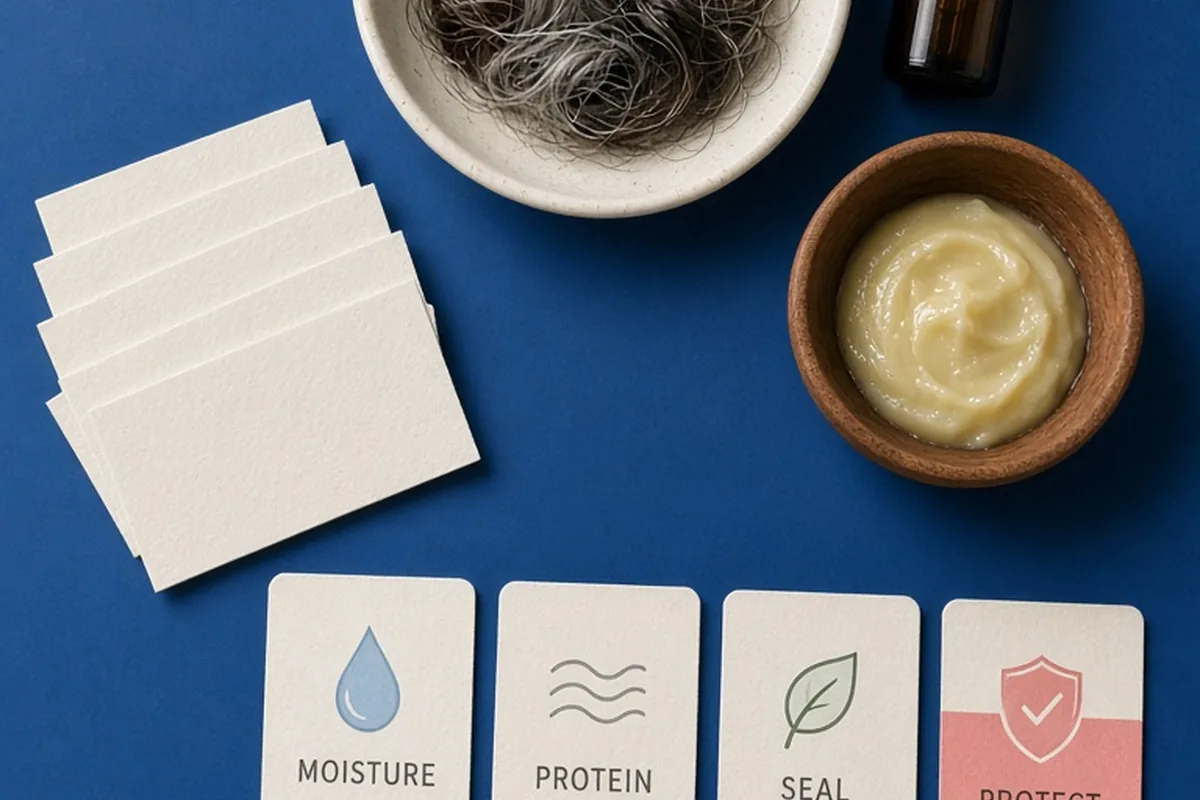
High porosity hair for women over 40 occurs when the hair cuticle layer is raised or compromised, causing strands to absorb water rapidly but lose it just as quickly. Managing it requires a routine centered on gentle, sulfate-free cleansing, frequent deep conditioning with humectants, targeted protein replenishment to strengthen gaps in the cuticle, and sealing layers with plant oils or rich butters to lock in lasting hydration.
Navigating changes in hair texture in your forties and beyond often feels unpredictable, particularly as natural shifts in scalp oil production, cumulative color treatments, and graying alter how your hair behaves.
Why High Porosity Hair Becomes More Common for Women Over 40
Porosity refers to your hair shaft's ability to absorb and retain moisture, which is governed by the condition of the outer cuticle layer. In youthful, undamaged hair, cuticles tend to lie relatively flat, creating a smooth barrier that regulates hydration entry and exit. As women enter their forties and fifties, biological changes alter the composition of new hair growth. Sebaceous glands naturally produce less sebum, leaving emerging strands with less natural lipid lubrication. Concurrently, hormonal shifts during perimenopause and menopause can cause individual hair fibers to grow in finer or with irregular surface textures, making the outer layer inherently more vulnerable to environmental wear.
Beyond biological shifts, cumulative lifestyle factors play an equally large role in elevating porosity over time. Decades of heat styling, mechanical brushing, chemical perms or relaxers, and regular permanent coloring to cover or blend gray hair gradually lift and erode the protective cuticle scales. Gray hair fibers themselves often have a thicker, wiry cuticle structure that may resist initial water penetration yet remain porous and prone to moisture loss once breached. When multiple factors intersect, the result is hair that drinks up water instantly in the shower but feels dry, rough, and parched within hours of drying.
Recognizing the Signs of High Porosity in Aging Hair Textures
Identifying high porosity in mature hair requires observing how your strands react to water, styling products, and humidity rather than relying on unreliable home tests like floating hair in a cup of water. One of the most obvious indicators is drying time: high porosity hair often absorbs shower water instantly, soaking through immediately, yet dries at an unusually fast rate because the open cuticles cannot trap internal moisture. If your hair goes from saturated to dry and brittle in a fraction of the time it used to, an elevated porosity level is often the primary reason.
Another telltale sign is how products perform on your hair throughout the day. High porosity strands tend to absorb leave-in conditioners, creams, and serums almost instantly, looking hydrated for an hour before returning to a matte, frizzy, or dull state. You may also notice chronic tangling, single-strand knots, reduced elasticity where hair snaps easily during gentle detangling, and heightened sensitivity to ambient humidity. When humid air enters open cuticles, the hair shaft swells unevenly, leading to rapid volume expansion and loss of definition.
Restructuring Your Cleansing Routine to Prevent Cuticle Loss
Cleansing mature, highly porous hair requires striking a careful balance between clearing scalp buildup and preserving delicate lipid barriers. Traditional clarifying shampoos containing harsh sulfates strip away the minimal natural oils your scalp produces, leaving raised cuticles even rougher and prone to snagging. Transitioning to a gentle, sulfate-free moisturizing shampoo or a conditioning wash protects fragile strands from unnecessary friction. When washing, focus your cleanser directly on the scalp using the pads of your fingers, allowing the suds to run down the mid-lengths and ends during rinsing rather than scrubbing the lengths directly.
Water temperature also plays an underappreciated role in maintaining cuticle integrity. While hot water feels relaxing, excessive heat further lifts the cuticle scales and accelerates the loss of internal moisture reserves. Rinsing with lukewarm water cleanses effectively without stripping the hair fiber. Completing your final rinse with cool water can help soothe the hair surface and encourage the cuticle to lay flatter, providing a smoother foundation before applying leave-in treatments and stylers.
Mastering Deep Conditioning and Protein-Moisture Balance
High porosity hair possesses microscopic gaps along the cuticle sheath where structural proteins have worn away. To restore bounce and resilience, your conditioning routine must supply both intense hydration and structural support. Incorporating a rich deep conditioner containing humectants like glycerin, aloe vera, or panthenol draws moisture deep into the cortex. Pairing these humectants with emollient fatty alcohols ensures the absorbed moisture stays bound within the fiber rather than evaporating as soon as you step out of the shower.
However, moisture alone is insufficient for porous strands; without structural reinforcement, the hair cannot hold that moisture. Hydrolyzed proteins, such as hydrolyzed wheat, silk, keratin, or oat protein, temporarily fill the gaps in the cuticle, creating a smoother and stronger surface. The challenge for women over 40 is avoiding protein overload, which occurs when too much protein accumulates on aging, delicate hair, causing it to feel stiff and breakable. A practical rhythm is using a moisturizing deep conditioner weekly, while rotating in a mild hydrolyzed protein mask once every two to three weeks, adjusting the frequency based on whether your hair feels mushy (needs protein) or stiff (needs pure moisture).
Layering Techniques for Sealing Moisture: Fine vs. Coarse Strands
Applying leave-in products in the right sequence is critical for sealing high porosity hair, but your specific hair thickness dictates which products to select. The traditional Liquid-Oil-Cream (LOC) or Liquid-Cream-Oil (LCO) method works exceptionally well because it traps lightweight hydration beneath a protective lipid barrier. The liquid layer—typically a water-based leave-in conditioner—infuses base hydration, the cream layer softens the hair fiber, and the outer oil layer coats the cuticle to slow down moisture evaporation throughout the day.
For fine, thinning high porosity hair, heavy butters and dense oils can weigh down the root area and make the hair appear greasy or limp. Fine textures benefit most from lightweight plant oils such as argan oil, jojoba oil, or squalane, applied sparingly to the bottom two-thirds of the hair shaft. Conversely, if you have coarse, thick, or tightly coiled mature hair, heavier sealants like shea butter, cupuacu butter, or avocado oil provide the robust physical barrier needed to prevent open cuticles from losing moisture to dry indoor air.
Coloring, Gray Coverage, and Heat Styling Without Further Damage
Many women over 40 regularly color their hair, whether fully covering gray roots, adding dimensional highlights, or blending silver strands with glosses. Because permanent hair dyes rely on alkaline agents to open the cuticle and deposit pigment, repeated applications on already porous hair can cause significant cumulative damage. When touching up gray growth, apply permanent formulas strictly to the new regrowth at the roots rather than dragging permanent dye through previously colored mid-lengths. For refreshing color or toning gray hair across the lengths, use a gentle, ammonia-free demi-permanent gloss or acidic color glaze, which deposits tone without lifting the cuticle further.
Heat styling requires heightened caution on mature, porous strands. Because the protective cuticle is compromised, high temperatures can scorch the inner cortex and degrade remaining keratin quickly. Always apply a dedicated, silicone- or polymer-based heat protectant before using blow dryers, curling wands, or flat irons. Keep thermal tool temperatures below moderate thresholds, and try incorporating heat-free styling methods, such as roller sets, satin wrapping, or air-drying with microfiber towels, to minimize cumulative thermal stress.
Night Care, Friction Reduction, and Scalp Maintenance
Preserving moisture and preventing mechanical damage requires protective habits between wash days. Cotton pillowcases are highly absorbent and create microscopic friction against raised hair cuticles as you sleep, leading to morning dryness, frizz, and breakage. Sleeping on a mulberry silk or satin pillowcase, or wearing a lined satin bonnet, allows hair to glide smoothly without having its moisture drawn out overnight. If your hair is long enough, gathering it into a loose, high pineapple or securing it with a soft silk scrunchie prevents strands from tangling while you rest.
Scalp care also directly influences the quality of the new hair fibers your body produces. Incorporating gentle scalp massages stimulates local circulation and helps evenly distribute whatever natural sebum your scalp creates. If you experience dry, flaky scalp conditions alongside your high porosity lengths, look for targeted scalp serums containing soothing ingredients like hyaluronic acid, niacinamide, or tea tree oil, ensuring they are applied directly to the skin rather than weighing down your styled strands.
Illustrative Scenarios
Adjusting Routine for Color-Treated Mature Wavy Hair
Elena, a 47-year-old marketing director, noticed her naturally wavy hair became increasingly frizzy, brittle, and dry after three years of monthly root touch-ups. Believing her hair was simply dirty and dry, she washed it daily with strong clarifying shampoos and loaded on heavy hair oils, which left her scalp itchy and her ends dry and stringy. After learning her hair had developed high porosity from cumulative dye and heat styling, Elena shifted to washing twice a week with a gentle cream cleanser, applying a weekly hydrolyzed silk protein mask, and sealing her damp waves with a lightweight argan oil. Within six weeks, her wave pattern regained spring and smoothness.
Key point: Daily harsh cleansing combined with heavy oils suffocates porous hair; switching to gentle cleansing, targeted protein, and light sealing restores balance.
Managing Dryness in Coarse Transitioning Gray Coils
Maya, a 54-year-old accountant with 4A coily hair, decided to transition to her natural silver hair. She struggled with severe snapping and parched ends because her gray coils felt wiry and resistant during styling yet lost hydration instantly. Maya initially tried using only heavy raw shea butter on dry hair, which created greasy buildup without softening the strands. She changed her approach by applying a water-based leave-in conditioner immediately after showering, followed by a curl cream, and finishing with a small amount of whipped butter using the LCO method. Her breakage dropped significantly and her natural gray curls retained softness for days.
Key point: Raw butters cannot moisturize dry hair on their own; layering water-based hydration before applying rich sealants is essential for coarse, porous gray hair.
Frequently asked questions
Can high porosity hair in women over 40 be permanently reversed?
Existing high porosity along the hair shaft cannot be permanently repaired because hair fiber is non-living tissue, meaning gaps in the cuticle must be continuously managed with proteins, conditioners, and sealants. However, you can prevent newly growing hair from becoming prematurely porous by using gentle color practices, reducing heat exposure, and keeping your scalp nourished.
How often should mature high porosity hair receive protein treatments?
Most women over 40 with high porosity hair benefit from a mild hydrolyzed protein treatment once every two to three weeks. If your strands feel overly soft, limp, or stretch excessively without bouncing back, increase frequency slightly. If the hair begins to feel stiff, rough, or brittle, pause protein treatments and prioritize pure hydrating deep conditioners.
Does gray hair always have high porosity?
Not necessarily, as gray hair often has a compact, dense cuticle layer when it first emerges that can initially act like low porosity hair by repelling water. However, because gray hair lacks melanin and produces fewer natural lipids, environmental exposure and styling quickly lift those cuticles, causing gray strands to become highly porous over time.
What is the best way to refresh high porosity curls or waves between washes?
Avoid re-washing your hair daily or spraying it with plain tap water, which can cause the cuticle to swell repeatedly and lead to hygral fatigue. Instead, lightly mist hair with a mixture of warm water and a water-based leave-in conditioner, then smooth a drop of lightweight facial-grade plant oil over the surface to reseal the cuticle.
Your next step
Inspect your current hair routine today, replace any harsh sulfate-based daily shampoos with a gentle moisturizing cleanser, and schedule a weekly deep conditioning session to begin reinforcing your hair cuticle.