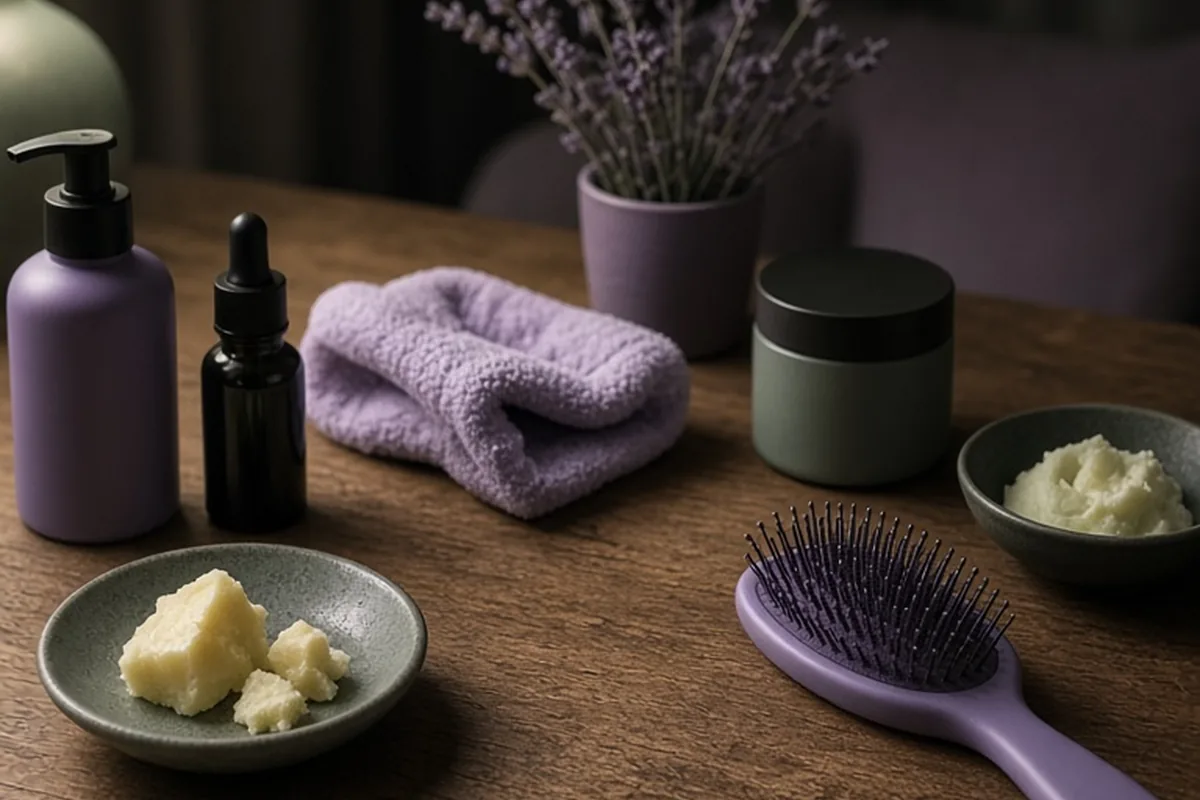
An effective high porosity hair maintenance schedule focuses on consistent moisture retention and cuticle reinforcement. Wash your hair weekly using a gentle sulfate-free cleanser, followed immediately by a rich deep conditioning mask. Apply daily leave-in hydration layered with botanical oils or plant butters using the liquid-oil-cream technique. Incorporate a structural protein treatment every few weeks depending on your strand elasticity, and refresh mid-week with water-based mists to prevent breakage caused by rapid moisture loss through open cuticles.
High porosity hair absorbs water quickly because the outer cuticle layer contains wide gaps, chips, or lifted scales, but it releases that hydration just as fast. Without an organized routine designed to seal those gaps and protect the inner cortex, strands frequently become brittle, tangled, and prone to chronic dryness.
Mapping Your Weekly Wash Day for High Porosity Strands
A structured wash day forms the baseline of your high porosity hair maintenance schedule. Because open cuticles allow water and cleansing agents to rush into the cortex rapidly, traditional clarifying shampoos can strip natural lipids and leave strands feeling rough or frayed. Begin your wash day by wetting the hair with lukewarm water rather than steaming hot water, which can expand cuticles further and exacerbate strand fragility. Cleanse your scalp gently using a moisturizing, sulfate-free shampoo or a cleansing conditioner designed to lift environmental debris without removing internal sebum.
Focus your lather primarily along the scalp where sebum and styling residues gather, allowing the descending suds to rinse clean through the lengths of the hair without aggressive scrubbing. Once the scalp feels refreshed, rinse thoroughly and immediately prepare for the conditioning phase. High porosity hair requires conditioned slip at every stage to prevent wet strands from snagging against each other. If your hair experiences heavy mineral buildup from municipal tap water or styling silicones, schedule a dedicated chelating wash once a month, immediately pairing it with an intensive conditioning treatment to restore pliability.
Layering Daily Hydration to Prevent Moisture Evaporation
Because high porosity hair loses moisture throughout the day due to ambient air exposure, daily maintenance determines your overall retention between washes. Applying a single water-based product rarely provides lasting softness; you must layer formulations systematically so moisture remains trapped within the hair shaft. Begin every morning by evaluating how your ends feel. If they feel papery, rough, or stiff, mist your hair lightly with pure water, aloe vera juice, or a diluted water-based leave-in conditioner to reintroduce essential water molecules into the cortex.
Follow this hydrating base immediately with an emollient cream or milk containing humectants and fatty acids, which distribute hydration along the strand. Finish the process by applying an occlusive layer, such as a natural plant butter or dense oil, concentrating heavily on the oldest sections of your hair at the ends. This sealing step acts as a temporary synthetic cuticle, physically slowing down the rate at which internal water evaporates into dry indoor heating or brisk outdoor winds. On humid days, keep the occlusive layer light to prevent excess ambient moisture from causing unwanted swelling and frizz.
Rotating Protein Treatments and Deep Conditioning Masks
Maintaining structural integrity in high porosity hair requires balancing internal hydration with strengthening proteins. The gaps present in high porosity cuticles often stem from chemical processing, thermal styling, or natural strand topography, leaving the underlying keratin exposed to mechanical stress. Incorporating a dedicated protein treatment into your monthly rotation fills these microscopic fissures, temporarily hardening the strand structure and decreasing unnecessary porosity. Hydrolyzed wheat, silk, keratin, or quinoa proteins attach directly to damaged zones, offering scaffolding that helps the strand hold onto moisture longer.
However, applying excessive protein without adequate moisture produces stiff, straw-like strands that snap under tension. To maintain balance, follow every protein application with an intensive deep conditioning mask rich in fatty alcohols and plant oils. Let the deep conditioner sit on clean, damp hair under a shower cap or warm thermal cap for several minutes to soften the newly reinforced structure. When hair feels mushy, stretchy, or fails to snap back when gently pulled, prioritize protein in your schedule. Conversely, if strands feel rigid, dry, and rough, pause protein products and schedule two consecutive moisture-only conditioning sessions.
Pre-Wash Oil Treatments to Prevent Hygral Fatigue
A key vulnerability of high porosity hair is susceptibility to hygral fatigue, a form of structural damage caused by repeated swelling and contracting of the cortex as hair absorbs and releases large volumes of water. Because the cuticle cannot restrict rapid water intake, the cortex expands dramatically when submerged, stretching the cellular membrane complex until the fibers weaken. Applying a penetrating oil prior to washing acts as a hydrophobic barrier that regulates how fast water enters the hair fiber.
Incorporate a pre-wash oil application into your schedule several hours before wetting your hair, or apply it the night before wash day. Choose oils capable of penetrating the cuticle, such as unrefined coconut oil, babassu oil, or extra virgin olive oil. Warm a small amount between your palms and smooth it down the lengths of your dry hair, working in sections to ensure even distribution. By filling the porous gaps within the cortex before water touches your strands, the oil prevents excessive inner swelling while simultaneously protecting delicate ends from friction caused by cleansing detergents.
Selecting Sealing Oils and Butters for Open Cuticles
Choosing appropriate finishing products depends on understanding the difference between penetrating lipids and surface-sealing occlusives. While penetrating oils sink into the cortex to support elasticity, high porosity strands also require heavier surface sealants that sit over the lifted cuticles to smooth the exterior topography. Shea butter, mango seed butter, castor oil, and avocado oil possess dense molecular weights that form protective coatings over frayed ends, preventing snagging during everyday movement.
Apply these dense sealants sparingly to damp hair rather than dry hair, as applying heavy occlusives over dehydrated strands merely seals dryness inside and locks ambient hydration out. Distribute the product using the praying-hands method, gently smoothing downward from mid-lengths to tips without disturbing the cuticle alignment. If you have fine or low-density strands that become easily weighed down by heavy butters, replace solid butters with lighter alternatives such as jojoba oil or argan oil, which provide surface slip and shine without flattening volume.
Nighttime Protection Routines for Friction Reduction
A comprehensive maintenance schedule must extend through the night, as hours of head movement against standard bedding can completely undo daytime hydration efforts. Cotton pillowcases are naturally absorbent fibers that actively wick away moisture, oils, and leave-in products from porous strands, leaving hair brittle and tangled by morning. Additionally, the coarse weave of woven cotton grabs lifted cuticles, causing friction that encourages mid-shaft breakage and split ends.
Protect your strands nightly by wrapping your hair in a pure silk or satin bonnet, or by sleeping on a smooth satin pillowcase. For longer hair, gather your strands into a loose pineapple style at the crown of your head using a soft satin scrunchie to minimize friction against the nape and sides. If you wear protective styles such as two-strand twists or braids, apply a tiny amount of sealing butter to the ends before tucking them under your bonnet. This overnight barrier retains internal moisture and dramatically shortens the morning refresh routine.
Adjusting Your Regimen for Seasonal Weather and Water Types
External weather patterns directly influence how high porosity hair behaves, requiring minor adjustments to your weekly and monthly maintenance schedule. During dry winter months when indoor heating pulls moisture from every surface, increase the frequency of your deep conditioning masks and lean heavily on rich occlusives to shield your ends. In contrast, hot and humid summer environments contain abundant airborne moisture, which causes high porosity hair to swell uncontrollably into localized frizz. During humid stretches, reduce your use of simple humectants such as pure glycerin, opting instead for anti-humectant styling gels that lock the outer cuticle in place.
Your household water supply also plays a substantial role in product performance. Hard water carries dissolved minerals like calcium and magnesium that adhere to open cuticles, creating an invisible film that prevents hydrating conditioners from penetrating the strand. If you notice persistent dullness, tangling, or an inability to absorb leave-in products, install a shower head filter or incorporate a chelating wash into your schedule once a month. Following a clarifying or chelating session, always restore the acidic balance of your scalp and hair by applying a pH-balancing rinse or an acidic deep conditioner to encourage cuticles to lie flat.
Frequently asked questions
How often should high porosity hair be washed?
Most individuals with high porosity hair benefit from washing once a week. Washing too frequently can lead to moisture loss and hygral fatigue from repeated swelling, while waiting several weeks can cause product buildup along the scalp and hair shaft.
Can high porosity hair ever become low porosity?
Hair that grew out naturally high porosity due to genetics will retain that characteristic, though targeted care can smooth cuticles and mimic lower porosity behavior. If high porosity was caused by bleach or heat styling, newly grown hair at the root will emerge with its natural porosity, but previously damaged lengths remain permanently altered until trimmed.
Should high porosity hair always use the LOC or LCO method?
The Liquid-Oil-Cream (LOC) or Liquid-Cream-Oil (LCO) methods work exceptionally well for high porosity textures because both prioritize an occlusive layer to seal open cuticles. Fine strands may prefer LCO using lightweight oils to prevent product buildup, while coarser textures often thrive using rich butters as the final step.
Your next step
Assess your strand elasticity right now by gently stretching a damp shed hair: if it stretches and fails to return, schedule a protein treatment for your upcoming wash day; if it snaps immediately with zero give, schedule a moisture-only deep conditioning session.