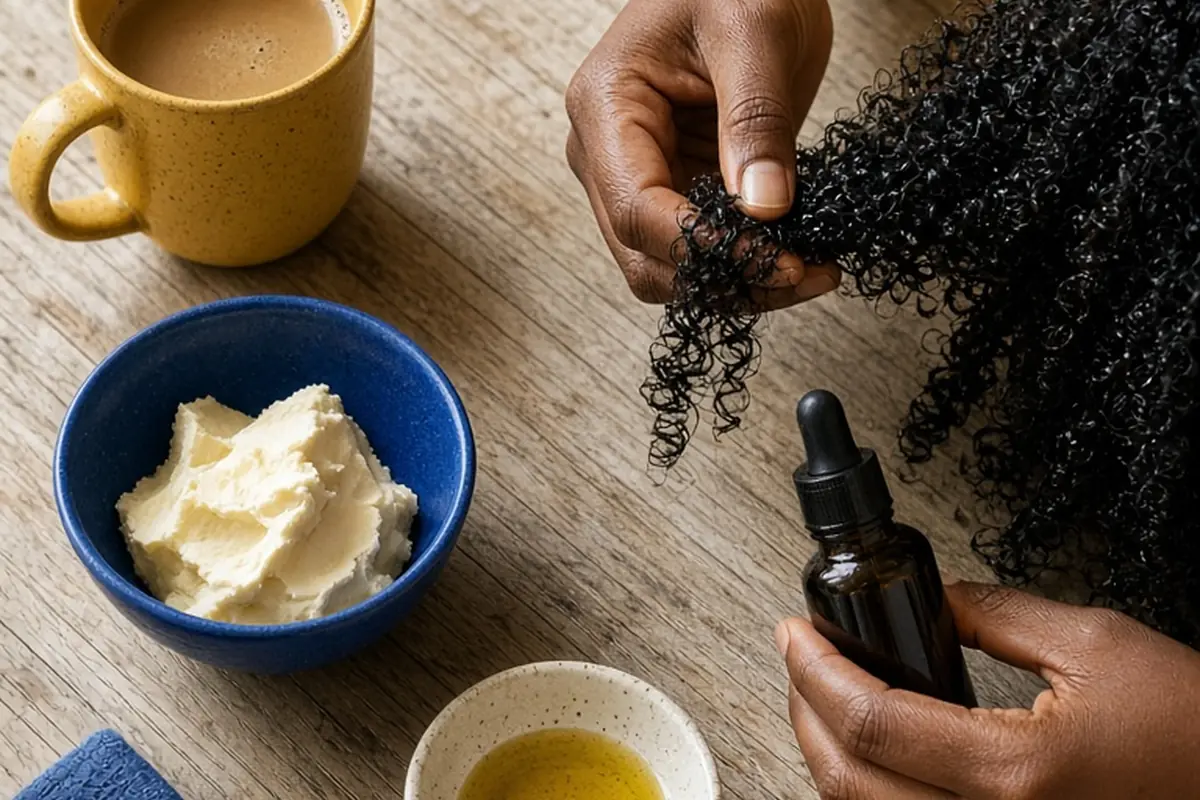
Healthy high porosity hair requires rich emollient products, structural proteins, and sealing agents that fill and coat open cuticle gaps. Because high porosity strands absorb water quickly but lose it just as fast, the most effective routine uses sulfate-free hydrating cleansers, frequent deep conditioning masks containing hydrolyzed proteins or amino acids, and rich leave-in conditioners layered under heavy plant butters or sealing oils such as shea butter or castor oil using the Liquid-Cream-Oil method.
High porosity hair, whether naturally textured, sun-bleached, or chemically altered, presents a distinct set of hydration and styling challenges. Because the outer cuticle layer remains raised, chipped, or naturally loose, moisture moves freely into the cortex but evaporates almost immediately. Selecting the right product formulations and application techniques helps rebuild structural integrity, close gaps along the hair shaft, and lock in lasting softness.
Identifying High Porosity Hair and How Cuticle Gaps Cause Moisture Loss
Hair porosity refers to your hair shaft's capacity to absorb and retain moisture, which is governed by the condition of the outermost protective layer, the cuticle. Under normal conditions, cuticle scales lie relatively flat like shingles on a roof. In high porosity hair, these scales are permanently raised, separated, or missing entirely due to genetics, chemical processing, thermal styling, or mechanical friction. When cuticles are raised, water penetrates the inner cortex instantly upon contact, causing the hair to saturate quickly in the shower, but it escapes just as fast once you step out into dry air.
Recognizing high porosity hair involves observing how your strands feel and behave throughout the day. Strands often feel dry, rough, or coarse to the touch within hours of being washed and conditioned. High porosity hair is notoriously prone to chronic tangles, single-strand knots, dullness, and instant frizz in humid environments because the open cortex absorbs airborne humidity uncontrollably. It also absorbs styling products rapidly, often seeming to swallow heavy creams without looking visibly greasy, yet it loses pliability and becomes brittle if those products lack adequate occlusive sealants.
Understanding this mechanism is essential when evaluating hair products. Lightweight, water-only hydrators evaporate rapidly from high porosity strands, leaving them vulnerable to breakage. Instead, your product regimen must focus on two complementary goals: introducing deeply hydrating humectants and conditioning agents into the inner cortex, and depositing protective film-formers, proteins, and occlusive lipids over the exterior cuticle to plug micro-tears and trap that hydration inside.
Choosing Shampoos and Conditioners with Cuticle-Smoothing Ingredients
Cleansing high porosity hair requires a delicate balance between removing product buildup and preserving natural surface lipids. Harsh clarifying shampoos formulated with aggressive sulfates strip away the fragile sebum that already struggles to coat raised cuticles, worsening porosity over time. Look for sulfate-free shampoos that rely on mild surfactants such as sodium cocoyl isethionate, cocamidopropyl betaine, or decyl glucoside. Formulas enriched with fatty alcohols like cetyl or stearyl alcohol help lubricate the hair during washing, reducing the friction that leads to wet-hair snapping.
A slightly acidic pH is one of the most beneficial attributes to seek out in high porosity shampoos and rinse-out conditioners. Products with a pH balanced between 4.5 and 5.5 help contract and smooth the raised cuticle scales, encouraging them to lie flatter against the hair shaft. When scanning ingredient lists, look for citric acid, lactic acid, or aloe vera juice near the middle or end of the formulation, which often indicates an intentionally balanced acidic profile.
Your daily or weekly rinse-out conditioner should provide substantial slip to facilitate gentle detangling without snagging open cuticles. Look for conditioning agents such as behentrimonium methosulfate, cetrimonium chloride, and guar hydroxypropyltrimonium chloride. These cationic surfactants carry a positive electrical charge that naturally binds to the negatively charged, damaged areas along high porosity strands, smoothing the surface and minimizing static flyaways before you begin styling.
Balancing Protein Treatments and Deep Hydration Masks
High porosity hair has structural gaps along the keratin matrix, making regular protein integration necessary for maintaining elasticity and preventing breakage. Hydrolyzed proteins—such as hydrolyzed wheat, silk, keratin, collagen, and vegetable protein—have been broken down into small molecular weights capable of temporarily adhering to and filling damaged crevices along the hair shaft. This temporary reinforcement strengthens weak zones, restores curl definition, and allows the hair to withstand everyday manipulation.
However, relying solely on protein without sufficient moisture can make high porosity hair stiff, brittle, and prone to snapping. To prevent protein overload, alternate between protein-rich reconstructors and deep emollient moisturizing masks. If your hair feels mushy, overly stretchy when wet, or limp, it generally requires a protein treatment to restore tensile strength. Conversely, if your strands feel stiff, crunchy, dry, or straw-like, you should pause protein products and focus entirely on moisture-rich deep conditioners loaded with fatty acids and emollients.
When applying deep conditioning treatments, consider using indirect warmth, such as a heated conditioning cap or a warm damp towel wrapped over a shower cap. Gentle heat encourages conditioning ingredients to penetrate deeply into the open cortex. Always follow intensive treatments with a cool-to-lukewarm water rinse, which helps smooth down surface cuticles and lock in the deposited conditioning agents.
Selecting Heavy Butters and Sealing Oils to Lock In Moisture
Because high porosity hair loses water rapidly through evaporation, lightweight dry oils alone are rarely sufficient to sustain moisture throughout the week. Sealing requires richer, occlusive plant butters and medium-to-heavy oils that create a physical barrier over the hair shaft. Unrefined shea butter, mango butter, cupuacu butter, and murumuru butter are exceptional choices because they contain high concentrations of stearic and oleic fatty acids that coat the cuticle, reduce moisture loss, and impart long-lasting softness.
In addition to heavy butters, specific plant oils work well to seal high porosity textures. Castor oil and black castor oil provide a thick, protective viscosity that shields vulnerable ends from friction and moisture depletion. Avocado oil and olive oil contain monounsaturated fats capable of penetrating slightly into the outer layers of the cortex, providing both internal nourishment and external lubrication. Jojoba oil and argan oil, while lighter, mimic natural sebum and can be layered over butters to add shine and reduce surface friction without making the hair feel sticky.
Ceramides are another critical ingredient class to seek out in high porosity leave-ins and sealers. Ceramides are natural lipid molecules that act as the intercellular cement holding cuticle scales together. Formulations containing synthetic ceramides, sunflower seed oil, hemp seed oil, or wheat germ oil help replenish these depleted lipids, restoring structural cohesion and dramatically reducing porosity-related frizz and moisture loss over time.
Layering High Porosity Hair Products Using the LCO Method
The sequence in which you apply your styling products determines how well high porosity hair retains hydration. While low porosity hair often benefits from the LOC (Liquid-Oil-Cream) method, high porosity hair generally thrives when styled using the LCO (Liquid-Cream-Oil) approach. In this sequence, water or a liquid leave-in provides immediate hydration, a thick moisturizing cream fills gaps and softens the cortex, and a heavy oil or butter is applied last to seal the entire system shut.
Begin the LCO routine on thoroughly clean, damp hair. Step one is your liquid: apply a water-based leave-in conditioner infused with humectants such as glycerin, panthenol, or aloe vera to infuse the open cortex with water. Step two is your cream: smooth a rich, emollient styling butter or leave-in cream through each section from mid-lengths to ends, ensuring every strand is thoroughly coated. Step three is your oil or butter: apply a thin layer of a pure sealing oil or botanical butter over the cream to trap the water and conditioning agents underneath, preventing immediate ambient evaporation.
Sectioning your hair during product application is critical for consistent results. High porosity strands easily grab excess product on top layers while leaving under layers parched. Working in four to eight manageable sections ensures even product distribution, prevents unsealed patches from tangling, and minimizes mechanical breakage while working products through with your fingers or a wide-tooth detangling comb.
Special Care for Bleached, Chemically Treated, and Curly Textures
High porosity hair often results from chemical lifting, bleaching, permanent color, or chemical relaxers, which intentionally dissolve protective cuticle layers and dislodge internal disulfide bonds. Chemically processed high porosity hair is particularly susceptible to mechanical breakage when wet, as swollen fibers lose structural rigidity. For color-treated or bleached strands, prioritize bond-building treatments alongside your leave-in products to cross-link broken bonds internally before layering your occlusive creams and sealers.
Curly and coily hair types naturally possess higher porosity at the bends and turns of each curl where cuticles naturally lift. To keep high porosity curls defined and clumped, apply your LCO products to soaking wet or damp hair using smoothing and praying-hands techniques rather than vigorous rubbing. Incorporating a film-forming styling gel containing ingredients like flaxseed extract, marshmallow root, or pectin over your butter or oil creates a light protective cast that locks in hydration and prevents ambient humidity from turning defined curls into undefined frizz.
Nighttime protection is non-negotiable for preserving product moisture on high porosity textures. Cotton pillowcases act like sponges, absorbing conditioning oils and roughing up cuticles through overnight friction. Protect your hair by sleeping on a mulberry silk or satin pillowcase, or by wrapping your strands in a satin bonnet. This simple habit preserves your product layer, extends the lifespan of your wash-and-go or protective style, and prevents morning dryness.
Preventing Product Buildup, Hygral Fatigue, and Mechanical Breakage
Because high porosity hair responds well to heavy butters, rich creams, and protective oils, it is exceptionally vulnerable to product buildup over time. When heavy residues accumulate on the hair shaft, they create an impenetrable barrier that prevents fresh water from entering during subsequent washes, resulting in hair that feels simultaneously greasy and parched. Incorporate a gentle clarifying shampoo or an apple cider vinegar rinse once every two to four weeks to reset the hair and scalp without causing excessive dryness.
High porosity hair is also prone to hygral fatigue, a condition caused by the repeated excessive swelling of the hair shaft when wet and contraction when dry. Constant water uptake weakens the cell membrane complex within the cortex, leading to limpness and loss of elasticity. To protect against hygral fatigue, avoid leaving high porosity hair soaking wet for prolonged periods. Use a microfiber towel or cotton t-shirt to gently squeeze out excess water after washing, and consider pre-shampoo oil treatments using penetrating oils like coconut or avocado oil to limit excessive water absorption during cleansing.
Finally, manage mechanical handling with extreme care. High porosity strands catch and snag easily due to rough cuticles, forming fairy knots and split ends. Always detangle starting from the ends and moving upward toward the roots, working exclusively on conditioned, damp hair with ample slip. Trimming damaged, high porosity split ends every eight to twelve weeks prevents fraying from traveling up the hair shaft and maintains overall density.
Frequently asked questions
Can high porosity hair ever become low or medium porosity?
Hair that is high porosity due to chemical treatments, heat styling, or environmental damage cannot be permanently repaired, as cuticles do not regenerate once lost. However, regular use of bond builders, protein treatments, and acidic products can temporarily mimic healthy porosity until damaged lengths are gradually trimmed away. New hair growing from the scalp will emerge at its natural, genetic porosity level.
How often should I use protein treatments on high porosity hair?
Most high porosity hair benefits from a mild protein-infused conditioner or leave-in weekly, combined with a stronger reconstructive protein treatment every two to four weeks. Always observe your hair's tactile response; if strands feel stiff or brittle, reduce protein frequency and increase moisturizing deep conditioners.
Is coconut oil beneficial for high porosity hair?
Coconut oil can be helpful as a pre-shampoo treatment because its lauric acid content penetrates the cortex and reduces excessive swelling from water, helping prevent hygral fatigue. However, because it penetrates rather than forming a heavy surface barrier, it should generally be paired with a heavier butter or occlusive oil when used for styling and sealing.
Why does my high porosity hair feel dry even after applying heavy products?
This commonly happens if heavy butters and oils are applied to dry hair rather than damp hair, effectively sealing dryness in and keeping moisture out. It can also indicate mineral or product buildup on the cuticle, which requires a gentle clarifying wash to allow hydrating water and leave-ins to penetrate again.
Your next step
Assess your current hair products for balancing proteins, acidic pH levels, and rich occlusive sealers, then switch to applying your leave-in, cream, and oil using the LCO method on your next wash day.