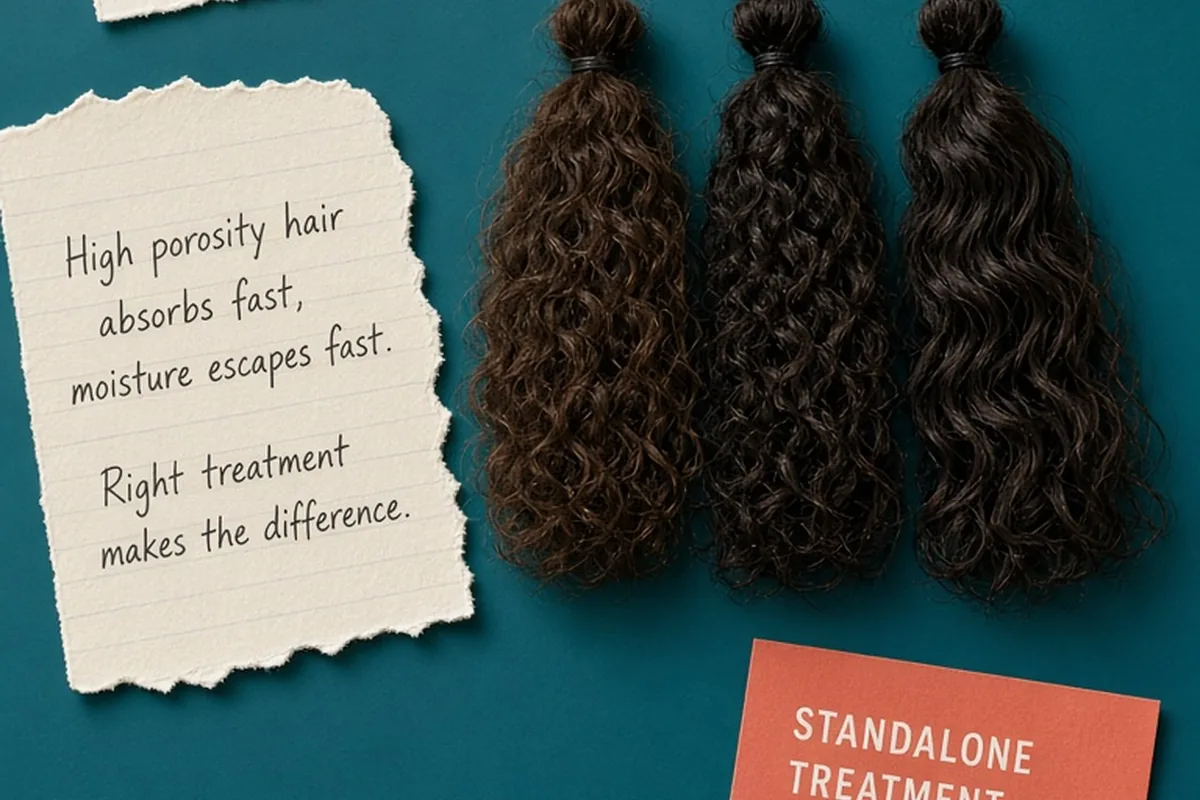
High porosity hair salon costs vary widely depending on whether you book a standalone restorative treatment, an intensive bond builder, or an add-on service alongside a cut or color. Pricing is determined by salon location, stylist seniority, hair density, product volume required to saturate porous strands, and the specific formulation used. Stylists typically charge either a flat menu rate for targeted treatments, an à la carte add-on fee, or an hourly rate for comprehensive hair rehabilitation.
High porosity hair absorbs water, oils, and chemical products rapidly through an open or compromised cuticle layer, but it loses that moisture just as quickly. When visiting a salon to address dryness, breakage, or chemical damage, knowing how professional services are structured helps you budget accurately and choose the most effective treatment for your specific hair needs.
How Professional Salons Structure Pricing for High Porosity Hair Care
Salon pricing structures generally fall into three distinct models: flat-rate menu pricing, tiered service levels based on stylist experience, and time-based hourly billing. Because high porosity hair often requires extra product absorption, specialized washing steps, and extended processing under heat or steam, salons rarely quote a single universal price. Instead, service costs reflect the amount of time the stylist spends analyzing your hair fiber condition, applying restorative treatments, and monitoring cuticle reaction during the appointment.
When booking, you will typically encounter restorative services offered as an add-on to a standard appointment or as a dedicated standalone service. Standalone appointments usually carry a higher baseline cost because they include a dedicated wash, scalp assessment, deep treatment application, processing time, and a finished style such as a blowout, silk press, or curl definition set. Add-on treatments, by contrast, are integrated into an existing service like a trim or dimensional color service, lowering the labor cost while still accounting for the specialized product formulation.
High Porosity Service Types: Protein Treatments, Bond Builders, and Cuticle Sealers
High porosity hair typically benefits from three main categories of professional treatments: protein reconstruction, molecular bond repair, and moisture-sealing glosses. Protein treatments deliver hydrolyzed proteins to fill structural gaps in a compromised cuticle sheath, helping hair temporarily regain elasticity and tensile strength. These treatments range from express protein rinses applied at the shampoo bowl to intensive multi-step strengthening systems that require precise heat activation and balanced moisture neutralization to prevent brittleness.
Bond-building treatments work inside the hair cortex rather than just coating the outer layer, reconnecting broken disulfide bonds caused by chemical lightening, permanent color, relaxers, or repeated thermal styling. Because bond repair systems often require multi-phase applications—both during chemical processing and as post-service sealants—salons frequently price them as premium upgrades. Acidic glosses and cuticle-sealing laminations represent another common option; these treatments lower the hair's pH to compact lifted cuticles, locking in moisture and preventing environmental moisture absorption that leads to swelling and frizz.
Texture, Density, and Chemical History Factors That Change Your Salon Bill
Two clients requesting the same deep treatment can receive substantially different estimates depending on their hair density, length, and chemical history. High porosity strands act like sponges, absorbing significantly more product than low or medium porosity hair. When a client has thick density or waist-length curls, the stylist may need to mix double or triple batches of intensive conditioners, peptide solutions, or glossing agents, triggering standard salon product surcharges.
Your hair's chemical background also dictates the complexity of the service. Hair that has experienced repeated bleaching, high-lift coloring, or overlapping chemical straightening often requires a customized combination of protein and hydration rather than a standard single-step mask. A thorough professional will assess whether your strands have structural damage, moisture deficiency, or both. Formulating a customized multi-step protocol takes more time and technical skill, which directly influences the overall service charge.
Standalone Appointments Versus Chemical Service Add-On Fees
Deciding whether to book a standalone restorative appointment or add a high porosity treatment to your regular cut or color appointment is one of the most significant budgeting decisions. An add-on service is generally the most economical way to receive professional-grade bond builders or deep conditioning because the stylist is already working on your hair, washing it, and finishing the style. In this scenario, you pay primarily for the specialty product and the five to twenty minutes of additional processing time.
A standalone treatment appointment, however, requires a dedicated chair block and full styling labor. If you visit the salon solely for an intensive moisture infusion, steam therapy, and protein rebuild, the final bill will reflect not just the treatment solution, but also the stylist's time for consultation, shampooing, scalp massage, hood dryer or steamer dwell time, and thermal or natural styling. If budget is your primary concern, timing your high porosity treatments alongside scheduled haircut maintenance or color root touch-ups minimizes separate styling and chair fees.
Evaluating Salon Treatment Longevity Against at-Home Maintenance Costs
While in-salon high porosity treatments provide high concentrations of active ingredients and professional delivery tools like micro-mist steamers, their lasting value depends heavily on your at-home maintenance routine. Professional bond builders and deep protein infusions can improve manageability, reduce breakage, and restore curl definition for several weeks, but high porosity cuticles naturally remain prone to moisture loss whenever exposed to hard water, clarifying shampoos, or extreme humidity.
Balancing salon treatments with at-home care involves calculating the cost of upkeep between professional appointments. If your stylist applies an intensive reconstructor, maintaining those results usually requires sulfate-free cleansers, leave-in conditioners with film-forming humectants, and sealing butters or lightweight oils. Comparing the cost of a quarterly professional restorative reset against continuous at-home masking helps you determine whether frequent salon visits are necessary or if a seasonal salon treatment combined with disciplined home care offers the best value.
Questions to Ask Your Stylist Before Booking High Porosity Restorative Services
Before sitting in the chair, clear communication with your stylist ensures you receive a treatment tailored to your specific porosity level without encountering unexpected fees at checkout. Porous hair requires careful diagnosis to avoid protein overload, which can make damaged hair feel stiff, brittle, and prone to snapping. Asking precise questions about the stylist's proposed treatment plan protects both your hair health and your budget.
Begin by asking whether the salon performs a wet elasticity test or strand assessment prior to applying reconstructive treatments. Clarify whether the quoted price includes the complete service from shampoo through final styling, or if blow-drying and heat styling are billed as separate line items. You should also ask whether your hair length or thickness will incur an extra product charge, and how many weeks the stylist expects the treatment benefits to last under your regular washing routine.
Avoiding Hidden Surcharges on Length, Product Volume, and Scalp Care
Unexpected salon bill increases often stem from small service additions that accumulate during an appointment. Because high porosity hair frequently coexists with dry scalp issues, product buildup, or mechanical breakage, a stylist might suggest a clarifying detox wash, an exfoliating scalp scrub, or a split-end dusting. While these treatments can improve overall hair health, they are often billed as separate à la carte upgrades rather than inclusive steps.
To avoid surprises, confirm with your stylist what each recommended step entails before they apply it at the shampoo bowl. Inquire if the initial quote covers additional bowls of product if your hair requires heavy saturation, and verify whether thermal styling or diffuse drying is bundled into the service. Establishing clear expectations during the consultation phase allows you to approve or decline optional add-ons based on your hair goals and budget constraints.
Frequently asked questions
How often does high porosity hair need professional salon treatments?
Most stylists recommend scheduling intensive in-salon restorative treatments every four to eight weeks, depending on the level of chemical or heat damage. Hair that is frequently colored, bleached, or heat-styled benefits from more regular professional bond reinforcement, while naturally porous hair with minimal damage can maintain health with quarterly salon visits paired with regular at-home deep conditioning.
Can a salon treatment permanently fix high porosity hair?
No professional salon treatment can permanently alter hair porosity caused by genetic cuticle structure or reverse severe structural fiber degradation permanently. Salon treatments provide temporary reinforcement, bond reconstruction, and cuticle smoothing that wash out or wear off over time, meaning ongoing at-home care and periodic touch-ups are necessary to maintain results.
Why do high porosity treatments sometimes cost more than standard deep conditioning?
High porosity hair often demands specialized, multi-phase systems such as molecular bond builders, targeted amino acid reconstructors, or acidic sealants rather than generic surface masks. Additionally, porous strands absorb significantly more product, leading to extra formulation fees, and often require heat or steam processing that occupies more stylist time.
What is the difference between a protein treatment and a moisture treatment at a salon?
A protein treatment rebuilds structural strength and fills microscopic holes along a damaged cuticle sheath to prevent breakage, whereas a moisture treatment infuses the hair fiber with humectants, fatty alcohols, and oils to improve softness and flexibility. High porosity hair frequently requires a balanced approach where protein reconstruction is followed by deep hydration to prevent brittleness.
Your next step
Call your salon to book an in-person or digital consultation, and request a detailed price breakdown that lists the specific restorative treatment, estimated product volume charges, and finishing style fees before your appointment.