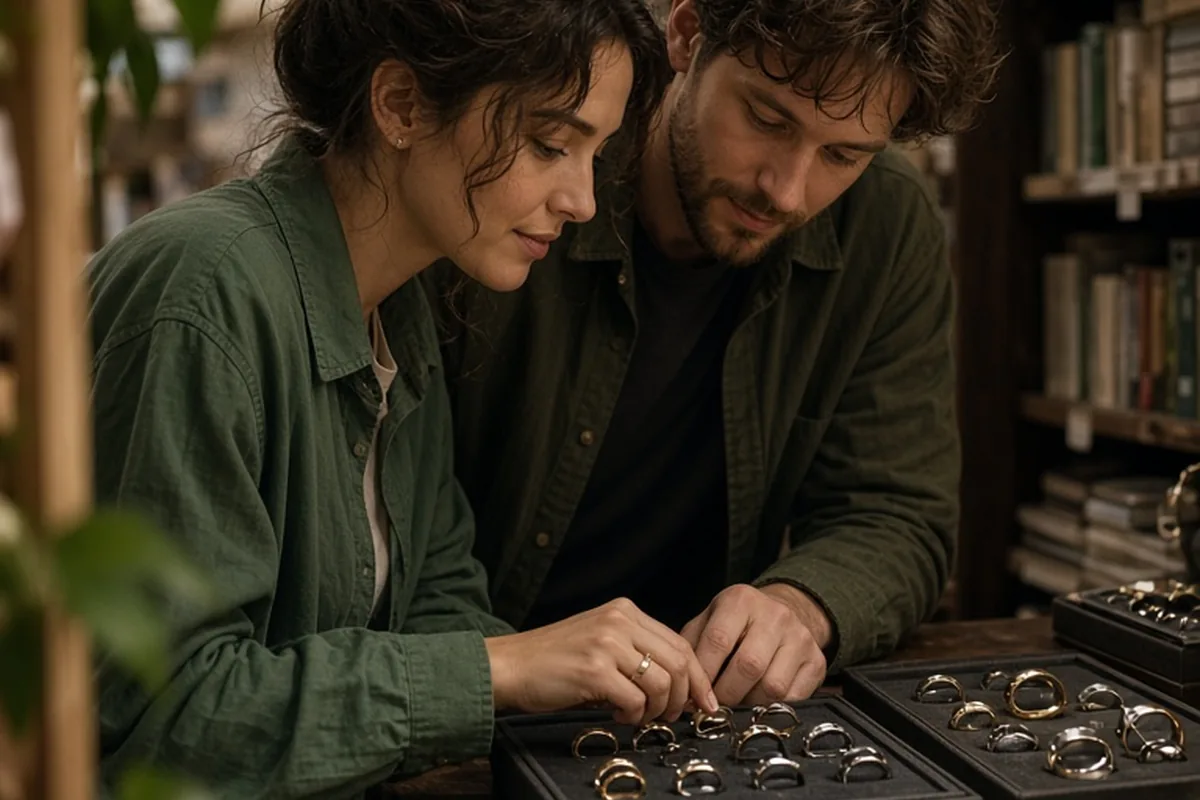
A combined set of his and hers wedding bands typically ranges from $600 to $3,000 or more, depending on metal choice, gemstones, and custom design. Plain classic bands in titanium, tungsten, or gold often cost between $300 and $1,200 together, while matching sets featuring platinum, intricate detailing, or diamond accents generally range from $1,500 to over $4,000. Realistic budgeting balances lifestyle durability with mutual aesthetic preferences.
Shopping for wedding bands marks one of the first shared financial commitments of married life. While engagement rings often dominate early planning conversations, wedding bands represent the daily symbols of your partnership, requiring honest discussions about personal style, durability, and practical spending.
Core Factors That Determine Wedding Band Pricing
The overall price tag on a pair of wedding rings reflects several distinct variables: raw material purity, band width, manufacturing complexity, and retail markup. Precious metals trade on global commodity markets, meaning a heavier, wider gold or platinum band will inherently cost more due to the physical volume of metal required. Men's bands, which often range from five to eight millimeters in width, frequently require twice the raw material of a delicate two-millimeter band, directly influencing the baseline price.
Manufacturing methods also drive pricing. Mass-produced, cast bands sourced through major commercial retailers carry different overheads than hand-forged or custom-machined rings made by independent jewelers. When evaluating options, look past brand prestige and examine the structural thickness and weight of the metal. A thin, hollowed band may cost less initially but can warp under daily pressure, leading to premature replacement costs later.
Metal Choices and Their Price Implications
Metals sit at the center of the cost equation. Traditional precious metals like platinum and gold command higher price points due to their rarity, density, and lasting value. Platinum remains the most premium option, prized for its natural hypoallergenic properties and substantial weight, often costing between $800 and $2,000 for a single band. Fourteen-karat and eighteen-karat gold—available in yellow, white, and rose hues—provide classic luster and workable longevity, typically pricing between $350 and $1,200 per ring depending on finger size and thickness.
Alternative contemporary metals offer significant cost savings while introducing distinct functional benefits. Titanium, tungsten carbide, cobalt chrome, and tantalum provide modern, masculine aesthetics and exceptional scratch resistance at price points generally falling between $100 and $400. However, alternative metals come with an important trade-off: most cannot be resized. If your finger size changes significantly over time, a contemporary metal band will usually need to be fully replaced rather than adjusted.
- Platinum: $800 to $2,000+ per ring; heavy, hypoallergenic, naturally white, premium longevity.
- 14k or 18k Gold: $350 to $1,200+ per ring; timeless finish, easily resized, requires periodic polishing.
- Tungsten and Titanium: $100 to $400 per ring; extremely durable, budget-friendly, cannot be resized.
- Tantalum and Cobalt: $250 to $600 per ring; modern gunmetal luster, shatter-resistant, limited resizing options.
Diamonds, Gemstones, and Design Customization
Adding stones or custom textural finishes changes the bottom line dramatically. A simple curved women's band might sit around $400, but transforming it into a pavé diamond eternity band or a bezel-set contour ring can lift the price to $1,200 or $3,500 depending on total carat weight, color, and clarity. For men's bands, subtle flush-set black diamonds, wood or meteorite inlays, or custom knurling textures similarly add craftsmanship hours that elevate a base ring into a higher pricing tier.
When choosing stone accents, consider long-term durability alongside upfront expense. Full eternity bands feature diamonds encircling the entire circumference, which prevents future ring resizing and exposes underside stones to daily impacts against hard surfaces. Three-quarter or half-eternity settings frequently provide an identical visible appearance from the top while reducing overall cost, improving structural integrity, and leaving plain metal at the base for easy resizing down the road.
Matching Sets Versus Complementary Styles
Couples frequently debate whether their bands must be an exact visual match. Pre-packaged his and hers bridal sets simplify purchasing and occasionally offer small bundled discounts, but they can force one partner to compromise on personal taste or comfort. A high-polish yellow gold band might suit one partner's skin tone and wardrobe, while the other prefers a matte, dark grey tantalum finish suited for an active hands-on job.
Modern couples increasingly opt for complementary rather than identical pairings. You can establish meaningful cohesion through subtle shared details—such as matching an interior engraving, choosing the same metal karat, or incorporating a shared satin finish—while allowing the exterior profile, metal color, and width to reflect each individual's daily lifestyle. This approach keeps both partners confident in what they wear without inflating costs to match an arbitrary standard of uniformity.
Hidden Long-Term Costs and Maintenance
A realistic wedding band budget extends beyond the checkout counter. Routine maintenance, resizing, insurance, and professional refinishing represent recurring expenses that vary by material. White gold rings, for example, are coated in rhodium to achieve a bright chrome-like sheen. Over eighteen to thirty-six months of wear, this plating naturally rubs thin, requiring replating services that typically cost $50 to $100 per session to restore the original luster.
Insurance coverage and professional appraisals also merit early consideration. Adding fine jewelry to a homeowners, renters, or dedicated jewelry policy generally costs one to two percent of the ring's appraised value annually. Factoring in these small, predictable costs protects your investment against accidental loss or stone displacement without creating surprise financial strain later in marriage.
Navigating Joint Budgeting and Communication
Discussions around wedding expenses can occasionally produce unspoken tension, particularly if one partner envisions a luxurious diamond-set band while the other values minimal spending. Addressing ring purchases with clarity and emotional maturity prevents unnecessary friction. Start by setting a combined ceiling for both rings together, then allocate funds based on what matters most to each person rather than enforcing an arbitrary fifty-fifty split on every line item.
Remember that the symbolic weight of a wedding band does not depend on its retail price. A well-constructed $250 titanium band chosen with care holds the exact same emotional commitment as a $2,500 custom platinum ring. Grounding your purchasing decisions in mutual respect, practical affordability, and honest conversation ensures that your rings remain a source of daily pride rather than a lingering financial regret.
Illustrative Scenarios
Navigating Different Metal Preferences and Budgets
Marcus and Elena began ring shopping with an overall target of $1,500 for both bands. Elena wanted a delicate 14k yellow gold band with subtle diamond accents to match her vintage engagement ring, which priced out at $950. Marcus initially felt pressured to buy a matching $1,000 gold band to create a unified set, which would have pushed them significantly over their shared budget. After discussing his hands-on work as a carpenter, Marcus realized a heavy gold ring would scratch easily and feel impractical. Instead, he selected a durable, brushed tantalum band for $350. By focusing on practical lifestyle needs rather than identical matching, they stayed within their $1,300 total cost while both getting rings they loved.
Key point: Shared symbolism does not require matching metals; prioritizing daily utility and individual comfort keeps couples on budget.
Managing Resizing Realities and Long-Term Value
Julian and Taylor found an inexpensive pair of custom tungsten rings online for under $200 total. Julian loved the initial savings and dark aesthetic. However, when trying the ring on at home during a warmer month, Julian found the fit too tight around the knuckle. Because tungsten cannot be cut, stretched, or resized by a bench jeweler, the couple faced ordering entirely new custom pieces with non-refundable restocking fees. They paused, visited a local independent jeweler to get professionally sized across different band widths, and chose comfort-fit 14k white gold bands on sale for $800 total. The shift gave them lifelong resizing security and saved them from ongoing replacement costs.
Key point: Factor future sizing adjustments into your initial purchasing decision to avoid repeat replacement expenses.
Frequently asked questions
Who traditionally pays for his and hers wedding bands?
Traditional etiquette suggested that each partner purchase the other's band, but modern couples increasingly pool their wedding funds or split the combined cost according to their overall financial plan. Discussing payment openly ahead of time ensures both partners feel comfortable with the arrangement.
How far in advance should couples order their wedding rings?
Aim to order your wedding bands roughly two to three months before the wedding ceremony. This timeline accommodates custom sizing, engraving, unexpected shipping delays, and any minor fitting adjustments without last-minute stress.
Can alternative metal wedding bands like tungsten or titanium be resized?
Most alternative metals like tungsten carbide, titanium, and stainless steel cannot be resized due to their extreme hardness and distinct metallurgical properties. If your ring size changes over time, you will generally need to purchase a replacement band rather than alter the existing one.
Is it cheaper to buy wedding bands as a pre-matched set?
Buying a pre-packaged bridal set can occasionally yield modest promotional discounts from retailers, but it is not universally cheaper. Purchasing individual bands that align with each partner's specific metal and style preferences often yields better value and avoids paying for unwanted design extras.
Your next step
Schedule an in-person consultation at a reputable local jeweler to try on different metal weights and band widths together before establishing your final shared budget.