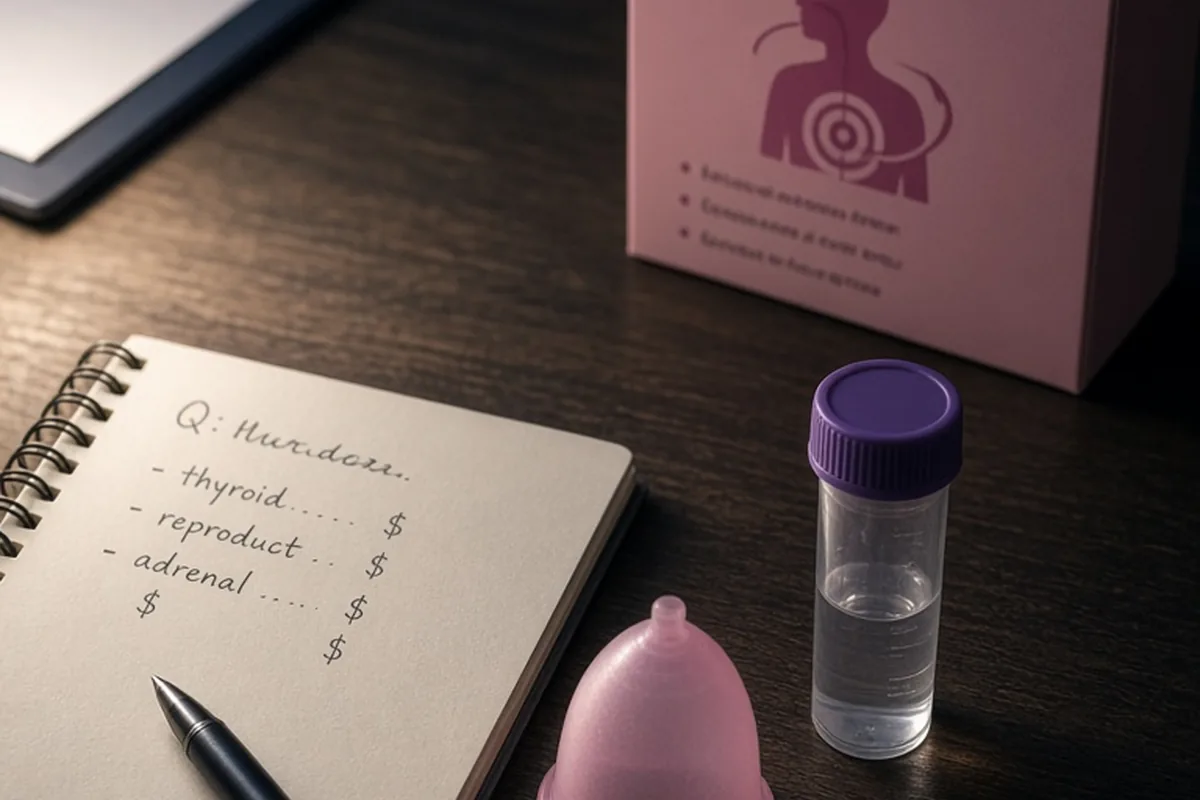
A hormone panel cost depends on the specific biomarkers ordered, the testing facility, whether blood or saliva is analyzed, and your insurance status. Out-of-pocket prices vary widely because a basic thyroid screen requires fewer assays than an extensive reproductive or adrenal profile. Without insurance coverage, you pay separate fees for the physician order, the phlebotomy collection, lab processing, and clinical interpretation. Obtaining itemized diagnostic codes directly from your healthcare provider allows you to confirm exact out-of-pocket pricing with your laboratory and insurer before testing.
Hormone testing evaluates chemical messengers that regulate metabolism, reproduction, mood, sleep, and energy levels. Because hormone panels range from single-marker checks to complex multi-gland assessments, understanding the financial breakdown beforehand prevents unexpected medical bills and ensures you choose the most reliable testing route for your health goals.
Core Fee Components of a Clinical Hormone Panel
When evaluating the total expense of diagnostic hormone testing, your final bill rarely represents a single flat fee. In traditional clinical environments, the overall price is divided across several distinct services. The first component is the clinical consultation, during which a licensed medical provider reviews your symptoms, medical history, and physical indicators to determine which specific endocrine pathways require evaluation. This office visit carries its own billing code and fee structure separate from any laboratory work performed later.
The second component is the specimen collection fee, often billed as a phlebotomy charge when venous blood is drawn at a hospital outpatient department, independent patient service center, or primary care office. If specialized handling is required, such as centrifuging the sample immediately, freezing serum, or scheduling blood draws around specific times of day or menstrual cycle phases, facilities may add logistical handling fees. Patients who choose saliva or dried blood spot collections rather than venous draws may encounter kit shipping and handling surcharges instead of local phlebotomy fees.
The final and typically largest portion of the expense comes from the analytical laboratory processing fees. Each hormone assay—such as total testosterone, free testosterone, estradiol, progesterone, luteinizing hormone, follicle-stimulating hormone, cortisol, or thyroid-stimulating hormone—utilizes distinct reagents, instrumentation, and laboratory technician time. Complex profiles measuring multiple fractions or utilizing advanced methodologies like liquid chromatography-tandem mass spectrometry cost substantially more to process than basic automated immunoassay screens.
Further reading: Office on Women's Health
Why Thyroid, Adrenal, and Reproductive Panels Vary in Expense
The specific physiological system under evaluation directly dictates the complexity and overall price of your laboratory order. Basic thyroid assessments, for example, frequently begin with a single thyroid-stimulating hormone measurement. If that initial screen indicates an irregularity, reflex testing may add free thyroxine and free triiodothyronine, incrementally raising the processing fee. Because thyroid screens are among the most standardized and high-volume automated assays in diagnostic medicine, their baseline laboratory fees remain comparatively modest compared to specialized endocrine panels.
Reproductive hormone panels, by contrast, tend to be significantly broader and require concurrent testing of multiple interconnected analytes. Evaluating menstrual irregularities, fertility status, perimenopausal transitions, or hormonal acne often involves measuring estradiol, progesterone, follicle-stimulating hormone, luteinizing hormone, prolactin, and dehydroepiandrosterone sulfate simultaneously. In female reproductive health, timing within the menstrual cycle is critical, meaning providers may occasionally require repeated blood draws across specific follicular or luteal windows, effectively doubling the procedural and specimen handling costs.
Adrenal and metabolic evaluations introduce another tier of complexity that influences the bottom line. Cortisol levels fluctuate dramatically throughout the day following a natural circadian rhythm, frequently necessitating either multiple saliva collections over twenty-four hours, a timed twenty-four-hour urine preservation, or early-morning fasting blood draws. When assessing specialized endocrine conditions, dynamic stimulation or suppression testing may be ordered, requiring multiple sequential blood draws over several hours at a specialized clinic, which increases clinical supervision and laboratory processing fees accordingly.
Further reading: Office on Women's Health
Further reading: CDC: Contraception and birth control methods
Navigating Health Insurance Coverage and Medical Necessity Rules
Health insurance policies generally evaluate hormone testing based on documented medical necessity rather than general wellness curiosity. When a clinician orders laboratory work to investigate unexplained weight fluctuations, chronic fatigue, irregular menstrual bleeding, fertility challenges, hair loss, or clinical symptoms of endocrine disorders, the visit is paired with specific diagnostic billing codes. If the diagnostic justification satisfies the insurer's clinical policy guidelines, the cost is processed through your standard plan benefits, subject to your annual deductible, copayment, or coinsurance responsibilities.
In contrast, routine wellness screenings, proactive longevity assessments, or hormone panels requested without documented clinical symptoms are frequently deemed elective by commercial insurance plans. When an insurer denies coverage on the grounds that testing lacks medical necessity, the patient becomes responsible for the full non-negotiated laboratory charge. Furthermore, even medically justified orders can result in unexpected expenses if the specimen is sent to an out-of-network reference laboratory, emphasizing the necessity of verifying network status for both the ordering clinician and the processing facility.
Understanding where you stand within your annual deductible cycle is equally vital. If you undergo comprehensive hormone testing early in the plan year before meeting your deductible threshold, you will likely be billed the insurer's contracted rate directly out of pocket. For patients with high-deductible health plans, this contracted rate for an extensive multi-analyte panel can still amount to a substantial sum, making it advantageous to compare your plan's contracted lab rate against self-pay cash pricing before blood is drawn.
Further reading: Office on Women's Health
Direct-to-Consumer at-Home Kits Versus In-Clinic Blood Draws
The expansion of direct-to-consumer health services has established at-home hormone testing kits as an accessible alternative to traditional clinical appointments. These services bundle the physician review, test materials, prepaid return shipping, laboratory analysis, and a digital results dashboard into a single transparent upfront price. Consumers collect capillary blood via finger prick, saliva samples across designated time intervals, or dried urine samples at home and mail them directly to a certified processing facility, eliminating the need to take time off for an in-person phlebotomy appointment.
While direct-to-consumer testing provides clear upfront pricing and privacy, it presents distinct clinical and financial trade-offs. Finger-prick capillary blood and saliva sampling techniques require meticulous user compliance; improper sample collection, insufficient volume, or delays in transit can degrade the specimen, requiring paid kit replacements or yielding ambiguous results. Furthermore, at-home test panels frequently measure a pre-selected bundle of markers that may omit critical companion tests, such as complete blood counts or liver function markers, which a physician would typically evaluate alongside endocrine indicators to interpret the complete clinical picture.
Traditional in-clinic venous blood draws performed at certified clinical laboratories remain the benchmark for analytical precision, particularly for hormones present in low physiological concentrations. Although in-clinic testing involves navigating administrative scheduling, physician office charges, and separate facility billing, it ensures that sample integrity is preserved under controlled conditions. Choosing between these testing paths depends on whether your priority is all-inclusive pricing transparency or comprehensive diagnostic oversight integrated with direct medical management.
Overlooked Follow-Up Fees, Consultation Charges, and Retesting
When planning for the expense of hormone evaluation, many individuals focus entirely on the initial laboratory charge while overlooking downstream costs essential for clinical resolution. A laboratory test result is purely diagnostic data; it does not constitute a treatment plan. Once your biomarker values are reported, you will almost always require a follow-up consultation with a medical provider to interpret the findings in the context of your symptoms, discuss potential underlying causes, and determine whether medical therapy, lifestyle adjustments, or dietary changes are indicated.
Specialist referrals represent another secondary expense. If your primary care provider or an at-home screening identifies complex hormonal imbalances—such as thyroid nodules, polycystic ovary syndrome, or pituitary dysregulation—you may be referred to an endocrinologist or reproductive specialist. Specialist visits frequently carry higher insurance copayments or coinsurance tiers than primary care consultations, and specialized practices may require secondary diagnostic procedures, such as pelvic or thyroid ultrasounds, to complement blood work.
Additionally, baseline hormone testing rarely concludes your diagnostic journey if an imbalance is identified and treatment is initiated. Patients beginning hormone replacement therapy, thyroid medication, or ovulation induction protocols require periodic monitoring panels to assess therapeutic efficacy, calibrate medication dosages, and prevent adverse side effects. Budgeting for hormone management should therefore incorporate the cost of recurring follow-up testing every three to six months until physiological stabilization is achieved.
Further reading: Office on Women's Health
Further reading: CDC: Contraception and birth control methods
How to Reduce Out-of-Pocket Hormone Testing Expenses Safely
There are several practical strategies to manage and reduce the cost of hormone testing without compromising analytical accuracy or clinical safety. If you plan to pay out of pocket without insurance, ask the laboratory or clinic directly for their self-pay or prompt-pay discount schedule. Major diagnostic laboratories frequently offer deeply discounted cash rates to individuals who pay at the time of service, which can be significantly lower than the standard list price billed to non-contracted insurance policies.
Another effective approach is utilizing independent direct-access laboratory marketplaces. These online platforms partner with accredited commercial laboratories to allow consumers to purchase physician-approved lab requisitions at pre-negotiated wholesale rates. You purchase the specific hormone panel online at a transparent price, visit a local participating patient service center for a standard venous blood draw, and receive clinical-grade results without paying unexpected facility or consultation markups.
For individuals utilizing health insurance, scheduling testing through in-network independent laboratories rather than hospital-affiliated outpatient clinics often yields lower coinsurance costs. Hospital systems routinely bill facility fees alongside standard laboratory charges, whereas standalone commercial laboratory facilities generally bill under single professional fee schedules. Additionally, expenses for medically necessary diagnostic hormone testing, doctor visits, and prescription therapies are eligible for reimbursement through Health Savings Accounts and Flexible Spending Accounts using pre-tax funds.
Essential Questions to Ask Your Clinic and Lab Before Testing
Taking an active role in your healthcare billing before samples are drawn is the most reliable way to avoid medical billing surprises. When your healthcare provider recommends hormone testing, begin by requesting the exact names of the ordered tests along with their corresponding Current Procedural Terminology billing codes and International Classification of Diseases diagnostic codes. Having these precise codes enables you to contact your insurance representative and obtain exact coverage determinations rather than generalized estimates.
Contact your health plan's member services department with your provider's codes and verify whether prior authorization is mandatory for the requested panel, whether your annual deductible applies, and which local laboratory facilities are in-network. If you discover that your deductible is unmet or that coverage is restricted, contact the laboratory's billing office directly and ask for their itemized self-pay cash pricing for those exact procedural codes. Comparing the insured out-of-pocket obligation against the upfront cash rate empowers you to choose the most cost-effective payment method.
Finally, clarify logistical and clinical parameters with your ordering provider before scheduling your appointment. Inquire whether the specimen requires strict fasting, specific morning collection hours, or precise cycle-day timing for menstruating individuals. Understanding these testing constraints ensures your sample yields accurate, interpretable results on the first attempt, preventing the financial burden and physical inconvenience of repeat blood draws.
Further reading: Office on Women's Health
Frequently asked questions
Can I use an HSA or FSA to pay for hormone panels?
Yes, diagnostic hormone testing is generally considered an eligible medical expense under Health Savings Accounts and Flexible Spending Accounts when ordered to evaluate symptoms or monitor an existing health condition. You can use pre-tax funds to cover copayments, deductibles, out-of-pocket lab charges, and certified direct-to-consumer testing kits.
Why is an at-home saliva hormone test priced differently than a clinic blood test?
At-home saliva testing kits bundle the collection materials, mailing logistics, and laboratory analysis into a single upfront price, whereas clinic blood draws often involve separate billing for office consultations, phlebotomy services, and laboratory processing. Additionally, saliva assays measure bioavailable free hormones, which require different laboratory processing techniques than total hormone assays measured in blood serum.
Do I need a doctor's prescription to order a hormone panel?
Traditional clinical laboratories and insurance-covered testing require an order from a licensed healthcare provider. However, many direct-to-consumer testing companies and direct-access laboratory platforms employ independent physician networks that review and authorize your test requisition as part of their bundled service fee, allowing you to self-order in eligible states.
Will health insurance cover a hormone panel if I have no symptoms?
Most health insurance plans require documented medical necessity and specific diagnostic codes reflecting symptoms or clinical conditions before approving laboratory coverage. Tests ordered strictly for general wellness, fitness optimization, or anti-aging curiosity without underlying clinical symptoms are typically classified as elective and billed directly to the patient.
Your next step
Request the exact procedural and diagnostic codes from your medical provider so you can compare your insurer's in-network coverage against the laboratory's self-pay cash discount before scheduling your blood draw.