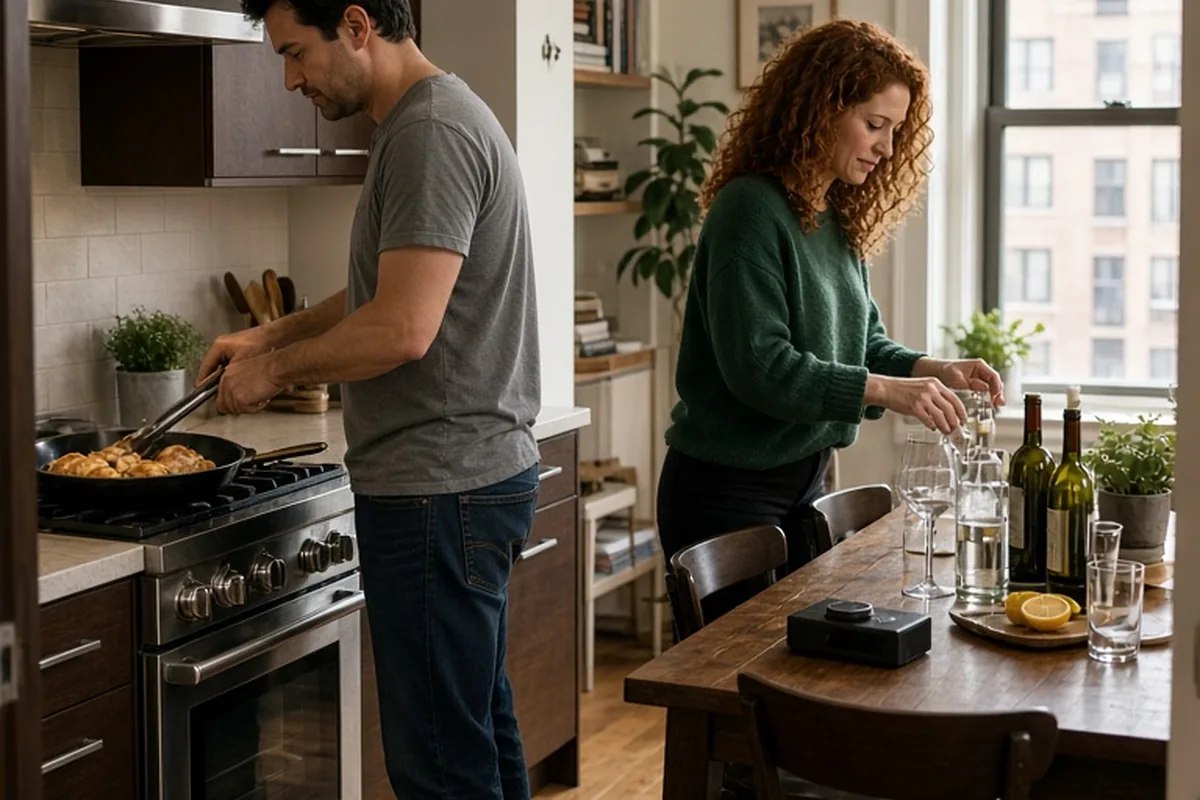
Hosting dinner parties as a couple succeeds when you treat the evening as a collaborative project rather than an unstated test of compatibility. The most effective approach relies on agreeing on the event's scale in advance, establishing distinct operational roles—such as one partner managing the menu while the other leads drinks and hospitality—and using discreet check-in signals to keep both partners calm, aligned, and connected throughout the night.
Opening your shared home to friends sounds romantic in theory, yet the practical reality often unearths unexpected friction over prep timelines, chore allocation, and mismatched social energy. When expectations remain unspoken, the pressure to deliver a flawless evening can easily turn an enjoyable gathering into an exhausting test of patience.
Establishing Shared Alignment on Scale and Ambiance
Friction between hosting partners often begins long before anyone rings the doorbell, typically rooted in conflicting visions of what the evening should look like. One partner may anticipate a casual, low-maintenance gathering with craft beer and sheet-pan appetizers, while the other envisions a seated, multi-course meal complete with curated lighting and paired wines. When these assumptions go unaddressed, one person inevitably feels ambushed by an overwhelming workload, while the other feels unsupported or judged for having different hospitality standards.
To prevent misaligned efforts, sit down together before extending invitations to define the scope of the night. Agree on a firm headcount, the overall budget, the serving format, and an intended finish time. If one partner has a grueling workweek leading up to the party, the practical choice is to scale back the complexity of the menu rather than expecting them to match a high-stress standard. Choosing an uncomplicated setup allows both partners to feel invested in the plan without quiet resentment brewing over the required labor.
Dividing Responsibilities into Autonomous Operational Zones
Two well-meaning adults attempting to manage the same stove top, playlist, and greeting routine at the exact same moment is a recipe for irritability. Kitchens are functional workspaces with limited real estate, and diffuse ownership invites constant second-guessing. When tasks lack clear boundaries, questions like 'Did you chill the wine?' or 'When are you slicing the bread?' sound less like teamwork and more like micromanagement, especially under time constraints.
The remedy is creating distinct operational zones based on personal preferences and skills. One partner can assume ownership of the kitchen—handling grocery staging, oven management, and plating—while the other takes charge of the front of house, which includes clearing the entryway, arranging glassware, running the bar, and answering the door. Crucially, each partner must grant the other full autonomy within their designated zone. If your partner is managing the music and drinks, step back and let them execute their role without offering unsolicited critiques.
Navigating Differences in Social Energy and Stamina
Couples rarely possess identical social batteries. In many relationships, one person thrives in lively group conversations late into the night, while the other begins feeling cognitively drained after ninety minutes of continuous engagement. Left unmanaged, this disparity creates an uncomfortable dilemma: the introverted partner feels trapped or pressured to perform, while the extroverted partner feels abandoned or resentful if their significant other suddenly retreats into silence.
A healthy hosting partnership accommodates differing energy levels through planned flexibility and discreet communication. Agree in advance on quiet tactical breathers, such as a ten-minute break to restock the bathroom, step into the pantry, or handle a quick chore alone in the bedroom without explanation needed. Establishing a simple, private nonverbal cue allows either person to signal when their energy is dipping. This gives the more energized partner the opportunity to shoulder more of the conversational load without making their partner feel inadequate.
Maintaining Front-Facing Solidarity During Inevitable Mishaps
Even with meticulous planning, dinner parties rarely go entirely as scripted. A sauce burns, a guest arrives an hour late, an awkward conversational topic surfaces, or a glass of red wine spills on the rug. In high-stimulus moments, the instinctive temptation can be to deflect embarrassment by making a sarcastic remark about your partner's timing or cooking habits. However, public teasing or passive-aggressive comments erode trust instantly and make every guest at the table deeply uncomfortable.
Practicing public solidarity means committing to treat mistakes as shared events rather than individual failures. If the main course is delayed, the front-of-house partner can bring out extra bread and top off drinks with an easy smile, treating it as an amusing footnote rather than a catastrophe. When partners visibly back each other up under pressure, it projects confidence, relaxes the room, and reassures both individuals that their partnership remains intact even when an oven timer misfires.
Managing the Wrap-Up and Establishing Cleanup Boundaries
The final hour of an event represents a subtle danger zone for couple conflict. As the energy winds down, one partner might want to scrub every single pan, wipe the counters, and vacuum immediately before sleeping, while the other is exhausted and wants nothing more than to leave the mess for tomorrow. Disagreements at this stage are amplified by physical fatigue, leading to sharp arguments over chore fairness when neither person has the emotional bandwidth to resolve them calmly.
Avoid late-night cleanup disputes by deciding on a bare-minimum closing standard before the first guest arrives. For example, agree that the night-of routine consists only of putting away perishable food, loading what fits easily into the dishwasher, and soaking heavy cookware. Everything else can wait until the next morning over fresh coffee. When it is time for the evening to conclude, signal the transition together by bringing out herbal tea, lowering the music volume, and gradually turning up ambient lights, which naturally cues lingering guests that the night has reached its end.
Conducting a Constructive Post-Event Debrief
Once the door closes and the apartment is quiet, it is easy to fixate on the one thing that went sideways or launch into a critique of how your partner handled a specific moment. Doing this while tired almost always triggers defensiveness. A productive reflection requires emotional distance, ensuring that both people feel appreciated for their contributions before discussing operational refinements for future events.
Schedule a brief, lighthearted conversation for the following afternoon. Begin by identifying what went well, acknowledging where your partner supported you, and sharing favorite moments from the gathering. Afterward, discuss practical adjustments objectively—such as whether the menu required too much last-minute attention or if the guest list was slightly too large for your living room. Viewing dinner parties as a repeatable, evolving skill strengthens your collaborative rhythm and ensures that entertaining remains a source of shared connection rather than dread.
Illustrative Scenarios
Navigating the Crowded Kitchen Bottleneck
Marcus and Julian decided to host four longtime friends for an elaborate Sunday dinner. Marcus was searing chicken thighs while Julian tried to assemble a delicate salad on the exact same kitchen island. Feeling crowded and behind schedule, Marcus made several irritable comments about Julian being in the way, prompting Julian to put down the tongs and walk into the bedroom in frustration. Recognizing that the tension was about physical space rather than the food, Marcus took a breath, stepped into the hallway, and apologized for snapping. They agreed to split the territory: Julian moved into the dining room to set up a dedicated cocktail station and curate music, while Marcus retained sole control of the stove. The rest of the prep ran smoothly.
Key point: Separating physical workspaces and delegating independent domains prevents friction and lets both partners contribute meaningfully without feeling micro-managed.
Balancing Disparate Social Endurance
Claire and Brett invited six neighbors over for dinner. By 10:30 PM, the guests were laughing loudly at the table, but Brett felt his focus and patience rapidly deteriorating. In the past, Brett might have silently withdrawn or checked his phone under the table, which usually made Claire feel self-conscious and abandoned. Instead, Brett stepped into the kitchen to rinse glasses, where Claire joined him to grab extra napkins. Brett quietly used their pre-arranged phrase: 'I am running on fumes.' Recognizing his limit without taking it personally, Claire smiled, thanked him for carrying the earlier conversation, and agreed to shift the room toward wind-down mode. She served a final round of water, and guests departed twenty minutes later.
Key point: Using clear, honest check-in cues honors differing energy thresholds and prevents quiet resentment from turning a successful night into an argument.
Frequently asked questions
What should we do if one partner enjoys hosting far more than the other?
The partner who loves hosting should take primary ownership of the planning and culinary workload, rather than expecting a 50-50 split. The less enthusiastic partner can agree to a defined, manageable supporting role, such as curating a playlist or managing coat check, alongside a firm agreement on how late the party will run.
How can we split party expenses fairly if we keep separate bank accounts?
Agree on a total spending cap before shopping for ingredients or beverages to prevent unexpected financial pressure. You can either divide the grocery and alcohol receipts equally via a transfer app or divide purchases by category, such as one partner purchasing the food while the other covers wine and dessert.
What is the best way to handle an argument that flares up right before guests arrive?
Call an immediate, explicit truce by acknowledging that you are both stressed by the deadline. Agree to shelve the disagreement entirely until the next day, take three minutes to reset your breathing separately, and focus solely on the immediate logistical tasks needed to open the door.
How do we politely nudge lingering guests to head home without being rude?
Use environmental and verbal transitions in unison as a couple. Turn down the music, switch the beverage focus to decaf tea or ice water, and offer a clear closing statement like, 'We are so glad you came over tonight; let's get your coats before it gets too late.'
Your next step
Before your next dinner party, sit down with your partner for fifteen minutes to decide on the menu, define two distinct non-overlapping roles, and establish one private check-in phrase you can use if you feel overwhelmed.