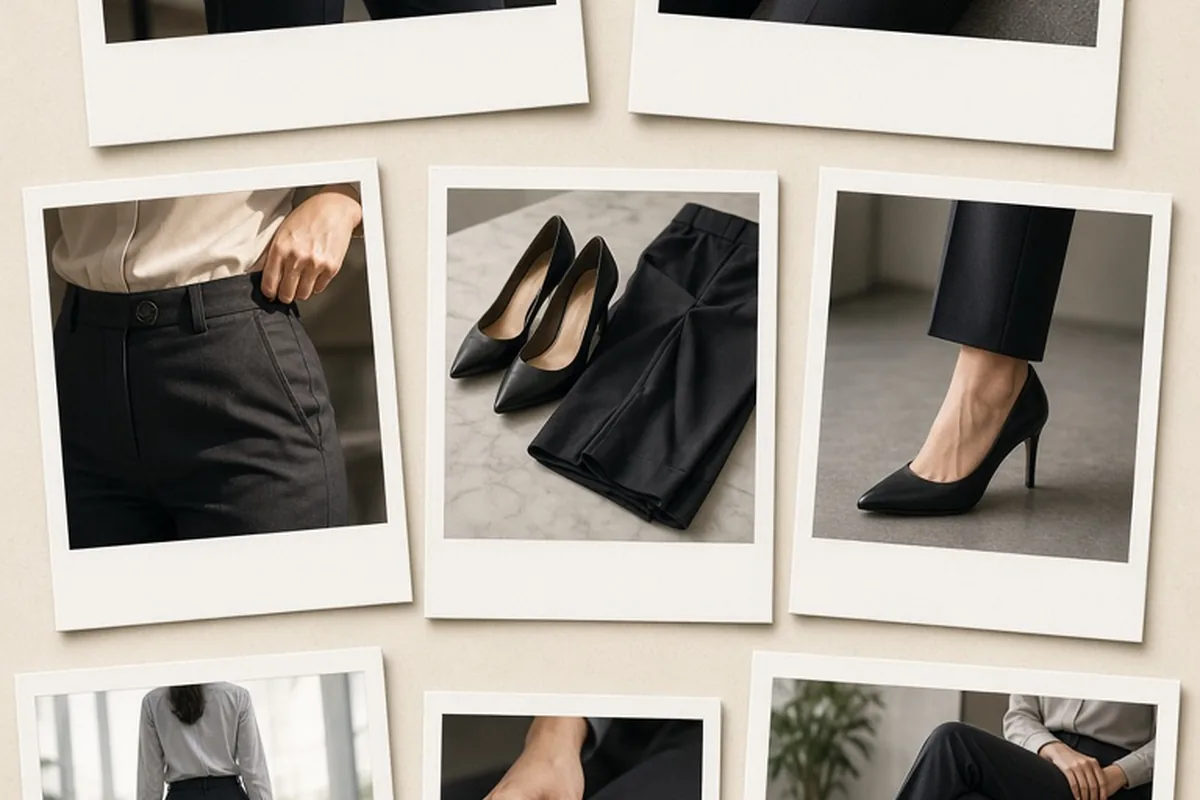
Dress pants for women should fit smoothly across the waist and hips without pulling, gaping, or squeezing. The waistband should stay secure without digging in when sitting, pockets should lie completely flat, and the fabric should drape cleanly through the thighs and seat. Depending on the cut, the hem should skim the top of your shoes or fall just above the floor without bunching.
Finding the right pair of dress pants can feel challenging because off-the-rack sizing rarely matches every individual body proportion. Understanding how each zone of a trouser is designed to drape against your frame helps you choose workwear that looks sharp, feels comfortable, and holds up through long days.
Evaluating the Waistband and Rise
The waistband of a well-fitted dress pant should sit comfortably against your torso without requiring a belt to stay in place, yet leave enough ease to slide two flat fingers inside. If the waistband pinches or creates noticeable pressure against your stomach, the pants will cause discomfort within an hour of sitting. Conversely, if the band pulls backward and leaves a large gap at the small of your back, the garment will constantly slide down and disrupt the vertical line of your outfit.
Rise is equally critical because it determines where the waistband rests relative to your hip bones and ribcage. High-rise trousers should sit cleanly at your natural waistline, while mid-rise pairs rest roughly an inch or two below your navel. If the rise is too short for your torso, the crotch seam will pull upward uncomfortably, creating tension and fabric distortion. When the rise is too long, extra material gathers awkwardly at the lower abdomen, creating an unbalanced and baggy silhouette.
Checking the Hips, Seat, and Pocket Lay
A proper fit through the hips and seat should outline your shape without clinging like athletic leggings. The fabric should skim smoothly over the widest part of your hips and fall cleanly down the back of your thighs. When trousers are too tight in this area, you will notice diagonal tension lines radiating from the crotch, commonly called whiskering, as well as fabric pulling across the buttocks.
One of the clearest indicators of an improper hip fit is how the side pockets behave. Slanted or vertical trouser pockets should lie completely flat against your hips when you stand naturally. If the pocket openings pull open, flare outward, or bunch up, the pants are too snug across the hips or seat. Sizing up to accommodate your hip measurement creates a cleaner line and prevents pocket distortion.
Managing Thigh Proportions Across Trouser Cuts
Different trouser cuts create distinct proportions through the legs, but each style requires sufficient ease around the thighs. In a straight-leg or wide-leg trouser, the material should drop straight from the widest point of the hip or thigh down to the hem without catching on the knees. In a slim or cigarette cut, the trouser will follow the taper of your leg more closely, but it should still pinch at least half an inch of loose fabric on either side of the thigh.
A common trade-off occurs with fitted cuts when your thighs are fuller relative to your calves. If the leg is cut too narrow, the trouser fabric will grab the back of your knees when you stand up after sitting, forcing you to constantly tug the hem downward. Opting for a relaxed taper or a straight leg often prevents this clinging while delivering a balanced, professional profile.
Determining Proper Hem Length and Inseam
The ideal hem length of a dress pant depends heavily on the leg silhouette and the shoes you plan to wear. For classic straight-leg and wide-leg trousers, the hem should finish roughly one-half to one-quarter of an inch off the floor when wearing your intended shoes, creating a slight break or clean drape. If wide-leg pants are hemmed too short, they can look awkward, whereas leaving them too long causes the fabric to pool or fray along the ground.
Ankle-length, tapered, and cigarette pants follow a different standard and should finish just at or slightly above the ankle bone. This cropped length highlights footwear such as loafers, flats, or low pumps without breaking the clean vertical line of the leg. When purchasing trousers, decide in advance whether they will be paired with high heels or flat shoes, as hem adjustments cannot easily accommodate both extremes.
The Movement Test and Fabric Behavior
Assessing dress pants only while standing in front of a dressing room mirror gives an incomplete picture of fit. When you sit, your hips and thighs naturally spread, and the waistband shifts higher or presses deeper into your abdomen. Always sit down in a sturdy chair during a fitting to confirm the waistband does not bite into your midsection and the rear seam provides ample coverage without pulling downward.
Fabric composition also alters how a pair of trousers wears throughout the day. Natural fibers such as wool, cotton, or linen provide structured drape and breathability, though they have minimal give unless blended with elastic fibers. Synthetic blends containing two to four percent elastane or spandex offer extra comfort during movement, but lower-quality stretch fabrics may stretch out permanently at the knees and seat by mid-afternoon.
Smart Tailoring: What Can and Cannot Be Adjusted
Off-the-rack trousers rarely fit every proportion without minor adjustments, making strategic alterations an essential part of wardrobe building. Tailors can easily shorten or lengthen hems, take in a waistband by one to two inches to eliminate gaping, and slim down wide leg openings. Taking advantage of these simple, inexpensive tweaks allows you to customize the fit to your specific measurements.
However, certain structural elements are difficult or impossible to alter effectively. Lowering an excessively high rise, adding fabric where there is no interior seam allowance, or rebuilding a poorly drafted crotch curve often results in distorted proportions and high tailoring costs. As a rule of thumb, always buy dress pants that fit comfortably in the widest part of your body—usually the hips or thighs—and have a tailor take in the waist.
Illustrative Scenarios
Resolving the Waist-Gap Dilemma
Maya needed a navy trouser suit for upcoming client presentations. In the fitting room, pants that zipped smoothly over her hips left a three-inch gap at the back of the waistband. Her first reaction was to buy a smaller size to fix the waist, but the smaller pair caused the pockets to flare open and pulled tightly across her thighs. Instead of settling for a restrictive fit, Maya purchased the larger size that accommodated her hips and took them to a local tailor, who took in the waistband and back seam.
Key point: Buy trousers that fit your widest measurement comfortably and use simple tailoring to close any gap at the waistband.
Choosing Hem Length for Everyday Footwear
Jordan purchased a pair of wide-leg wool trousers tailored specifically while wearing three-inch heels. When she tried wearing the same trousers with pointed-toe flats to commute comfortably on the subway, the back hems dragged on the wet pavement and frayed quickly. Rather than retiring the trousers, she had them hemmed to work with a moderate one-inch block heel, giving her a versatile middle ground for both walking and office meetings.
Key point: Align trouser hem alterations with the shoe heel height you wear most frequently to protect your clothing and maintain clean proportions.
Frequently asked questions
Why do my trouser pockets flare open when I stand up?
Pockets flare open when trousers are too tight across the hips, seat, or upper thighs. Sizing up will provide enough room for the fabric to drape naturally and keep the pocket openings lying flat.
How should dress pants fit in the seat area?
The seat should skim your shape smoothly without pulling tightly across your rear or sagging with excess material. There should be no horizontal tension creases, and the back rise should remain in place when you sit down.
Can a tailor fix a waist that is too loose on dress pants?
Yes, taking in a waistband by one to two inches is a standard and straightforward alteration. A tailor can adjust the back seam and waistband to eliminate gaps while preserving the trouser lines.
Where should wide-leg dress pants hit on shoes?
Wide-leg dress pants should hang straight down and finish roughly one-quarter to one-half inch above the floor when wearing your intended shoes. This provides a sleek drape without dragging on the ground.
Your next step
Inspect the fit of your dress pants by checking waistband ease, pocket alignment, and sitting comfort, then tailor the waist or hem for a polished finish.