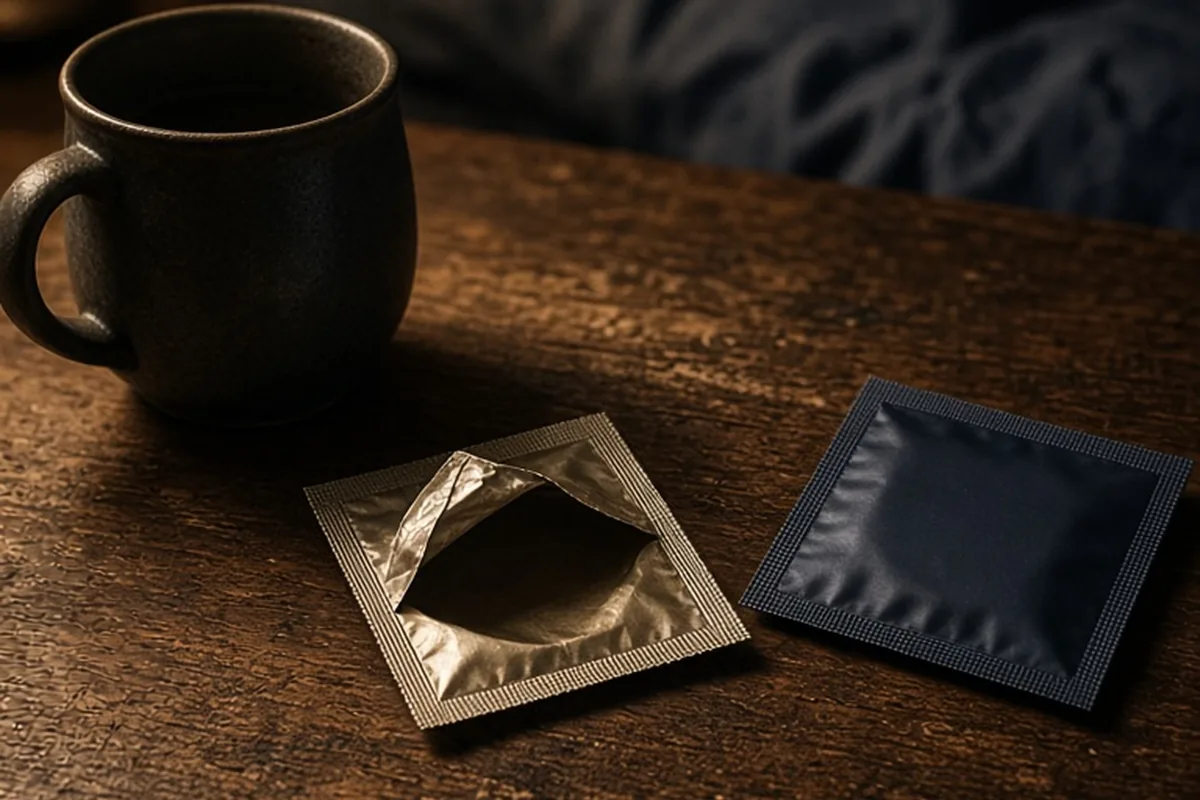
Most condoms last roughly three to five years from their manufacture date, but the only answer that truly matters is the expiration date printed on the box or foil wrapper. Heat, friction, and sunlight can shorten that window, so a condom kept in a wallet or hot car may be unreliable well before it expires. When in doubt, replace it.
Condoms are one of those things people buy, stash, and forget about until the moment they need one. Knowing how long they actually stay reliable, and what quietly ruins them in the meantime, is a small piece of knowledge that prevents a very big problem.
Where to Find the Expiration Date and What It Means
Every condom sold in the United States carries an expiration date, and finding it takes about two seconds once you know where to look. On a box, the date is usually stamped or printed on the bottom or side panel. On individual foil or plastic wrappers, it is typically pressed into the edge of the seal or printed on the back. Many packages also show a manufacture date alongside the expiration date, which tells you how old the condom is right now, not just when it stops being reliable.
That printed date is the manufacturer's estimate of how long the materials should hold up under reasonable storage conditions. It is not a cliff edge where a condom works perfectly one day and fails the next, but it is the line the maker is willing to stand behind. Treat it the way you would treat the date on a smoke detector battery: not a suggestion to gamble on, but a firm signal that the product has done its time. If the date has passed, the practical move is simple: throw it out and use a fresh one.
How Material and Additives Change Shelf Life
Not all condoms age the same way, and the material matters more than most people realize. Latex condoms, the most common type, generally carry the longest shelf lives because latex is durable and well-tested. Polyurethane and polyisoprene condoms, the usual alternatives for people with latex sensitivities, often have similar or slightly shorter windows depending on the brand. Condoms made from natural membrane materials tend to have meaningfully shorter lifespans, which is one more reason to check the date rather than assume.
Additives change the picture too. Condoms with spermicide typically expire sooner than plain ones, because the spermicidal ingredient degrades over time even while the latex underneath is still fine. The same logic applies to condoms with added lubricants, warming agents, or flavoring: the more chemistry involved, the more there is to break down. The practical takeaway is not to memorize a chart of materials and years. It is to recognize that shelf life varies by product, which is exactly why the printed date on your specific wrapper beats any general rule.
How Storage Conditions Quietly Shorten a Condom's Life
The expiration date assumes the condom has been stored reasonably well, and real life often fails that assumption. The three big enemies are heat, friction, and light. Heat speeds up the breakdown of latex and other materials, which is why a glove compartment in July or a windowsill in direct sun is one of the worst places to keep condoms. Friction is the quieter problem: a condom riding around in a wallet gets bent, pressed, and rubbed every time you sit down, and that constant stress can create weak points or tiny tears in the wrapper long before the date arrives.
Light, especially direct sunlight, degrades the material over time as well. Moisture is a fourth factor worth mentioning, since a damp bathroom cabinet or a gym bag that gets sweaty can compromise the wrapper's seal. None of this means you need to treat condoms like museum artifacts. It means the difference between a condom that lasts until its printed date and one that quietly fails early often comes down to where it spent the last two years. A condom stored in a cool, dry drawer will almost always outlast an identical one that lived in a back pocket.
Signs a Condom Should Be Thrown Out Before the Date
The expiration date is a starting point, not the whole inspection. Before using any condom, take a few seconds to check the wrapper itself. A healthy wrapper feels like it has a small air bubble inside when you press it gently, which tells you the seal is intact. If the wrapper feels flat, looks punctured, is torn at the edges, or shows any sign of leaking lubricant, the condom inside may have been exposed to air and dried out, and it belongs in the trash regardless of the printed date.
Once opened, the condom itself gives you clues too. It should unroll smoothly and feel soft and flexible. Warning signs include a condom that feels brittle, stiff, sticky, or unusually dry, one that has visible discoloration, or one that smells off. Any of these suggest the material has degraded. The trade-off here is trivial: condoms are inexpensive and widely available, while the cost of a failed one is not. If anything about the wrapper or the condom seems wrong, the correct move is always to grab another one.
- Wrapper feels flat with no air bubble when pressed gently
- Tears, punctures, or worn spots in the foil or plastic
- Leaking lubricant or a dried-out wrapper
- Condom feels brittle, stiff, sticky, or overly dry
- Discoloration or an unusual smell after opening
What Actually Happens If You Use an Expired Condom
An expired condom does not automatically fail, and it is worth being honest about that rather than pretending the risk is absolute. What expiration does is raise the odds of problems you cannot see. As the material ages, it loses flexibility and strength, which makes small tears and breakage more likely during use. A condom that breaks or develops a hole stops doing its job, whether that job is preventing pregnancy or reducing the transmission of infections. The risk is not that the condom becomes toxic or dangerous to touch; it is that it becomes less dependable at the exact moment you are depending on it.
The practical framing is a risk calculation with a lopsided payoff. Using an expired condom is generally considered better than using nothing at all if that is genuinely the only option in the moment, but it is a distant second choice to a fresh one. If you discover afterward that a condom was expired and it broke or slipped, that is the point to think about next steps like emergency contraception or testing, ideally with input from a pharmacist or healthcare provider. If it stayed intact, the exposure is lower, but the experience is still a good reason to refresh your supply.
How to Store Condoms So They Actually Last
Good storage is boring, which is exactly the point. The ideal spot is cool, dry, dark, and stable: a bedside drawer, a bathroom cabinet away from the shower's steam, a closet shelf, or a small tin in a bag that stays at room temperature. Room temperature is the target. You want to avoid places that swing between hot and cold, places with direct sun, and anywhere the condom will be crushed or rubbed constantly. Keeping condoms in their original box adds a layer of protection for the wrappers and keeps the expiration dates easy to check.
For carrying condoms on the go, the wallet is the classic mistake. A better option is a front pocket for a single day, a hard case or small tin in a bag, or the inside pocket of a jacket you are actually wearing rather than one sitting in a hot car. The trade-off is convenience versus reliability: a condom you carry everywhere in a bad spot may be worse than one you have to plan slightly ahead for. A reasonable compromise is to carry one or two in a protective case and rotate them out regularly rather than letting the same condom ride around for months.
Buying and Rotating Your Supply the Smart Way
The easiest way to never face an expired condom is to keep a modest supply and let it turn over naturally. Buying a large bulk box feels efficient, but if it takes you four years to use it, the last few condoms may be approaching their date by the time you reach them. A smaller box that matches your realistic pace means fresher stock and less waste. When you buy, glance at the expiration dates on the shelf; boxes at the back are sometimes older stock, and picking the box with the furthest date costs nothing.
Rotation is simple: use older condoms first and put new purchases behind them, the same way a grocery store stocks milk. Once or twice a year, do a quick audit of wherever you keep them, checking dates and wrapper condition and tossing anything questionable. This takes less than five minutes and removes the guesswork from a moment when you do not want to be doing math. If you keep condoms in multiple places, like a drawer at home and a case in your bag, check all of them, since the bag condom is usually the one aging fastest.
Illustrative Scenarios
The Glove Compartment Find
While cleaning out his car before a road trip, a man finds a strip of condoms in the glove compartment that he put there two summers ago. The expiration date is still eight months away, but the wrappers feel slightly warped and one has a worn corner from sliding around. He remembers the car sitting in a parking lot through two heat waves. He throws all of them out and buys a fresh box for his nightstand drawer instead.
Key point: A condom can be within its printed date and still be a bad bet if it spent its life in heat and friction. Storage history matters as much as the calendar.
Frequently asked questions
Can you use a condom after its expiration date?
It is not recommended, because the material weakens over time and becomes more likely to tear or break during use. If an expired condom is truly the only option, it is generally considered better than nothing, but a fresh condom is always the right choice when one is available.
Do condoms expire faster if you keep them in a wallet?
Yes, in practical terms. The printed date assumes reasonable storage, and a wallet subjects condoms to constant bending, pressure, and body heat that can damage the wrapper and the material inside. A condom carried in a wallet for months should be replaced even if the date looks fine.
How long do condoms last once you open the box?
Opening the outer box does not start a countdown, because each condom stays sealed in its own wrapper until you open it. What matters is the condition of each individual wrapper and the printed expiration date, not how long the box has been open.
Do non-latex condoms last as long as latex ones?
It depends on the material and the product. Polyurethane and polyisoprene condoms often have comparable shelf lives to latex, while natural membrane condoms and those with spermicide tend to expire sooner. The printed date on your specific package is the only reliable guide.
Your next step
Tonight, take two minutes to check the expiration dates and wrapper condition on every condom you own, toss anything expired or damaged, and move the keepers to a cool, dry drawer away from heat and sunlight.