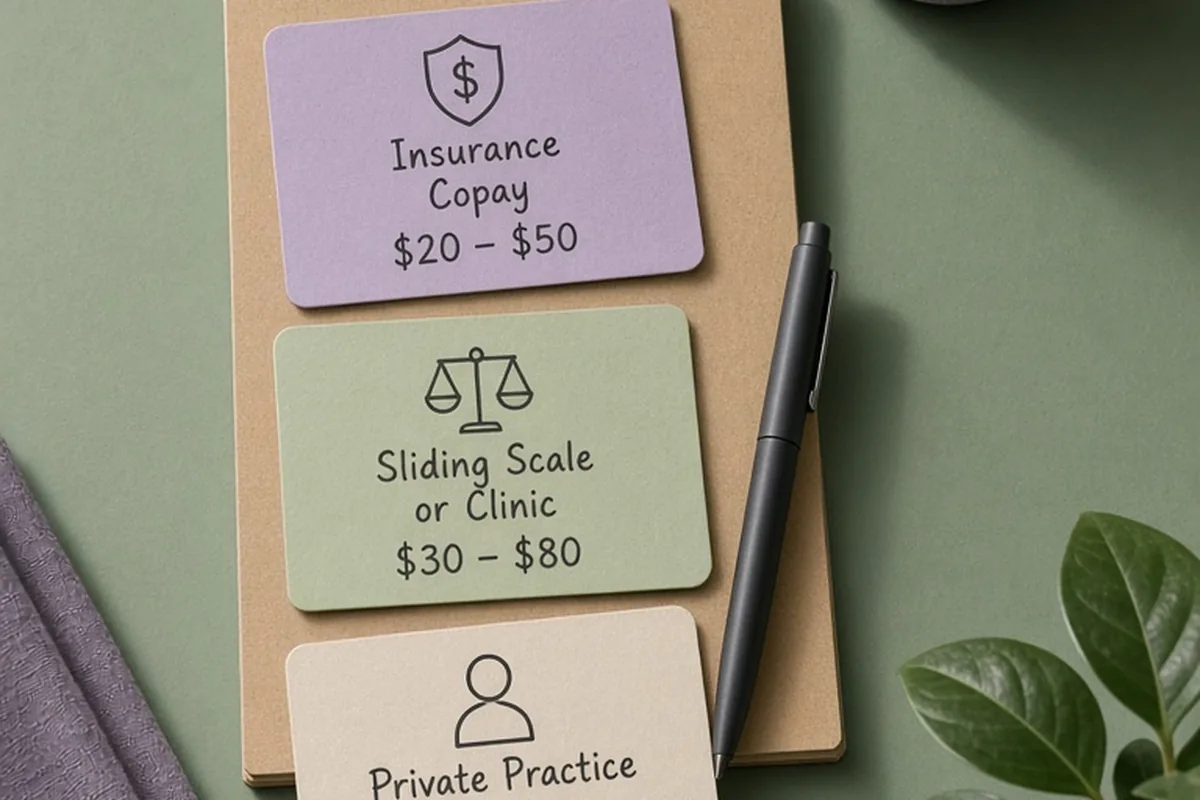
Most private cognitive behavioral therapy sessions range from one hundred to two hundred fifty dollars out of pocket, though rates in major metropolitan areas can reach three hundred dollars or more. With in-network insurance, copays typically fall between twenty and fifty dollars per visit. Low-cost community clinics and sliding-scale providers often charge between thirty and eighty dollars depending on documented household income.
Cognitive behavioral therapy remains one of the most widely requested forms of structured mental health care, yet navigating the financial commitment can feel opaque. Understanding fee structures, session frequency, and hidden savings avenues helps you plan a course of treatment without unnecessary financial strain.
Standard Private Practice Fees and Market Variations
In private practice settings, individual cognitive behavioral therapy sessions generally cost between one hundred and two hundred fifty dollars per standard fifty-minute clinical hour. In regions with a high cost of living, such as New York, San Francisco, or Boston, experienced licensed clinicians regularly set their cash rates between two hundred fifty and three hundred fifty dollars. Conversely, therapists practicing in smaller cities, suburban communities, or rural regions frequently maintain fees near the lower end of that range. Therapist credentials also play a major role in pricing; fully licensed clinical psychologists often charge higher rates than licensed professional counselors, social workers, or associate clinicians completing supervised hours.
When considering private pay options, it helps to examine what those fees actually purchase. Private clinicians operating outside managed care networks often offer greater flexibility with appointment times, specialized protocols for concerns like social anxiety or insomnia, and direct communication between visits. For example, a therapist working on relationship boundary issues might spend additional time tailoring between-session exercises. The trade-off is immediate financial exposure: you pay the full professional rate at the conclusion of each appointment, which requires disciplined personal budgeting and clear conversations about how long your targeted treatment plan should last.
Using Health Insurance, Copays, and Deductibles
Utilizing commercial health insurance, employer-sponsored plans, or government programs substantially lowers your direct per-visit expense. When seeing an in-network provider, clients typically pay a contracted copay ranging from fifteen to fifty dollars per session, or a coinsurance rate of ten to thirty percent of the insurer's negotiated rate. However, accessing these rates requires meeting your annual deductible first. If you carry a high-deductible health plan, you might pay the full negotiated rate—often between eighty and one hundred forty dollars—until your deductible is satisfied, after which the lower copay or coinsurance takes effect.
A practical complication involves network adequacy and clinical diagnostic requirements. Many cognitive behavioral specialists choose not to contract with insurance panels due to low reimbursement schedules and extensive administrative paperwork. Furthermore, insurance coverage universally requires the clinician to assign a formal diagnostic code justifying medical necessity. For instance, someone seeking short-term skill building to handle dating anxiety or improve workplace assertiveness might find that an insurer scrutinizes claims if symptoms do not meet specific diagnostic thresholds. In addition, you must verify preauthorization rules and out-of-network benefits, which may reimburse twenty to sixty percent of costs once you submit itemized super一段时间 receipts.
Sliding-Scale Programs, Community Clinics, and Training Centers
If private out-of-pocket fees exceed your budget and in-network clinicians are unavailable, sliding-scale services provide a legitimate, dignified route to high-quality care. Many independent practitioners reserve a modest percentage of their caseload for clients who demonstrate limited financial resources, charging fees adjusted to household income that frequently range from forty to ninety dollars. Federally Qualified Health Centers, community mental health organizations, and nonprofit counseling agencies also offer structured sliding fees based on national poverty guidelines, sometimes reducing session charges to nominal amounts such as twenty dollars.
University psychology departments and graduate counseling training clinics represent another dependable resource for affordable cognitive behavioral therapy. In these facilities, advanced graduate students provide evidence-based care under the direct, close supervision of licensed faculty psychologists. Sessions are frequently recorded for supervisory evaluation, which ensures strict adherence to clinical protocols while keeping per-session costs between twenty and fifty dollars. The trade-off often involves operating within an academic calendar, meaning clinic hours may be limited during summer or holiday breaks, and appointment slots during peak evening hours can fill rapidly.
Online Platforms, Subscription Models, and In-Person Visits
Teletherapy platforms and digital mental health networks have shifted how many people access and pay for structured therapy. Direct-to-consumer therapy subscriptions typically bill monthly at rates translating to approximately sixty to one hundred ten dollars per weekly session. Some modern digital platforms also coordinate with major insurance networks, allowing insured individuals to access virtual care with standard office copays. Virtual appointments eliminate transit expenses, take less time out of the workday, and make it easier to locate a specialist who possesses specific cognitive behavioral training even if they practice miles away.
Nevertheless, subscription services carry distinct limits that require thoughtful evaluation. Monthly billing occurs whether or not you use your scheduled appointments, which can inadvertently create pressure or waste money if your schedule fluctuates. Therapist turnover can also be higher on high-volume digital networks, potentially disrupting the consistency necessary for deep therapeutic rapport. A client working through complex social avoidance, for example, might find that an in-person setting offers valuable real-world exposure and interpersonal feedback that a video screen cannot completely replicate. Weighing technological convenience against clinical continuity helps determine which format suits your personal objectives.
Calculating the Total Investment for a Full Course of CBT
Unlike open-ended, exploratory therapies that can extend across multiple years, cognitive behavioral therapy is generally structured as a short-term, goal-oriented modality. A typical course of treatment focuses on specific behavioral patterns or cognitive distortions and usually spans twelve to twenty weekly sessions. Calculating the true cost means multiplying the single-session fee by this expected timeframe while factoring in periodic booster check-ins. An uninsured individual paying one hundred seventy-five dollars per week for sixteen sessions should anticipate an aggregate direct investment of approximately twenty-eight hundred dollars.
Budgeting for the full course from the outset protects you from having to abandon care prematurely due to mid-treatment financial shock. To assess whether the investment aligns with your budget, discuss estimated timelines directly with prospective clinicians during an initial consultation. Ask how they track progress and how you will both determine when you are ready to taper down to biweekly or monthly maintenance appointments. While front-loading therapy costs can feel daunting, structured care that equips you with lasting coping strategies, improved self-regulation, and clearer communication skills often delivers long-term returns in your career, emotional resilience, and personal relationships.
Cost-Saving Strategies and Practical Financing Options
Several established financial tools can help you reduce the effective out-of-pocket cost of therapy without sacrificing the quality of your care. Utilizing pre-tax accounts represents one of the most immediate avenues. Both Health Savings Accounts and Flexible Spending Accounts allow you to pay qualified clinical therapy fees using pre-tax income, which effectively yields a twenty to thirty-five percent discount depending on your personal income tax bracket. Simply ensure your provider supplies compliant itemized invoices containing standard procedure codes for your records.
You can also explore alternative delivery structures and employer-sponsored programs to lower overall expenses. Group cognitive behavioral therapy sessions, which gather several individuals dealing with shared challenges like social anxiety or stress management, often cost half as much as one-on-one appointments while offering rich opportunities to practice relational skills. Additionally, many companies provide Employee Assistance Programs that cover three to eight sessions at zero cost to the employee. Inquiring about these benefits gives you a zero-risk starting point to build baseline skills before transitioning to private self-pay or insurance-backed follow-up care.
- Deploy Health Savings Accounts or Flexible Spending Accounts to apply pre-tax funds toward qualified session fees and copays.
- Request an itemized superbill from out-of-network clinicians to seek partial reimbursement through your health plan.
- Check whether your employer provides an Employee Assistance Program offering an initial allocation of complimentary sessions.
- Consider joining a structured group CBT program to reduce hourly rates while gaining mutual peer perspectives.
Illustrative Scenarios
Navigating Out-of-Network Superbills
Marcus felt overwhelmed by chronic social dread that made dating and workplace presentations exhausting. After researching local specialists, he discovered an experienced practitioner whose cash rate was two hundred twenty dollars per appointment—well outside his monthly leisure budget. Marcus initially assumed he would have to postpone therapy indefinitely. Instead of giving up, he scheduled a fifteen-minute consultation and inquired directly about out-of-network documentation. The therapist agreed to provide detailed monthly superbills. Marcus checked with his health insurance provider and learned his policy reimbursed fifty percent of out-of-network behavioral health fees after his deductible. By combining these insurance reimbursements with his pre-tax Health Savings Account contributions, Marcus reduced his actual out-of-pocket expense to approximately ninety dollars per appointment.
Key point: Transparent communication regarding insurance documentation and pre-tax health accounts can turn seemingly unaffordable out-of-pocket therapy rates into a manageable monthly investment.
Choosing Between Digital Subscriptions and In-Person Sliding Scales
Elena wanted structured therapy to address recurring communication spirals and anxiety in her relationship. Constrained by entry-level wages, she signed up for an eighty-dollar-per-week digital messaging platform. After six weeks, she realized that asynchronous text messages and brief video check-ins left her feeling disconnected and lacked the rigorous behavioral homework she wanted. Elena ended the subscription and reached out to a regional university psychology clinic. She qualified for an income-based sliding-scale fee of thirty-five dollars per session with a supervised doctoral trainee. The weekly in-person sessions provided rigorous behavioral tracking, interactive role-playing exercises, and personal accountability that helped her assert boundaries effectively.
Key point: Lower per-week platform pricing does not guarantee value if the delivery format does not provide the clinical depth, structure, and direct engagement your goals require.
Frequently asked questions
Does health insurance usually cover cognitive behavioral therapy?
Yes, most comprehensive commercial health insurance plans and Medicaid programs cover cognitive behavioral therapy when provided by an in-network licensed professional. Coverage requires that treatment be deemed medically necessary to address a diagnosed mental health condition, subject to your regular copay or deductible terms.
How many sessions of CBT do people typically need?
Because cognitive behavioral therapy focuses on concrete problem-solving and skill development, a typical initial treatment plan spans twelve to twenty weekly sessions. Many clients notice measurable progress within the first eight weeks and gradually transition to biweekly sessions or periodic booster visits.
Can I negotiate therapy fees directly with a private practitioner?
Many private clinicians are open to discussing fees during your initial consultation, particularly if you explain your financial parameters honestly. While some have fixed rates, others reserve sliding-scale spots or offer reduced pricing for daytime appointments when clinic demand is lower.
Are online CBT sessions cheaper than meeting a therapist in person?
Online platforms that use monthly subscription bundles often cost less per week than traditional private-practice cash rates, averaging sixty to one hundred dollars per session. However, when using in-network health insurance, the copay for an online session is usually identical to an in-person office visit.
Your next step
Review your monthly budget, check your health insurance summary of benefits for behavioral health copays, and contact three local or virtual providers this week to request an initial cost consultation.