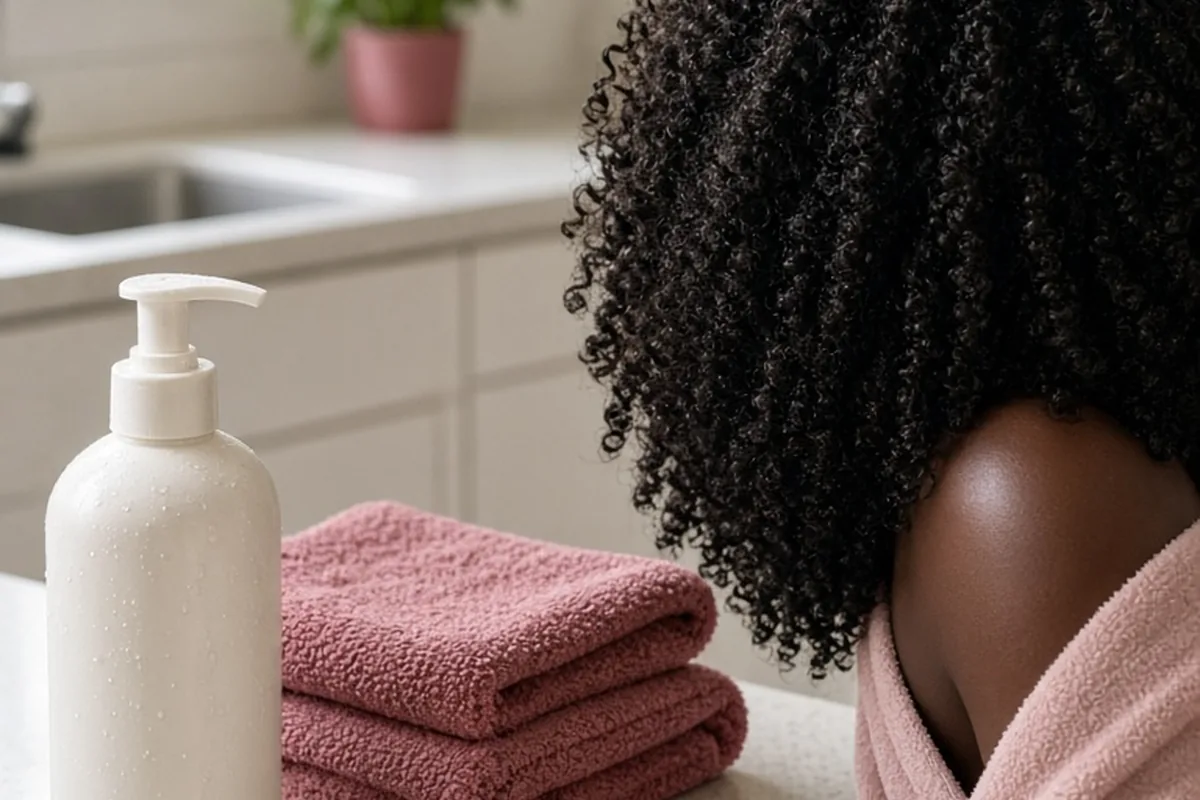
Black hair typically needs moisturizing every two to three days, though the ideal frequency ranges from daily to once or twice weekly depending on hair porosity, strand thickness, climate, and styling method. High-porosity or fine strands often benefit from light daily hydration, while low-porosity hair or styles sealed with heavier butters may stay hydrated for several days. If hair feels dry, brittle, or stiff to the touch, it is time to reapply moisture.
Textured hair has a unique elliptical follicle shape and tight coil patterns that make it harder for natural sebum from the scalp to travel down the entire length of the hair shaft. Because of this natural anatomy, Black hair is naturally more prone to dryness, requiring intentional, consistent external moisture to maintain elasticity and prevent mechanical breakage.
Determining Your Moisturizing Schedule by Hair Porosity
Hair porosity refers to how easily your hair cuticles open and close to absorb and retain water. Understanding your porosity level is the single most reliable factor in deciding whether your hair needs attention every single morning or only once or twice a week. When porosity is ignored, people often make the mistake of either overloading low-porosity strands with heavy products or leaving high-porosity hair parched within hours of washing.
Low-porosity hair features tightly overlapping cuticles that resist moisture penetration. Once water and water-based leave-in conditioners finally enter the hair shaft—often aided by gentle warmth or steam—the cuticle snaps shut, locking that moisture inside for several days. If you have low-porosity hair, moisturizing once or twice a week after a thorough wash or deep conditioning session is usually sufficient. Applying heavy creams every day to low-porosity strands will only lead to surface product buildup, white flaking, and stiff, unresponsive hair that cannot absorb further hydration.
High-porosity hair, conversely, has raised, damaged, or naturally widely spaced cuticles. This hair type absorbs moisture almost instantly, but it loses that moisture just as rapidly through evaporation. For high-porosity strands, a multi-day moisture schedule rarely works without frequent intervention. You will likely need to mist your hair with water or a water-based refresher spray and lightly seal the ends every one to two days to preserve suppleness and prevent split ends.
Daily Hydration Versus Multi-Day Sealing Techniques
A common point of confusion is the difference between hydrating hair and sealing hair. Pure water and water-based products (where water or aloe vera juice is listed as the first ingredient) are the only true sources of moisture. Plant oils, cosmetic butters, and silicone serums do not add water to the hair; their primary chemical function is to form an occlusive barrier that slows down water evaporation from the cortex.
If your routine relies on the Liquid-Oil-Cream (LOC) or Liquid-Cream-Oil (LCO) layering method, the heaviness of your sealant dictates your reapplication calendar. When you apply a rich, thick sealant such as raw shea butter, castor oil, or a heavy twisting cream on damp hair, you create a robust physical shield. This barrier can keep moisture intact for three to four days, meaning you do not need to rehydrate daily. In fact, attempting to spray water over a heavy layer of raw shea butter will merely cause water droplets to bead up on the outside of the hair without penetrating.
If you prefer lightweight formulas, such as liquid leave-in sprays followed by a drop of jojoba, squalane, or argan oil, that barrier is much lighter and naturally dissipates faster. With this approach, a brief daily or alternate-day spritz followed by finger-detangling works well without suffocating the hair strand or causing rapid greasy buildup.
Adjusting Moisture Frequency for Protective Styles and Braids
Protective styles such as box braids, knotless twists, cornrows, and faux locs are designed to reduce daily mechanical manipulation and preserve your ends. However, tucking your hair away does not pause its moisture requirements. Because synthetic or human braiding extensions can absorb natural oils and friction from fabrics accelerates dryness, braided styles require a dedicated, non-greasy moisturizing schedule.
For box braids and cornrows, aim to mist your natural hair along the length of the braid every two to three days using a lightweight, water-based braid spray, diluted leave-in conditioner, or rosewater mist. Heavy creams and thick pomades should generally be avoided along the length of braids, as they trap lint, dust, and shed hair at the base of the braid, creating stubborn buildup that is difficult to wash out without causing matting.
If you are wearing a sew-in weave or a wig over cornrows, your natural hair is shielded from direct sunlight and ambient air, but it is also inaccessible for full-scale deep conditioning. In these setups, use a spray bottle with an applicator nozzle to target your braided foundation two times a week, ensuring the hair under the protective style stays pliable without soaking the weave tracks or encouraging scalp dampness.
Managing Seasonal and Climate-Driven Changes in Hydration Needs
Your environmental climate plays an enormous role in how rapidly hair loses its internal water content. The moisture routine that keeps your coils soft during a humid summer month will rarely perform the same way in the dry, heated air of mid-winter.
During cold weather, artificial indoor heating systems drop indoor relative humidity levels significantly, accelerating moisture evaporation from porous hair. In winter, you will often need to increase your moisturizing cadence to every other day and switch to richer sealing emollients like cupuacu butter, avocado oil, or heavier leave-in creams. Wearing satin-lined beanies and headwraps further shields your hair from cold winds that strip hydration.
In hot, humid climates, the air contains abundant moisture. While high humidity reduces the need for heavy daily sealants, it can cause high-porosity hair to swell uncontrollably, leading to frizz and tangles. In high-humidity environments, a lighter moisturizing schedule—refreshing every three to four days with balanced humectants and a lightweight smoothing serum—helps maintain definition without weighing hair down.
Recognizing the Difference Between Dryness, Buildup, and Hygral Fatigue
Increasing product application is not always the correct response when hair feels rough. One of the most frequent missteps in natural hair care is mistaking product buildup or over-hydration for acute dryness, leading people to layer more moisturizer over hair that is already suffocated.
When hair suffers from product buildup, it feels coated, waxy, and rigid, yet appears dull. Water simply rolls off the surface without soaking in. If you apply moisturizer every single day without a weekly or bi-weekly clarifying shampoo, the accumulated layers of butters, conditioning agents, and silicones block moisture absorption entirely. The solution for buildup is not more moisturizer, but a clarifying wash followed by a single, clean hydration step.
Hygral fatigue, on the other hand, occurs when hair is repeatedly over-wetted and swelled without adequate protein structure or drying intervals. Hair experiencing hygral fatigue feels limp, gummy, or mushy when wet, and stretches excessively before snapping. If your hair shows these signs, reduce daily drenching routines, space out your wet moisturizing sessions to two or three times a week, and incorporate a balanced protein treatment to restore cuticle integrity.
How Product Ingredients Dictate How Often to Reapply
The formulation of your moisturizer determines how long hydration stays bound within the hair fiber. Reading the first five ingredients on your product label gives clear guidance on how frequently you should expect to reapply the product.
Products that feature water, glycerin, aloe, or panthenol at the top of the list excel at drawing ambient water into the hair shaft. However, if these humectants are used in arid environments without an occlusive oil or butter layered on top, they can pull moisture out of the hair fiber toward the dry atmosphere, causing hair to feel parched within twenty-four hours. For these formulations, frequent light reapplication or pairing them with a sealing butter is necessary.
Conversely, leave-in formulations that combine water with fatty alcohols like cetyl or stearyl alcohol, along with rich plant lipids such as shea, mango butter, or olive oil, provide a built-in balance of moisture and protection. These balanced formulations typically sustain curl flexibility for three to five days, eliminating the need for daily wet restyling.
Structuring Your Weekly Moisture Routine for Healthy Hair
Creating a predictable weekly cadence helps prevent both under-moisturization and unnecessary product accumulation. Rather than guessing every morning, establish a baseline rhythm centered on wash day, mid-week maintenance, and pre-styling touch-ups.
Begin your cycle on wash day with a hydrating, sulfate-free cleanser or a periodic clarifying shampoo, followed by a deep conditioning treatment applied with moderate heat to open cuticles. While the hair is still thoroughly damp, apply your leave-in conditioner and preferred sealant using the LOC or LCO method to lock in the wash-day water base.
Plan a mid-week refresh around day three or four. Lightly mist sections of your hair with warm water or a botanical refresher spray, concentrating on the ends, which are the oldest and most fragile parts of your strands. Smooth a dime-sized amount of lightweight oil or cream over the refreshed sections to reseal the cuticle. If your hair retains suppleness through day five or six, leave it alone until your next scheduled wash day to avoid unnecessary manipulation.
Illustrative Scenarios
Adjusting Moisture Frequency from Daily to Bi-Weekly
An individual with fine, low-porosity 4C coils was applying heavy leave-in cream and raw shea butter every morning to combat chronic midday dryness. Despite daily applications, the hair felt brittle, stiff, and shed excessively during detangling. After clarifying to remove months of accumulated product, the routine was adjusted to deep condition once a week with heat, apply a light water-based leave-in sealed with two drops of argan oil on wash day, and refresh only once mid-week with a fine water mist.
Key point: Daily heavy product application on low-porosity hair often creates a waterproof barrier that blocks actual hydration; reducing application frequency and thoroughly clarifying allows moisture to penetrate effectively.
Frequently asked questions
Can I moisturize my Black hair every day?
Yes, but only if you use a very lightweight, water-based mist or leave-in spray without heavy butters. Daily application of heavy creams or raw oils can quickly lead to buildup, scalp irritation, and limp strands. If you choose daily hydration, focus the mist primarily on the mid-lengths and ends.
Should I apply oil to my hair if it feels dry?
No, you should never apply oil to completely dry hair. Oil acts as a sealant rather than a hydrator; applying it over dry strands creates a barrier that locks dryness in and prevents water from entering. Always apply water or a water-based leave-in spray first, then smooth oil over the damp surface to seal it.
How do I know when my hair is genuinely moisturized?
Well-moisturized Black hair feels soft, pliable, and cool to the touch, with visible bounce and elasticity when gently stretched. It should not feel greasy, slippery, coated with residue, or produce a snapping sound during light finger-combing.
Does fine textured Black hair need a different moisturizing frequency than coarse hair?
Yes. Fine strands have a smaller diameter and are easily weighed down by frequent or heavy product application, usually thriving on light moisture every three to four days. Coarse strands have a wider diameter and thicker cuticle structure, often tolerating more frequent rehydration every two days.
Your next step
Perform a simple strand elasticity test today: gently stretch a clean, dry strand of hair; if it feels stiff, resists bending, or snaps immediately, mist your hair with clean water and apply a light leave-in conditioner to re-establish your baseline moisture schedule.